
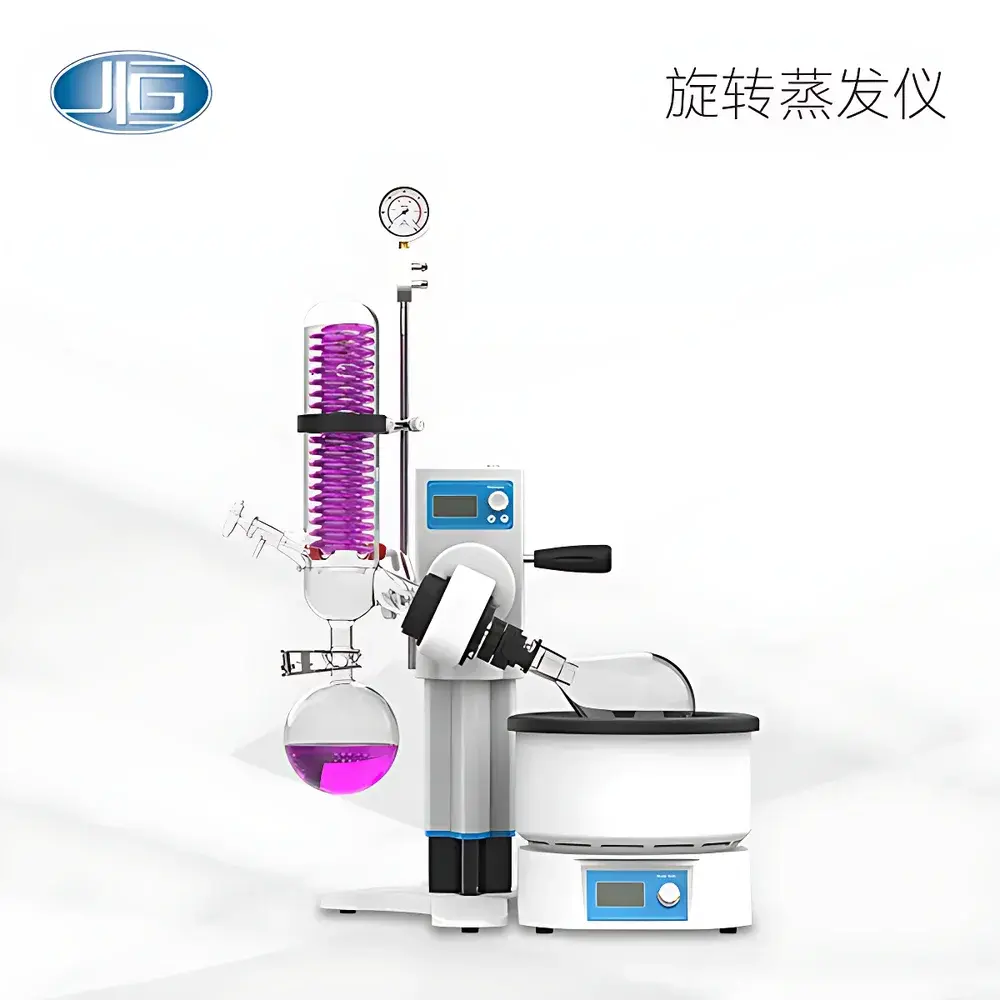
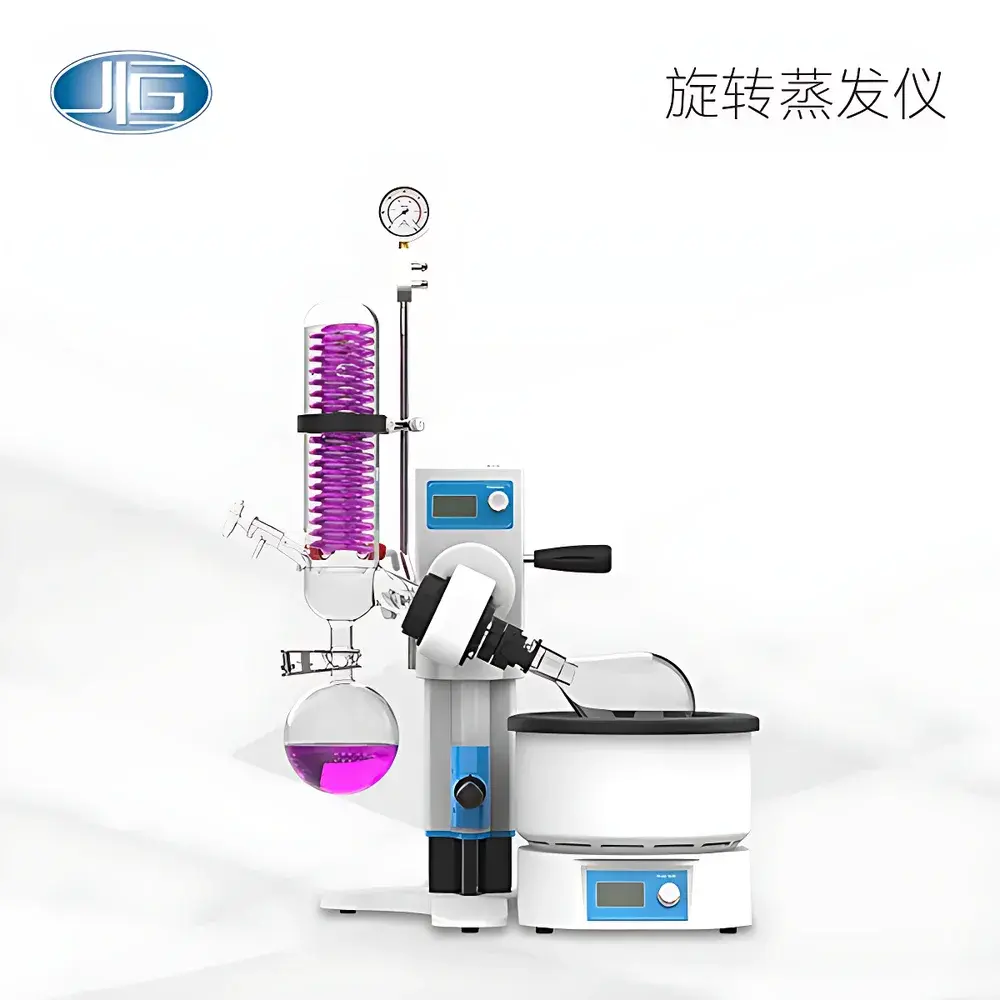
Yiheng RV-211A / RV-211M Rotary Evaporator
| Brand | Yiheng |
|---|---|
| Origin | Shanghai, China |
| Manufacturer Type | Direct Manufacturer |
| Region of Origin | Domestic (China) |
| Model | RV-211A, RV-211M |
| Capacity | 1 L |
| Rotation Speed | 20–180 rpm |
| Temperature Control Range | RT+5°C to 99°C |
| Condenser Cooling Area | 0.15 m² |
Overview
The Yiheng RV-211A and RV-211M rotary evaporators are precision-engineered laboratory instruments designed for efficient solvent removal, concentration, and gentle sample recovery under reduced pressure. Based on the fundamental principle of vacuum-assisted evaporation—where lowering the system pressure reduces the boiling point of solvents—the RV-211 series enables rapid, controlled, and reproducible distillation across a wide range of organic and aqueous solutions. These units integrate a robust mechanical rotation mechanism with precise thermal regulation and optimized condensation geometry to maximize evaporation efficiency while minimizing thermal degradation or bumping. Engineered for routine use in synthetic chemistry labs, pharmaceutical QC environments, natural product extraction workflows, and academic research settings, the RV-211 platform delivers consistent performance under GLP-aligned operational conditions.
Key Features
- Manual and motorized lift options (RV-211M includes automatic vertical adjustment), enabling single-hand operation and stable, vibration-damped positioning during evaporation cycles.
- Backlit LCD display with intuitive menu-driven interface and rotary encoder for simultaneous monitoring and setting of rotation speed, bath temperature, and vacuum status—supporting rapid parameter entry and real-time feedback.
- PID temperature control ensures ±0.5°C stability across the full operating range (RT+5°C to 99°C), compatible with both water and oil bath media; integrated dry-run protection automatically deactivates heating if liquid level falls below sensor threshold.
- Angled dual-layer coiled condenser with total effective cooling surface area of 0.15 m², configured to enhance heat transfer efficiency and support maximum evaporation rates up to 22 mL/min—optimized for scalability from micro-scale to standard 1 L flask volumes.
- Adjustable condenser orientation allows fine-tuning of vapor path geometry to accommodate varying flask sizes and optimize condensate collection efficiency.
- High-performance sealing system utilizing PTFE-coated elastomeric gaskets rated for continuous operation at temperatures up to 120°C and resistant to aggressive solvents including chlorinated hydrocarbons, esters, and strong acids—demonstrating >3× service life versus conventional domestic alternatives.
- Dual safety architecture: independent overtemperature cutoff (with audible/visual alarm), pressure relief valve, and overload current protection circuitry compliant with IEC 61010-1 safety standards for laboratory electrical equipment.
Sample Compatibility & Compliance
The RV-211 series accommodates standard ground-glass jointed glassware (e.g., 1 L round-bottom flasks with ISO 29/32 or 24/40 joints) and supports common solvent systems including ethanol, acetone, ethyl acetate, dichloromethane, hexane, and aqueous buffers. All wetted surfaces—including condenser tubing, vapor ducts, and seals—are chemically inert and non-leaching. The instrument conforms to CE marking requirements and meets essential safety provisions outlined in EN 61010-1:2010. While not certified for FDA 21 CFR Part 11 compliance out-of-the-box, its operational logs (when paired with external data acquisition systems) can be structured to support audit-ready documentation in GMP/GLP-regulated laboratories.
Software & Data Management
The RV-211A operates via embedded firmware with no proprietary software dependency; all parameters are set and monitored locally via the front-panel interface. The RV-211M variant offers optional RS-232 or analog 0–10 V output for integration into centralized lab automation platforms (e.g., LabVIEW, DeltaV, or custom SCADA). Temperature and rotation data can be logged externally using third-party DAQ modules supporting time-stamped CSV export—enabling traceability, batch record generation, and alignment with internal SOPs requiring electronic data integrity.
Applications
- Solvent removal following column chromatography or solid-phase extraction (SPE).
- Concentration of heat-sensitive natural extracts (e.g., essential oils, flavonoids, terpenes) without thermal decomposition.
- Recovery of reaction products in multi-step organic synthesis under mild vacuum conditions.
- Preparative-scale purification in analytical method development and reference standard preparation.
- Environmental sample processing (e.g., pesticide residue concentration in water matrices prior to GC-MS analysis).
FAQ
What is the maximum recommended vacuum level for optimal performance?
The system is rated for operation down to 10 mbar (7.5 Torr); however, optimal evaporation efficiency for most solvents is achieved between 20–50 mbar, balancing rate and control.
Can the unit be used with corrosive solvents such as concentrated HCl or nitric acid?
No—while PTFE seals resist many organics and weak acids, direct exposure to fuming or hot concentrated mineral acids will degrade gasket integrity and compromise vacuum integrity.
Is the water bath compatible with silicone oil for elevated temperature applications?
Yes—the heating element and bath chamber are rated for use with thermal oils up to 99°C; ensure oil viscosity remains suitable for convection-based heat transfer.
Does the instrument include vacuum pump and chiller?
No—these are auxiliary components; users must select a diaphragm or rotary vane pump rated ≥20 L/min flow and a recirculating chiller capable of maintaining ≤10°C coolant supply to the condenser jacket.



