
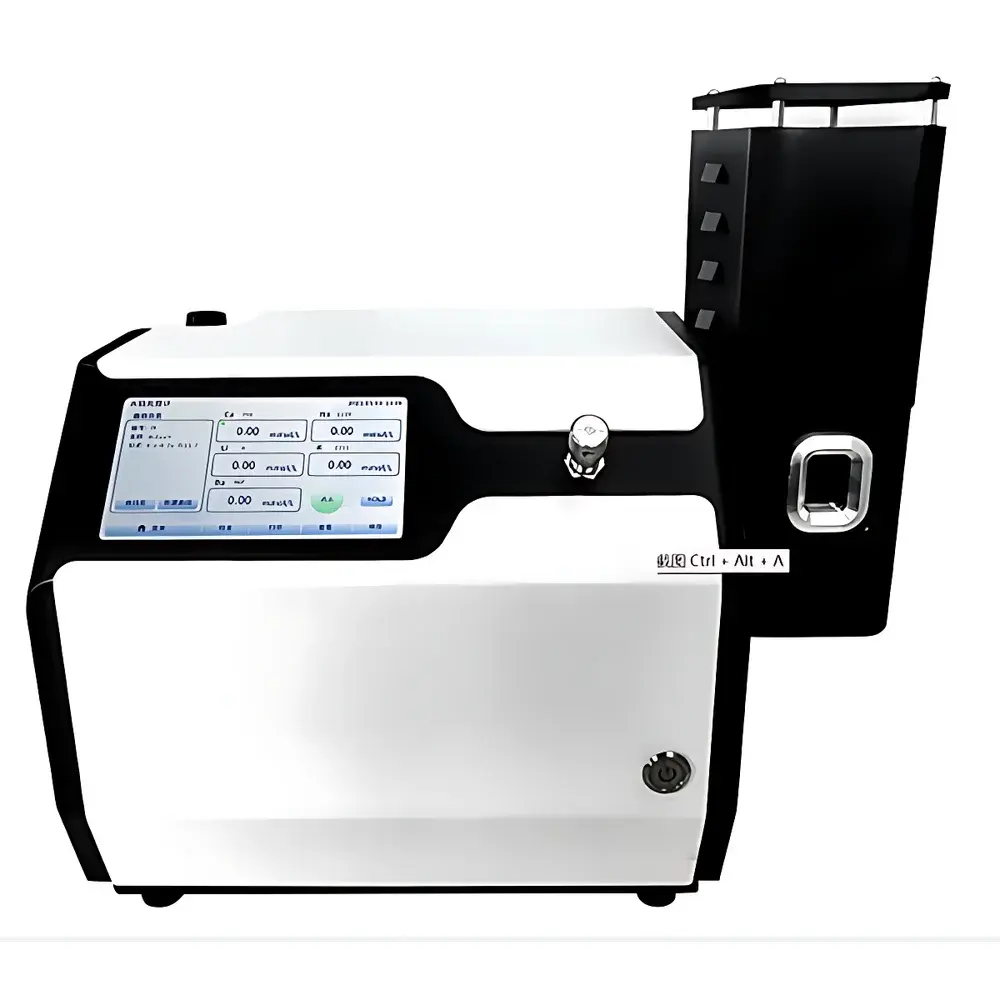
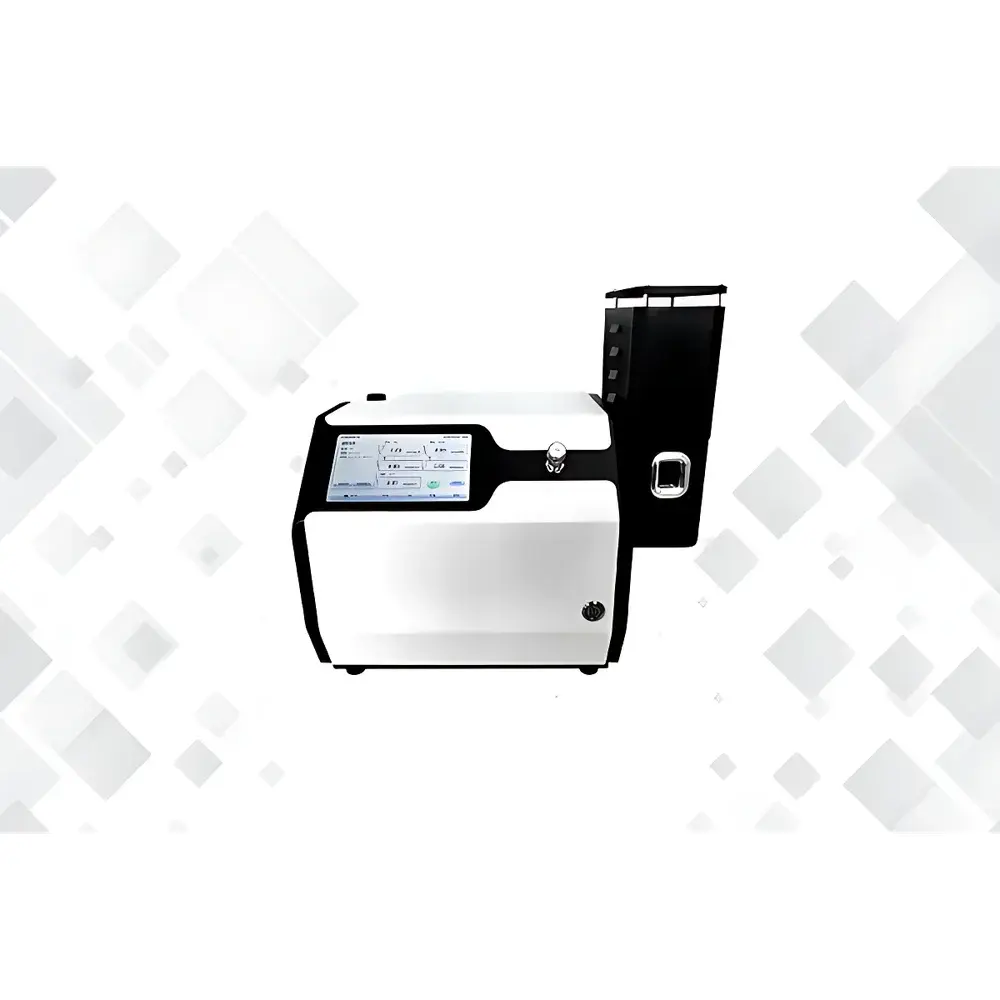
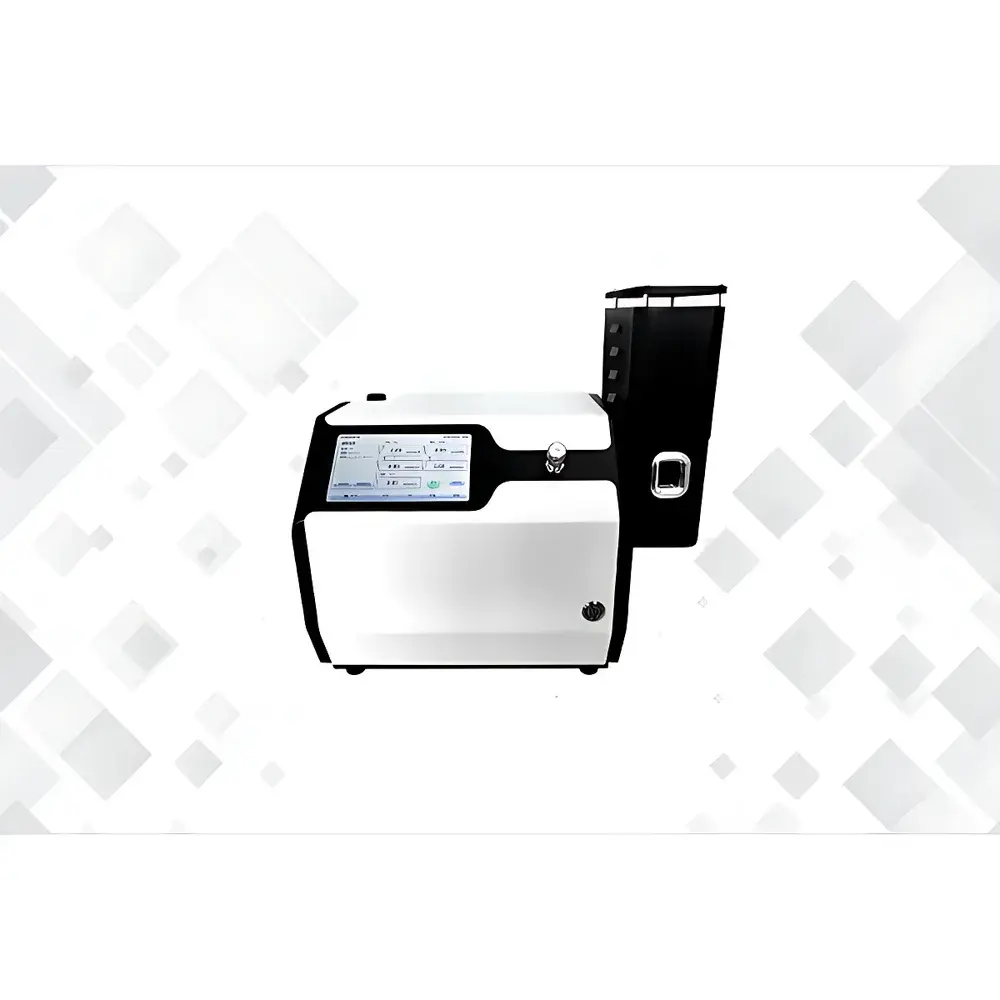
Yoke FP6431 Flame Photometer
| Brand | Yoke |
|---|---|
| Origin | Shanghai, China |
| Model | FP6431 |
| Detection Elements | K, Na, Ca |
| Detection Limits | K: 0.001 mmol/L |
| Na | 0.001 mmol/L |
| Ca | 0.01 mmol/L |
| Response Time | ≤5 s |
| Repeatability | RSD ≤1.5% |
| Sample Flow Rate | 6–8 mL/min |
| Display | 7-inch capacitive touch LCD |
| Data Export | USB port & U-disk support |
| Safety Features | Flame-out protection & gas leakage alarm |
| Operating Temperature | 10–35 °C |
| Relative Humidity | ≤85% RH |
| Power Supply | AC 220 V ±10%, 50 Hz, 250 W |
Overview
The Yoke FP6431 Flame Photometer is a benchtop atomic emission spectrometer designed for quantitative analysis of alkali and alkaline earth metals—specifically potassium (K), sodium (Na), and calcium (Ca)—in aqueous solutions. It operates on the principle of flame atomic emission spectroscopy (FAES): sample aerosols are introduced into a premixed air-propane (or air-butane) flame, where thermal energy excites valence electrons of target metal atoms to higher electronic states. Upon returning to ground-state configurations, these atoms emit photons at characteristic wavelengths—e.g., 766.5 nm for K, 589.0/589.6 nm (doublet) for Na, and 422.7 nm for Ca. Optical bandpass filters isolate these emissions, and a photomultiplier tube (PMT) or silicon photodiode converts radiant intensity into an electrical signal proportional to elemental concentration. As a relative measurement instrument, the FP6431 requires calibration against a series of certified standard solutions under identical nebulization and combustion conditions. The resulting calibration curve—generated either manually or via onboard linear regression—enables direct concentration readout in mmol/L or other user-defined units.
Key Features
- Integrated 7-inch capacitive touch LCD interface with intuitive icon-driven navigation and real-time parameter visualization
- Onboard coefficient-of-determination (R²) calculation for automatic validation of calibration linearity during standard curve generation
- Dual safety architecture: flame-out detection circuitry halts fuel supply within <1 second of ignition failure; integrated combustible gas sensor triggers audible/visual alarm upon propane/butane leakage exceeding 10% LEL
- Direct element concentration readout for K, Na, and Ca—no manual calculation required post-calibration
- USB Type-B port for bidirectional communication with laboratory PCs; supports firmware updates and remote diagnostics
- U-disk (USB flash drive) data export in CSV format—including raw intensity values, calibration coefficients, sample IDs, timestamps, and operator logs
- Compact footprint (W × D × H ≈ 360 × 320 × 420 mm) optimized for shared analytical workbenches in QC/QA labs and teaching facilities
Sample Compatibility & Compliance
The FP6431 accepts clarified, low-viscosity aqueous samples with total dissolved solids (TDS) < 0.1% w/v. Acidified digests (e.g., HNO₃-preserved environmental waters, plant tissue extracts, biological fluids) and clinical serum/plasma dilutions are routinely analyzed after appropriate matrix-matching with standards. Sample introduction uses a concentric pneumatic nebulizer with adjustable aspiration rate (6–8 mL/min), compatible with standard 13-mm borosilicate test tubes. While not validated per ISO/IEC 17025 for accredited testing, the instrument’s repeatability (RSD ≤1.5%) and detection limits align with typical requirements for routine monitoring in accordance with ASTM D1292 (sodium in water), ISO 9297 (potassium in fertilizers), and USP (electrolyte assays). Data integrity is supported by timestamped audit trails for all calibrations and measurements—essential for GLP-compliant environments.
Software & Data Management
No proprietary desktop software is required: raw intensity data, calibration parameters, and result tables export directly to comma-separated values (CSV) files readable in Excel, MATLAB, or LIMS platforms. Each exported file includes embedded metadata—date/time stamp, operator ID (if entered), instrument serial number, and calibration validity window. The internal memory retains up to 1,000 measurement records with full traceability. For networked laboratories, optional cloud connectivity enables secure FTP-based data synchronization to centralized servers—facilitating cross-site method harmonization and remote review by QA supervisors. All data handling complies with basic ALCOA+ principles (Attributable, Legible, Contemporaneous, Original, Accurate), though full 21 CFR Part 11 compliance requires external electronic signature integration via third-party LIMS.
Applications
- Environmental monitoring: quantification of K⁺ and Na⁺ in surface water, groundwater, and wastewater effluents per EPA Method 200.7 (modified)
- Agricultural analytics: rapid determination of exchangeable K and Ca in soil extracts and fertilizer formulations
- Clinical chemistry: electrolyte profiling in serum, urine, and dialysate—particularly in resource-constrained settings where ICP-OES is unavailable
- Food & beverage quality control: Na content verification in dairy products, processed meats, and beverages against Codex Alimentarius limits
- Pharmaceutical manufacturing: assay of K/Na counterions in active pharmaceutical ingredients (APIs) and excipients
- Academic teaching: hands-on instruction in atomic spectroscopy fundamentals, calibration theory, and error propagation in quantitative analysis
FAQ
What gases are compatible with the FP6431? Can natural gas be used?
The FP6431 is configured for propane or butane fuel with compressed air as the oxidant. Natural gas (methane) is not recommended due to its lower flame temperature (~1950 °C vs. ~1970 °C for propane), which reduces atomization efficiency and increases spectral interferences from incomplete combustion.
Is acid digestion required for solid samples?
Yes. Solid matrices (soils, tissues, foodstuffs) must undergo wet-chemical digestion—typically using nitric acid alone or in combination with hydrogen peroxide—to solubilize target cations and minimize refractory oxide formation prior to aspiration.
How often should the nebulizer and burner head be cleaned?
Nebulizer capillaries should be inspected and ultrasonically cleaned in 5% HNO₃ weekly if analyzing high-TDS samples; the stainless-steel burner slit requires monthly mechanical cleaning with a 0.1-mm wire probe to prevent carbon buildup.
Does the FP6431 support multi-element sequential analysis?
No. It performs single-element measurements per run. Sequential analysis of K, Na, and Ca requires three discrete calibrations and sample passes—though total cycle time remains under 90 seconds due to rapid flame stabilization and <5-second response.
Can the instrument be validated for GMP-regulated environments?
While the FP6431 meets core performance criteria (precision, LOD, linearity), formal IQ/OQ/PQ validation must be executed per site-specific protocols using NIST-traceable standards and documented by qualified personnel. Yoke provides technical specifications and factory test reports as foundational documentation.




