
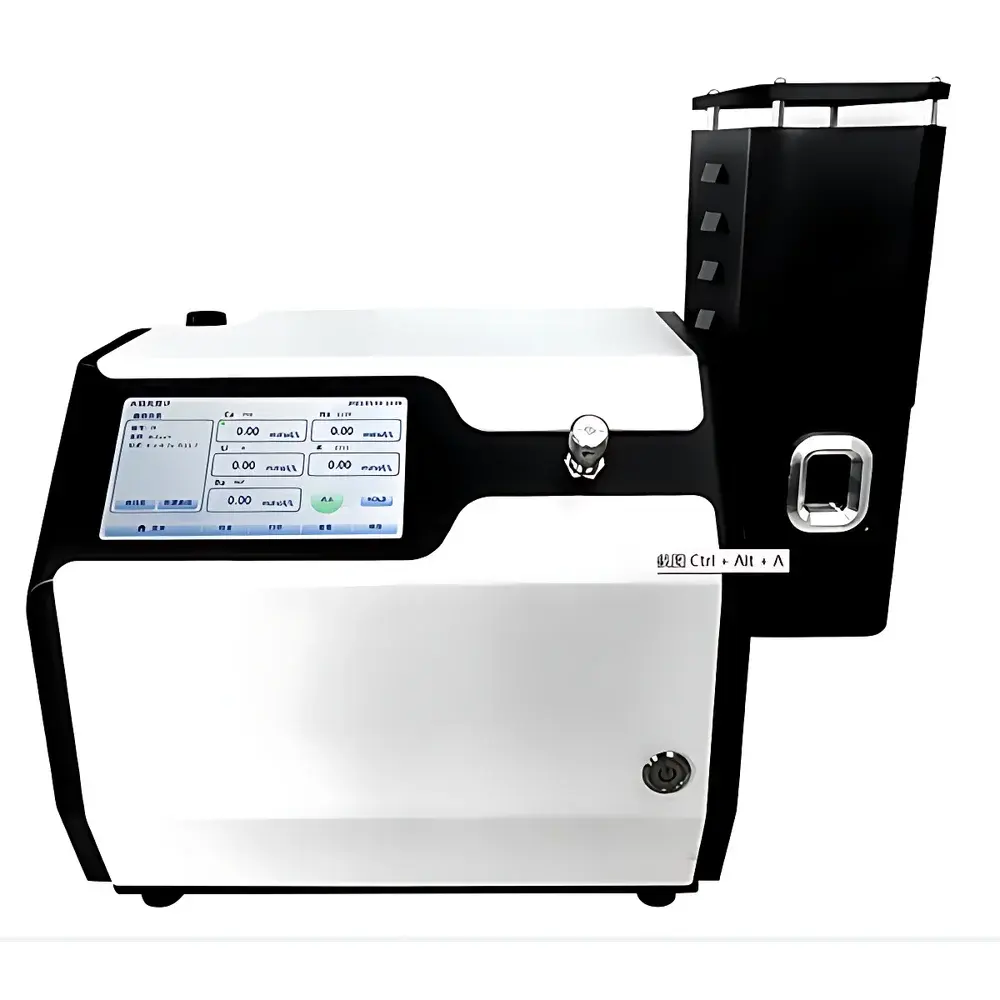
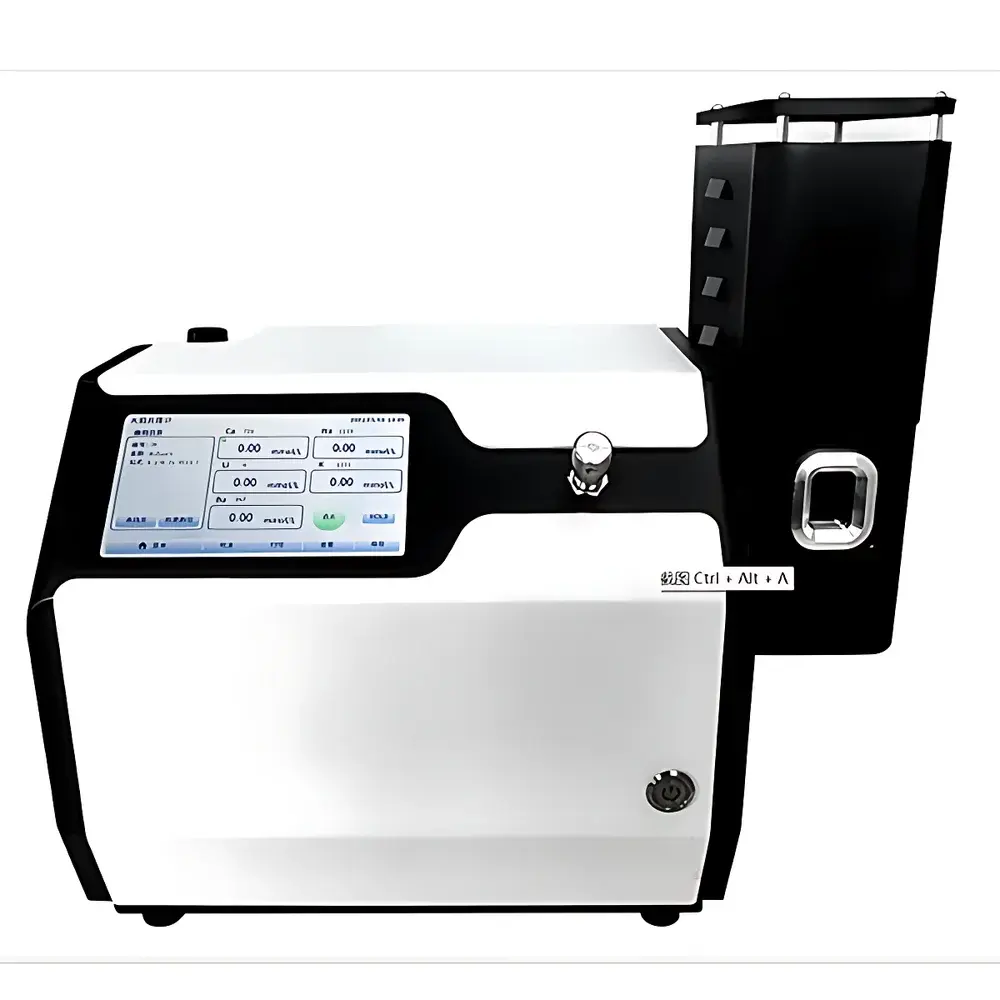
Yoke FP6440 Flame Photometer
| Brand | Yoke |
|---|---|
| Origin | Shanghai, China |
| Model | FP6440 |
| Detection Elements | K, Na, Li, Ca |
| Detection Limits | K: 0.001 mmol/L |
| Na | 0.001 mmol/L |
| Li | 0.005 mmol/L |
| Ca | 0.01 mmol/L |
| Response Time | <8 s |
| Repeatability | RSD ≤1.5% |
| Nebulization Flow Rate | 6–8 mL/min |
| Display | 7-inch capacitive touch LCD |
| Safety Features | Flame-out protection, gas leakage alarm |
| Data Interface | USB port, U-disk export, PC connectivity |
| Cloud Connectivity | Yes |
| Calibration Function | Automatic correlation coefficient calculation |
| Optional Accessory | Thermal printer |
Overview
The Yoke FP6440 Flame Photometer is a benchtop atomic emission spectrometer engineered for rapid, selective quantification of alkali and alkaline earth metals—including potassium (K), sodium (Na), lithium (Li), and calcium (Ca)—in aqueous solutions. It operates on the fundamental principle of flame atomic emission spectroscopy (FAES): liquid samples are pneumatically nebulized into a stable air-propane or air-butane flame, where thermal energy atomizes and excites valence electrons of target metal ions. Upon relaxation, these atoms emit characteristic wavelength radiation—primarily in the visible region (e.g., Na at 589 nm, K at 766/769 nm, Ca at 422 nm, Li at 671 nm). A fixed-wavelength optical system with interference filters isolates each element’s primary emission line, and a silicon photodiode converts photon flux into proportional electrical signal. The instrument applies the fundamental emission intensity relationship I = a·cb, where I is measured intensity, c is analyte concentration, a is an instrument- and flame-condition-dependent constant, and b approximates unity under low-concentration, non-self-absorbing conditions—enabling linear calibration across typical clinical, agricultural, and environmental working ranges (0.01–10 mmol/L).
Key Features
- Integrated 7-inch high-resolution capacitive touch display enabling intuitive navigation, real-time signal monitoring, and on-device calibration curve generation.
- Dual safety architecture: hardware-based flame-out detection circuit interrupts fuel supply within 1.2 seconds of flame extinction; integrated semiconductor gas sensor triggers audible/visual alarm upon propane/butane leakage exceeding 10% LEL.
- Optimized pneumatic nebulization system delivering consistent aerosol generation at 6–8 mL/min, minimizing droplet size distribution variance and enhancing measurement reproducibility (RSD ≤1.5% at mid-range concentrations).
- Onboard data processing engine supporting automatic linear regression, correlation coefficient (r²) calculation, and slope/intercept reporting for every calibration run—traceable per ISO/IEC 17025 documentation requirements.
- Native USB 2.0 interface and FAT32-formatted U-disk support enable secure, audit-ready data export without proprietary software dependency; compatible with Windows/Linux systems via CDC ACM virtual COM port.
- Cloud-enabled firmware (optional subscription) facilitates remote diagnostics, method synchronization across multi-site labs, and encrypted backup of calibration logs and QC records—aligned with FDA 21 CFR Part 11 electronic record integrity guidelines.
Sample Compatibility & Compliance
The FP6440 accepts clarified aqueous samples with total dissolved solids (TDS) < 0.5% w/v and viscosity < 2.5 cP. It accommodates standard 13 × 100 mm borosilicate glass sample tubes and integrates seamlessly with automated dilutors for high-throughput workflows. Method validation adheres to ASTM D1293 (water pH and conductivity), ISO 11885 (determination of selected elements by FAES), and USP (atomic spectroscopy validation parameters). Built-in buffer compensation logic supports matrix-matched calibration using saturated K/Ca/Mg solutions to mitigate inter-element ionization suppression—a practice recommended in AOAC 985.23 for soil and biological fluid analysis.
Software & Data Management
No proprietary desktop application is required for basic operation. Raw intensity values, calibration coefficients, and QC check results are stored in CSV format with ISO 8601 timestamps. Each exported file includes embedded metadata: operator ID (user-defined), instrument serial number, lamp hours, and ambient temperature/humidity from onboard sensors. Audit trail functionality logs all parameter modifications (e.g., filter selection, gain adjustment) with user attribution and timestamp—meeting GLP/GMP data integrity expectations. For regulated environments, optional Yoke LabLink™ software provides 21 CFR Part 11-compliant electronic signatures, role-based access control, and automated report generation (PDF/A-1b compliant).
Applications
- Clinical laboratories: Quantitative serum/plasma Na⁺ and K⁺ for electrolyte panel verification (CLIA-waived when used with IVD-certified reagents).
- Agricultural testing: Soil extract analysis for exchangeable K⁺ and Ca²⁺ to inform fertilizer recommendations (per USDA NRCS methodology).
- Pharmaceutical QC: Monitoring residual Na⁺ in lyophilized biologics and K⁺ in oral rehydration salts against Ph. Eur. 2.2.24 limits.
- Environmental monitoring: Surface water and wastewater screening per EPA Method 200.7 (modified for FAES-compatible elements).
- Food & beverage: Salt (NaCl) and mineral fortification (Ca, K) verification in dairy, plant-based beverages, and sports drinks.
FAQ
What flame gases are compatible with the FP6440?
The instrument is configured for air–propane combustion (standard) or air–butane (optional); hydrogen is not supported due to excessive flame temperature and safety constraints.
Can the FP6440 measure barium (Ba) as stated in some marketing materials?
While the optical path accommodates Ba’s 553.6 nm line, factory calibration and validation are limited to K, Na, Li, and Ca per ISO 11885 scope; Ba quantification requires user-developed method validation.
Is the “cloud connectivity” feature mandatory for routine operation?
No—cloud services are opt-in and fully disabled by default; all core analytical functions operate independently in standalone mode.
How frequently must the nebulizer capillary be cleaned?
Under normal use with filtered, low-TDS samples, cleaning every 40–50 analyses is sufficient; ultrasonic bath in 5% HNO₃ for 10 minutes restores optimal aerosol output.
Does the FP6440 comply with electromagnetic compatibility (EMC) directives for EU deployment?
Yes—certified to EN 61326-1:2013 (industrial environment) and CE-marked; full test reports available upon request from Yoke Technical Support.
Related Products





