
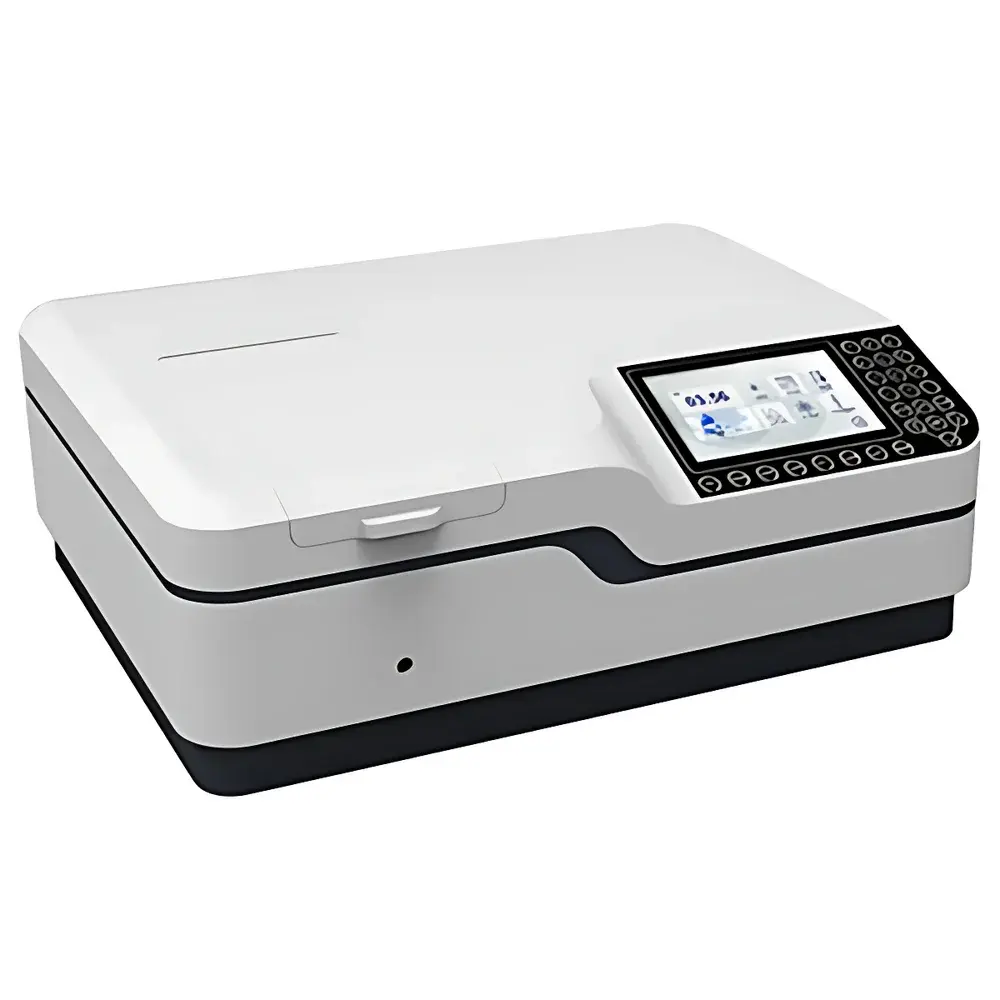
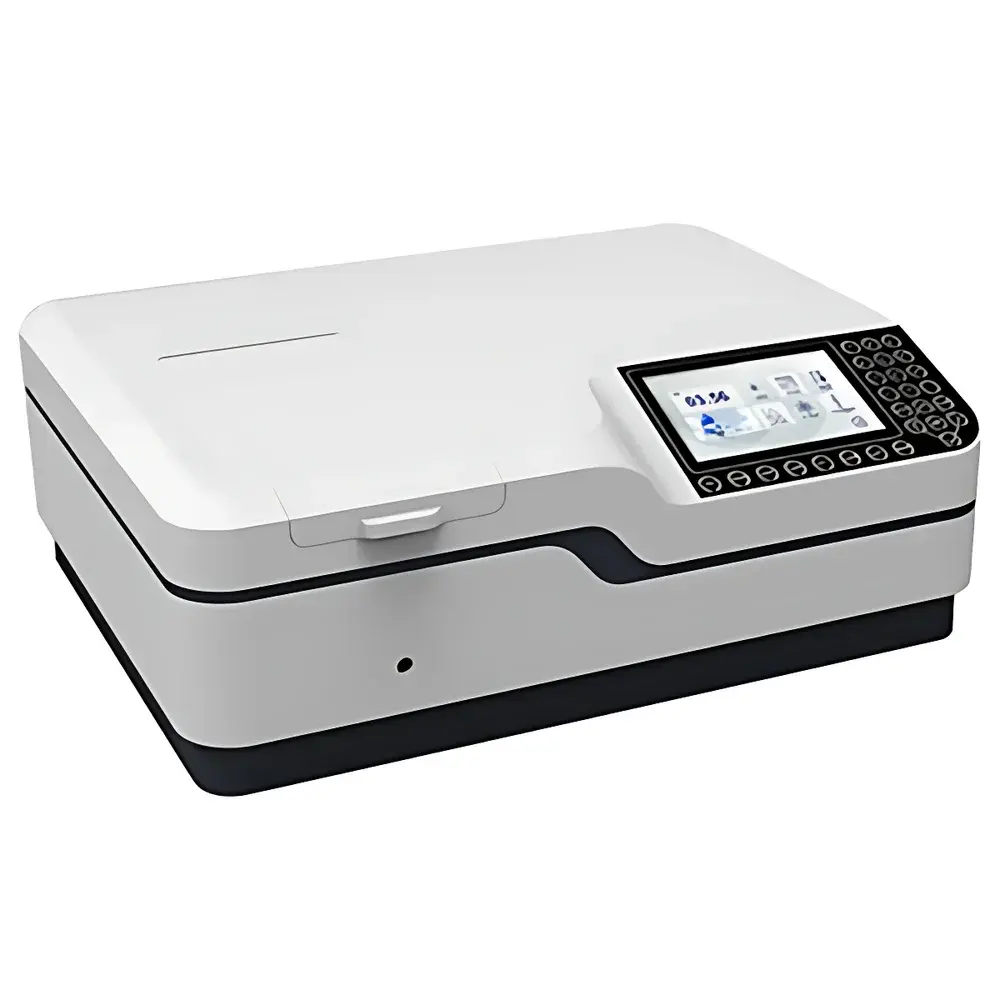
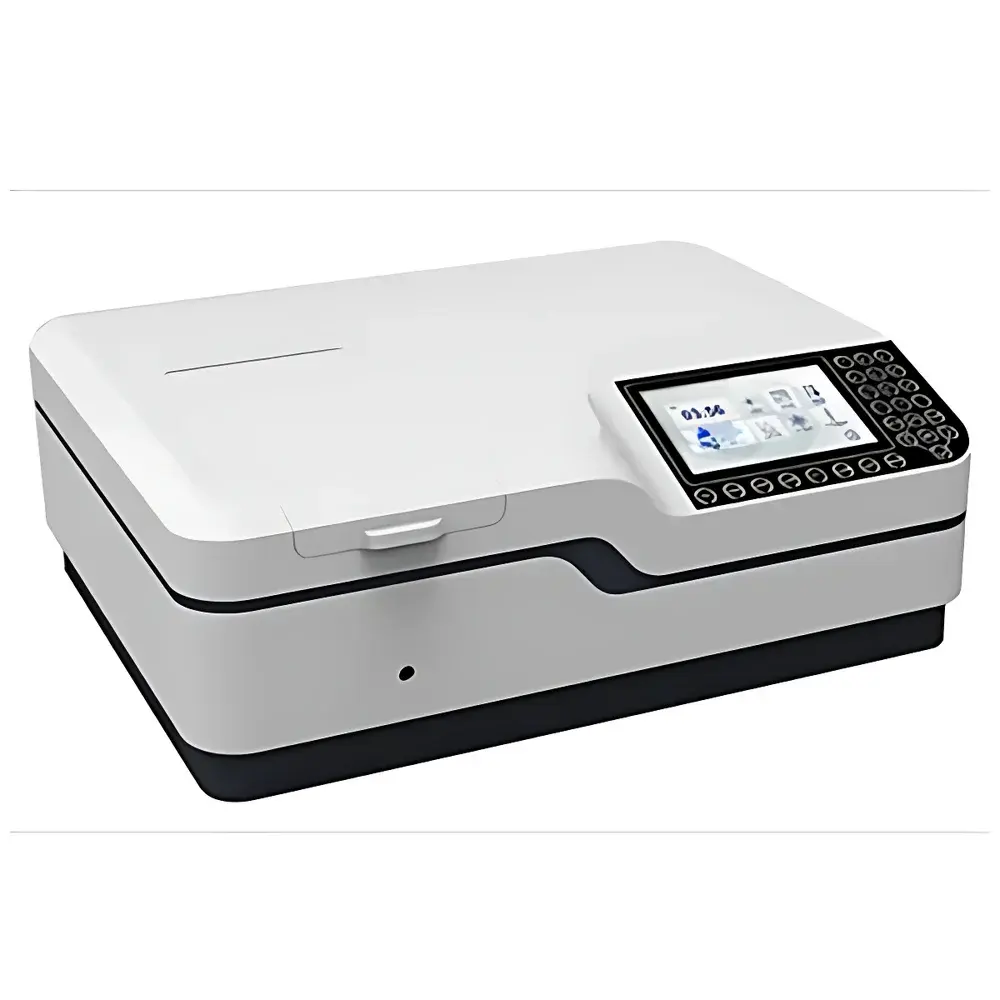
Yoke YK-YW5 Ethylene Oxide Residual Content Analyzer for Medical Devices
| Brand | Yoke |
|---|---|
| Origin | Shanghai, China |
| Manufacturer Type | Authorized Distributor |
| Region of Manufacture | Domestic (China) |
| Model | YK-YW5 |
| Pricing | Available Upon Request |
Overview
The Yoke YK-YW5 Ethylene Oxide Residual Content Analyzer is a dedicated photometric instrument engineered for the quantitative determination of residual ethylene oxide (EO) in medical devices—particularly post-sterilization masks, gowns, catheters, and other single-use healthcare products. It operates on a validated colorimetric principle aligned with ISO 10993-7:2008 and USP , wherein EO residues are hydrolyzed under controlled acidic conditions to ethylene glycol, which is subsequently oxidized by periodic acid (H5IO6) to formaldehyde. The liberated formaldehyde reacts with Schiff’s reagent (pararosaniline–sodium bisulfite) to form a stable magenta-colored chromophore, quantified spectrophotometrically at 560 nm. Unlike generic UV-Vis spectrophotometers, the YK-YW5 integrates pre-calibrated assay chemistry, fixed optical pathlength cuvettes, and temperature-controlled incubation (35–37 °C), ensuring reproducible reaction kinetics and minimizing inter-operator variability. Its design prioritizes compliance readiness for ISO 13485-certified quality systems and supports GLP-aligned documentation workflows.
Key Features
- Pre-installed calibration curve: Factory-established working curve eliminates manual standard curve generation—reducing analyst training time and method transfer risk.
- Integrated reagent kit: Includes 100 complete assay cycles (all reagents pre-weighed and stabilized), compliant with ISO 10993-7 Annex B protocols for EO extraction and derivatization.
- Dedicated optical system: Fixed-pathlength (10 mm) photometric cell with narrow-band interference filter centered at 560 ± 2 nm; optimized signal-to-noise ratio for low-concentration detection (LOD ≤ 0.5 µg/g).
- Controlled thermal incubation: Built-in heating block maintains 35–37 °C during chromophore development—critical for reaction completeness and inter-laboratory reproducibility.
- Standardized sample handling: Supports both “limit extraction” (ISO 10993-7 Clause 6.2) and “exhaustive extraction” protocols using defined acid hydrolysis (0.1 mol/L HCl, 1 h, ambient).
- Traceable measurement chain: Each instrument ships with NIST-traceable absorbance verification filters and documented uncertainty budget per ISO/IEC 17025 requirements.
Sample Compatibility & Compliance
The YK-YW5 is validated for use with polymeric, non-porous, and semi-porous medical device materials including polypropylene (masks), PVC tubing, silicone elastomers, and PET packaging films. Sample preparation follows ISO 10993-7 Section 6 procedures: representative high-residue components are cut into uniform fragments (5 mm × 5 mm or 10 mm²), extracted in 0.1 mol/L HCl (10 mL per 2.0 g sample), and analyzed without filtration unless particulates interfere. The system meets essential requirements of FDA 21 CFR Part 820 (QSR) for test method validation and supports audit-ready records when paired with optional LIMS integration. All reagents conform to ACS-grade specifications per ASTM E2913-20, and the assay methodology satisfies acceptance criteria for precision (RSD ≤ 5% at 10 µg/g) and accuracy (recovery 92–105%) as defined in ISO 10993-7 Annex C.
Software & Data Management
The embedded firmware enables direct absorbance acquisition, automatic concentration calculation using the built-in calibration equation (CEO = 1.775 × V × C₁ × 1000), and export of raw data (A560, V, calculated CEO in µg/g) via USB to CSV format. Audit trail functionality logs operator ID, date/time stamp, calibration status, and reagent lot numbers—meeting baseline requirements for FDA 21 CFR Part 11 compliance when deployed with password-protected user roles and electronic signature capability (optional configuration). Data files include metadata headers referencing ISO 10993-7 clause numbers, enabling traceability during regulatory inspections. No cloud dependency: all processing occurs locally to ensure data sovereignty and network isolation in GMP environments.
Applications
- Residual EO quantification in Class I–III medical devices following ethylene oxide sterilization (per ISO 11135).
- Verification of EO desorption efficiency in aerators and off-gassing chambers.
- Stability-indicating testing of EO-sterilized products during accelerated aging studies (ASTM F1980).
- Supplier qualification and incoming inspection of sterilized components (e.g., filter housings, IV sets).
- Supporting biocompatibility dossiers under ISO 10993-1 and regulatory submissions to MDR (EU), PMDA (Japan), and NMPA (China).
FAQ
Does the YK-YW5 require daily recalibration?
No. The factory-installed calibration curve remains valid for 12 months under standard storage conditions. A quarterly performance check using the included absorbance verification filter is recommended.
Can the instrument measure EO directly, or only via hydrolysis to ethylene glycol?
It measures EO indirectly but quantitatively via its stoichiometric hydrolysis product (ethylene glycol), as required by ISO 10993-7. Direct EO gas-phase analysis is outside its scope.
Is the reagent kit compatible with third-party spectrophotometers?
The chemistry is transferable, but full method equivalence requires replication of the YK-YW5’s thermal incubation profile, optical bandwidth, and timing parameters—validated only on the native platform.
What is the maximum allowable EO residue level the instrument can report per ISO 10993-7?
The system reports results up to 20 µg/g with linearity; however, the regulatory limit for most patient-contact devices is ≤10 µg/g, and the instrument’s software flags exceedances accordingly.
Does Yoke provide method validation documentation?
Yes—each unit ships with a Certificate of Conformance, Installation Qualification (IQ) checklist, and a summary Validation Report covering specificity, linearity (0.5–20 µg/g), LOD/LOQ, precision, and robustness per ICH Q2(R2).



