
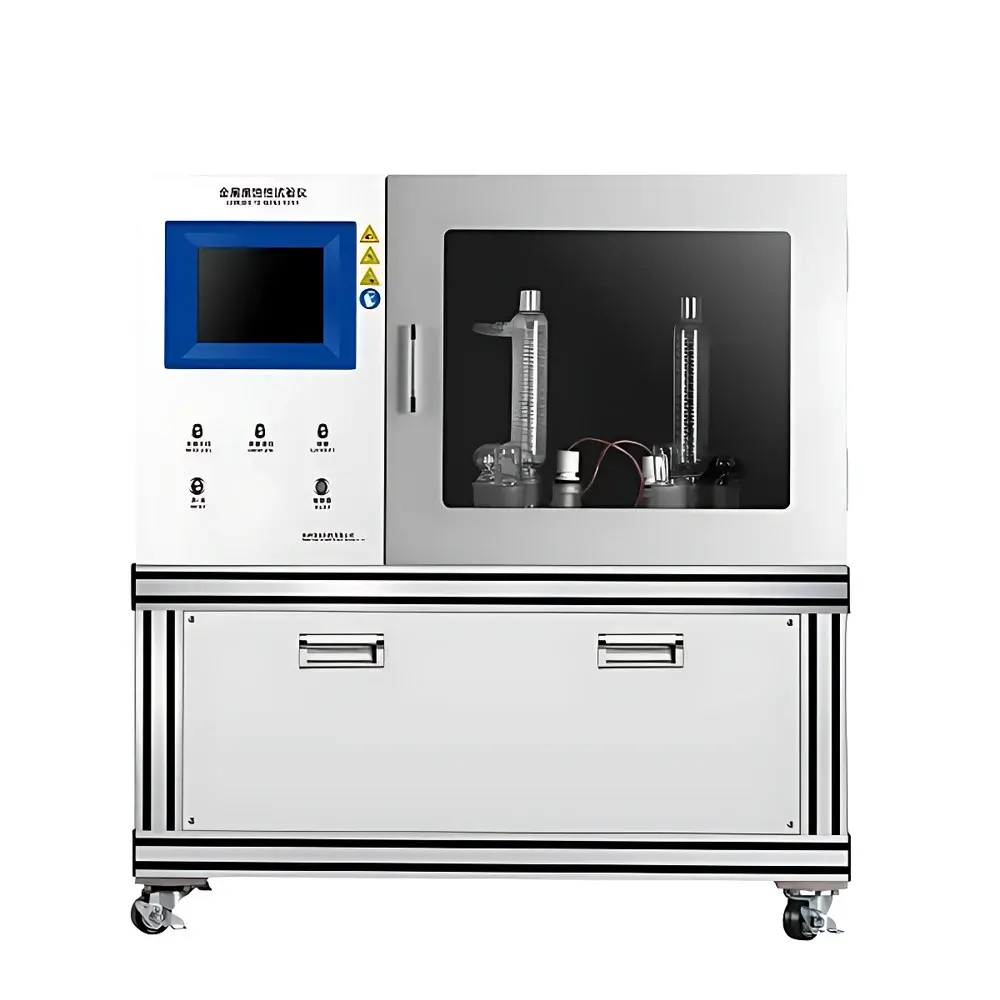
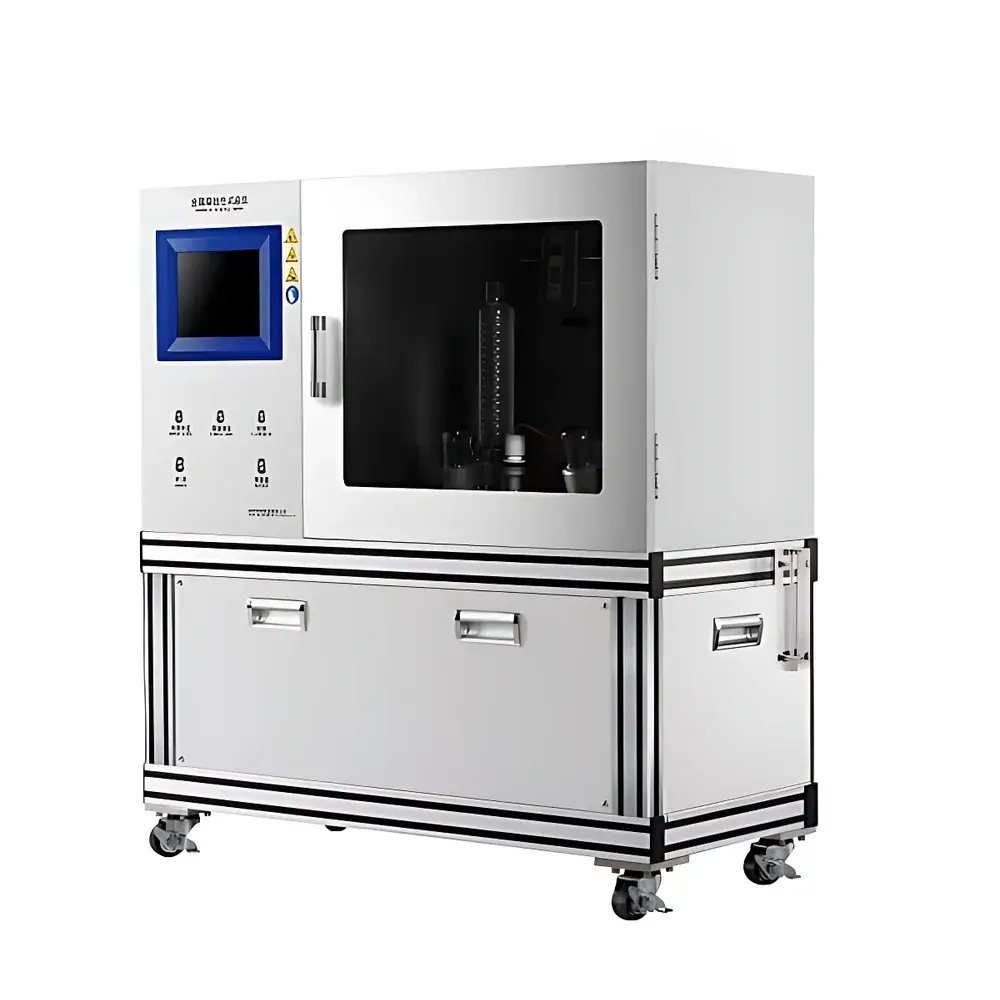
Young Instruments HWP04-10S Metal Corrosivity Tester
| Brand | Young Instruments |
|---|---|
| Origin | Zhejiang, China |
| Manufacturer Type | Manufacturer |
| Origin Category | Domestic |
| Model | HWP04-10S |
| Pricing | Upon Request |
| Operating Environment | (-5–45)°C, <95% RH |
| Channel Capacity | Standard 2 channels, customizable up to 8 |
| Temperature Control Range | Ambient to 98°C |
| Temperature Control Accuracy | ≤±0.5°C |
| Temperature Fluctuation | ≤±0.3°C |
| Temperature Uniformity | ±0.5°C |
| Heating Tube Material | SUS316 stainless steel |
| Bath Tank Material | Stainless steel |
| Timing Range | 0–35 days |
| Timing Accuracy | ±0.01 s |
| Time Display Resolution | 1 minute |
| Sample Vessel Volume | 3000 mL (effective volume: 2000 mL) |
Overview
The Young Instruments HWP04-10S Metal Corrosivity Tester is a fully automated, regulatory-compliant instrument engineered for the quantitative assessment of corrosive hazard in hazardous substances—specifically liquids and solids that may become liquid during transport. It operates on the principle of gravimetric and dimensional evaluation: standardized metal test specimens (typically low-carbon steel or aluminum alloy strips per UN TDG and GB/T 21621-2008) are immersed in the test substance under precisely controlled thermal and temporal conditions. After exposure, mass loss (mg/cm²) and penetration depth (mm) are measured to determine whether the substance meets the classification criteria for Class 8 corrosive substances (Packing Group III) under the United Nations Recommendations on the Transport of Dangerous Goods (UN Manual of Tests and Criteria, Section 37.4.1.1, Test C.1). The system integrates precision thermal regulation, real-time liquid-level monitoring, and autonomous operation over extended durations—up to 35 days—enabling unattended compliance testing in accordance with globally harmonized regulatory frameworks.
Key Features
- Embedded Windows CE operating system with industrial-grade 8-inch capacitive touchscreen interface for intuitive parameter configuration, live status visualization, and interactive diagnostics.
- Dual-channel standard configuration (expandable to eight independent test stations), each with dedicated temperature control, timing, and specimen monitoring—ideal for comparative or high-throughput screening studies.
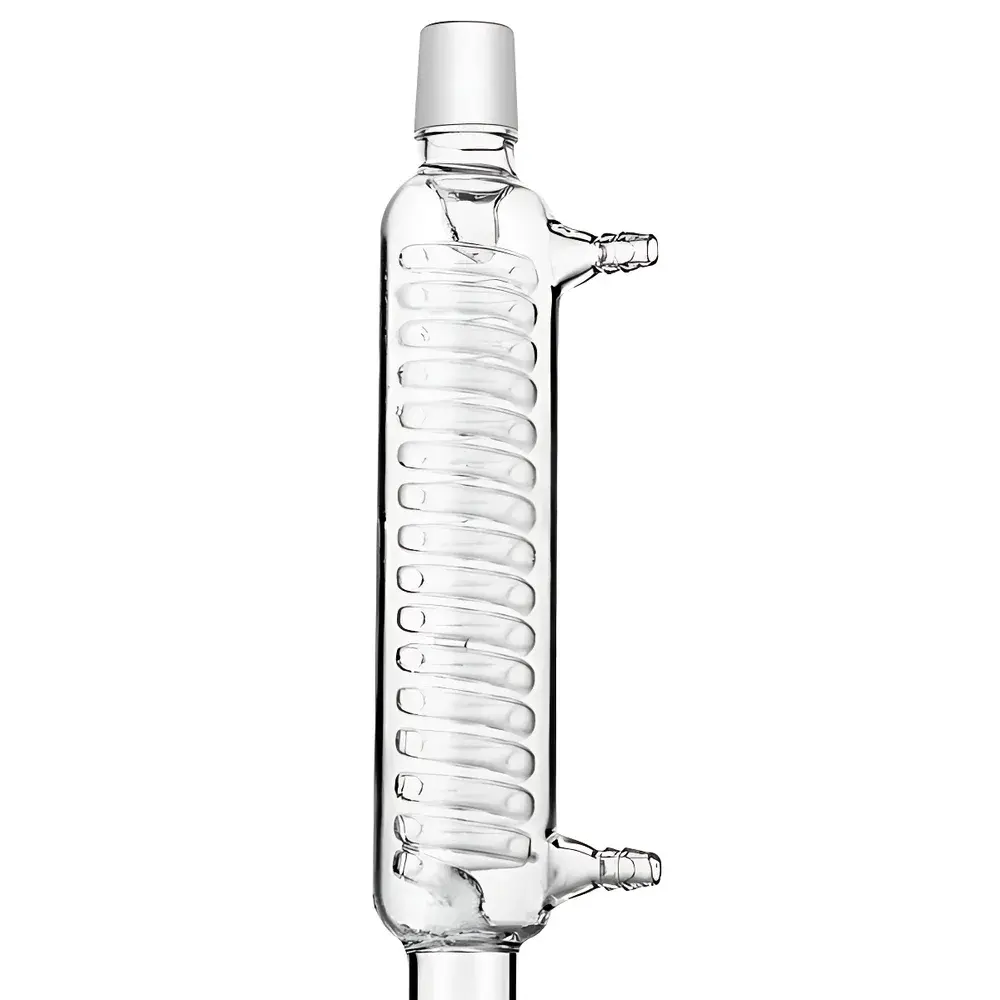
- High-stability water bath system featuring SUS316 U-shaped heating elements and internal spiral condenser coupled to an auxiliary water reservoir, minimizing volatile loss and ensuring consistent immersion conditions throughout prolonged tests.
- Automated water-level management: integrated ultrasonic level sensing triggers intelligent replenishment from a secondary reservoir, maintaining constant bath volume and thermal inertia without manual intervention.
- Thermal performance certified to ≤±0.5°C accuracy, ≤±0.3°C fluctuation, and ±0.5°C uniformity across the full working volume—validated per ISO/IEC 17025 traceable calibration protocols.
- Comprehensive safety architecture including real-time fault detection, audible/visual alarm activation, and automatic thermal shutdown upon abnormal sensor readings or fluid depletion.
- Extended-duration capability: supports uninterrupted operation for up to 35 days with second-level timing resolution (±0.01 s) and minute-level display granularity—fully compliant with long-term exposure requirements in UN Test C.1 and GB 5085.1-2007.
Sample Compatibility & Compliance
The HWP04-10S accommodates liquid samples and solids with melting points below 98°C—including molten salts, organic acids, alkaline solutions, agrochemical formulations, and waste streams—as defined in UN TDG Subsection 37.4.1.1. Specimen compatibility includes standardized 50 mm × 25 mm × 2 mm low-carbon steel strips (GB/T 21621-2008 Annex A) and alternative alloys per NY/T 1860.16-2010. The instrument satisfies technical validation requirements for regulatory submission under multiple internationally aligned standards: UN Manual of Tests and Criteria (Rev. 7, Section 37.4.1.1), GB/T 21621-2008, GB 5085.1-2007, and NY/T 1860.16-2010. Its design supports GLP-aligned data integrity through time-stamped event logging and non-modifiable audit trails—facilitating FDA 21 CFR Part 11 readiness when deployed with validated software extensions.
Software & Data Management
The embedded Windows CE platform provides native support for parameter setup (temperature setpoint, duration, channel assignment), real-time graphical monitoring (temperature vs. time, elapsed runtime), and structured data export via USB or Ethernet. All test records—including start/stop timestamps, thermal profiles, alarm events, and user-initiated actions—are stored in encrypted binary format with SHA-256 checksums. Exported reports conform to ASTM E2500-18-defined minimum metadata requirements: instrument ID, operator ID, calibration status, environmental logs, and raw measurement values. Optional PC-based software (sold separately) enables batch report generation, statistical comparison across test series, and direct integration with LIMS platforms via HL7 or CSV interfaces.
Applications
- Hazard classification of new chemical substances prior to transport or storage under UN TDG, ADR, IMDG Code, and IATA DGR regulations.
- Corrosivity screening of pesticide formulations per NY/T 1860.16 for packaging material compatibility assessment.
- Waste characterization for landfill disposal eligibility under China’s Hazardous Waste Identification Standards (GB 5085.x series).
- QC/QA verification of corrosion inhibitors in industrial coolants or process fluids.
- Research into degradation kinetics of metallic substrates exposed to aggressive electrolytes—supporting materials science and electrochemical corrosion studies.
FAQ
Does the HWP04-10S comply with UN Test C.1 as specified in the Manual of Tests and Criteria?
Yes—the instrument implements all mandatory procedural controls: precise temperature maintenance (ambient to 98°C), calibrated timing (±0.01 s), standardized specimen geometry and surface preparation, and automated exposure duration up to 35 days.
Can the system accommodate non-standard specimen geometries or alternative metals?
While optimized for GB/T 21621-2008 steel strips, the sample holders are mechanically adjustable; users may install custom specimens provided they fit within the 2000 mL effective bath volume and do not obstruct thermal circulation or level sensing.
Is remote monitoring or network connectivity supported?
The base unit features Ethernet and USB ports; remote access and centralized fleet management require optional software licensing and IT infrastructure alignment per organizational cybersecurity policies.
What calibration documentation is supplied with the instrument?
Each unit ships with a factory-issued calibration certificate traceable to CNAS-accredited standards, covering temperature sensors, timer module, and level detection circuitry—valid for 12 months under normal operating conditions.
How is data integrity ensured during long-duration tests?
All critical parameters are logged at ≥1 Hz intervals to non-volatile memory; power-loss recovery preserves timestamp continuity, and exported files include digital signatures to prevent post-hoc modification.




