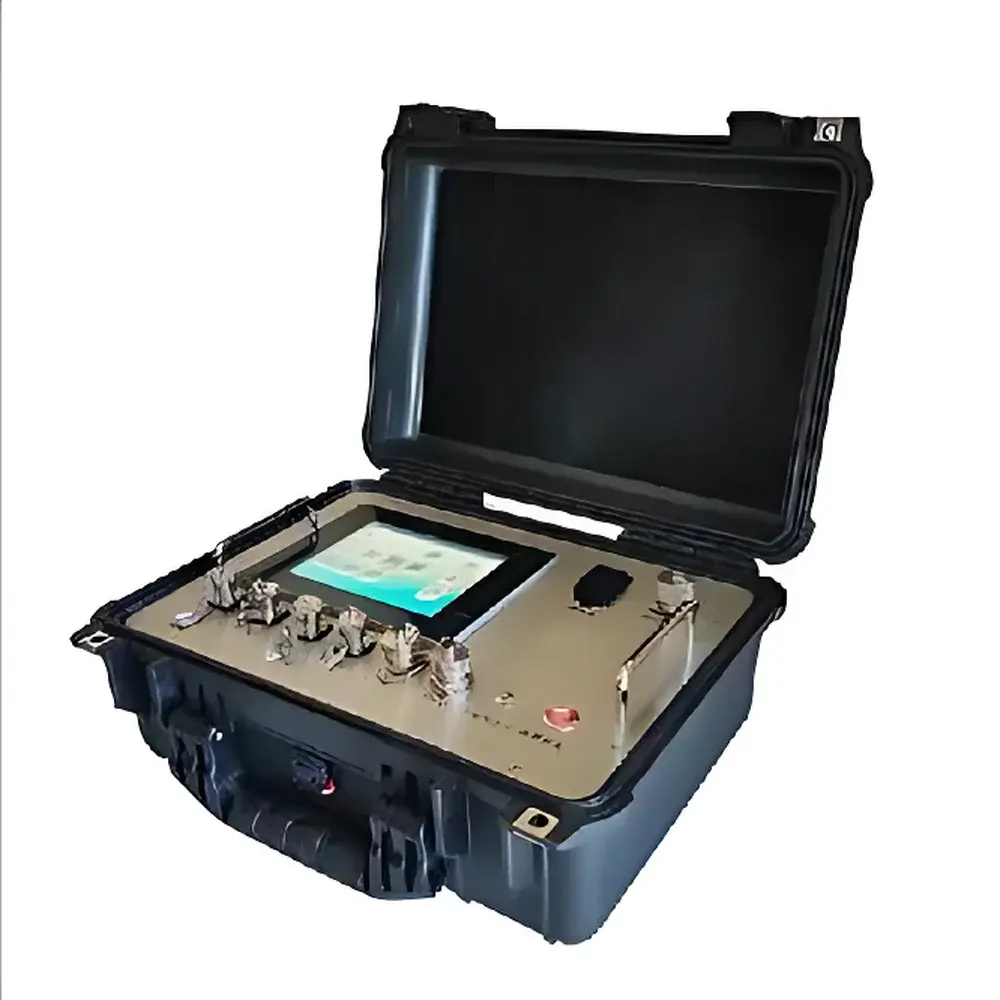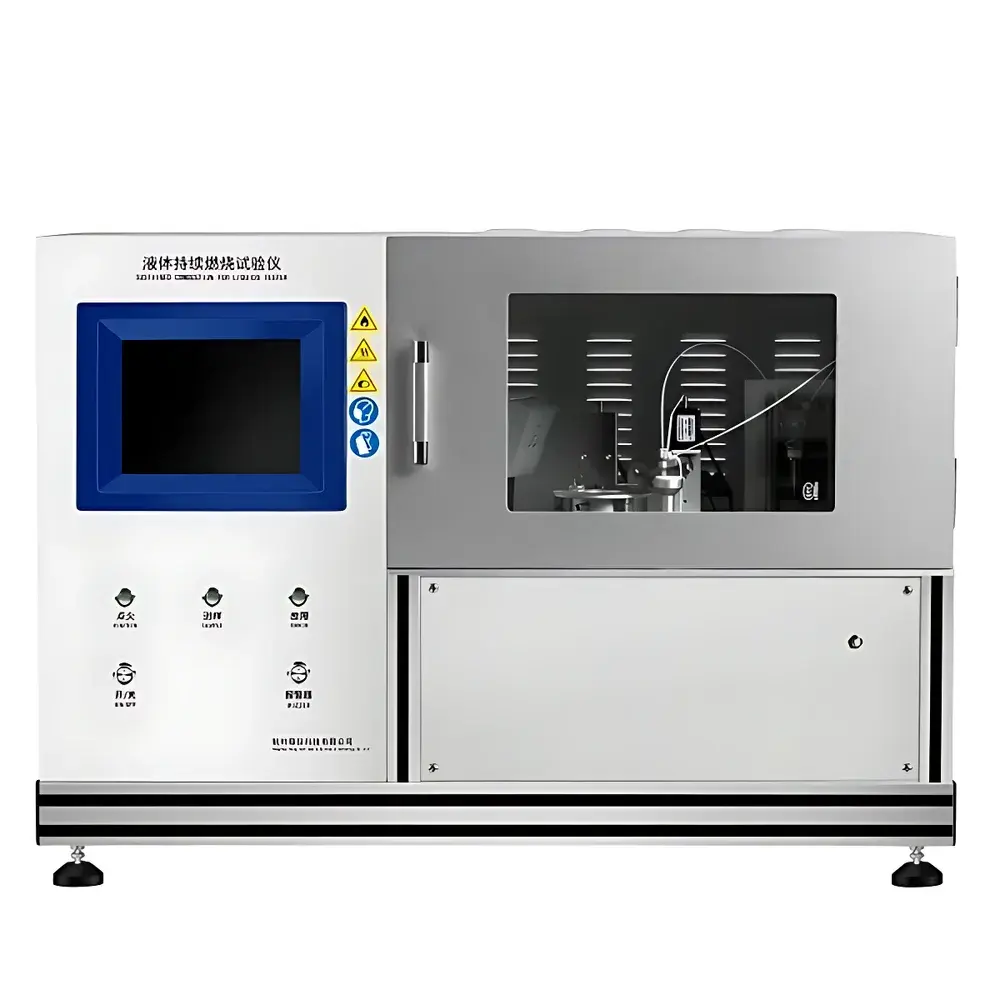
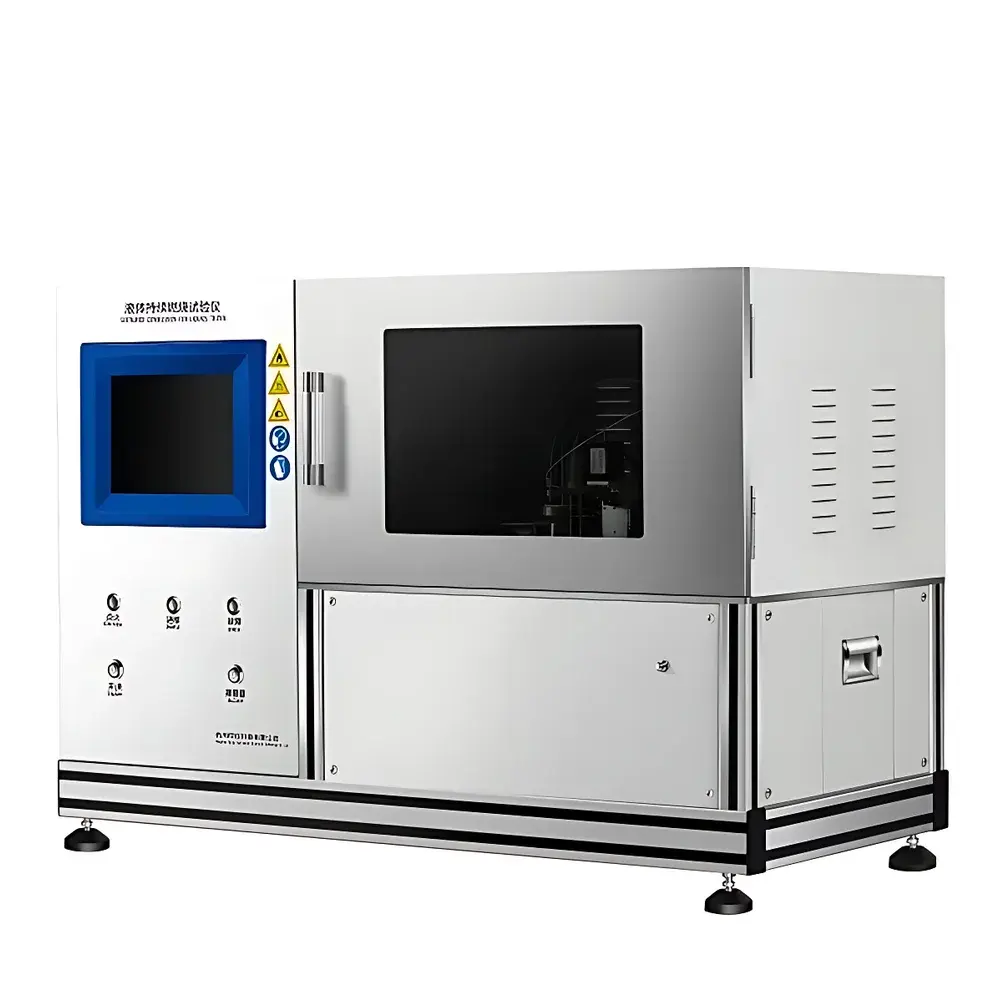
Young Instruments HWP08-10S Continuous Combustibility Tester for Flammable Liquids
| Brand | Young Instruments |
|---|---|
| Origin | Zhejiang, China |
| Manufacturer Type | Direct Manufacturer |
| Origin Category | Domestic (China) |
| Model | HWP08-10S |
| Pricing | Upon Request |
| Operating Environment | (-5 to 45) °C, <95% RH |
| Standard Test Temperatures | 60.5 °C / 75 °C |
| Temperature Control Range | Customizable |
| Temperature Control Accuracy | ±0.5 °C |
| Ambient Atmospheric Pressure Measurement Range | (0–110) kPa |
| Ambient Atmospheric Pressure Measurement Accuracy | ±0.25 kPa |
| Ignition Timing Options | 30 s / 60 s |
| Sample Volume | (1–3) mL |
| Sample Delivery Accuracy | ±0.05 mL |
| Timing Range | (0–999) s |
| Timing Resolution | 0.1 s |
| Timing Accuracy | ±0.01 s |
| Ignition Method | Spark Plug |
| Sample Vial Capacity | 20 mL |
Overview
The Young Instruments HWP08-10S Continuous Combustibility Tester is an automated benchtop instrument engineered for the standardized determination of sustained combustibility in liquid substances under controlled thermal and ignition conditions. It operates on the principle of thermal exposure followed by controlled flame application—measuring whether a liquid sample sustains combustion for a defined duration after initial ignition. This test method directly implements the physical criterion for classification as a Class 3 flammable liquid under the UN Recommendations on the Transport of Dangerous Goods (Manual of Tests and Criteria, Section 32.5.2, Test L.2), where sustained burning for ≥5 seconds constitutes a positive result. The instrument is designed exclusively for liquids that remain homogenous at ambient temperature—i.e., without crystallization, phase separation, or precipitation—and is not intended for suspensions, emulsions, or viscous non-flowing materials.
Key Features
- Embedded Windows CE operating system with real-time process monitoring via an 8-inch capacitive touchscreen interface;
- Triple operational mode architecture: Standard Mode (pre-configured per GB/T 21622-2008, UN Test L.2, GAT 536, and GB 5085.4), Custom Mode (user-defined temperature, timing, and ignition parameters), and Cleaning Mode (automated solvent flush sequence);
- Integrated environmental compensation: simultaneous measurement of ambient temperature and atmospheric pressure (0–110 kPa, ±0.25 kPa accuracy) to dynamically adjust thermal setpoints and ensure thermodynamic consistency across geographic and seasonal variations;
- Precision volumetric dispensing module with ±0.05 mL accuracy over the 1–3 mL range, utilizing corrosion-resistant fluidic pathways compatible with common organic solvents;
- Optical flame detection system based on high-sensitivity photodiode array, capable of distinguishing sustained luminous combustion from transient flash or spark-induced glow with sub-100 ms response latency;
- Automated spark plug ignition with positional repeatability ≤0.3 mm and synchronized start-of-timing trigger within ±0.01 s;
- Fault diagnostics with multi-level error logging, visual LED indicators, and audible alerts for anomalies including pressure deviation, temperature overshoot, sample delivery failure, or flame detection timeout;
- Aluminum alloy sample tray (standard), with optional stainless steel or quartz variants available for high-purity or aggressive chemical applications;
- Full audit trail capability: all parameter changes, test initiations, result flags, and system events are timestamped and stored internally with ISO/IEC 17025-aligned metadata tagging.
Sample Compatibility & Compliance
The HWP08-10S is validated for use with clear, low-viscosity liquids exhibiting Newtonian flow behavior at test temperatures (e.g., hydrocarbons, alcohols, esters, ketones). It excludes samples containing suspended solids, polymer gels, or water-miscible formulations prone to steam explosion or micro-boiling artifacts. Regulatory alignment includes full conformance with:
- UN Manual of Tests and Criteria, Rev. 7, Section 32.5.2 (Test L.2);
- GB/T 21622–2008 “Dangerous Goods – Test Method for Sustained Combustibility of Flammable Liquids”;
- GAT 536–2015 “Fire Hazard Classification and Test Methods for Flammable and Explosive Dangerous Goods”;
- GB 5085.4–2007 “Identification Standards for Hazardous Waste – Ignitability Identification”;
- ASTM D4291–22 “Standard Test Method for Determining Sustained Combustibility of Liquids” (technically equivalent protocol);
- ISO 13736:2021 “Reaction to fire tests – Ignitability of liquids by hot surface” (for comparative assessment).
All test reports generated include traceable references to clause numbers, calibration certificates for integrated pressure and temperature sensors (NIST-traceable), and environmental condition logs required for GLP-compliant submissions.
Software & Data Management
The embedded software supports configurable user roles (Operator, Supervisor, Administrator) with password-protected access levels. Data export is available in CSV and PDF formats, both retaining original timestamps, sensor raw values, and pass/fail logic flags. Audit trails meet FDA 21 CFR Part 11 requirements for electronic records—including operator ID, action type, timestamp, and reason-for-change fields where applicable. Internal storage retains ≥10,000 test records with automatic rollover and USB backup functionality. Remote firmware updates are supported via encrypted OTA packages verified through SHA-256 signature validation.
Applications
- Classification of industrial solvents prior to transport under ADR/RID/IMDG Code Chapter 2.3;
- Quality control release testing for petrochemical feedstocks and refinery intermediates;
- Regulatory submission support for SDS Section 9 (Physical and Chemical Properties) and Section 14 (Transport Information);
- Research into flame inhibition mechanisms using halogenated or phosphorus-based additives;
- Verification of batch-to-batch consistency in formulated cleaning agents and coating thinners;
- Due diligence screening for waste stream characterization under RCRA and EU Waste Framework Directive Annex III criteria.
FAQ
What liquids are excluded from testing on the HWP08-10S?
Liquids exhibiting crystallization, cloud point formation, or phase separation below 75 °C; suspensions, colloidal dispersions, or highly viscous fluids (>500 mPa·s at 60.5 °C) are not suitable.
Is external calibration required before first use?
Yes—initial calibration of the integrated pressure transducer and PT100 temperature probe must be performed using NIST-traceable reference standards; certificate documentation is provided with shipment.
Can the instrument operate unattended overnight?
No—per ISO/IEC 17025 and UN Test L.2 procedural requirements, operator presence is mandatory during ignition and flame observation phases; automated shutdown occurs after 999 s regardless of outcome.
Does the system support network connectivity for LIMS integration?
Optional Ethernet port available (HWP08-10S-NET variant) with HL7 v2.5 and ASTM E1384-compliant data streaming protocols.
What maintenance intervals are recommended?
Spark plug replacement every 500 tests; optical window cleaning weekly; full fluidic path purge quarterly; annual sensor recalibration recommended.