
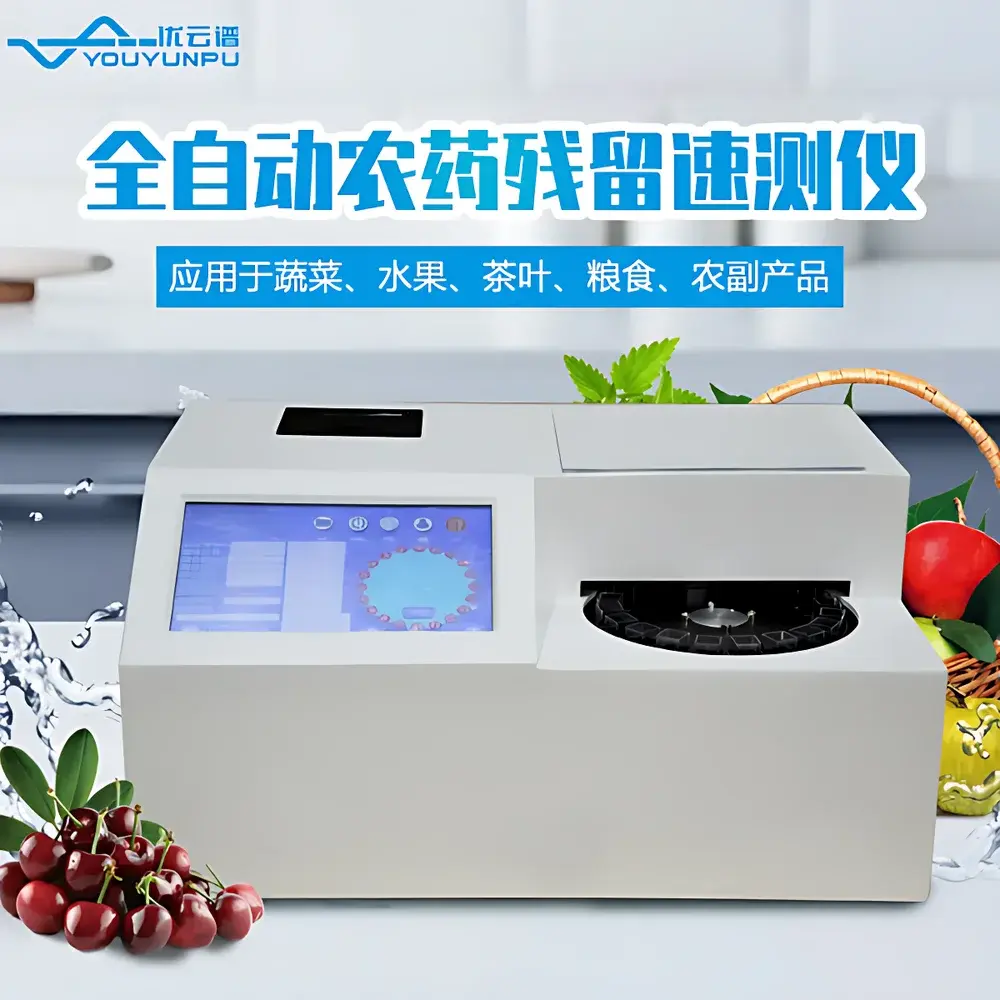
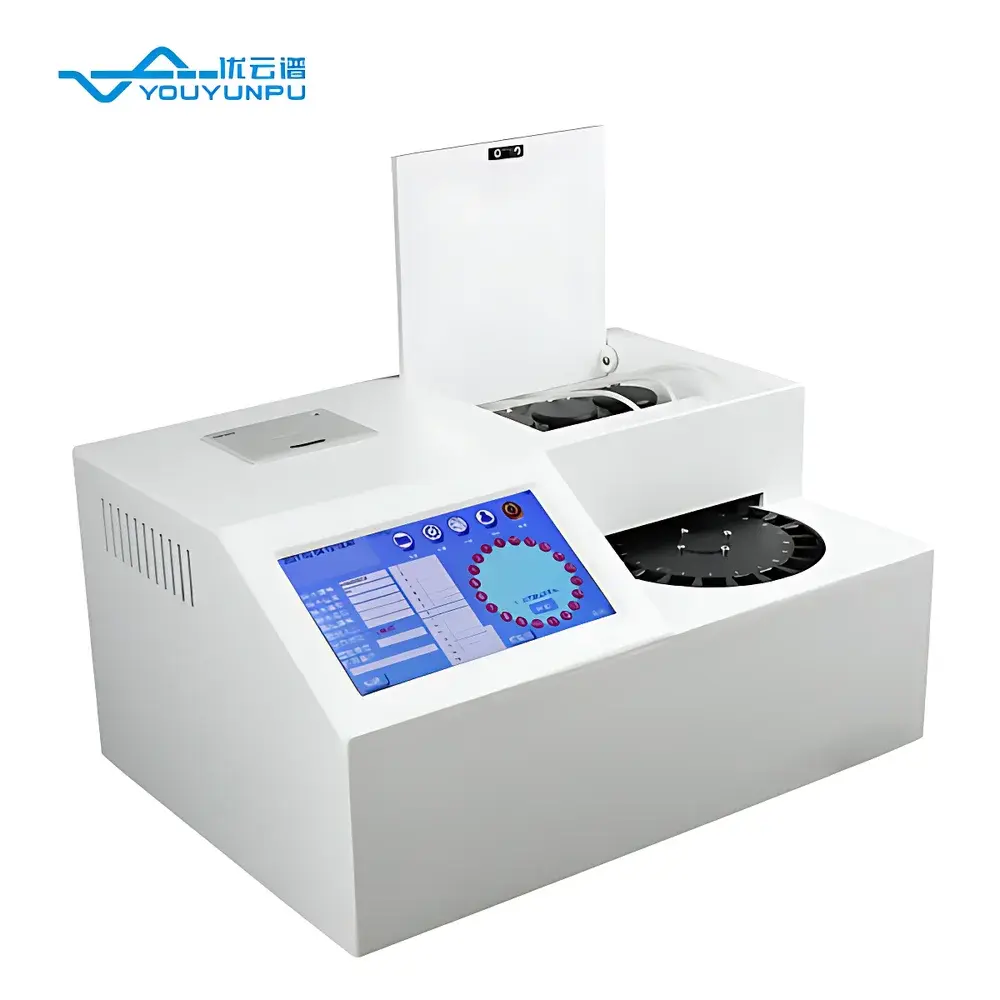
Youyunpu YP-QN20 Fully Automated Pesticide Residue Analyzer
| Brand | Youyunpu |
|---|---|
| Origin | Shandong, China |
| Manufacturer Type | Direct Manufacturer |
| Country of Origin | China |
| Model | YP-QN20 |
| Detection Method | Enzyme Inhibition Rate Colorimetry (Spectrophotometry) |
| Measurement Range | 0–100% inhibition rate |
| Number of Detection Channels | 20 |
| Measurement Error | ≤10% |
| Limit of Detection | 5% inhibition rate |
| Wavelength | 410 nm |
| Reagent Positions | 3 |
| Reagent Probes | 6 (3 spare) |
| Reaction Temperature | 37 °C |
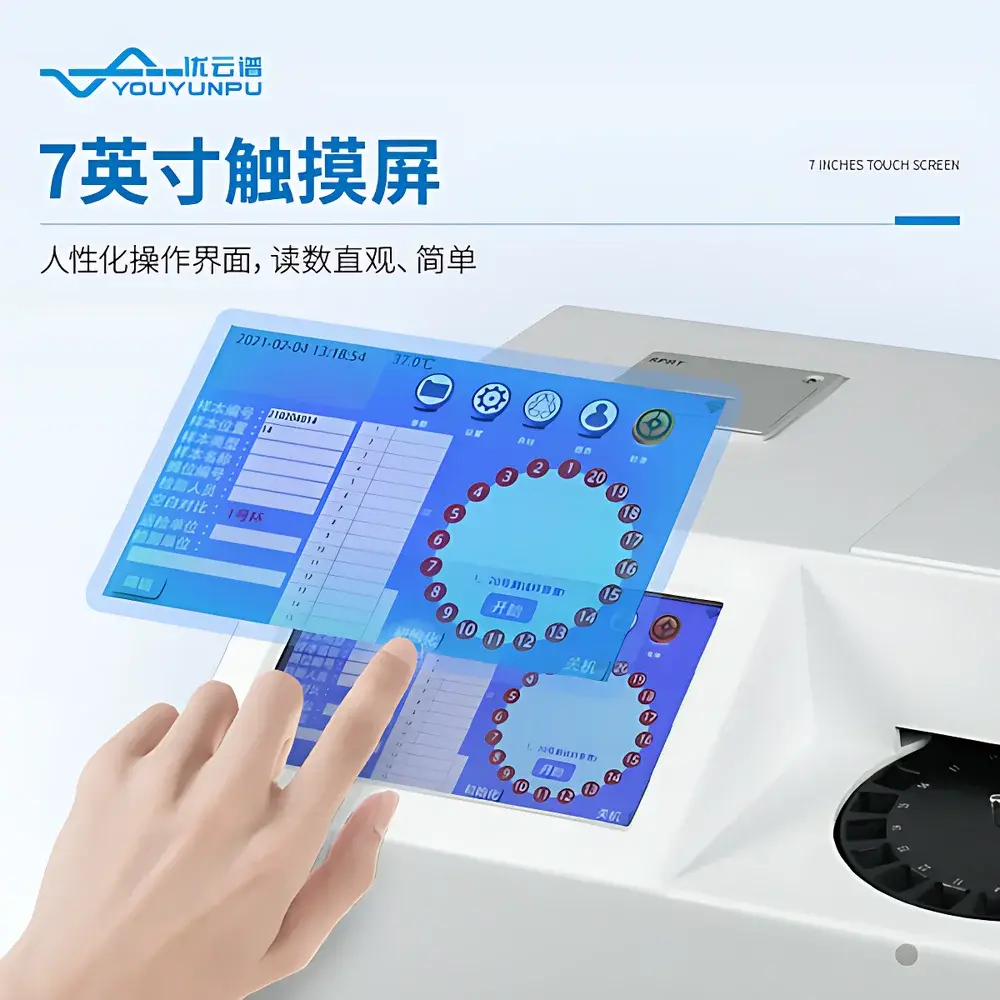
| Touchscreen | 7-inch capacitive touchscreen |
| Cuvette Capacity | 0–4.5 mL |
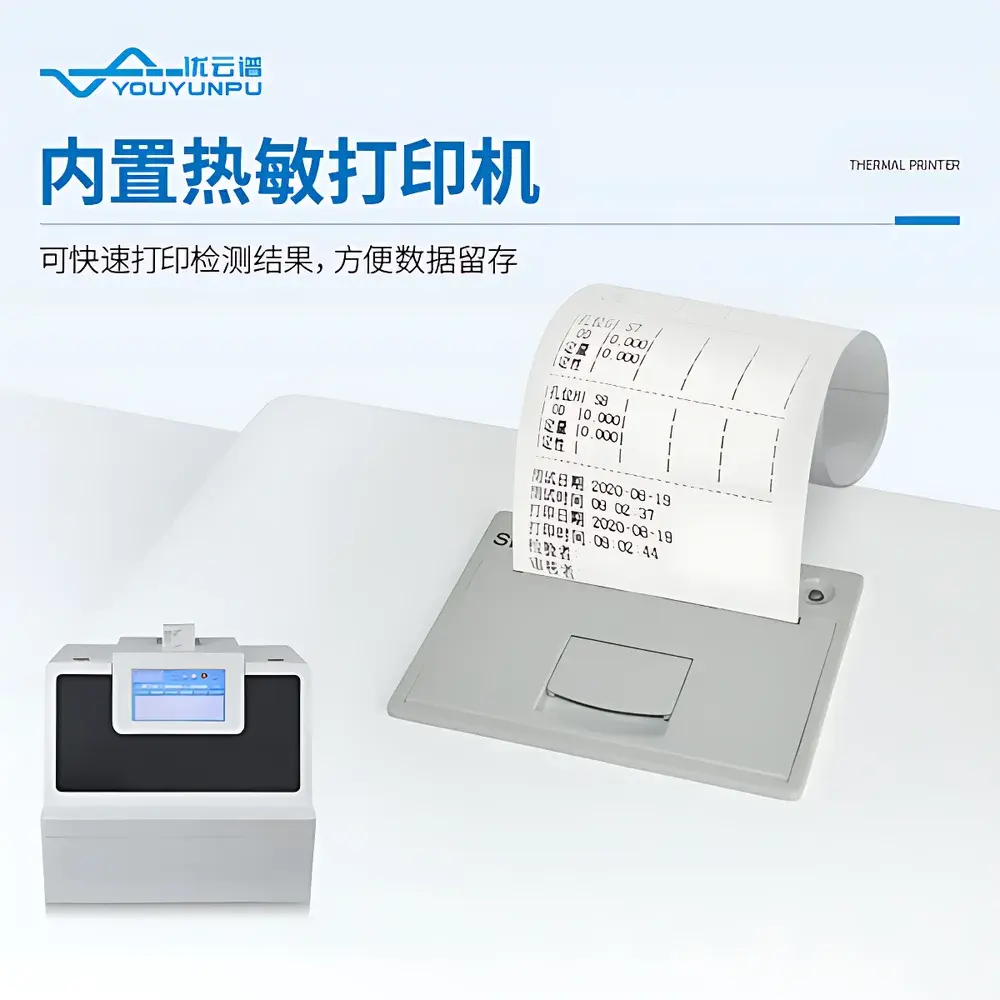
| Integrated Thermal Printer | Yes |
| Data Storage Capacity | 120,000 records |
| Connectivity | USB port + RJ45 Ethernet interface |
| Dimensions | 410 × 290 × 202 mm |
| Weight | ~6 kg |
Overview
The Youyunpu YP-QN20 Fully Automated Pesticide Residue Analyzer is an engineered solution for high-throughput screening of organophosphorus and carbamate pesticide residues in food matrices. It operates on the internationally recognized enzyme inhibition principle—based on acetylcholinesterase (AChE) activity suppression—quantified via spectrophotometric measurement at 410 nm. This method is standardized under GB/T 5009.199–2003 (China National Standard) and NY/T 448–2001 (Agricultural Industry Standard), aligning with global regulatory frameworks for rapid food safety assessment. The instrument integrates precise fluid handling, temperature-controlled incubation (37 °C ± 0.5 °C), and real-time optical detection to deliver reproducible inhibition rate measurements across solid and liquid samples—including fresh produce, tea leaves, agricultural commodities, and processed food extracts.
Key Features
- 20 independent optical detection channels enable parallel analysis of up to 20 samples per run, significantly reducing batch processing time.
- Automated reagent dispensing system with six precision probes (three active, three hot-spare) ensures consistent volume delivery (±1.5% CV) and minimizes manual intervention.
- Integrated 37 °C thermostatic reaction block maintains enzymatic reaction kinetics within ISO/IEC 17025–recommended thermal stability tolerances.
- Stable cold-light source (LED-based, 410 nm) eliminates lamp drift and thermal noise, supporting long-term photometric accuracy (absorbance repeatability <0.003 AU).
- Self-diagnostic sample placement verification detects misaligned or incomplete cuvette insertion and alerts operators before assay initiation.
- Onboard automatic cleaning cycle flushes reagent pathways with deionized water between runs, preventing cross-contamination and carryover (validated per AOAC 2012.01 rinse efficiency protocol).
- 7-inch industrial-grade capacitive touchscreen provides intuitive workflow navigation, calibration management, and real-time status monitoring—including temperature, probe position, and absorbance trace visualization.
- Built-in thermal printer outputs GLP-compliant hard copies with timestamp, operator ID, sample ID, inhibition rate, and pass/fail flag per test.
Sample Compatibility & Compliance
The YP-QN20 accommodates homogenized extracts from fruits, vegetables, leafy greens, herbs, and tea—prepared using standardized extraction protocols (e.g., QuEChERS pre-treatment or aqueous acetone dilution). Its 0–4.5 mL cuvette format supports both direct supernatant loading and diluted extract analysis. Regulatory alignment includes conformance with Chinese GB standards, USDA-FDA guidance on rapid screening tools, and EU Regulation (EC) No 396/2005 Annex IV residue screening thresholds. While not a confirmatory method, it serves as a validated prescreening tool compliant with ISO/IEC 17025 quality systems when operated within documented SOPs and routine performance verification (e.g., daily blank and control checks).
Software & Data Management
The embedded firmware supports audit-trail-enabled data logging: each record stores sample ID, test date/time, operator code, raw absorbance values, calculated inhibition rate (%), pass/fail determination (vs. 50% cutoff), and instrument environmental logs. Data retention capacity exceeds 120,000 entries with cyclic overwrite protection. Export options include CSV via USB mass storage or network transfer (TCP/IP) to LIMS or central QA databases. Optional PC software (Windows 10/11 compatible) enables trend analysis, QC charting (X-bar/R charts), report generation (PDF/Excel), and electronic signature support—facilitating FDA 21 CFR Part 11 readiness when deployed with user authentication and change-control workflows.
Applications
- Routine surveillance in municipal food safety monitoring centers and provincial CDC laboratories.
- On-site testing at wholesale markets, farm gate collection points, and supermarket QA labs.
- Mobile food safety inspection units requiring battery-independent, low-power (<30 W), compact instrumentation.
- Tea estate quality assurance programs validating post-harvest pesticide compliance prior to export shipment.
- Academic research on pesticide degradation kinetics and matrix interference effects in plant tissues.
FAQ
What types of pesticides does the YP-QN20 detect?
It quantifies inhibition caused by organophosphorus (e.g., chlorpyrifos, malathion) and carbamate (e.g., carbaryl, methomyl) compounds—not neonicotinoids, pyrethroids, or glyphosate.
Is calibration required before each use?
Yes: daily calibration using blank buffer and positive control (e.g., 50% inhibition standard) is mandatory per GB/T 5009.199–2003 Annex B to ensure measurement traceability.
Can the instrument be integrated into an existing LIMS?
Yes: structured CSV exports and Ethernet connectivity support automated ingestion into common LIMS platforms via scheduled polling or API-triggered transfers.
How is reagent stability managed during extended operation?
The 3-position reagent carousel maintains refrigerated storage (optional external cooler integration); onboard temperature sensors log ambient and reagent block conditions for QC review.
Does the system meet GLP documentation requirements?
When used with enabled audit trail, electronic signatures, and version-controlled SOPs, it satisfies core GLP elements for non-GLP screening labs; full GLP compliance requires site-specific validation per OECD Principles.





