
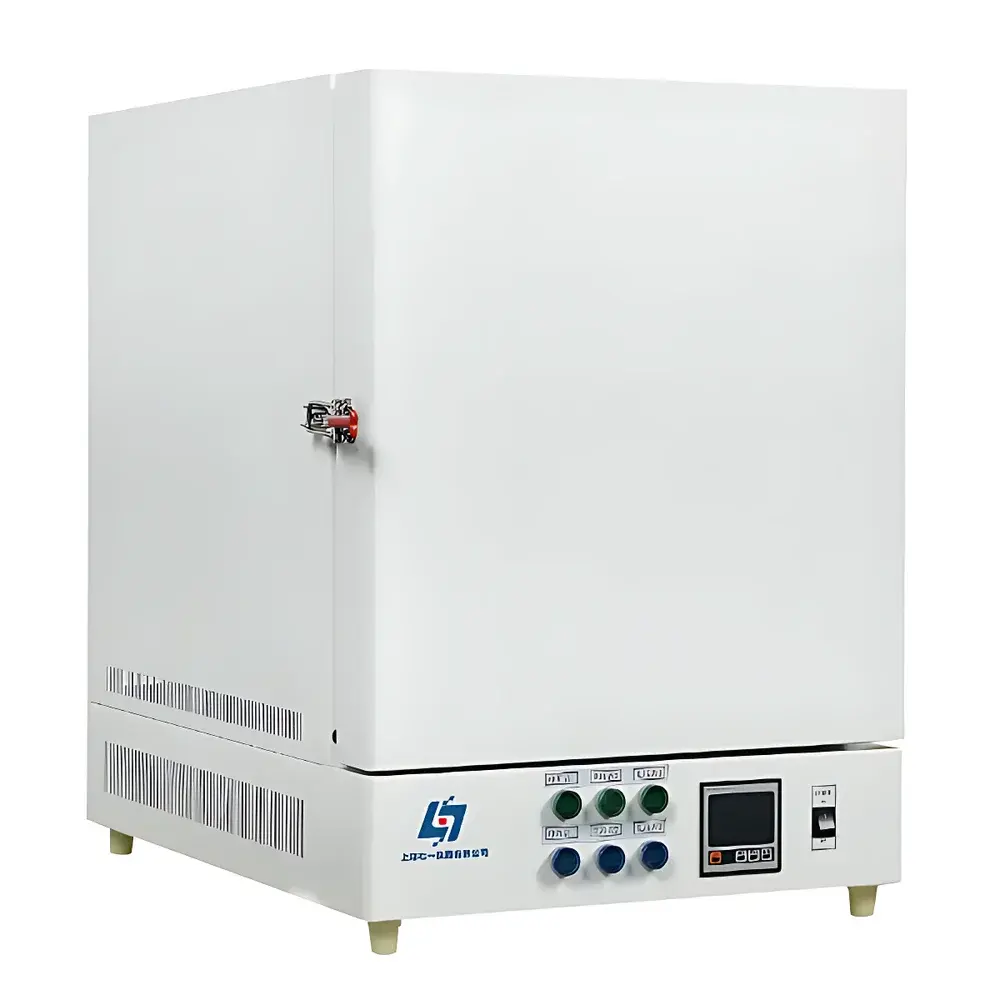
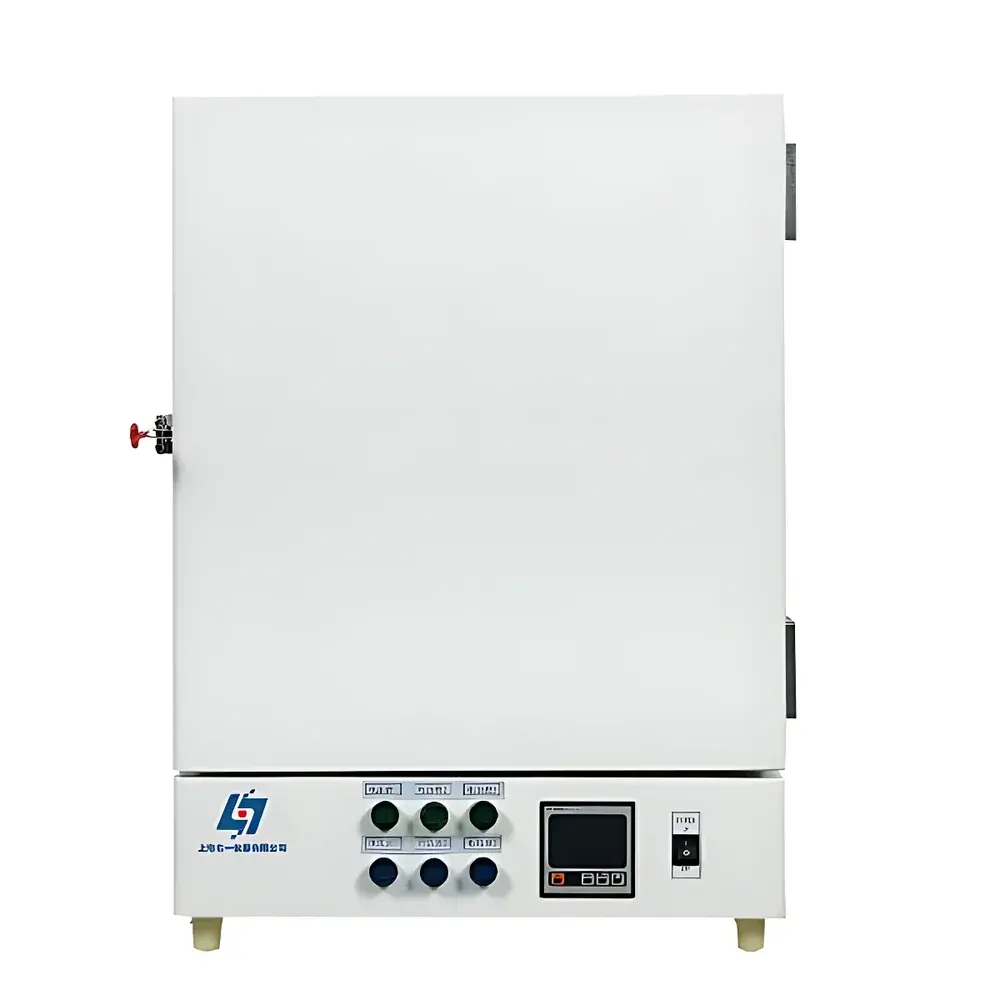
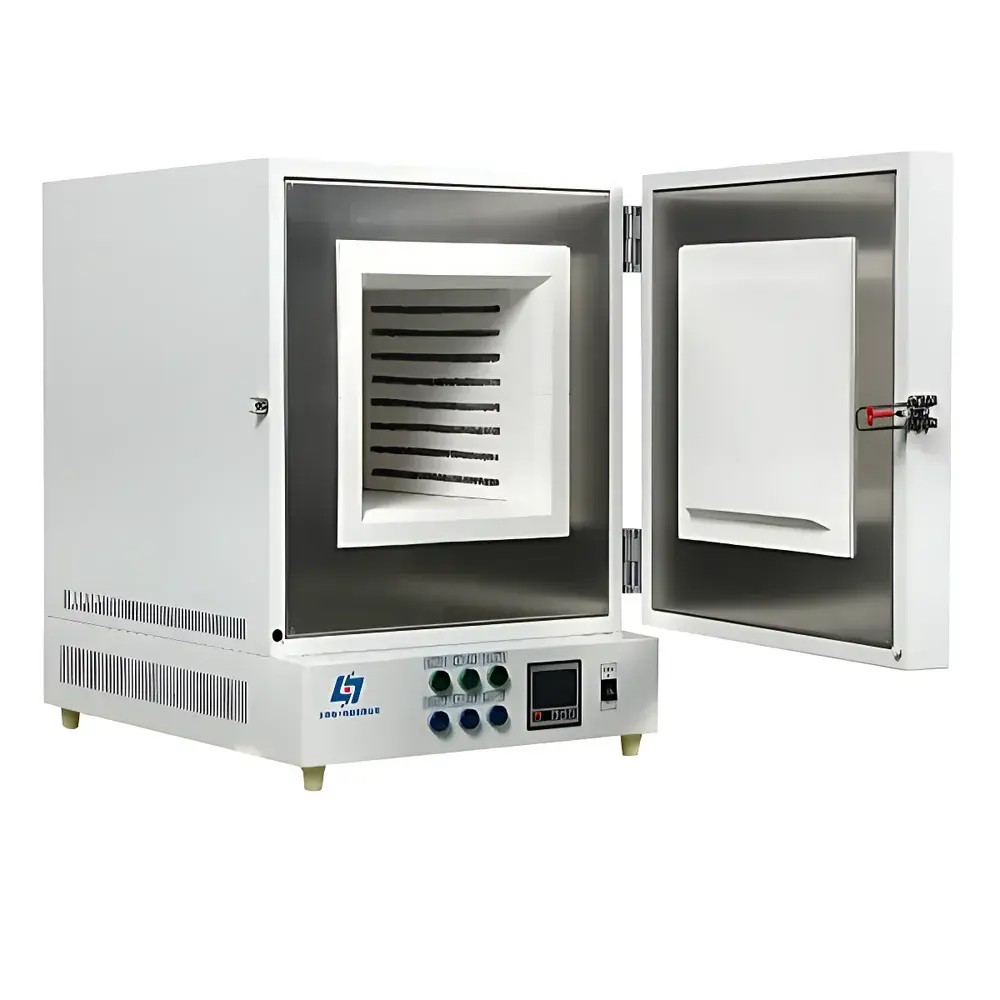
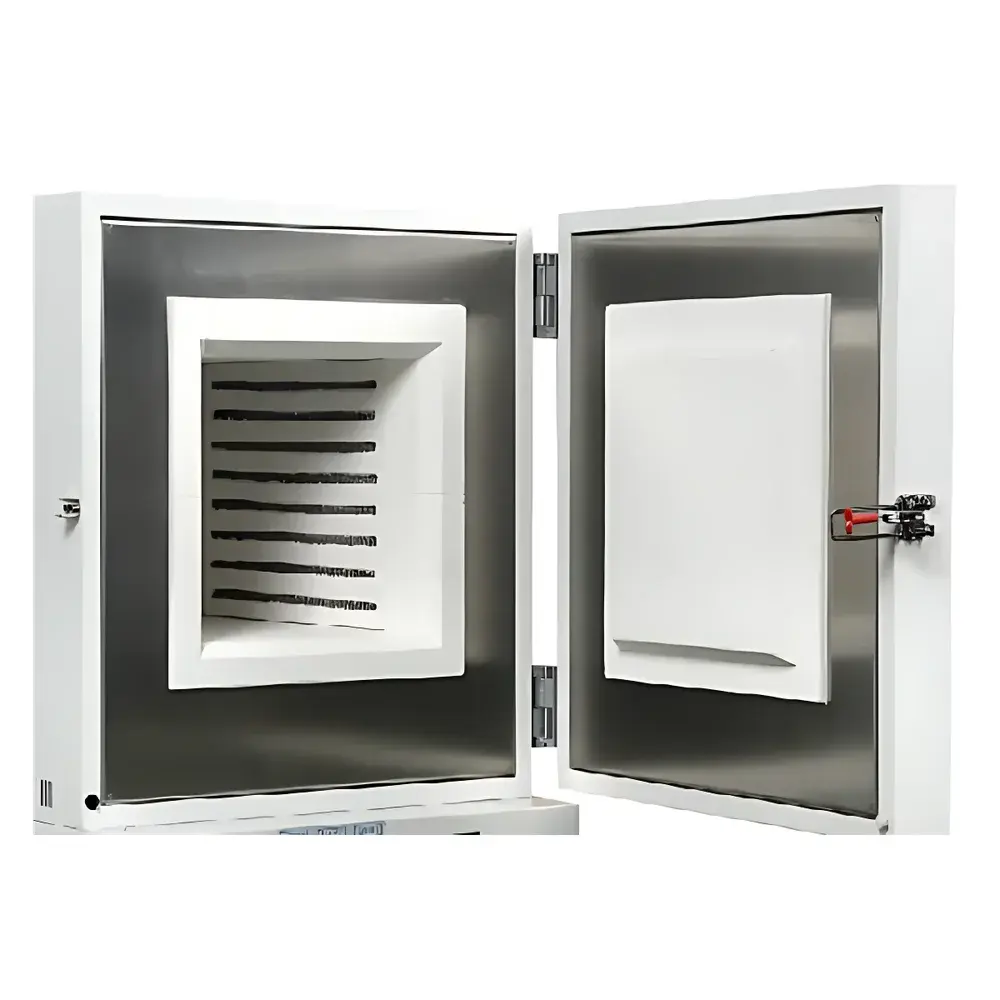
Yoyi SX2-16-12A Ceramic Fiber Muffle Furnace (Box-Type Resistance Furnace), 1200 °C, 80 L
| Brand | Yoyi |
|---|---|
| Origin | Shanghai, China |
| Manufacturer Type | Direct Manufacturer |
| Instrument Type | Box-Type Muffle Furnace |
| Maximum Temperature | 1200 °C |
| Temperature Control Accuracy | ±1 °C |
| Rated Power | 16 kW |
| Heating Element | Ni-Cr Alloy Wire (Mo-doped for 1200 °C stability) |
| Internal Chamber Dimensions | 400 × 500 × 400 mm |
| Nominal Volume | 80 L |
| Control System | Microprocessor-Based PID Controller with LCD Interface |
| Safety Protections | Overcurrent, Overvoltage, Overtemperature, Leakage Current, and Short-Circuit Protection |
| Insulation | Dual-Layer Ceramic Fiber Board (Hot Face + Structural Layer) |
| Surface Temperature at 1000 °C Hold | ≤50 °C (measured after 1 h stabilization) |
Overview
The Yoyi SX2-16-12A is a high-performance ceramic fiber box-type muffle furnace engineered for precision thermal processing in research laboratories, materials science facilities, and industrial quality control environments. Operating on resistive heating principles via Mo-doped Ni-Cr alloy wire elements, it delivers stable, uniform temperature fields up to 1200 °C within a 80 L working chamber. Its core architecture leverages low-density, high-purity alumina-silica ceramic fiber insulation—offering exceptional thermal efficiency, rapid thermal response, and minimal heat loss. Unlike traditional refractory brick furnaces, this design achieves typical energy savings of ~60% under comparable duty cycles, while reducing structural mass by over 50%. The furnace complies with fundamental safety and electromagnetic compatibility requirements per IEC 61000-6-3 (EMI) and IEC 61000-6-2 (immunity), and supports integration into GLP-compliant workflows through configurable data logging and alarm traceability.
Key Features
- Advanced ceramic fiber hot-face chamber (density: 128 kg/m³, purity >96% Al₂O₃ + SiO₂) providing thermal conductivity <0.1 W/(m·K) at 1000 °C
- Dual-layer insulation system: primary hot-face fiber board backed by structural ceramic fiber blanket, minimizing radial heat flux and enabling surface temperatures ≤50 °C during extended 1000 °C operation
- Microprocessor-driven PID temperature controller with 0.1 °C setpoint resolution, auto-tuning capability, and programmable ramp/soak profiles (up to 30 segments)
- LCD graphical interface displaying real-time chamber temperature, setpoint, elapsed time, remaining hold time, and active alarm status—all simultaneously on a single screen
- Comprehensive electrical safety architecture including dual independent overtemperature cutoffs (mechanical bimetallic + electronic thermocouple-based), ground-fault detection, and automatic power cut-off upon door opening
- Robust cold-rolled steel enclosure with phosphate conversion coating and epoxy-polyester electrostatic finish (film thickness ≥75 µm), rated IP20 for indoor laboratory use
- Power recovery function preserving all active parameters—including ramp rates, soak durations, and alarm thresholds—after grid interruption or system reset
Sample Compatibility & Compliance
The SX2-16-12A accommodates a broad range of sample forms and crucible materials, including alumina, quartz, silicon carbide, and platinum-rhodium alloys (up to 1200 °C continuous). It is routinely deployed for ASTM C865 (sintering shrinkage), ISO 11468 (ceramic phase transformation), and USP heavy metal residue ashing protocols. While not certified to UL 746C or EN 61000-6-4 out-of-the-box, its electrical design adheres to the essential safety principles referenced in those standards. For regulated environments, optional RS485 Modbus RTU communication enables audit-ready temperature logging aligned with FDA 21 CFR Part 11 requirements when paired with validated third-party SCADA software.
Software & Data Management
The integrated controller supports local data retention of up to 100 complete thermal cycles, each storing timestamped temperature vs. time records at 1-second intervals. Optional RS485 interface (available as add-on module) permits bidirectional communication with host PCs running Windows-based configuration utilities. Exported CSV files include columns for absolute timestamp (ISO 8601), measured temperature (°C), setpoint (°C), power output (%), and event flags (e.g., “RAMP”, “SOAK”, “ALARM_OVERTEMP”). No cloud connectivity or proprietary runtime dependencies are required—data remains fully accessible via standard spreadsheet applications. Firmware updates are performed via USB flash drive using signed binary packages verified by SHA-256 checksum.
Applications
- Controlled-atmosphere ashing of biological, pharmaceutical, and environmental samples per EPA Method 3050B and ISO 11885
- Sintering of advanced ceramics (zirconia, alumina, silicon nitride) and powder metallurgy compacts under air or inert gas purge
- Thermal gravimetric analysis (TGA) pre-conditioning and residue quantification in QC labs
- Heat treatment of metallic components: annealing of stainless steels, stress-relieving of tool steels, and tempering of hardened alloys
- Crystallization and devitrification studies of glass-ceramic systems requiring precise nucleation hold profiles
- Preparation of reference materials for XRF and ICP-OES calibration via high-temperature fusion
FAQ
What is the recommended maintenance interval for the heating elements?
Ni-Cr alloy heating wires should be visually inspected every 200 operational hours; replacement is advised after 1,500–2,000 cumulative hours at ≥1100 °C or upon visible sagging, oxidation spalling, or resistance drift exceeding ±5% from nominal.
Can this furnace operate under nitrogen or argon atmosphere?
Yes—provided an external gas purge system with flowmeter and pressure regulator is installed; the furnace includes two 12-mm diameter atmospheric ports (top and rear) compatible with standard Swagelok fittings.
Is the temperature uniformity specification documented per ASTM E220?
Uniformity testing per ASTM E220-22 was conducted at 1000 °C in empty chamber: ±3.5 °C across 80% of working volume (defined as central 320 × 400 × 320 mm zone). Full report available upon request.
Does the controller support multi-stage programming without external software?
Yes—the built-in interface allows creation, storage, and execution of up to 30-segment programs directly via front-panel navigation; no PC connection required.
What thermocouple type is used for internal sensing?
Type K (Chromel–Alumel) mineral-insulated thermocouple, calibrated to NIST-traceable standards, mounted at geometric center of chamber floor.



