
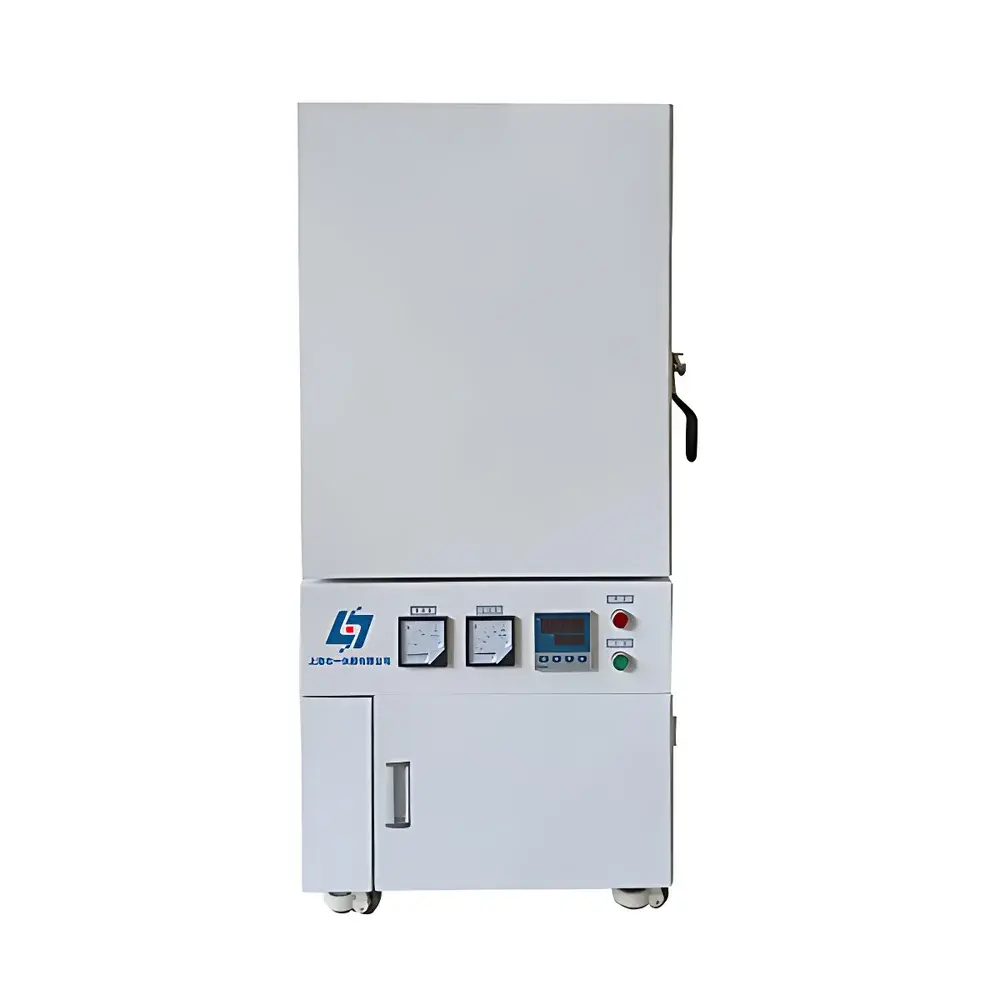
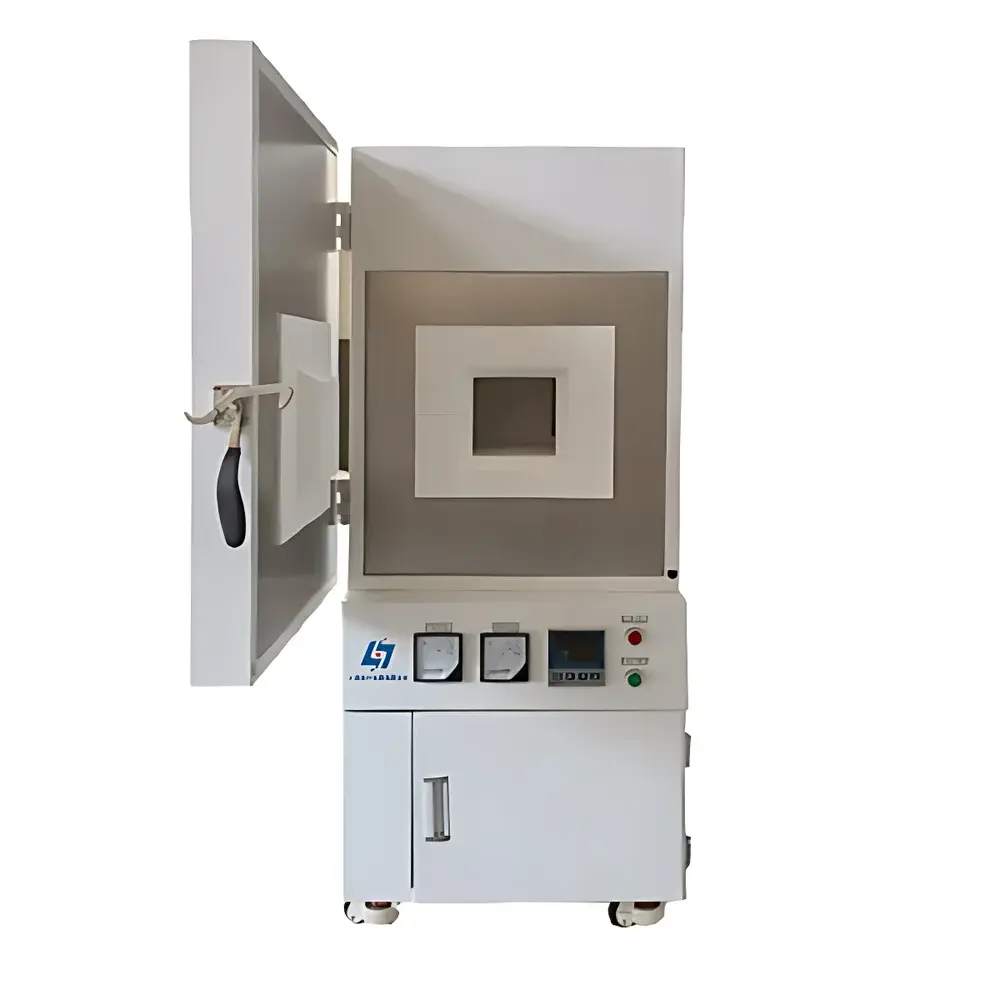
Yoyi SX2-9-16A Ceramic Fiber Muffle Furnace (1600 °C Box-Type Resistance Furnace)
| Brand | Yoyi |
|---|---|
| Origin | Shanghai, China |
| Manufacturer Type | Direct Manufacturer |
| Product Category | Domestic |
| Model | SX2-9-16A |
| Instrument Type | Box-Type Muffle Furnace |
| Max Temperature | 1600 °C |
| Temperature Control Accuracy | ±1 °C |
| Rated Power | 9 kW |
| Heating Element | Silicon-Molybdenum Rod (MoSi₂) |
| Internal Chamber Dimensions | 200 × 300 × 150 mm |
| Nominal Volume | 9 L |
Overview
The Yoyi SX2-9-16A is a high-temperature box-type muffle furnace engineered for precision thermal processing in research laboratories, materials science departments, and industrial R&D facilities. Operating on resistive heating principles via silicon-molybdenum (MoSi₂) rods, it delivers stable, uniform temperature distribution across its ceramic fiber insulated chamber up to 1600 °C. Unlike traditional refractory brick furnaces, this model employs a lightweight, low-thermal-mass ceramic fiber insulation system—enabling rapid ramp rates (up to 2× faster than conventional units), reduced standby energy consumption (~60% lower operational power demand), and minimal thermal inertia for improved process repeatability. Its design complies with fundamental safety and performance expectations for Class I laboratory heating equipment under IEC 61010-1, with integrated thermal and electrical protection circuits ensuring safe operation during extended thermal cycles.
Key Features
- Ceramic fiber furnace chamber (density: ~128 kg/m³) offering superior thermal insulation, low heat storage, and resistance to thermal shock up to 1600 °C
- High-purity MoSi₂ heating elements rated for continuous operation at 1600 °C, exhibiting excellent oxidation resistance in air and uniform radial heat distribution
- Microprocessor-based PID temperature controller with digital LCD interface, supporting programmable ramp-soak profiles, real-time temperature logging, and deviation alarms
- Dual-layer chamber wall construction: outer cold-rolled steel shell (phosphated + epoxy powder-coated) and inner ceramic fiber board lining, limiting external surface temperature to ≤50 °C at 1000 °C internal setpoint
- Comprehensive safety architecture including over-temperature cut-off, over-current protection, ground-fault detection, and automatic power recovery after grid interruption
- Non-volatile memory retention for user-defined parameters (setpoints, dwell times, ramp rates) to ensure process continuity following unexpected shutdowns
Sample Compatibility & Compliance
The SX2-9-16A accommodates crucibles and sample holders made from alumina, zirconia, silicon carbide, or platinum-group alloys—compatible with ashing, sintering, calcination, annealing, and heat-treatment protocols specified in ASTM E1111 (ash content determination), ISO 562 (coal ash fusion), and USP (heavy metals testing). Its sealed muffle configuration prevents direct flame contact and minimizes atmospheric contamination, making it suitable for inert-atmosphere-compatible applications when used with optional purge gas fittings (N₂, Ar). The unit meets general requirements for GLP-compliant thermal processing environments; optional RS485 interface supports audit-trail-capable data export for FDA 21 CFR Part 11–aligned workflows when paired with validated third-party software.
Software & Data Management
While the standard configuration includes an embedded 4-button LCD controller with intuitive menu navigation, optional upgrades extend functionality significantly. The RS485 serial interface (available as add-on module) enables bidirectional communication with PC-based thermal management platforms, supporting real-time temperature graphing, multi-stage program upload/download, and timestamped event logging. When integrated with compliant SCADA or LIMS systems, the furnace can generate electronic records traceable to operator ID, calibration date, and environmental conditions—fulfilling documentation requirements for ISO/IEC 17025 accredited labs. Firmware supports configurable alarm thresholds, password-protected parameter editing, and auto-save of last-run profile upon power-down.
Applications
This furnace serves diverse high-temperature material processing needs: ceramic green-body sintering (e.g., BaTiO₃, Al₂O₃, Si₃N₄); thermal decomposition of metal nitrates and carbonates; catalyst activation and regeneration; ash residue quantification in pharmaceutical excipients; pre-sintering of lithium-ion battery cathode precursors (e.g., NMC, LFP); controlled oxidation of thin-film substrates; and microstructural homogenization of intermetallic compounds. Its 9 L chamber volume and 200 × 300 × 150 mm usable workspace support standard ASTM G160 crucibles (Φ60 × 40 mm), multiple small-diameter quartz tubes, or stacked alumina setter plates—facilitating parallel batch processing without compromising thermal uniformity (±5 °C across working zone per ASTM E220).
FAQ
What atmosphere types can be used inside the SX2-9-16A?
The furnace is designed for ambient air operation. Optional quartz tube adapters or flanged ports allow connection to inert gas lines (N₂, Ar) or vacuum pumps for controlled-atmosphere experiments.
Is the MoSi₂ heating element replaceable in-field?
Yes—elements are modular and accessible via rear panel access ports; replacement requires standard torx tools and adherence to OEM torque specifications for terminal clamps.
Does the controller support multi-step temperature programming?
The base controller supports single-setpoint operation with timer-based hold; the optional programmable controller upgrade enables up to 30 segments with independent ramp rates, soak durations, and cycle repeats.
How often should thermocouple calibration be performed?
For GLP/GMP compliance, annual verification against NIST-traceable reference standards is recommended; users performing critical thermal analysis should implement quarterly drift checks using certified fixed-point cells (e.g., Al, Zn).



