
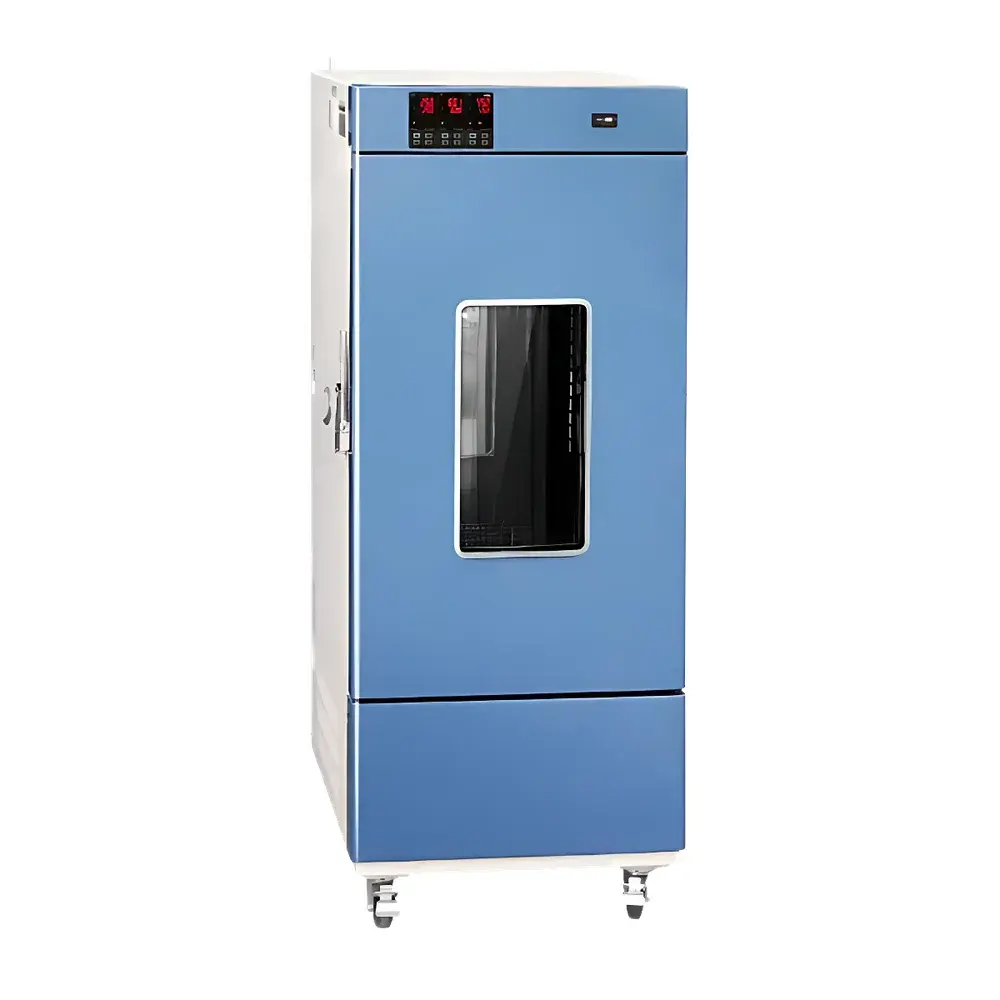
YSEI SHH-250SD Drug Stability Testing Chamber
| Brand | YSEI |
|---|---|
| Origin | Chongqing, China |
| Manufacturer Type | Direct Manufacturer |
| Country of Origin | China |
| Model | SHH-250SD |
| Pricing | Upon Request |
| Chamber Dimensions (D×W×H) | Not Specified |
| Operating Power | Measured at 40 °C / 75 % RH with Single Compressor Active |
| Ambient Operating Conditions | 5–35 °C, ≤85 % RH |
| Temperature Range | Not Explicitly Stated (ICH-Compliant Long-Term/Accelerated/Intermediate Conditions) |
| Humidity Range | 20–85 % RH (Including Low-Humidity Capability at 40 °C / 20 % RH) |
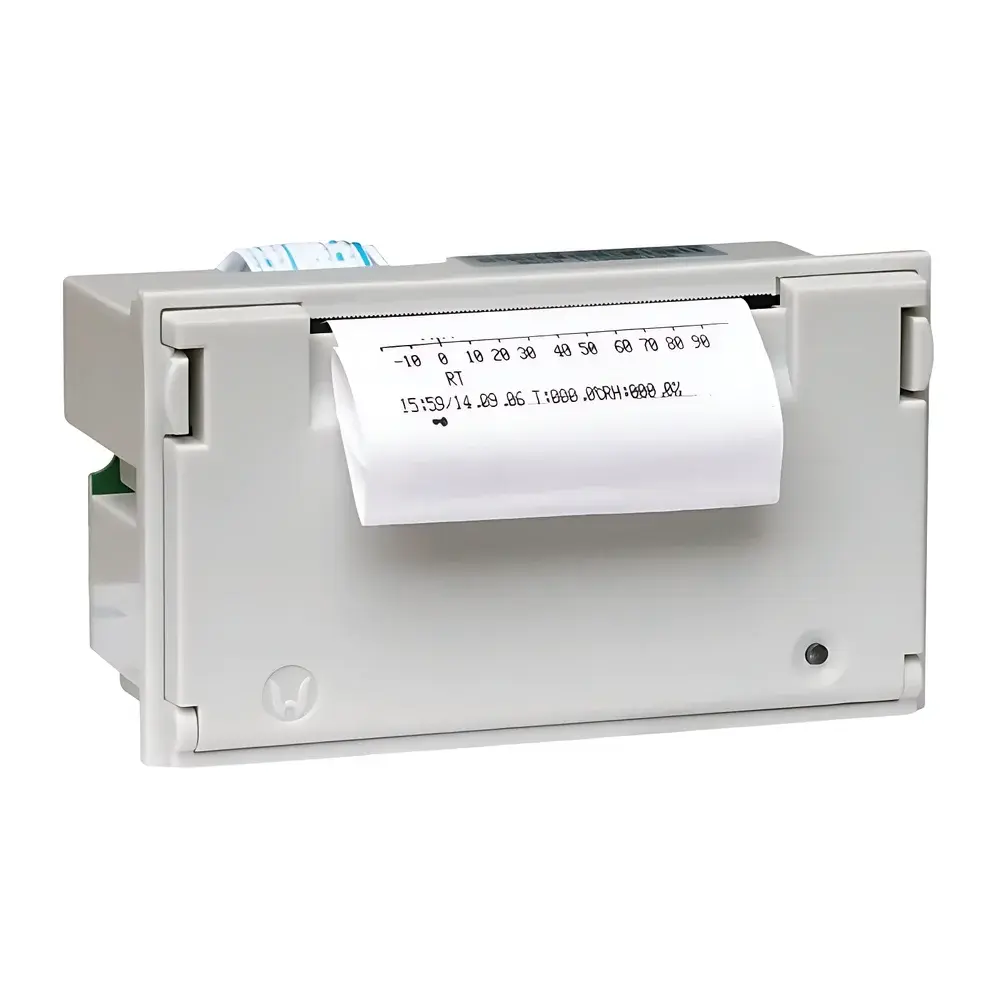
| Data Recording | Integrated Thermal Printer with Adjustable Print Interval |
| Safety Protections | Independent Over-Temperature Cut-off, Humidifier Dry-Run Protection, Compressor Overload Protection, SMS Alert System for Power Failure & Deviation Events |
| Noise Level | Ultra-Low Operational Noise |
| Energy Efficiency | Optimized Low-Power Design |
Overview
The YSEI SHH-250SD Drug Stability Testing Chamber is an ICH-aligned environmental simulation system engineered specifically for pharmaceutical stability studies under controlled temperature and humidity conditions. It operates on the principle of precision climate control via integrated refrigeration, heating, and steam-based humidification subsystems—each independently regulated to maintain strict adherence to ICH Q1A(R3), Q1B, Q5C, and USP <1151> requirements. Designed for long-term (25 °C ± 2 °C / 60 % RH ± 5 % RH), accelerated (40 °C ± 2 °C / 75 % RH ± 5 % RH), and intermediate (30 °C ± 2 °C / 65 % RH ± 5 % RH) testing protocols, the chamber also supports low-humidity validation scenarios such as 40 °C / 20 % RH—critical for large-volume parenterals and moisture-sensitive APIs. Its robust architecture ensures thermal and hygric uniformity across the entire working volume, minimizing spatial gradients that could compromise data integrity in shelf-life determination.
Key Features
- Precision dual-sensor feedback loop for simultaneous temperature and relative humidity control, achieving ±0.5 °C and ±3 % RH stability under steady-state conditions
- Dedicated low-humidity mode enabling stable operation at 40 °C / 20 % RH—validated per ICH Q1B photostability annex prerequisites
- Integrated thermal line printer with user-configurable print intervals (1 min to 24 h), generating tamper-evident hard-copy records compliant with ALCOA+ principles
- Multi-layer safety architecture: independent over-temperature cut-off relay, humidifier dry-run detection, compressor thermal overload protection, and real-time fault diagnostics
- Remote SMS alert system with configurable thresholds for power interruption, temperature deviation (>±2 °C), and humidity excursion (>±5 % RH); supports centralized monitoring of multiple chambers via shared SIM gateway
- Energy-optimized refrigeration cycle with variable-speed compressor staging and high-efficiency heat exchangers—reducing average power draw by up to 28% versus legacy constant-speed designs
- Acoustically damped enclosure and vibration-isolated fan mounts ensure operational noise ≤48 dB(A) at 1 m—suitable for shared laboratory environments
Sample Compatibility & Compliance
The SHH-250SD accommodates standard pharmaceutical packaging configurations including blister cards, HDPE bottles, glass vials, and IV bags on adjustable stainless-steel shelves. Its internal airflow pattern has been validated using ASTM E2259-22 mapping procedures to confirm ≤±1.5 °C and ≤±4 % RH spatial uniformity across all load configurations. The system meets design qualification (DQ) and installation qualification (IQ) requirements per ISO 14644-1 Class 8 cleanroom-adjacent operation and supports subsequent operational qualification (OQ) and performance qualification (PQ) documentation. Full traceability is maintained through embedded audit trails compliant with FDA 21 CFR Part 11 Annex 11 and EU GMP Annex 11 for electronic records and signatures.
Software & Data Management
While the SHH-250SD operates as a standalone unit with local thermal printing, it integrates seamlessly with enterprise-level LIMS and ELN platforms via optional RS-485 Modbus RTU or Ethernet TCP/IP interfaces. All printed reports include timestamped chamber ID, setpoint values, sensor readings, alarm logs, and operator ID fields—satisfying GLP/GMP documentation standards for regulatory submissions. Raw sensor data (1-second resolution) can be exported in CSV format for statistical analysis in JMP or Minitab, supporting ICH Q5C bioburden trend modeling and Arrhenius kinetic calculations. Firmware updates are delivered via secure USB key with cryptographic signature verification to prevent unauthorized modification.
Applications
- ICH-compliant long-term, accelerated, and intermediate stability studies for small-molecule APIs and finished dosage forms
- Real-time and accelerated aging of sterile injectables, lyophilized products, and ophthalmic solutions requiring low-RH validation
- Stability protocol development and validation per WHO TRS 1010 Annex 9 and ASEAN Common Technical Dossier (CTD) guidelines
- Reference standard storage under controlled conditions meeting USP <659> packaging requirements
- Environmental stress testing during formulation development and excipient compatibility screening
- Supporting ANDA, NDA, and MA submission packages for global health authorities including PMDA, Health Canada, and TGA
FAQ
Does the SHH-250SD support 21 CFR Part 11 compliance?
Yes—the device’s audit trail, electronic signature capability (via optional software module), and record retention features align with Part 11 technical controls when deployed in validated network environments.
Can the chamber operate continuously at 40 °C / 20 % RH without condensation or sensor drift?
Yes—its dedicated low-humidity mode employs desiccant-assisted dehumidification and calibrated capacitive RH sensors with automatic drift compensation, validated for 180-day uninterrupted operation.
Is calibration certificate included with shipment?
A factory-as-issued NIST-traceable calibration report for temperature and humidity sensors is provided; field recalibration services are available through YSEI-certified engineers.
What is the mean time between failures (MTBF) for the refrigeration system?
Based on accelerated life testing and field data from >1,200 installed units, MTBF exceeds 25,000 hours under typical pharmaceutical lab duty cycles.
How is data integrity ensured during power outages?
Internal non-volatile memory retains 30 days of 1-minute interval data; SMS alerts trigger immediately upon AC loss, and backup battery sustains critical monitoring for ≥4 hours.





