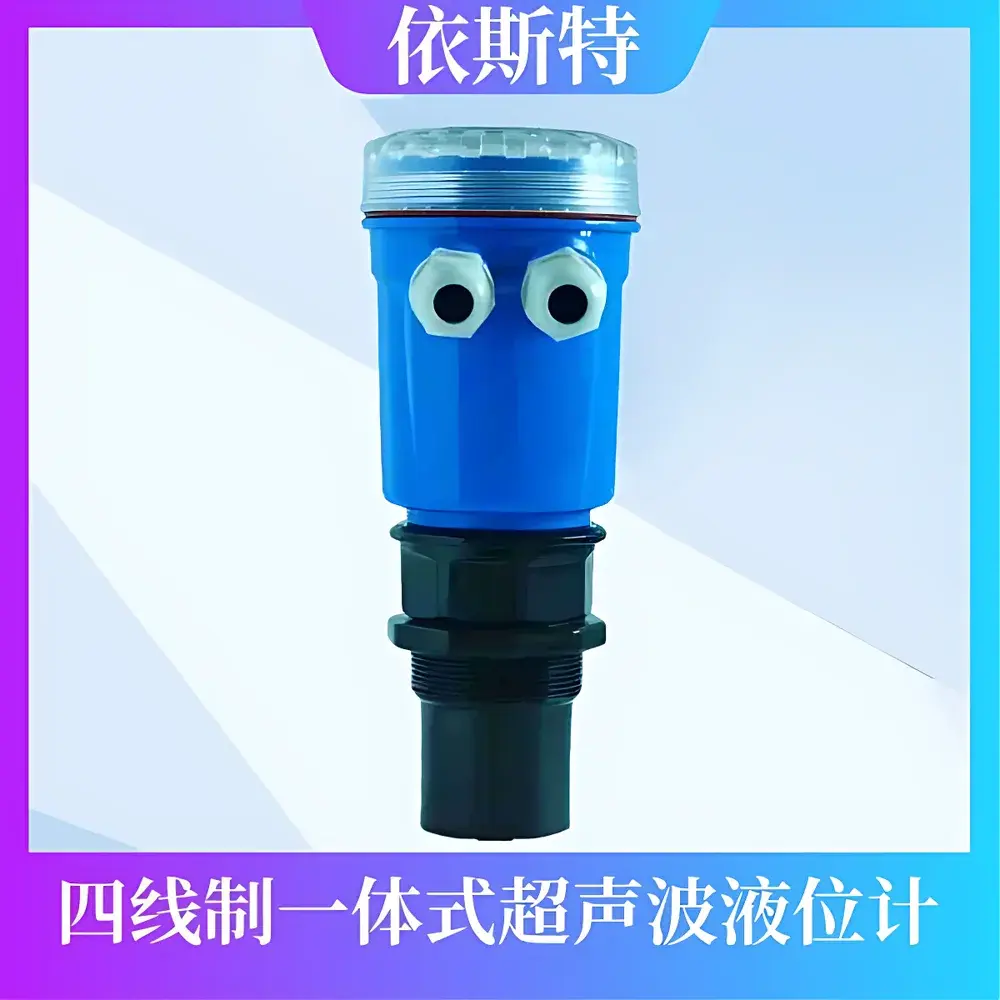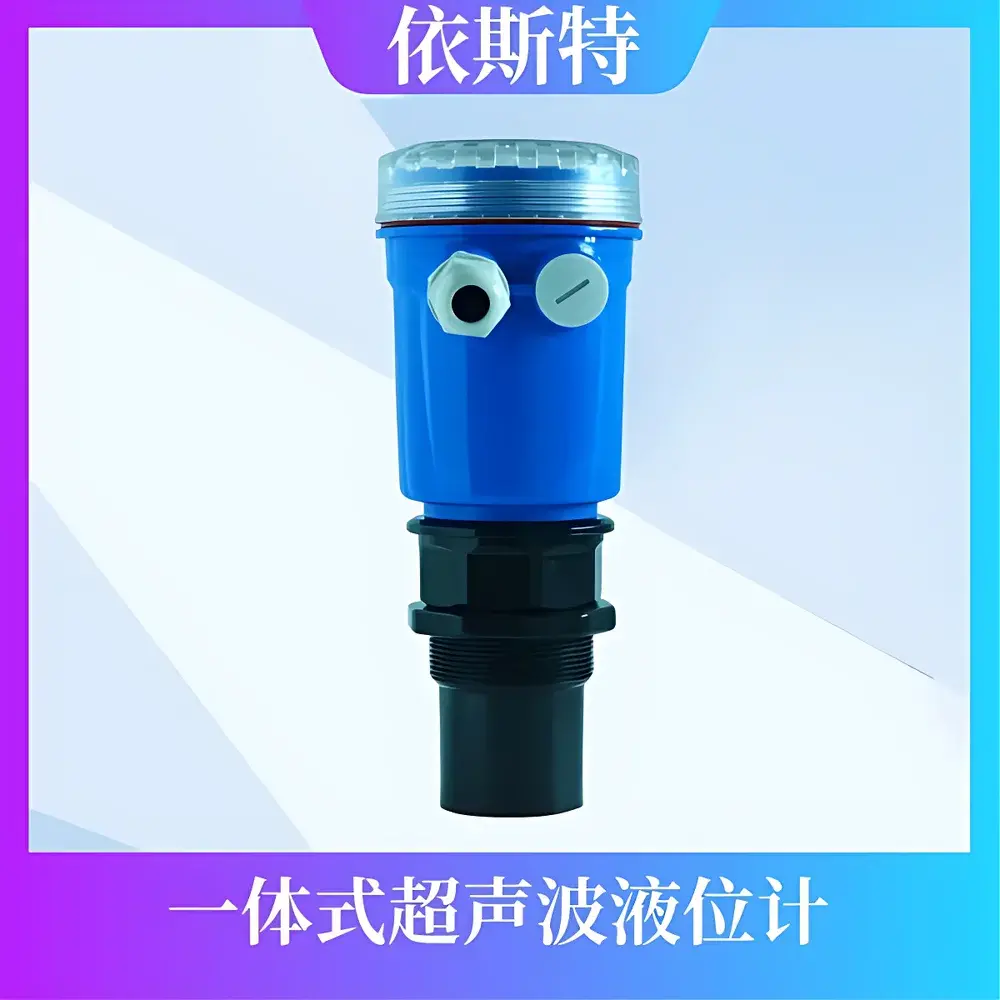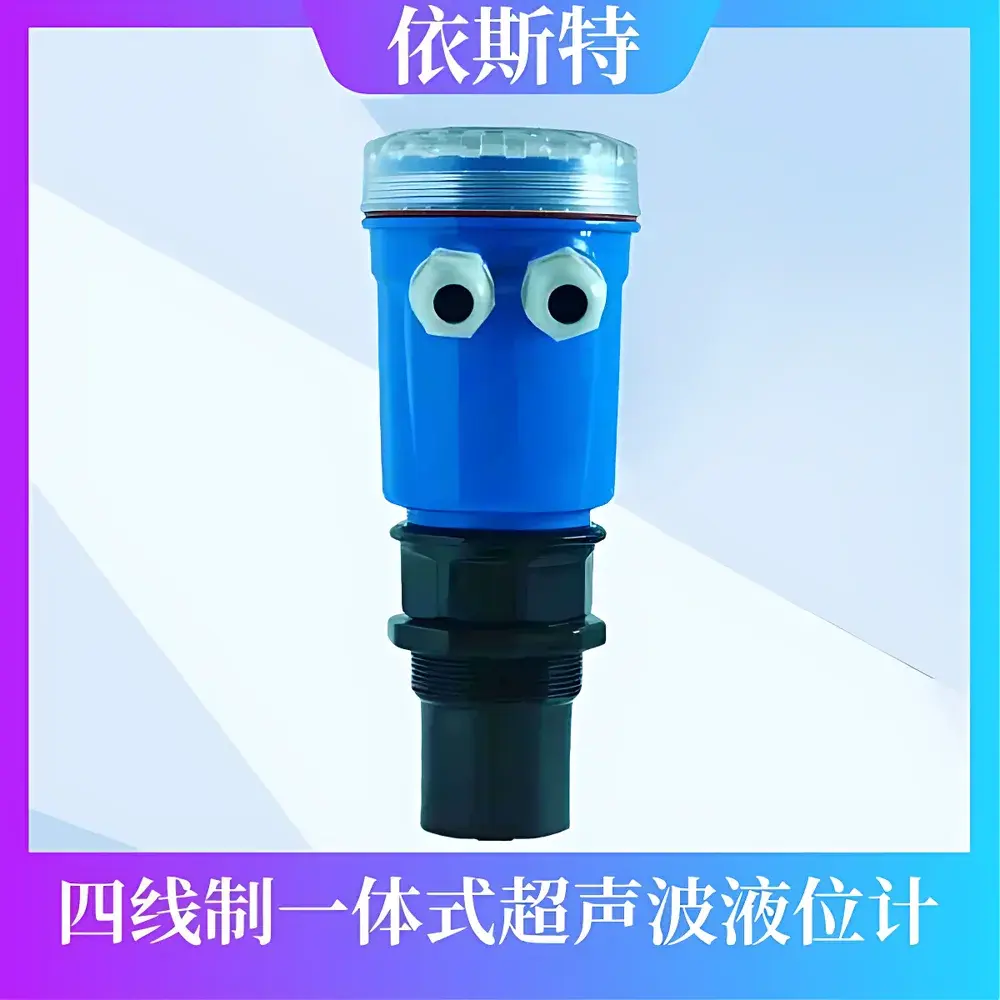
YST940F-1CY10 Split-Type Ultrasonic Level Transmitter for Municipal Wastewater Pump Stations
| Brand | YST (Dalian Yist) |
|---|---|
| Origin | Liaoning, China |
| Model | YST940F-1CY10 |
| Measurement Range | 0.3–10 m |
| Accuracy | ±0.5% FS |
| Resolution | 1 mm |
| Operating Temperature (Transducer) | −20 °C to +60 °C |
| Operating Temperature (Transmitter Unit) | −20 °C to +80 °C |
| Power Supply | DC 24 V (2-wire or 4-wire configuration) |
| Output Signal | 4–20 mA analog output |
| Digital Interface | RS485 with Modbus RTU protocol |
| Enclosure Rating | IP67 (transducer), IP66 (transmitter unit) |
| Standard Cable Length | 10 m polyurethane-shielded cable (extendable up to 30 m) |
| Built-in Temperature Compensation | Yes |
| Foam & Suspended Solids Rejection Algorithm | Yes |
Overview
The YST940F-1CY10 is a purpose-engineered split-type ultrasonic level transmitter designed specifically for continuous, non-contact level monitoring in municipal wastewater pump stations. It operates on the principle of time-of-flight ultrasonic pulse echo measurement: a transducer emits high-frequency acoustic pulses toward the liquid surface and precisely measures the elapsed time until the reflected echo returns. By calculating distance using the speed of sound in air—dynamically corrected via integrated temperature compensation—the device delivers reliable level data across variable ambient conditions. Its robust mechanical and electrical architecture addresses the demanding operational environment typical of underground or semi-submerged pump stations: high humidity, airborne particulates, corrosive H2S and NH3 vapors, and fluctuating thermal loads. Unlike submersible or float-based alternatives, the YST940F-1CY10 eliminates direct media contact, thereby mitigating fouling, chemical degradation, and mechanical wear—critical advantages for long-term unattended operation in Class I, Division 2 hazardous locations common in wastewater infrastructure.
Key Features
- Split-architecture design: Physically separates the ultrasonic transducer (mounted above the sump or wet well) from the signal processing and output electronics (housed remotely in control cabinets or dry enclosures), enabling optimal placement for both sensing integrity and human-machine interface accessibility.
- Adaptive signal processing: Implements proprietary digital filtering algorithms optimized for wastewater applications—including real-time suppression of false echoes generated by surface foam, turbulent flow, suspended solids, and condensation on the transducer face.
- Automatic temperature compensation: Integrated thermistor continuously monitors ambient air temperature near the transducer and dynamically adjusts the speed-of-sound coefficient used in distance calculation—ensuring consistent accuracy across seasonal extremes from −20 °C to +60 °C.
- Dual-output capability: Simultaneous analog (4–20 mA, two- or four-wire configurable) and digital (RS485/Modbus RTU) outputs support integration with legacy PLCs, SCADA systems, and modern IIoT platforms without additional signal converters.
- Industrial-grade environmental protection: Transducer housing rated IP67 (dust-tight and protected against immersion up to 1 m for 30 min); transmitter unit rated IP66 (powerful water jet resistance). Both units constructed from UV-stabilized PPS and stainless steel components resistant to hydrogen sulfide corrosion.
- Low-power, maintenance-optimized design: Consumes <1.2 W in continuous operation; no moving parts, no calibration drift, and no routine cleaning required—reducing lifecycle OPEX and supporting remote monitoring compliance with ISO 55000 asset management frameworks.
Sample Compatibility & Compliance
The YST940F-1CY10 is validated for use with raw sewage, primary effluent, grit-laden stormwater, and mixed liquor in wet wells, lift stations, and equalization basins. It does not require media compatibility certification (as it employs non-contact measurement), but its materials of construction comply with ASTM D5084 (hydraulic conductivity testing standards for geosynthetic clay liners) and meet UL 61010-1 requirements for electrical safety in industrial control equipment. While not intrinsically safe certified, its low-energy operation and enclosure ratings align with NEC Article 501 guidelines for non-hazardous area instrumentation in wastewater treatment facilities. The device supports audit-ready data logging when paired with compliant Modbus masters and satisfies basic traceability requirements under ISO/IEC 17025 for field instrumentation used in environmental monitoring workflows.
Software & Data Management
The transmitter operates autonomously without embedded firmware requiring user-uploaded software. Configuration is performed locally via rotary encoder and LCD display on the transmitter unit, or remotely via Modbus RTU commands (Function Codes 03h/06h/10h) using standard SCADA HMI tools or open-source utilities such as QModMaster or ModScan. All parameter settings—including damping time, measurement range, zero/span offset, and alarm thresholds—are stored in non-volatile memory with write-protection options. When integrated into supervisory systems, the 4–20 mA output provides linearized level data traceable to NIST-traceable calibration certificates (available upon request). For regulatory reporting contexts (e.g., EPA NPDES permit compliance), the device supports timestamped data export through upstream PLC historians compliant with IEC 62443-3-3 security profiles.
Applications
- Real-time level monitoring in municipal lift stations and wet wells for pump start/stop logic and dry-run prevention
- Overflow warning and alarm triggering in combined sewer overflow (CSO) structures
- Level feedback control in flow-proportional dosing systems for chemical addition (e.g., chlorine, ferric chloride)
- Integration with predictive maintenance platforms using level trend analysis to detect pump clogging or check valve failure
- Supporting digital twin development for wastewater network modeling and hydraulic simulation (e.g., EPANET, InfoWorks ICM)
- Remote diagnostics in unmanned or solar-powered pump stations where power efficiency and communication resilience are critical
FAQ
Does the YST940F-1CY10 require periodic recalibration?
No. The device features factory-calibrated transducer timing and self-compensating temperature algorithms. Field verification using a known reference distance (e.g., tape measure to still water surface) is recommended annually per ISO 17025 Clause 7.7, but full recalibration is not necessary under normal operating conditions.
Can it operate reliably in high-foam environments?
Yes. Its adaptive echo discrimination algorithm has been validated in bench and field trials with foam layers exceeding 15 cm thickness and varying density (from light scum to dense biological foam), maintaining measurement stability within ±1 mm repeatability.
Is the 10-meter cable shielded against EMI in electrically noisy pump station environments?
Yes. The standard polyurethane-jacketed cable includes braided copper shielding and twisted-pair conductors, meeting EN 61000-6-2 immunity requirements for industrial environments. Additional conduit routing is advised where parallel runs exceed 3 m alongside VFD motor cables.
What is the maximum allowable cable extension length?
The system supports total loop lengths up to 30 meters using 1.5 mm² shielded twisted pair. Beyond 10 meters, voltage drop must be verified to ensure ≥21 VDC at the transducer terminals under worst-case load conditions.
Does it support HART communication?
No. The YST940F-1CY10 implements only 4–20 mA analog and RS485/Modbus RTU protocols. HART-capable variants are not part of this product line.