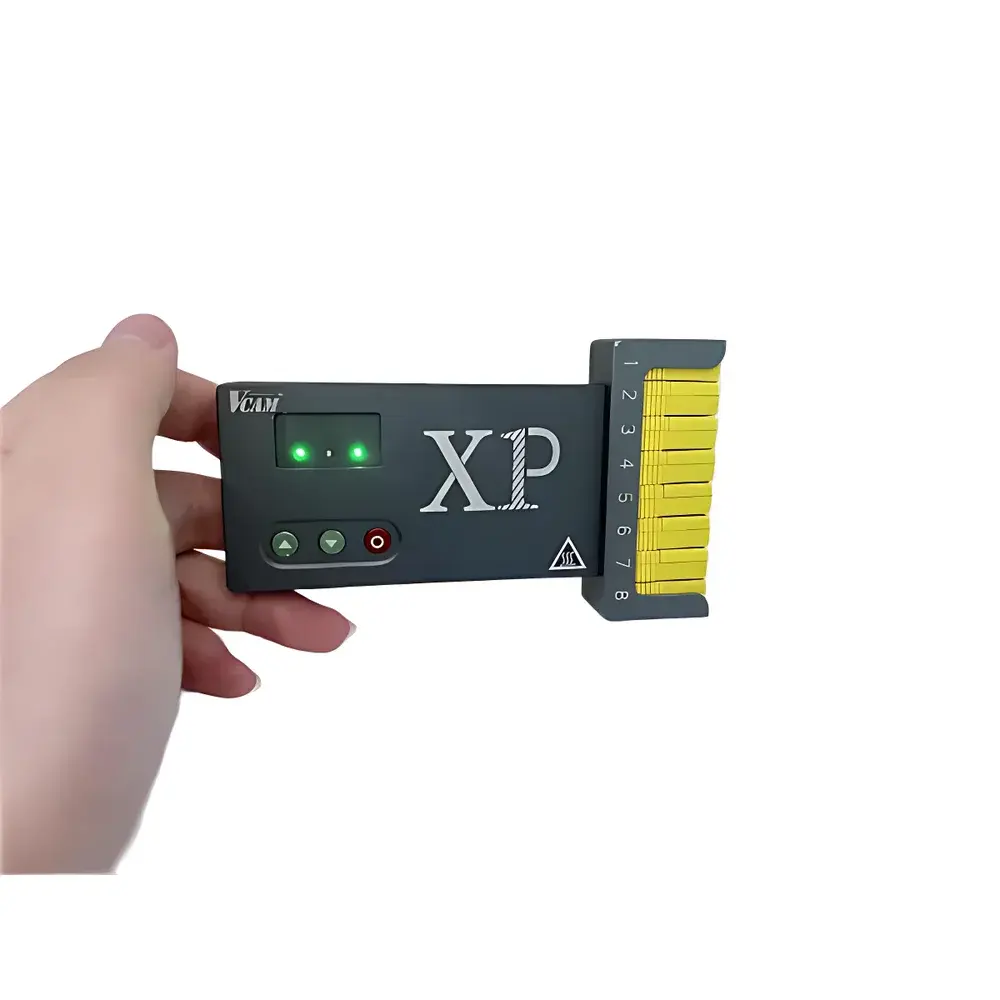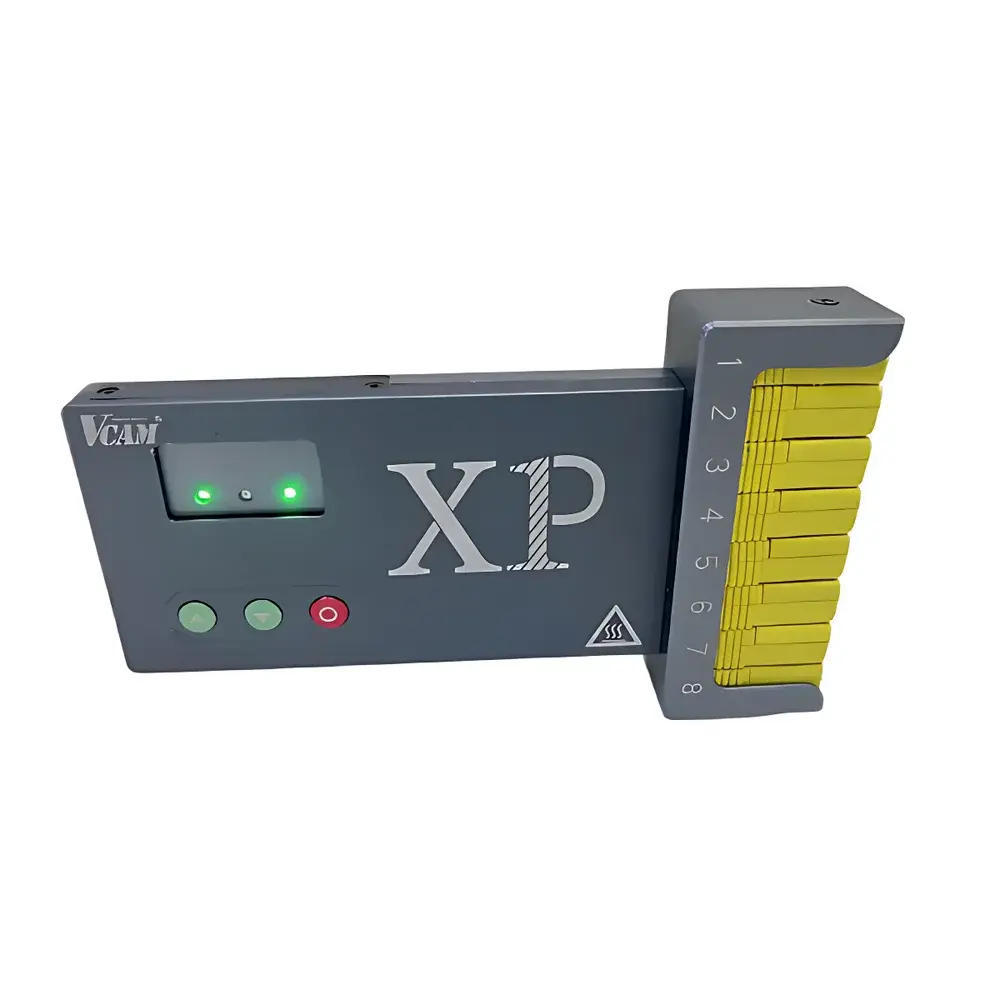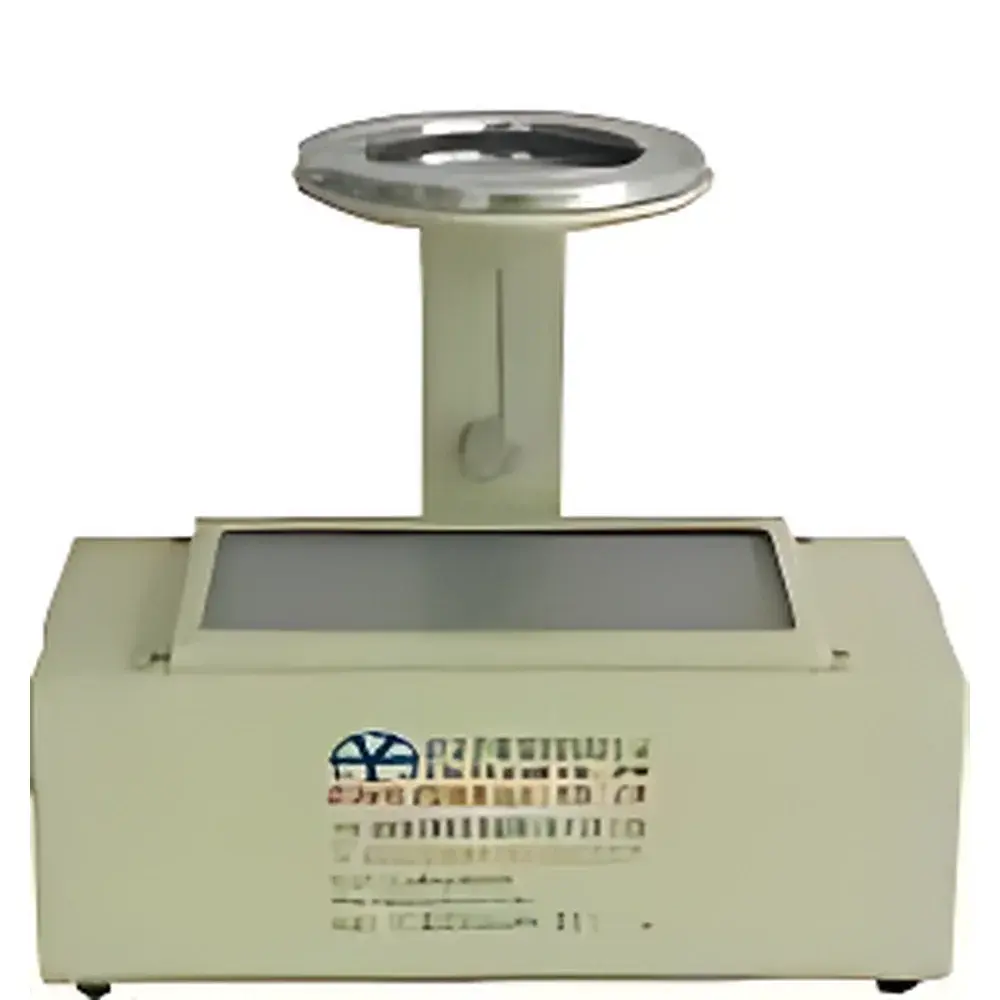
YT2002 Stress Analysis Tester
| Origin | Taiwan |
|---|---|
| Manufacturer Type | Distributor |
| Domestic Product Classification | Yes |
| Model | YT2002 |
| Pricing | Upon Request |
Overview
The YT2002 Stress Analysis Tester is a dedicated optical instrumentation system engineered for non-destructive, qualitative visualization and localization of residual internal stress in thermoplastic injection-molded components. It operates on the principle of photoelasticity — a well-established method in experimental mechanics where birefringence induced by mechanical stress in transparent or semi-transparent polymeric materials is quantified under polarized light illumination. When subjected to load or thermal history during molding, polymers such as polycarbonate (PC), acrylic (PMMA), and ABS develop anisotropic refractive index distributions proportional to local stress magnitude and orientation. The YT2002 leverages this physical phenomenon using calibrated crossed-polarizer optics and high-contrast monochromatic or white-light illumination to render stress fields as visible fringe patterns. This enables rapid identification of high-stress zones — including weld lines, gate regions, sharp corners, and thickness transitions — prior to functional failure or crack initiation.
Key Features
- Compact benchtop design optimized for integration into QC laboratories and production-floor inspection stations
- Dual-polarization optical path with adjustable rotation angle for enhanced fringe contrast and directional stress sensitivity
- Integrated LED illumination source with uniform intensity distribution and minimal thermal drift
- Real-time visual assessment without sample preparation, coating, or destructive sectioning
- Compatible with both transparent and translucent molded parts up to 300 mm × 300 mm footprint
- Designed for repeatable operator-assisted evaluation under ambient lighting conditions
Sample Compatibility & Compliance
The YT2002 is validated for use with common engineering thermoplastics processed via injection molding, including but not limited to polycarbonate, poly(methyl methacrylate), acrylonitrile-butadiene-styrene (ABS), and copolyester blends. It supports qualitative conformance checks aligned with ASTM D4092 (“Standard Practice for Visual Evaluation of Residual Stress in Transparent Plastics”) and ISO 6603-2 (“Plastics — Impact resistance of plastics — Part 2: Instrumented impact testing”). While not a quantitative metrology instrument per ISO/IEC 17025, its output serves as a critical pre-screening tool within GLP-compliant quality control workflows. The device meets CE marking requirements for electrical safety (EN 61010-1) and electromagnetic compatibility (EN 61326-1).
Software & Data Management
The YT2002 operates as a standalone optical evaluation platform with no embedded firmware or proprietary software. All analysis is performed visually by trained personnel following documented internal procedures. For traceability and audit readiness, users may integrate digital documentation practices — such as time-stamped photography using calibrated cameras or video capture synchronized with production lot identifiers — into their existing LIMS or QMS infrastructure. Optional third-party image analysis tools (e.g., ImageJ with polarimetric plugins) can be employed for comparative fringe mapping across batches, supporting root cause analysis in accordance with IATF 16949 clause 8.5.2.1 (Problem Solving) and FDA 21 CFR Part 11 compliance when paired with appropriate electronic signature and audit trail configurations.
Applications
- Routine in-process verification of mold design efficacy and gate location optimization
- Root cause investigation of premature cracking or warpage in customer returns
- Validation of annealing or stress-relief post-processing parameters
- Supplier qualification support for Tier-1 automotive and medical device component manufacturers
- Educational demonstration of polymer processing-induced stress mechanisms in materials science curricula
- Support for Design Failure Mode and Effects Analysis (DFMEA) by highlighting geometric stress concentrators
FAQ
Is the YT2002 suitable for quantitative stress measurement?
No. It provides qualitative spatial mapping only. Quantitative birefringence calibration requires specialized equipment such as a compensator-based polariscope or digital photoelastic system with known stress-optic coefficients.
Can opaque or painted plastic parts be evaluated?
No. The method requires optical transmission; therefore, only transparent or translucent parts are compatible. Surface coatings or pigments that block polarized light will prevent effective evaluation.
Does the instrument require annual recalibration?
Not applicable. As a passive optical comparator without transducers or analog-to-digital conversion, it has no calibration interval. However, routine verification of polarizer alignment and illumination uniformity is recommended per internal SOPs.
What training is required to operate the YT2002?
Operators should complete a minimum two-hour competency session covering photoelastic fundamentals, fringe interpretation, common artifact recognition (e.g., edge effects, thermal gradients), and documentation protocols aligned with organizational quality standards.