
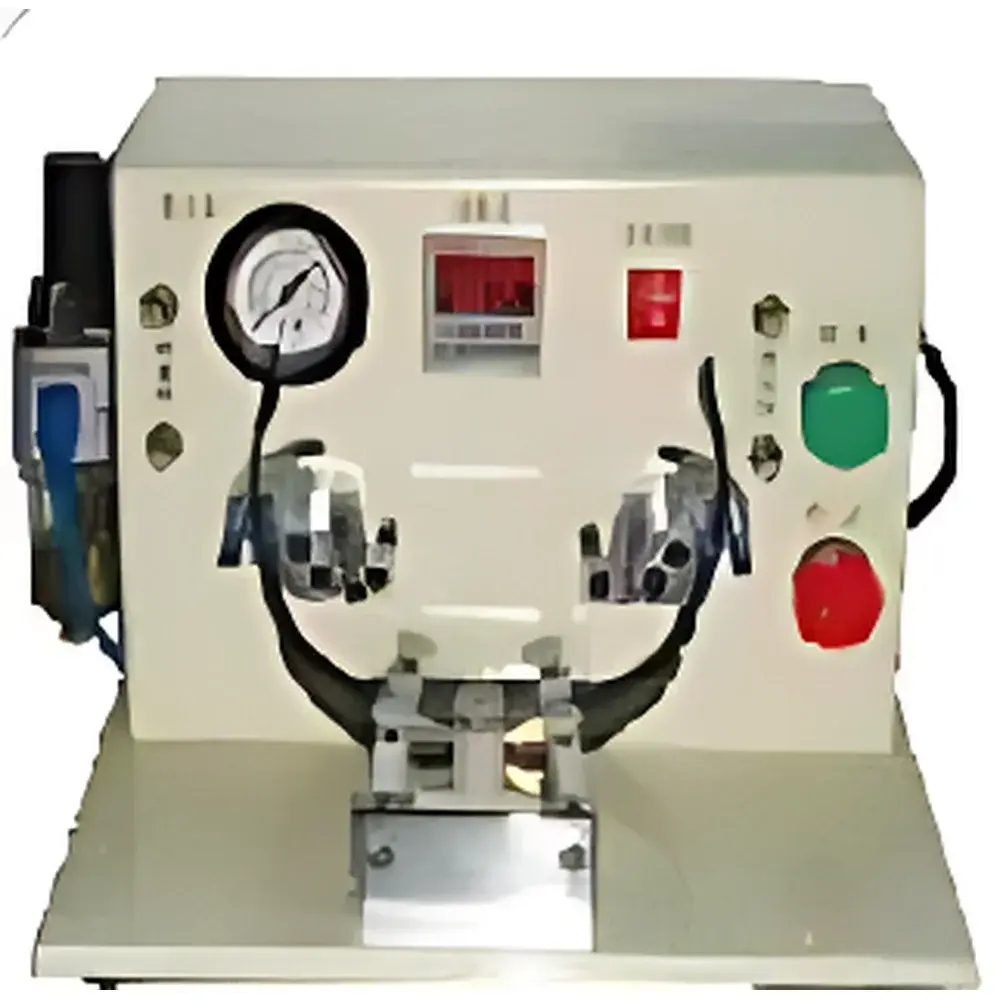
YT525 Spring Temple & Hinge Torque Tester
| Origin | Taiwan |
|---|---|
| Manufacturer Type | Authorized Distributor |
| Regional Classification | Asia-Pacific Sourced |
| Model | YT525 |
| Pricing | Available Upon Request |
Overview
The YT525 Spring Temple & Hinge Torque Tester is an electromechanical precision instrument engineered for quantitative mechanical evaluation of eyewear component reliability—specifically the spring-loaded temple arms (also known as flex hinges) and pivot hinge assemblies found in metal and hybrid frame designs. It operates on a calibrated torque-sensing principle, utilizing a high-resolution load cell and programmable angular displacement control to measure both static breakaway torque and dynamic rotational resistance across defined angular ranges (typically 0°–90°). The device conforms to fundamental mechanical test paradigms used in optical product quality assurance, where consistent hinge performance directly correlates with user comfort, long-term fatigue resistance, and regulatory conformance under ISO 12870 (Ophthalmic optics — Spectacle frames — Requirements and test methods).
Key Features
- Microprocessor-controlled dual-axis actuation system enabling independent control of angular position and applied torque measurement
- High-accuracy torque transducer with resolution down to 0.01 mN·m and repeatability ≤ ±0.5% full scale
- Adjustable clamping fixtures accommodating temple widths from 3.5 mm to 8.0 mm and hinge diameters ranging 0.8–2.5 mm
- Programmable test profiles: single-cycle breakaway, multi-cycle endurance (up to 10,000 cycles), and hysteresis loop acquisition
- Integrated real-time graphing interface displaying torque vs. angle curves with automatic peak detection and slope analysis
- Compliance-ready data logging supporting timestamped raw values, pass/fail thresholds, and operator ID tagging
Sample Compatibility & Compliance
The YT525 accommodates a broad spectrum of spectacle frame architectures—including full-rim, semi-rimless, and rimless designs—with particular optimization for spring-hinged temples commonly deployed in acetate, titanium, and beta-titanium frames. Fixture adaptability extends to testing housing-mounted barrel hinges, screwless hinge mechanisms, and mono-block temple interfaces. From a regulatory standpoint, the instrument supports test protocols aligned with ISO 12870:2021 Annex D (Hinge Durability Testing), ASTM F2754–22 (Standard Test Method for Hinge Strength of Eyewear), and internal QC specifications required by CE-marked manufacturers and FDA-listed Class I ophthalmic device producers. Data output formats comply with GLP documentation requirements, including audit-trail-enabled session logs.
Software & Data Management
The YT525 is operated via dedicated Windows-based software (v3.2+) featuring intuitive workflow navigation, customizable test method templates, and configurable pass/fail criteria per hinge type. All measurements are stored in encrypted SQLite databases with immutable timestamps and user authentication. Export options include CSV (for statistical process control integration), PDF test reports (with embedded torque-angle plots and metadata), and XML files compatible with LIMS platforms. Software architecture adheres to FDA 21 CFR Part 11 principles through electronic signature support, role-based access control, and automated change history tracking—ensuring traceability during GMP or ISO 13485 audits.
Applications
- Pre-production validation of hinge torque specifications against design tolerances (e.g., 0.15–0.45 N·m nominal range)
- Batch release testing for hinge consistency across production lots
- Accelerated life-cycle simulation to assess fatigue-induced torque decay after repeated opening/closing
- Root-cause analysis of field complaints related to temple sagging, over-tightness, or premature hinge failure
- Supplier qualification testing for hinge component vendors supplying OEM frame manufacturers
- Supporting technical documentation for CE Technical Files and FDA 510(k) submissions requiring mechanical durability evidence
FAQ
What standards does the YT525 support for hinge testing?
It enables execution of ISO 12870 Annex D, ASTM F2754, and manufacturer-specific hinge torque specifications.
Can the YT525 test non-spring hinges such as standard barrel or screw hinges?
Yes—the fixture system accommodates fixed-pivot and friction-based hinges; torque measurement remains valid for static and quasi-static evaluations.
Is calibration traceable to national metrology institutes?
All torque sensors ship with NIST-traceable calibration certificates; annual recalibration services are available through authorized service centers.
Does the software support multi-user environments with permission levels?
Yes—administrator, technician, and viewer roles are enforced with password protection and activity logging.
What is the maximum angular range and speed capability?
Standard operation covers 0°–90° at speeds from 0.1°/s to 10°/s, with optional firmware upgrades supporting extended ranges up to 180°.



