
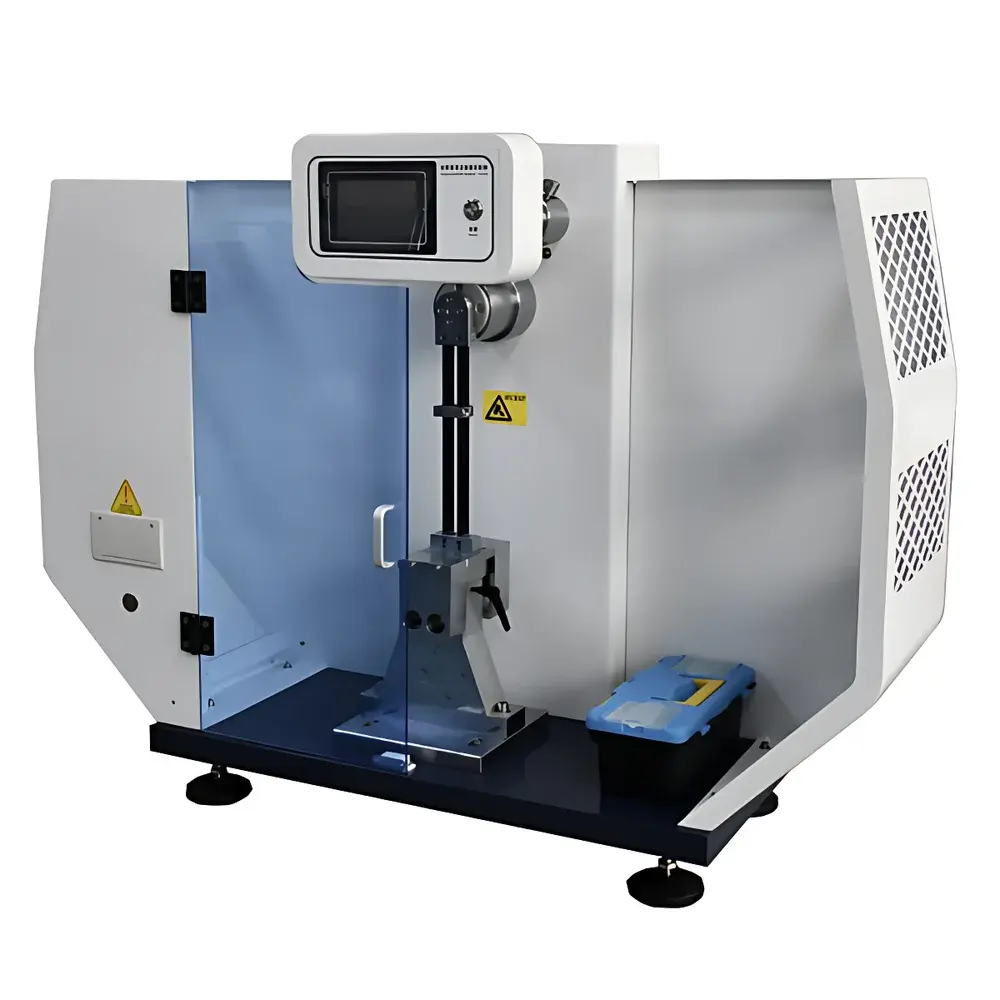
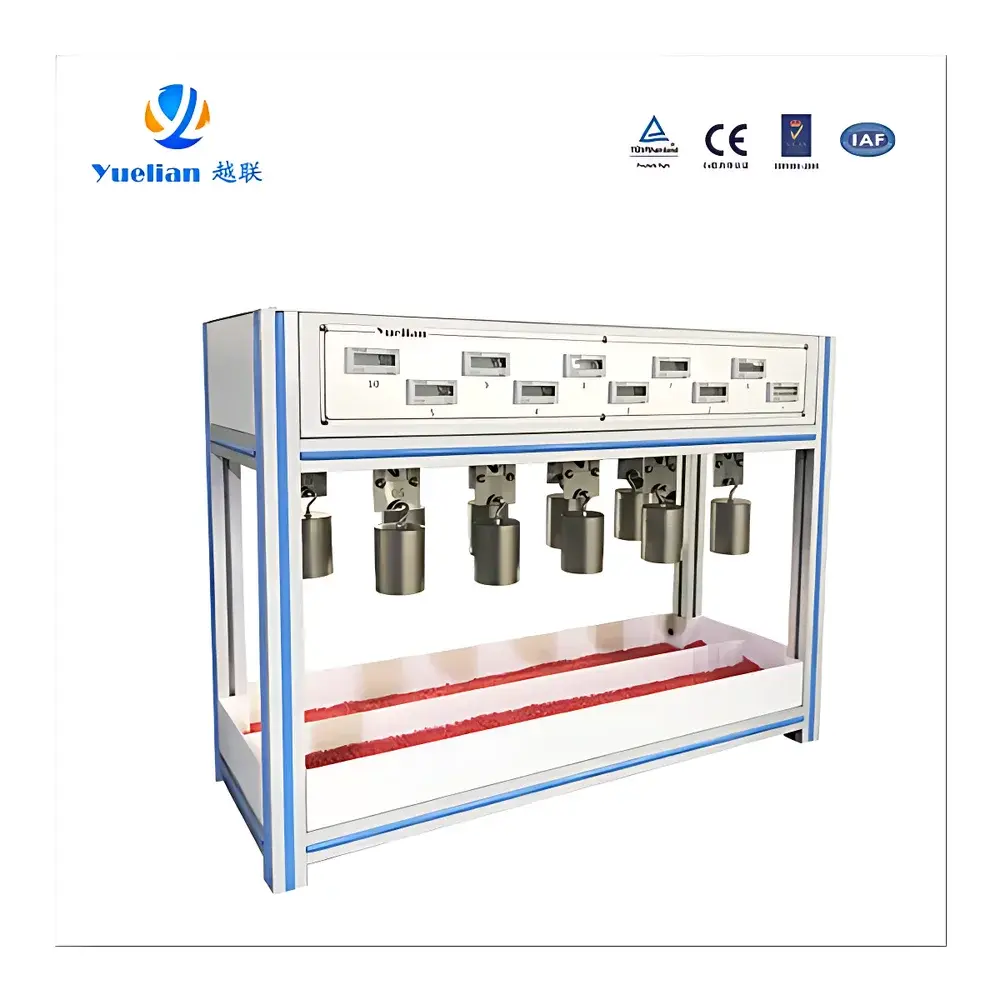
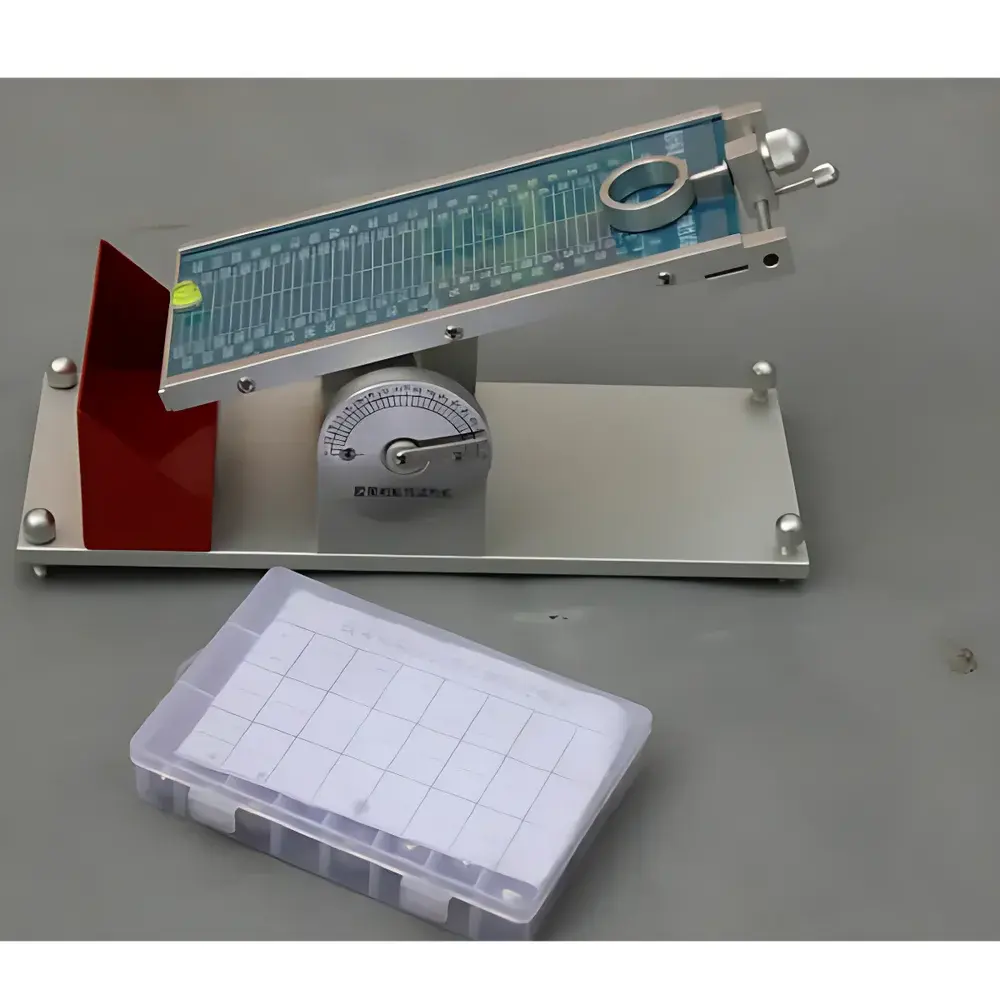
YueLian PW-3319T ISO 9653 / GB/T 6328-2021 Adhesive Shear Impact Tester
| Brand | YueLian (PW) |
|---|---|
| Origin | Guangdong, China |
| Model | PW-3319T |
| Instrument Type | Digital Pendulum Impact Tester |
| Max Impact Energy | 22 J |
| Energy Resolution | 0.01 J |
| Angular Accuracy | ±0.01° |
| Impact Velocity | 3.4 m/s |
| Pendulum Lifting Angle | 150° |
| Clamp-to-Impact-Edge Distance | 22 mm |
| Display | Color Touchscreen (English/Chinese UI) |
| Data Storage | 24 test records with auto-averaging |
| Output | Built-in thermal printer |
| Power Supply | AC 220 V ±10%, 50 Hz |
| Weight | 85 kg |
Overview
The YueLian PW-3319T Adhesive Shear Impact Tester is a precision-engineered pendulum impact system designed to determine the shear impact strength of adhesive bonds in accordance with internationally recognized standards—specifically ISO 9653:1993 “Adhesives — Determination of shear strength under impact loading” and GB/T 6328–2021 “Methods of test for adhesives — Determination of shear strength under impact loading”. Unlike quasi-static tensile or shear testers, this instrument applies controlled, high-rate dynamic loading via a calibrated pendulum mechanism, enabling quantification of energy absorption during catastrophic bond failure under impact conditions. The test principle follows Charpy-type impact methodology adapted for lap-shear geometry: a notched or bonded specimen is rigidly clamped, and a falling pendulum strikes the free end, inducing rapid shear deformation across the adhesive interface. The energy absorbed—calculated from the difference between initial potential energy and residual swing height—is reported as impact shear strength per unit width (e.g., J/m or kJ/m²), providing critical data for structural adhesive qualification in automotive, aerospace, and wood composite applications.
Key Features
- Carbon-fiber pendulum arm engineered for high torsional rigidity and minimized flexural vibration—ensuring kinetic energy transfer remains concentrated at the pendulum’s center of mass and reducing measurement uncertainty from parasitic oscillations.
- Imported Omron rotary encoder (0.01° angular resolution) coupled with real-time digital signal processing enables precise determination of pre- and post-impact pendulum angles, supporting energy calculation accuracy to ±0.01 J.
- Aerodynamically optimized impact hammer with hardened steel striking edge (R = 0 mm) and precision-ground parallel faces ensures consistent contact geometry and eliminates edge rounding effects that compromise shear stress uniformity.
- Modular, tool-free interchangeable fixtures accommodate standardized lap-shear specimens per ISO 9653 (e.g., 100 mm × 25 mm × substrate thickness ≤ 12 mm) and support multi-material configurations—wood-to-wood, metal-to-metal, plastic-to-plastic, and hybrid substrates.
- Embedded ARM-based controller with 7-inch color touchscreen interface supports dual-language operation (English/Chinese), on-screen calibration prompts, and real-time waveform preview of energy decay profiles.
- Automatic energy loss compensation algorithm accounts for bearing friction, air resistance, and pivot hysteresis using empirically derived correction coefficients traceable to NIST-traceable reference standards.
Sample Compatibility & Compliance
The PW-3319T is validated for use with bonded lap-shear specimens conforming to ISO 9653 Annex A and GB/T 6328–2021 Clause 6. Specimen preparation requires adherence to substrate surface conditioning (e.g., solvent cleaning, grit blasting), adhesive application protocol (wet film thickness, open time), and curing schedule (temperature, humidity, dwell time) as specified in the relevant material datasheet or internal quality procedure. The instrument meets mechanical safety requirements per ISO 12100 and electrical safety per IEC 61000-6-2/6-3. While not certified to ISO/IEC 17025, its measurement chain—including encoder linearity, pendulum moment of inertia verification, and energy calibration using certified reference specimens—is documented per GLP-compliant lab practice. Traceability of calibration is maintained through annual verification against accredited reference standards (e.g., NPL or CNAS-accredited labs).
Software & Data Management
Test data—including impact energy (J), calculated shear strength (J/m), peak load estimate (kN), and coefficient of variation (%CV)—are stored locally in non-volatile memory for up to 24 sequential tests. The embedded firmware performs automatic averaging, outlier rejection (via Grubbs’ test at α = 0.05), and statistical summary (mean, SD, min/max). Export options include direct thermal printout (with timestamp, operator ID, and test ID) and USB flash drive export in CSV format for integration into LIMS or statistical analysis platforms (e.g., JMP, Minitab). Audit trail functionality logs all user actions (test start/stop, parameter changes, calibration events) with ISO/IEC 17025-aligned metadata—though full 21 CFR Part 11 compliance requires optional network-connected PC software (sold separately).
Applications
This tester serves R&D laboratories evaluating comparative impact performance of epoxy, polyurethane, acrylic, and cyanoacrylate adhesives under simulated service conditions—such as door panel bonding in automotive interiors or laminated timber joints in mass timber construction. Quality control labs utilize it for incoming inspection of adhesive batches, release testing after curing process validation, and shelf-life stability assessment. It also supports failure mode analysis when correlated with post-test fractography (e.g., cohesive vs. interfacial failure) and complementary static shear testing (per ISO 4587). Not intended for brittle thermoset systems requiring fracture toughness metrics (e.g., GIc); such applications require ASTM D5041-compliant instrumented impact systems.
FAQ
What standards does the PW-3319T directly support?
It is configured and validated for ISO 9653:1993 and GB/T 6328–2021. Minor hardware adjustments may enable adaptation to ASTM D950 (for certain wood adhesive configurations), but formal conformance requires third-party verification.
Can the instrument measure both Izod and Charpy configurations?
No—it is exclusively configured for lap-shear impact per ISO 9653 geometry. It does not support notched-bar Izod or Charpy specimen holders.
Is calibration traceable to national metrology institutes?
Yes; angular encoder calibration is performed using a laser interferometer traceable to NIM (China National Institute of Metrology), and energy calibration uses certified reference specimens with uncertainty < ±0.5% (k=2).
Does the system support external data acquisition or PLC integration?
The RS-232 port allows basic command-line control and ASCII data streaming, but analog voltage outputs or EtherNet/IP are not available without custom OEM firmware modification.
What maintenance intervals are recommended?
Bearing lubrication and pivot alignment verification every 6 months; encoder recalibration and energy verification annually—or after 5,000 impacts, whichever occurs first.



