
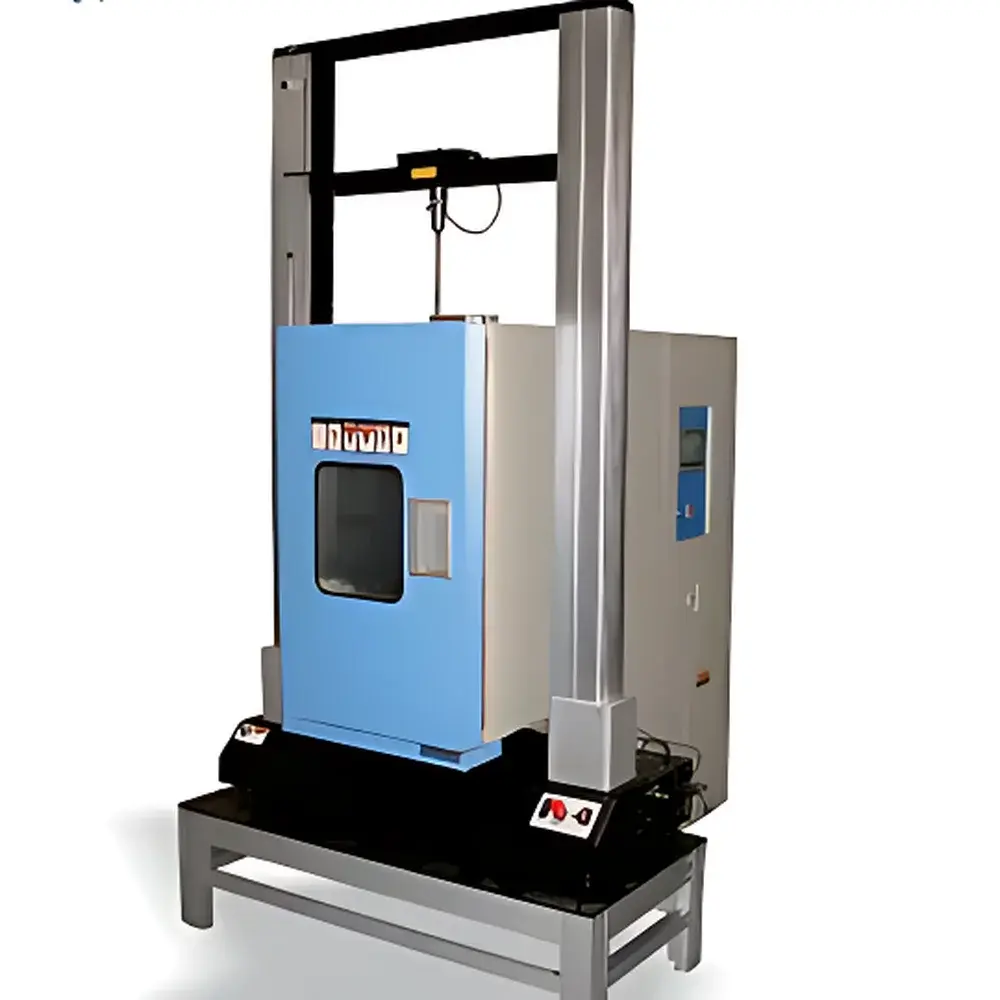
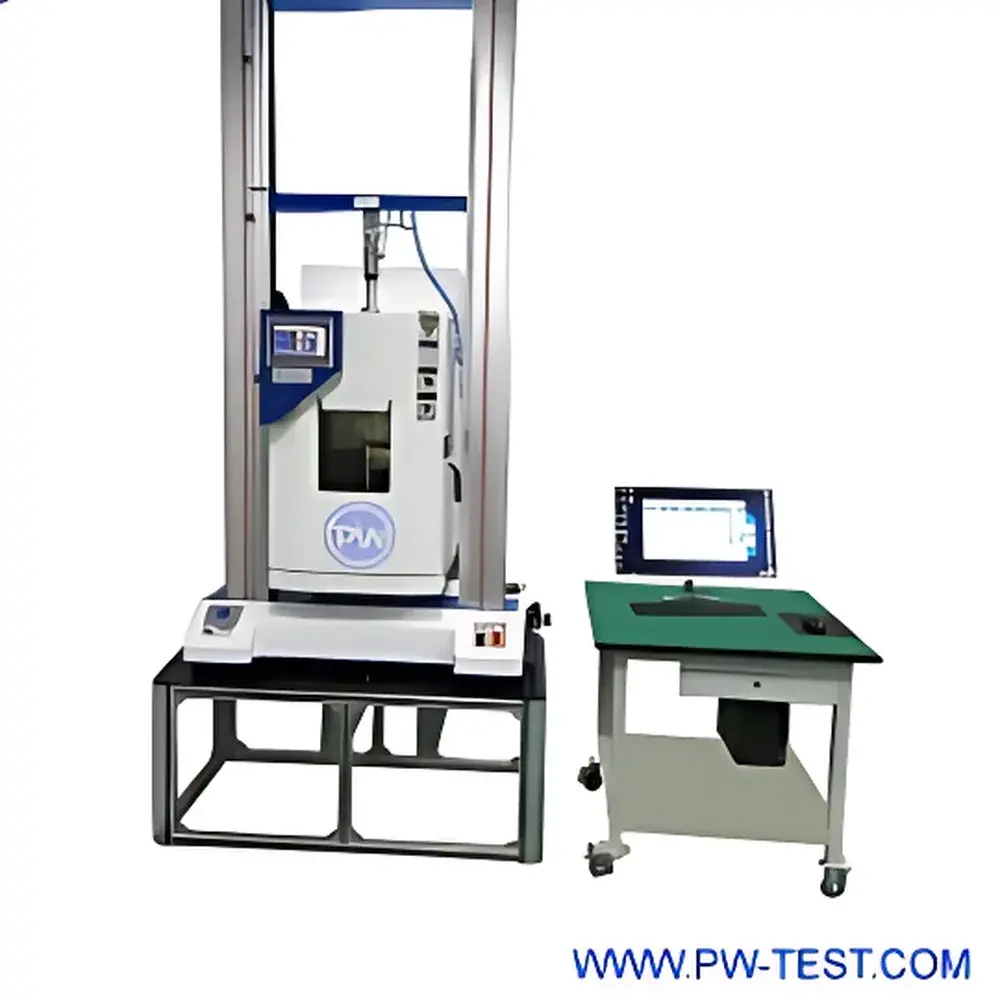
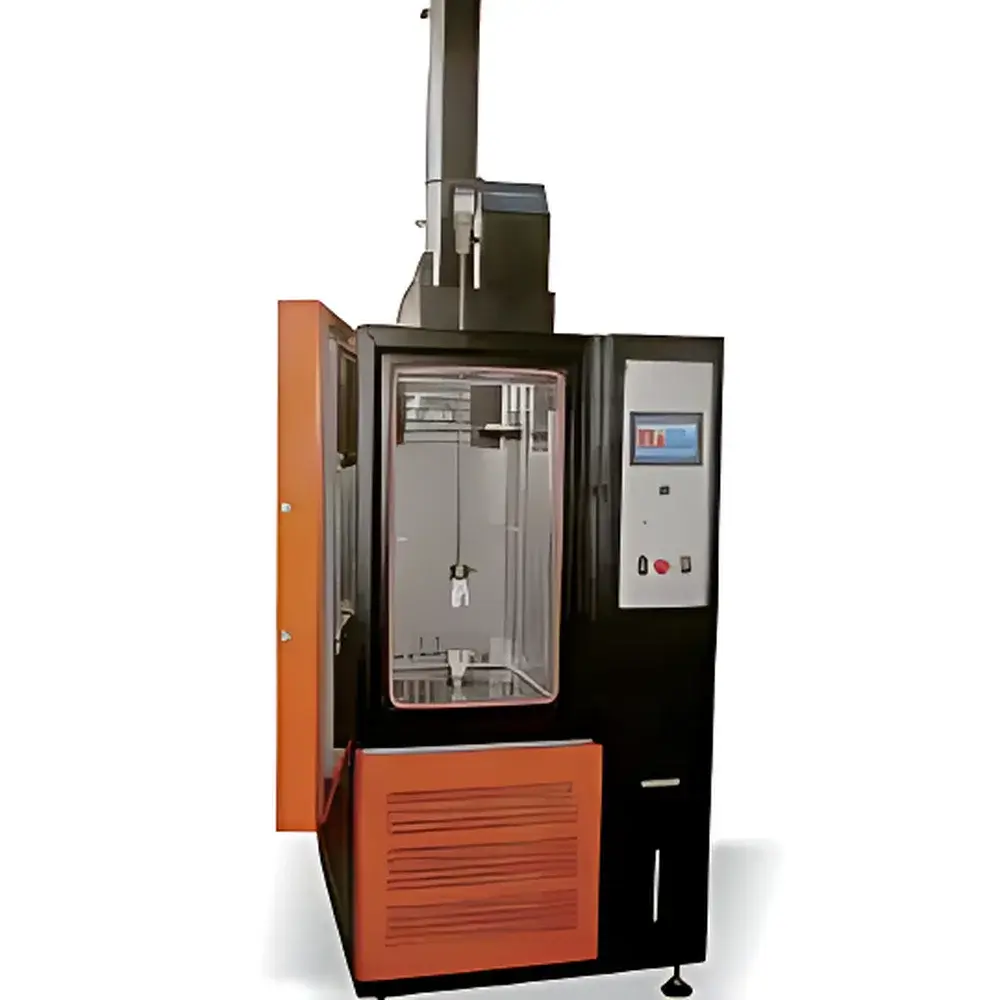
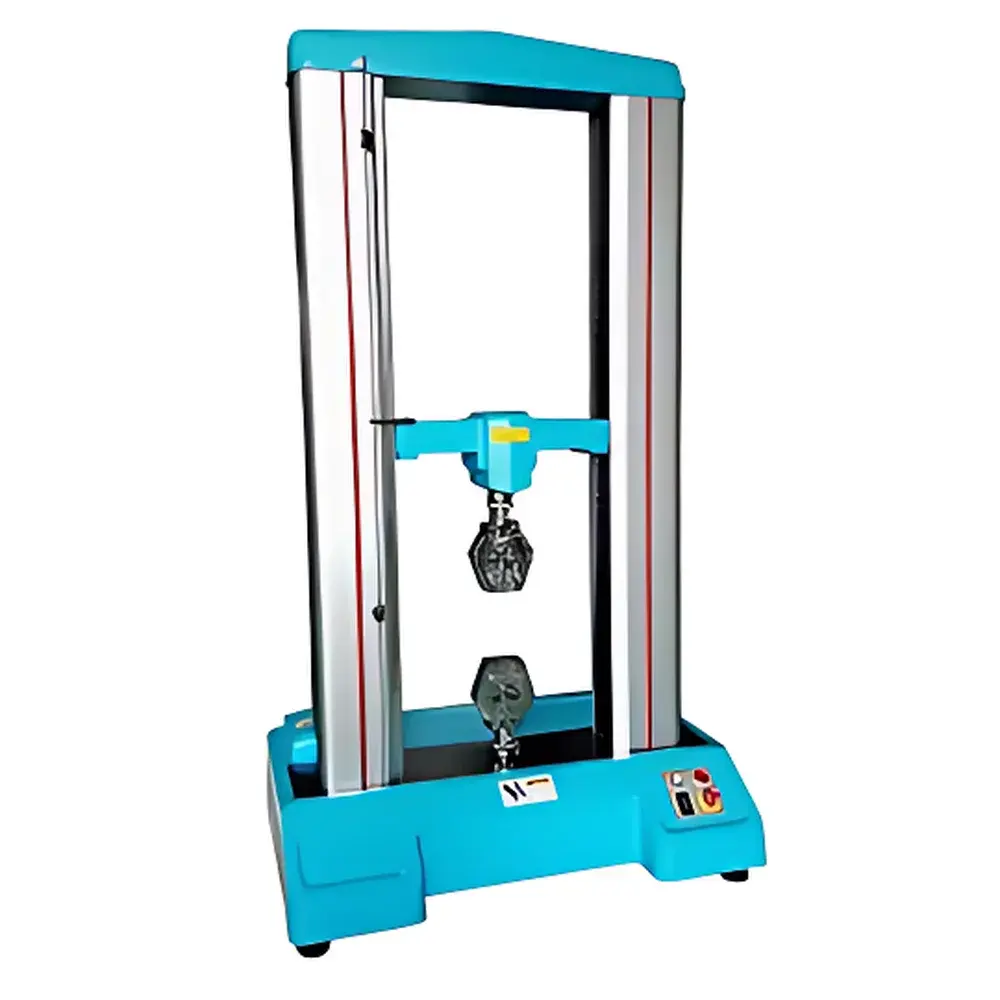
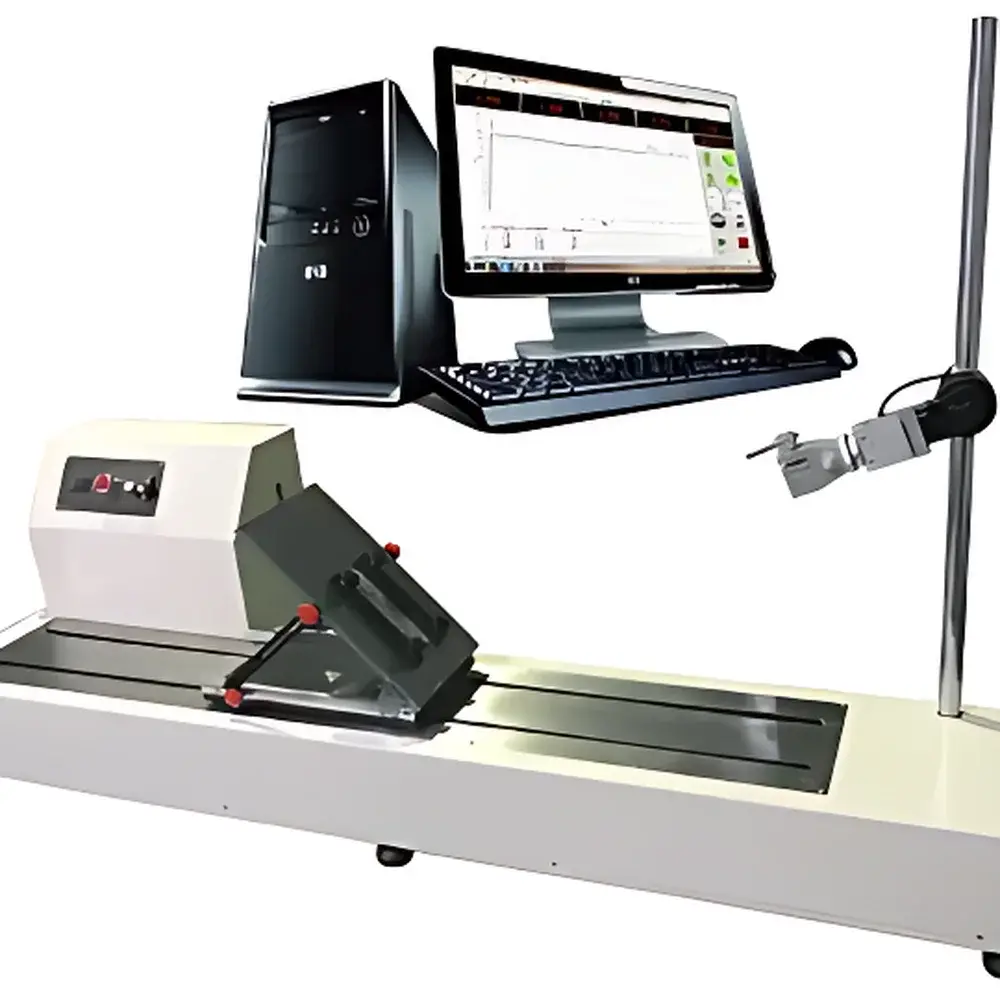
Yuelian PW-UCS-128 Environmental Chamber-Integrated Electromechanical Universal Testing Machine
| Brand | Yuelian |
|---|---|
| Origin | Guangdong, China |
| Model | PW-UCS-128 |
| Instrument Type | Electromechanical Universal Testing Machine |
| Load Capacity Options | 10N, 20N, 50N, 100N, 200N, 500N, 1 kN, 2 kN (dual-range configurable) |
| Temperature Range | −70 °C to +150 °C |
| Force Resolution | 1/250,000 full scale |
| Force Accuracy | ≤ ±0.5% of reading |
| Displacement Resolution | 0.005 mm |
| Temperature Control | PID auto-tuning, stability error < ±1 °C |
| Temperature Display Precision | 0.1 °C |
| Test Speed | 0.5–500 mm/min (PC-programmable) |
| Test Space (Chamber) | 400 × 400 × 800 mm (W×D×H) |
| Crosshead Travel | 650 mm |
| Effective Test Width | Ø140 mm |
| Drive System | Servo motor + precision ball screw + timing belt |
| Power Supply | 220 V, 50/60 Hz, 30 A |
| Rated Power | 400 W |
| Net Weight | ~420 kg |
| Chamber Material | SUS304 stainless steel |
| Cooling System | High-efficiency compressor with eco-friendly refrigerant |
| Heating System | SUS304 finned heating elements |
| Air Circulation | Forced convection via axial fans |
| Safety Protections | Overload cutoff, emergency stop, specimen rupture auto-stop, upper/lower limit trip, thermal over-limit protection, compressor overheat protection, heater dry-run protection |
Overview
The Yuelian PW-UCS-128 is an environmental chamber-integrated electromechanical universal testing machine engineered for high-fidelity mechanical property characterization under controlled thermal conditions. Unlike conventional ambient-only tensile testers, this system integrates a fully programmable climatic chamber—capable of stable operation from −70 °C to +150 °C—with a precision servo-driven loading frame. It operates on the fundamental principle of force-displacement transduction via calibrated load cells and high-resolution linear encoders, enabling quantitative evaluation of stress–strain behavior, modulus, yield point, fracture energy, and interfacial adhesion metrics across temperature-dependent material states. The modular chamber design allows physical detachment during room-temperature testing, optimizing workspace flexibility without compromising structural rigidity or alignment integrity. Its architecture complies with core mechanical testing standards including ISO 6892-1 (tensile testing of metallic materials), ASTM D638 (plastics tensile properties), ASTM D882 (thin plastic sheeting), and ISO 1133 (polymer melt flow), serving laboratories requiring traceable, reproducible data for R&D validation, quality control, and regulatory submissions.
Key Features
- Integrated dual-zone thermal control: Independent PID-regulated chamber and actuator thermal shielding minimize thermal drift in load cell and displacement sensor outputs.
- High-resolution force measurement: 1/250,000 full-scale resolution with ≤ ±0.5% accuracy across all selectable capacities (10 N to 2 kN), supporting both low-force film peel tests and high-strength composite tensile evaluations.
- Programmable test velocity: Linear speed range of 0.5–500 mm/min, adjustable in 0.1 mm/min increments via PC interface; includes rapid positioning mode for fixture alignment.
- Robust mechanical drivetrain: Industrial-grade servo motor coupled to a preloaded precision ball screw and synchronous timing belt ensures zero backlash, minimal hysteresis, and long-term repeatability.
- Comprehensive safety architecture: Dual-channel overload detection, hardware-based emergency stop circuitry, automatic specimen rupture termination, and redundant thermal cutouts (chamber heater, compressor, chamber wall).
- SUS304 chamber construction: Seamless interior welds, insulated double-wall design, and forced-air circulation ensure uniform temperature distribution (±1 °C deviation at setpoint) and corrosion resistance in humid or saline environments.
Sample Compatibility & Compliance
The PW-UCS-128 accommodates diverse specimen geometries—including films, foils, fibers, elastomeric strips, adhesive tapes, laminates, and small-section polymers—within its 400 × 400 × 800 mm chamber volume and Ø140 mm test zone. Standard fixtures include pneumatic wedge grips, peel arms, and shear plates; optional accessories extend capability to loop strength, ring crush, and coefficient of friction measurements. All test protocols adhere to GLP-compliant data governance: audit trails log user ID, timestamp, parameter changes, and calibration events. Software output meets FDA 21 CFR Part 11 requirements for electronic records and signatures when deployed with validated MS Access database configuration and role-based access control. Test reports conform to ISO/IEC 17025 documentation structure and may be exported in PDF, CSV, or XML formats for integration into LIMS environments.
Software & Data Management
The embedded Windows-based control suite supports real-time acquisition from up to four synchronized analog channels (load, displacement, chamber temperature, auxiliary thermocouple). It computes ASTM- and ISO-defined parameters—including tensile strength, elongation at break, Young’s modulus, secant modulus, peel average force, and tear propagation energy—using algorithmic curve smoothing and noise-filtered derivative calculations. Raw data is stored in encrypted binary format with metadata tagging (operator, sample ID, environmental log, calibration certificate reference). Graphical analysis tools enable overlay of multiple temperature-conditioned stress–strain curves, modulus vs. temperature plots, and time–temperature superposition (TTS) preprocessing. Database connectivity via ODBC allows direct querying against MS Access or SQL Server instances; custom report templates support company-specific headers, QA stamps, and digital signature fields.
Applications
- Thermo-mechanical characterization of polymer films and packaging materials across storage and end-use temperature ranges.
- Evaluation of adhesive bond strength degradation in automotive trim assemblies exposed to thermal cycling.
- Validation of biomedical device materials (e.g., silicone tubing, hydrogel films) under simulated physiological and sterilization temperatures.
- Quality assurance of lithium-ion battery separator tensile integrity at sub-zero operating conditions.
- Research into cold-embrittlement thresholds of engineering thermoplastics used in aerospace components.
- Regulatory submission testing for ISO 10993 biocompatibility assessments requiring mechanical property verification at elevated temperatures.
FAQ
Can the environmental chamber be removed for ambient-only testing?
Yes—the chamber is mechanically decoupled via standardized mounting rails and quick-disconnect utility interfaces (power, USB, thermocouple), enabling full use of the 650 mm travel envelope without thermal constraints.
Is the system compatible with third-party data acquisition hardware?
The controller provides isolated analog voltage outputs (±10 V) for load and displacement signals, plus TTL-level trigger outputs, allowing synchronization with external DAQ systems such as National Instruments or Keysight platforms.
What calibration standards does the force measurement trace to?
Load cells are factory-calibrated using NIST-traceable deadweight standards; optional annual recalibration services include ISO/IEC 17025-certified certificates with uncertainty budgets.
Does the software support automated multi-step test sequences?
Yes—users can define conditional test profiles (e.g., “hold at −40 °C for 30 min → ramp to 25 °C at 5 °C/min → initiate tensile test at 10 mm/min”) with embedded dwell, ramp, and step logic.
How is temperature uniformity verified inside the chamber?
Each unit undergoes 24-hour thermal mapping per IEC 60068-3-5 using 9-point thermocouple array; final validation report documents spatial deviation (±0.8 °C max) and temporal stability (±0.3 °C over 1 hour) at key setpoints.



