
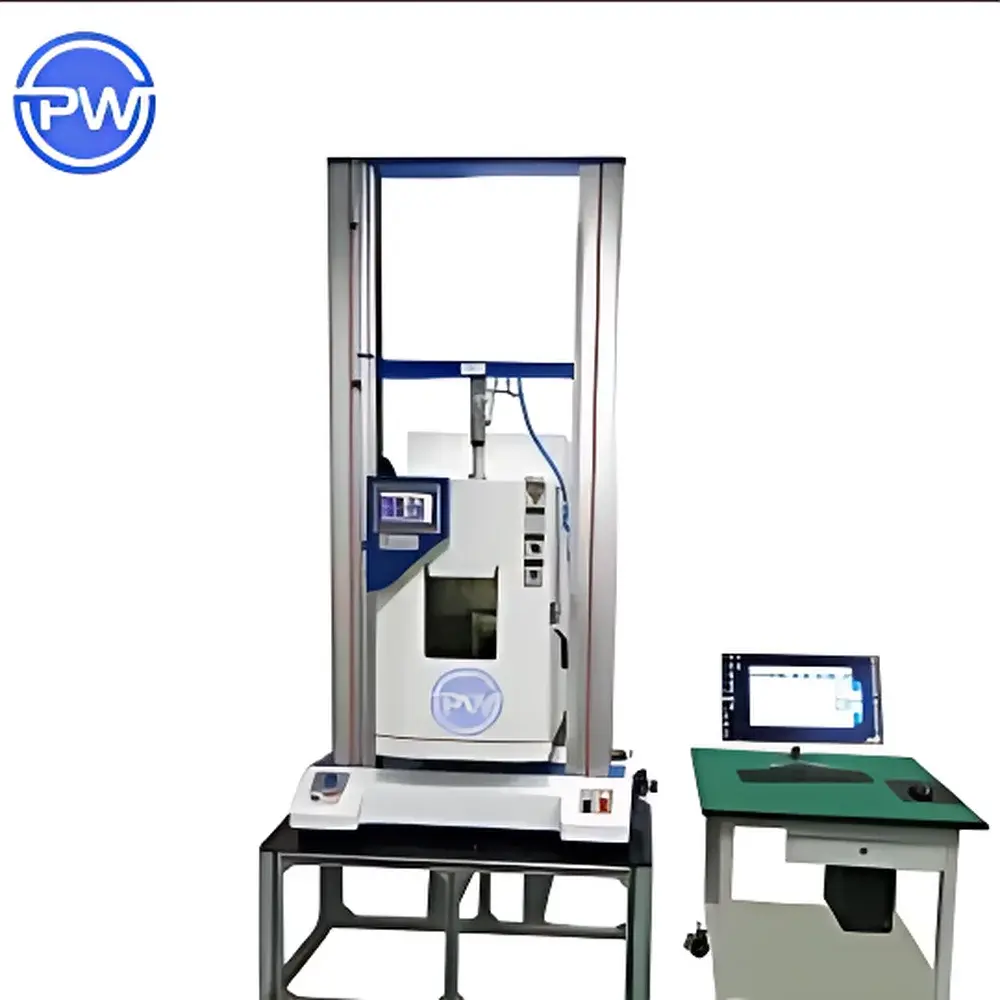
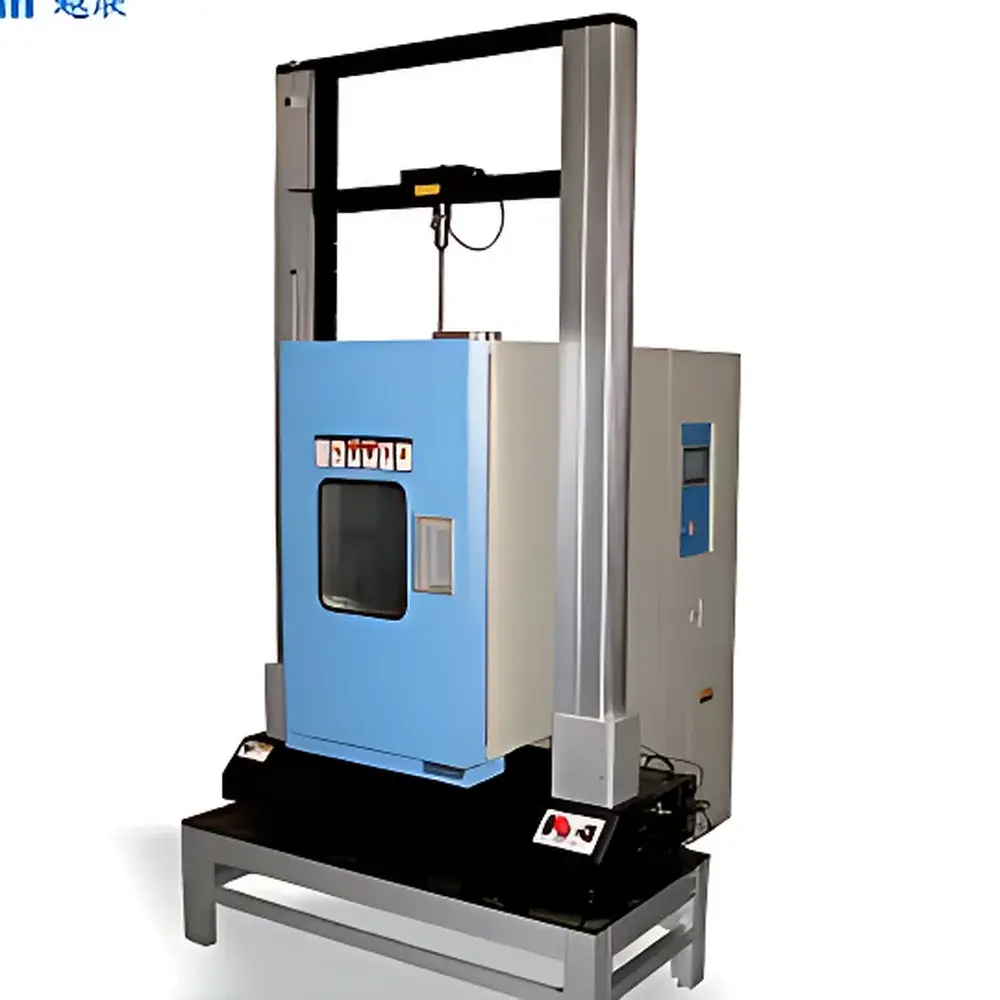
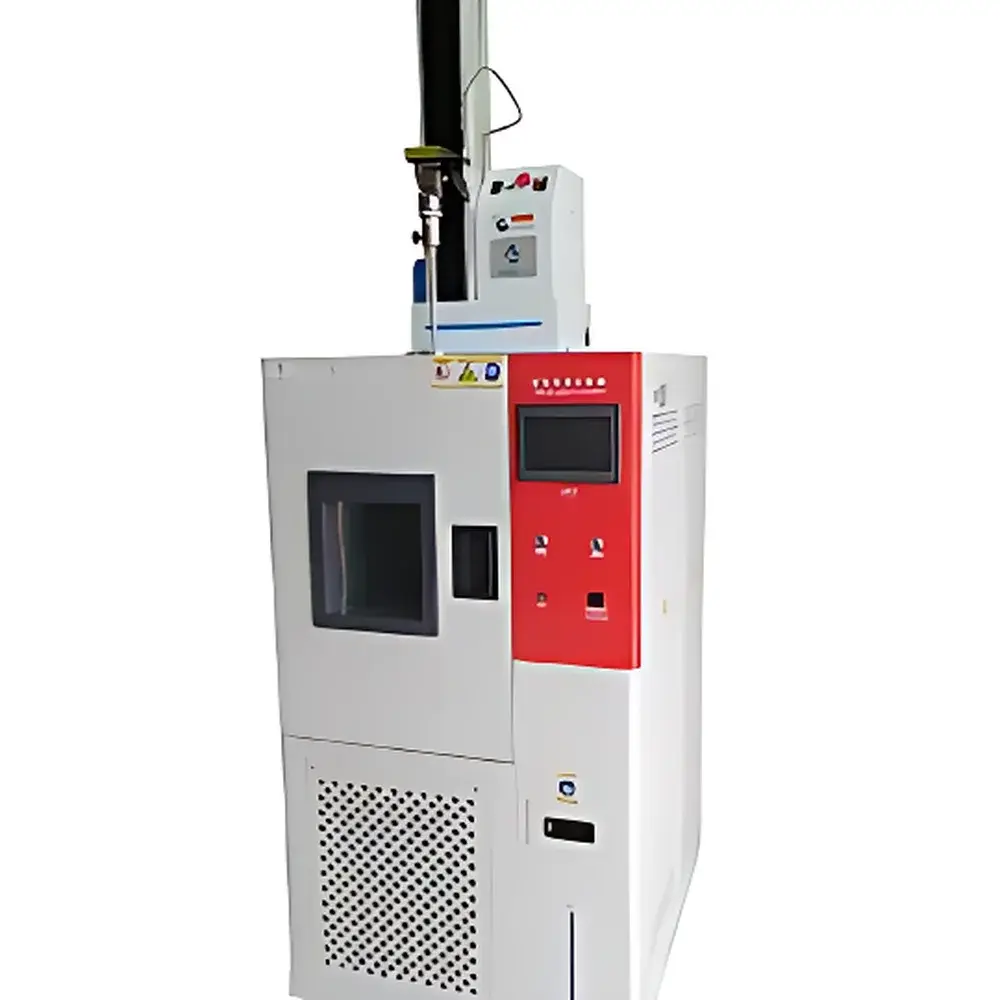
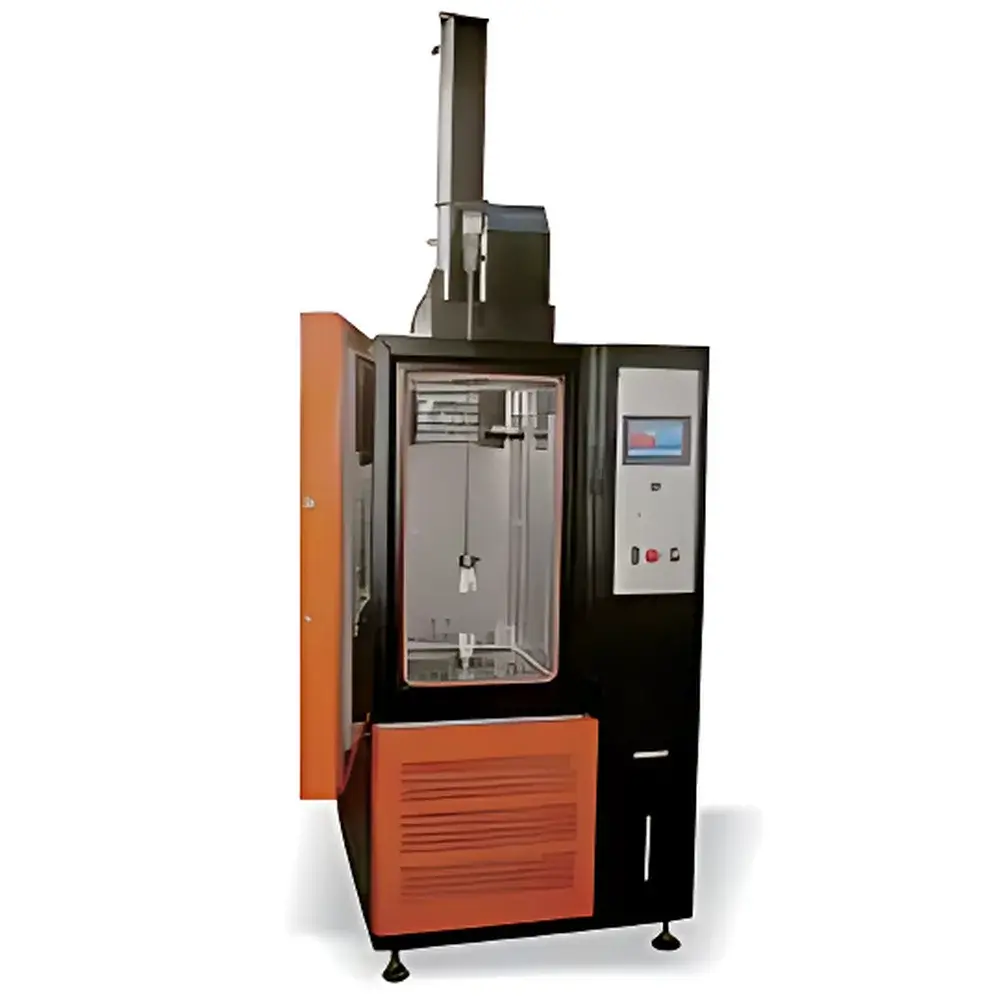
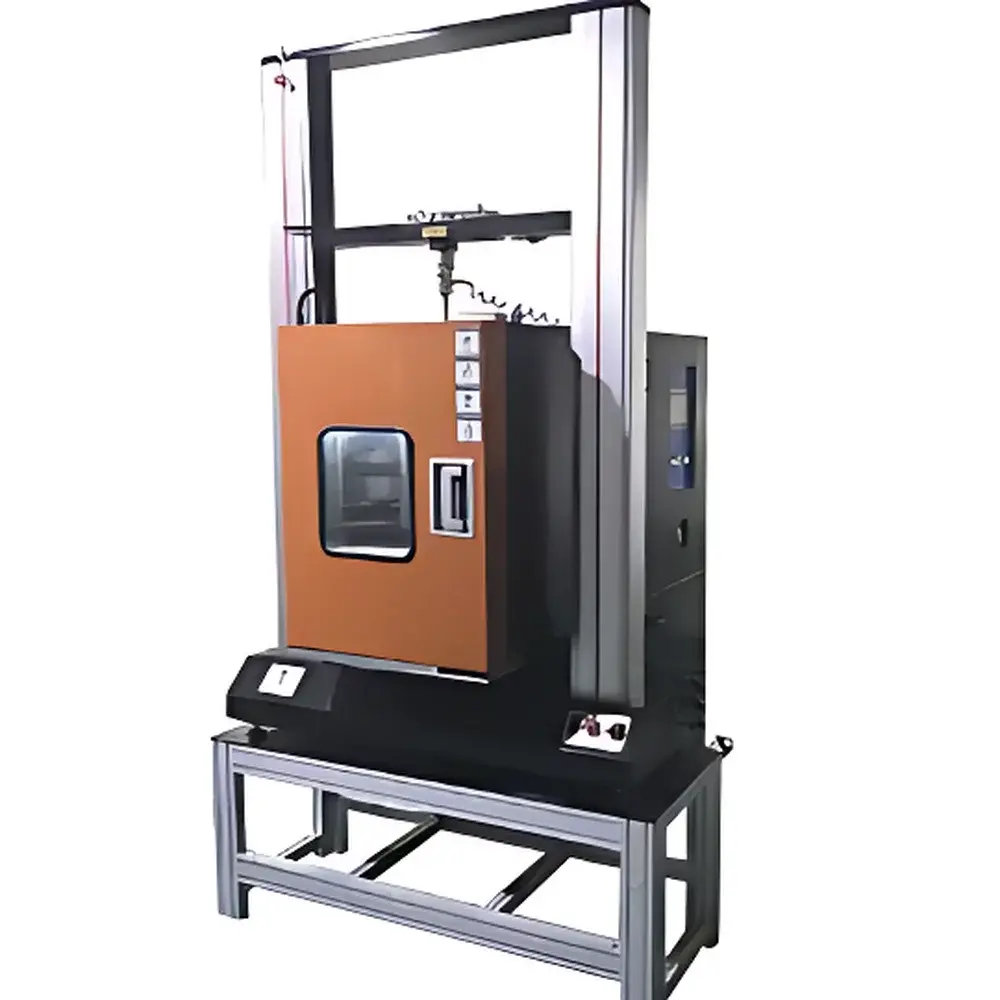
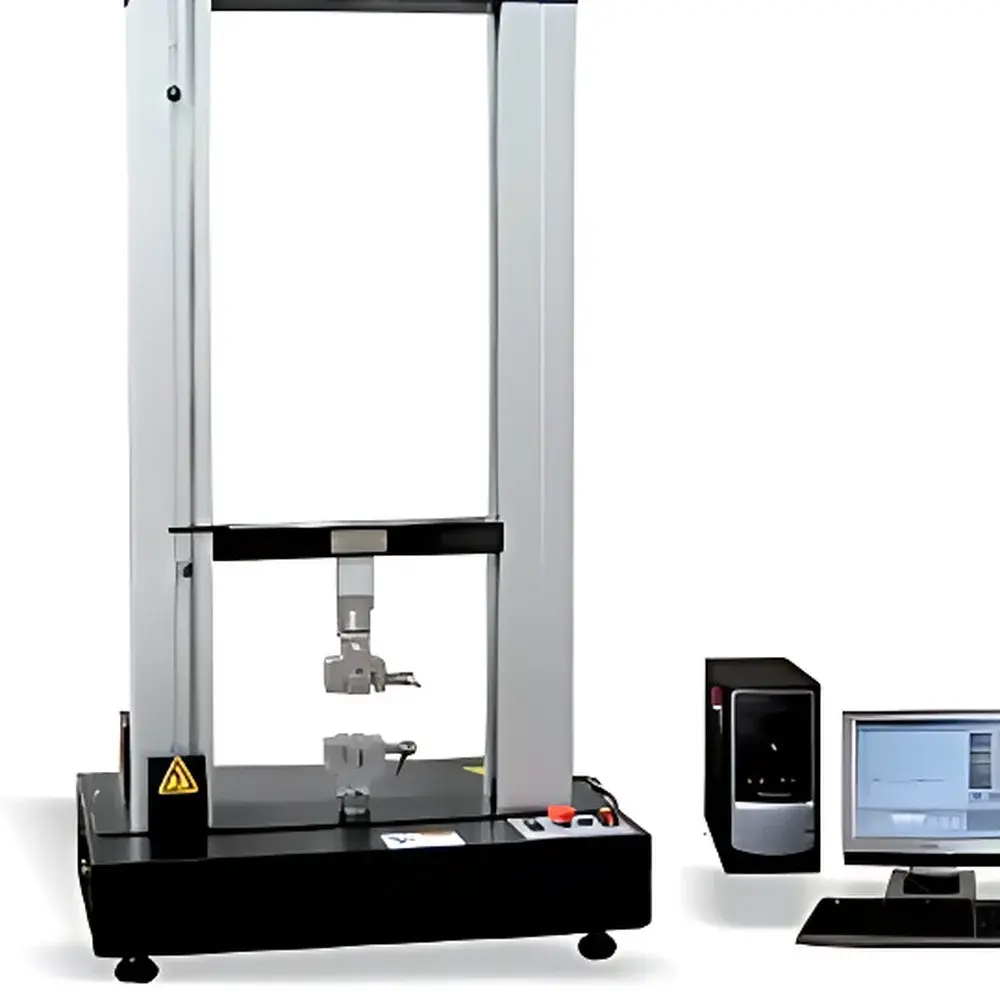
Yuelian PW-YT2-128 Environmental Universal Testing Machine with Integrated -40°C to +150°C Climate Chamber
| Brand | Yuelian |
|---|---|
| Origin | Guangdong, China |
| Manufacturer Type | Authorized Distributor |
| Country of Origin | China |
| Model | PW-YT2-128 |
| Instrument Type | Electromechanical Universal Testing Machine |
| Load Capacity Options | 10 N, 20 N, 50 N, 100 N, 200 N, 500 N, 1 kN, 2 kN (one selected) |
| Force Resolution | 1/500,000 full scale |
| Force Accuracy | ±0.3% of reading |
| Crosshead Travel | 650 mm |
| Test Width | Ø140 mm |
| Speed Range | 0.001–500 mm/min (computer-controlled) |
| Position Resolution | 1/500,000 full stroke |
| Drive System | Servo motor with precision ball screw and timing belt transmission |
| Power Consumption | 400 W |
| Electrical Supply | 220 V, 50/60 Hz |
| Temperature Range | -40°C to +150°C |
| Temperature Uniformity | ≤2°C |
| Temperature Stability | ±0.5°C |
| Temperature Deviation | ≤±2°C |
| Humidity Control (≤75% RH) | ±3% RH |
| Chamber Internal Volume | 128 L |
| Internal Dimensions (W×H×D) | 400 × 400 × 800 mm |
| External Dimensions (W×H×D) | 1000 × 2800 × 1200 mm |
| Warm-up/Cool-down Time (no load) | ~30 min to setpoint |
| Overshoot (no load) | ≤±3°C |
| Noise Level | ≤68 dB(A), per JB/T 9512–1999 |
| Standard Fixtures | 180° peel clamp, ring tack fixture |
| Software Interface | USB |
| Compliance | ASTM E4, ISO 7500-1, GB/T 16491, JJG 475–2008 |
Overview
The Yuelian PW-YT2-128 Environmental Universal Testing Machine is an electromechanical force-testing platform engineered for precise mechanical property evaluation under controlled thermal conditions. It integrates a high-fidelity universal testing frame with a fully compliant climate chamber—enabling static and dynamic tensile, compressive, peel, shear, tear, delamination, and ring tack measurements across a continuous temperature range from –40°C to +150°C. The system operates on the principle of servo-controlled displacement actuation, where load is measured via a high-stability load cell and position via an optical encoder coupled to a preloaded ball screw assembly. This architecture ensures traceable force measurement in accordance with ISO 7500-1 Class 0.5 and ASTM E4 calibration standards, while the climate chamber meets ISO 17025-relevant environmental uniformity and stability criteria for materials qualification testing.
Key Features
- Modular dual-system architecture: independent yet synchronized control of mechanical actuation and environmental conditioning
- High-resolution force measurement with 1/500,000 internal resolution and ±0.3% accuracy over full scale
- Computer-controlled speed regulation from 0.001 mm/min (creep-sensitive applications) to 500 mm/min (high-rate impact simulation)
- Integrated USB-based control software supporting real-time load-displacement curve acquisition, multi-step test protocols, and automatic stop triggers (overload, specimen rupture, user-defined limits)
- Climate chamber constructed with SUS 304 stainless steel interior, PID-controlled refrigeration/heating system, and validated temperature uniformity ≤2°C across 128 L working volume
- Dual-mode positioning: fine-adjustment via software interface and rapid manual coarse adjustment using dedicated front-panel buttons
- Comprehensive unit conversion engine supporting SI (N, MPa), imperial (lbf, psi), and legacy units (kgf, tonf, g)
Sample Compatibility & Compliance
The PW-YT2-128 accommodates standard and custom specimens up to Ø140 mm wide and 650 mm travel length—suitable for films, foils, elastomers, adhesives, composites, biomedical polymers, and thin metallic foils. Its mechanical subsystem complies with JJG 475–2008 (Chinese verification regulation for universal testers) and aligns with international metrological frameworks including ISO 7500-1 (static calibration) and ASTM E4 (force verification). The climate chamber satisfies thermal performance benchmarks referenced in ASTM D882 (tensile properties of thin plastic sheeting), ISO 8510-2 (peel resistance), and GB/T 2792 (adhesive tape peel strength), with documented temperature deviation ≤±2°C and stability ±0.5°C at steady state. All hardware and firmware support audit-ready operation under GLP and GMP environments, including timestamped data logging and user-access-level permissions.
Software & Data Management
The embedded PC-based control suite provides deterministic real-time acquisition at ≥1 kHz sampling rate, with lossless storage of raw load, displacement, time, and environmental parameters (temperature, humidity) in CSV and proprietary binary formats. Data export supports direct integration into LIMS or statistical analysis platforms (e.g., JMP, Minitab). Software features include programmable multi-stage tests (pre-load → ramp → hold → return), automatic calculation of modulus, yield point, elongation at break, and peel energy (J/m), as well as configurable report templates compliant with ISO/IEC 17025 documentation requirements. Audit trail functionality records operator ID, parameter changes, and test execution events—fully compatible with FDA 21 CFR Part 11 electronic signature readiness when deployed with validated Windows OS configurations.
Applications
This system serves critical R&D and QC functions across regulated industries: polymer formulation labs evaluating low-temperature brittleness or high-temperature creep compliance; adhesive manufacturers validating peel strength retention across automotive thermal cycles; medical device suppliers verifying suture tensile integrity after sterilization exposure; and packaging engineers assessing seal strength of laminated pouches under tropical/humid conditions. It is routinely applied to ASTM D638 (tensile plastics), ASTM D1876 (T-peel), ISO 11339 (adhesive tack), and ISO 1421 (rubber tear resistance)—with full environmental traceability for submission to regulatory dossiers.
FAQ
Does the system support automated thermal cycling during mechanical testing?
Yes—the software enables synchronized temperature ramping and dwell phases concurrent with force-displacement profiling, with user-defined thermal profiles linked to test stages.
Can third-party load cells or fixtures be integrated?
Fixture compatibility follows ISO 26203-2 mounting standards; load cell interchange requires recalibration per ISO 7500-1 and firmware reconfiguration by authorized service personnel.
Is humidity control available within the climate chamber?
The standard configuration maintains relative humidity ≤75% RH with ±3% RH accuracy; optional humidification/dehumidification modules are available upon request.
What validation documentation is provided?
Each unit ships with Factory Calibration Certificate (traceable to NIM, China), Chamber Performance Verification Report (temperature uniformity/stability), and Software Validation Summary aligned with ICH Q9 principles.
Is remote monitoring supported?
Local network connectivity allows secure remote access via VPN-configured client workstations; no cloud upload or external telemetry is enabled by default.



