
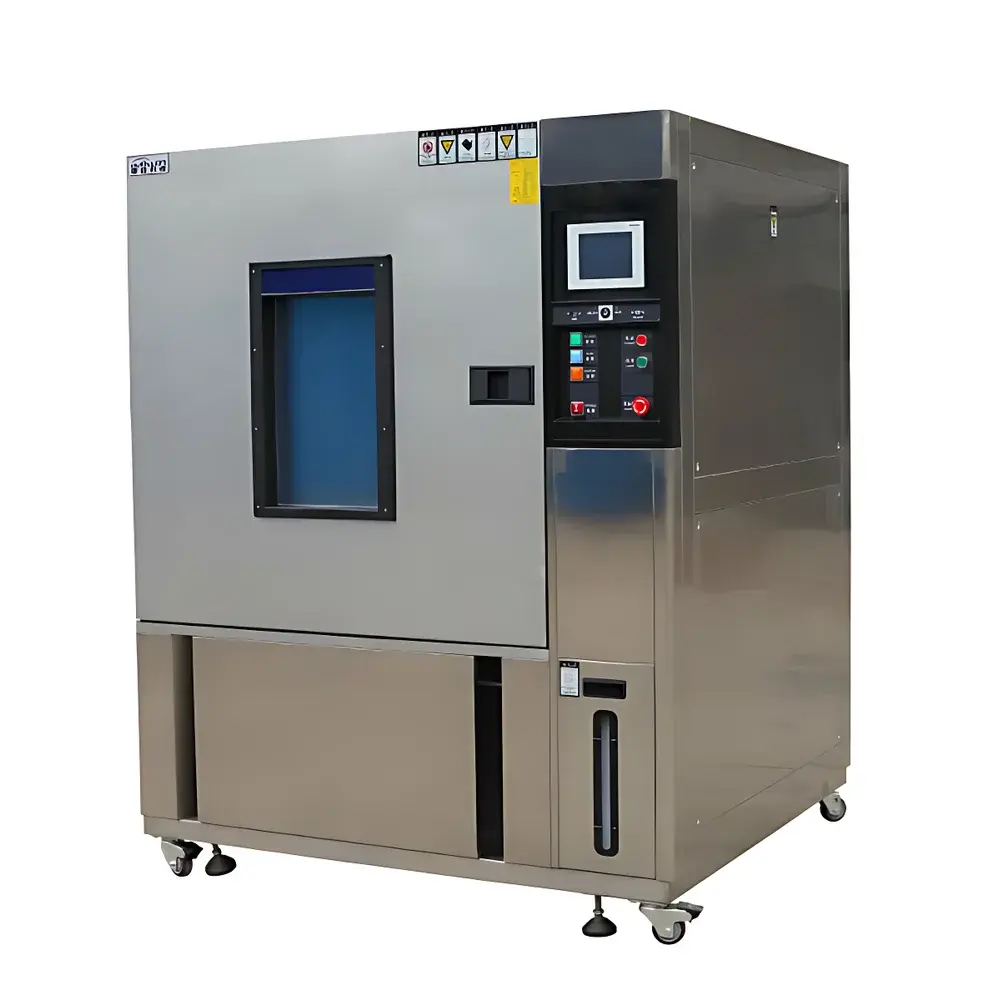
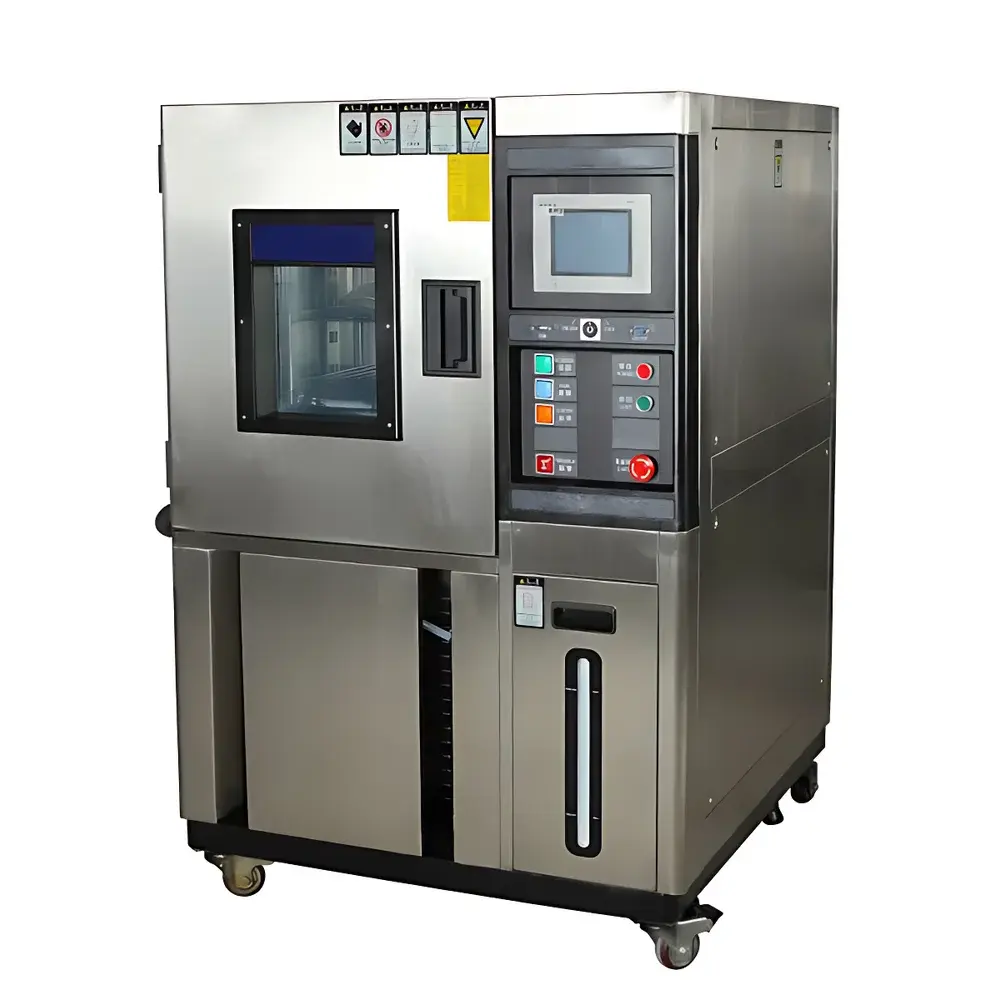
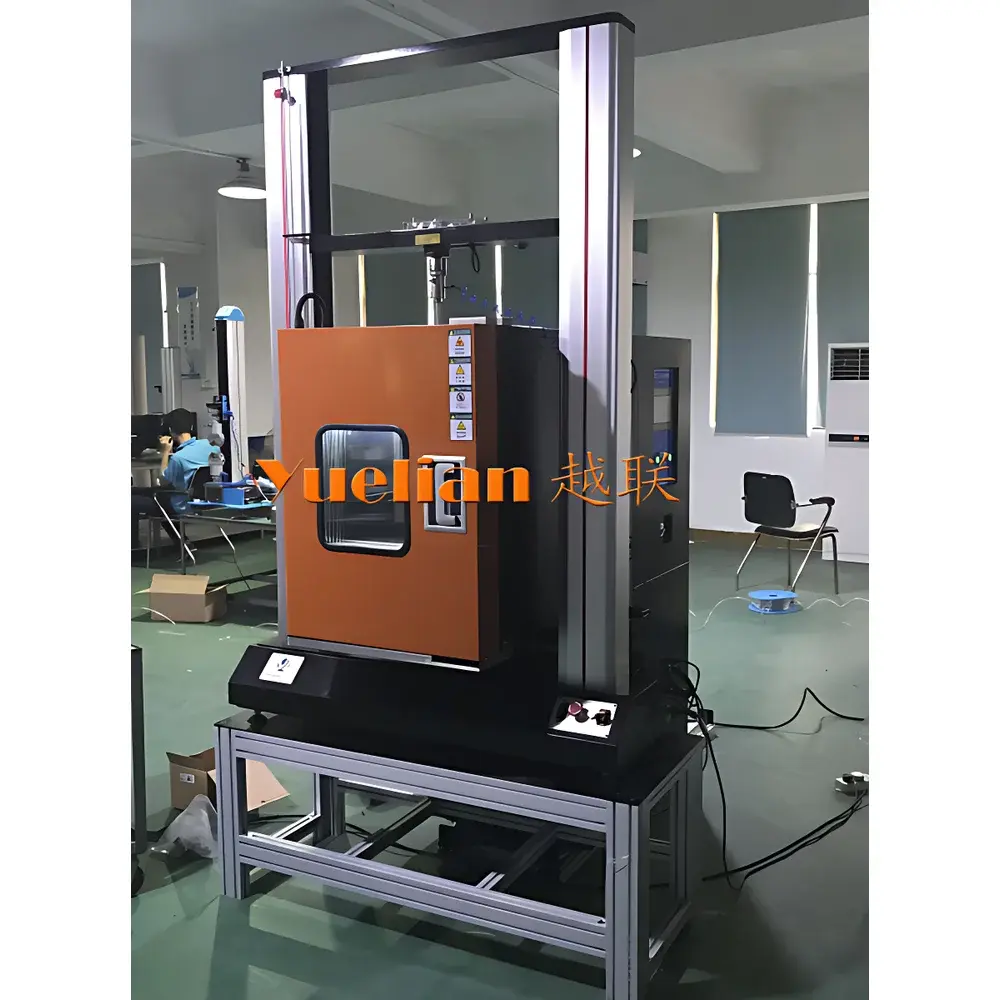
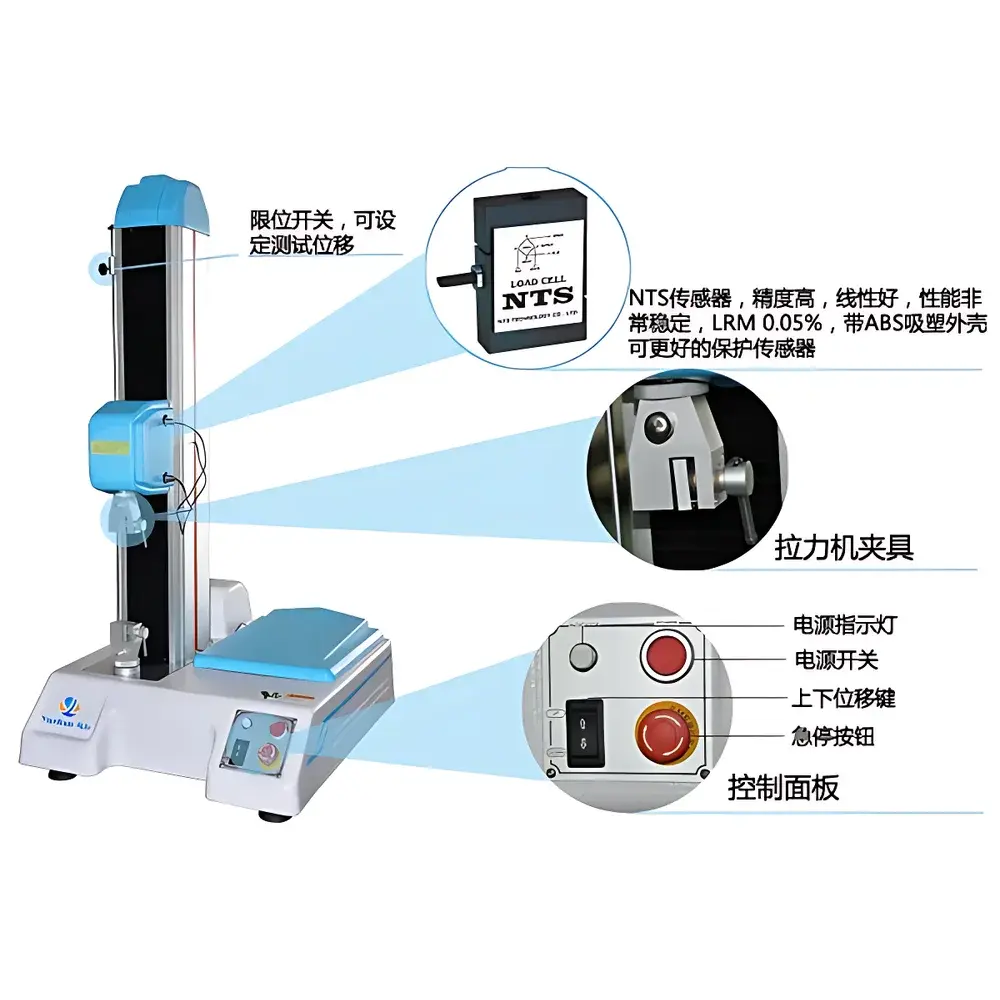
Yuelian TF-150 High-Low Temperature & Humidity Environmental Test Chamber
| Brand | Yuelian |
|---|---|
| Origin | Guangdong, China |
| Model | TF-150 |
| Internal Dimensions (W×H×D) | 50×60×50 cm |
| External Dimensions (W×H×D) | 103×141×91 cm |
| Chamber Volume | 150 L |
| Temperature Range | −70 °C to +150 °C |
| Humidity Range | 20 %RH to 98 %RH (optional low-humidity configuration down to 5 %RH) |
| Temperature Uniformity | ±0.5 °C |
| Humidity Uniformity | ±3 %RH |
| Temperature Stability | ±0.3 °C |
| Humidity Stability | ±2.5 %RH |
| Heating Rate | −70 °C → +100 °C in approx. 60 min |
| Cooling Rate | +20 °C → −70 °C in approx. 90 min |
| Control System | PID + SSR/SCR bidirectional synchronous output with slope logic |
| Programmability | 150 programs × 1500 segments, segmentable and chainable |
| Cycle Capability | 9999 cycles × 999 repeats, subdivisible into 5 independent partial cycles |
| Safety Monitoring | 15-point real-time system diagnostics with fault logging and remediation guidance |
| Refrigeration | Twin-stage hermetic air-cooled system (R404A/R507) |
| Humidification | Surface evaporation type with auto water recovery and dry-run/overheat protection |
| Construction | SUS#304 stainless steel interior and exterior |
| Insulation | Rock wool + rigid polyurethane foam |
| Compliance | Designed per IEC 60068-2 series, ASTM D4332, ISO 16750-4, and GB/T 2423.1–2423.4 for environmental stress screening |
Overview
The Yuelian TF-150 High-Low Temperature & Humidity Environmental Test Chamber is an engineered platform for accelerated environmental stress testing of materials and finished products under precisely controlled thermal and hygrothermal conditions. Based on the fundamental principles of thermodynamic equilibrium and psychrometric control, the chamber maintains stable temperature and relative humidity profiles across its working volume through a dual-loop feedback architecture—separate PID-regulated heating, refrigeration, and humidification subsystems operate in coordinated synchrony. Its operational envelope spans −70 °C to +150 °C and 20–98 %RH (extendable to 5 %RH upon specification), making it suitable for qualification testing per international reliability standards including IEC 60068-2-1 (cold), -2 (dry heat), -14 (change of temperature), -30 (damp heat cyclic), and ISO 16750-4 (road vehicles). The chamber’s structural integrity, thermal inertia management, and sensor placement strategy are optimized to meet the spatial uniformity requirements (±0.5 °C / ±3 %RH) mandated for comparative material evaluation and pre-compliance verification.
Key Features
- Robust dual-stage refrigeration system using environmentally compliant R404A/R507 mixed refrigerant, with oil separation technology to prevent lubricant accumulation in capillary tubes and condensers—ensuring long-term cooling efficiency and system reliability.
- Intelligent PID+SSR/SCR bidirectional control with embedded slope logic enables smooth ramp-and-soak transitions, minimizing thermal shock during rapid temperature sweeps (e.g., −70 °C → +100 °C in ≤60 minutes).
- Surface-evaporation humidification module with integrated deionized water generation from tap supply; includes automatic water recovery, dry-run cutoff, and overheat protection—eliminating manual refilling while maintaining consistent RH reproducibility.
- 150-program × 1500-segment programmable controller supports complex multi-step test profiles, including nested loops, conditional branching (via time-scheduled outputs), and cross-segment parameter linking—facilitating full-cycle HALT/HASS protocol execution.
- Full SUS#304 stainless steel construction (interior and exterior), combined with high-density rock wool and rigid PU foam insulation (≥120 mm thickness), ensures minimal thermal leakage and mechanical durability under continuous operation.
- Comprehensive 15-point safety monitoring system logs fault timestamps, identifies root causes (e.g., compressor overload, refrigerant pressure anomaly, heater overtemperature), and displays actionable mitigation steps—supporting GLP-aligned maintenance traceability.
Sample Compatibility & Compliance
The TF-150 accommodates diverse sample geometries up to 50×60×50 cm internal volume, with two adjustable stainless-steel shelves, a 100 mm diameter test port (standard), and optional inert-gas purge capability for oxygen-sensitive evaluations. Its design conforms to key regulatory frameworks governing environmental testing: IEC 60068-2 series for electronic component qualification; ASTM D4332 for conditioning plastics prior to mechanical testing; ISO 16750-4 for automotive ECU validation; and GB/T 2423.1–2423.4 for domestic electrical equipment certification. While not inherently 21 CFR Part 11 compliant, the RS-232 interface allows integration with validated third-party data acquisition systems supporting audit trails, electronic signatures, and user access controls required in GMP environments.
Software & Data Management
The built-in controller provides local real-time monitoring of temperature, humidity, setpoint deviation, and system status via a high-contrast LCD interface. All operational parameters—including program execution logs, alarm history, and calibration timestamps—are stored internally with non-volatile memory retention (>10 years). For extended data handling, the standard RS-232 serial port enables connection to host PCs running custom or vendor-supplied software for remote supervision, automated report generation (CSV/PDF), and trend analysis. Optional analog output signals (0–10 V / 4–20 mA) support integration into centralized facility SCADA systems. Firmware updates are performed via USB interface, preserving configuration integrity during version upgrades.
Applications
- Electronics: Thermal cycling of PCBAs, semiconductor packages, and connectors to assess solder joint fatigue and CTE mismatch failure modes.
- Automotive: Validation of infotainment modules, sensors, and battery management systems per ISO 16750-4 cold/hot/humidity exposure sequences.
- Medical Devices: Accelerated aging of polymer housings, adhesives, and sterilization packaging under IEC 60601-1 ambient stress conditions.
- Aerospace Components: Moisture absorption/desorption profiling of composite laminates and sealants used in avionics enclosures.
- Materials Science: Comparative hygrothermal aging of thermoplastics, elastomers, and coatings to quantify property degradation (tensile strength, elongation, gloss loss).
- Quality Assurance Labs: Routine incoming inspection of raw materials (e.g., lithium-ion cathode powders, optical films) against supplier-spec humidity tolerance thresholds.
FAQ
What is the minimum achievable humidity level, and how is it maintained?
The standard configuration achieves 20–98 %RH; a low-humidity option (5–98 %RH) is available using enhanced desiccant-assisted cooling and extended dwell-time dehumidification cycles.
Can the chamber be validated for IQ/OQ/PQ protocols?
Yes—the uniformity, stability, and sensor traceability (NIST-traceable Pt100 RTDs) support formal qualification when paired with external calibrated reference instruments and documented SOPs.
Is remote monitoring possible without proprietary software?
The RS-232 interface uses ASCII-based command protocols compatible with LabVIEW, Python (pySerial), or Modbus-RTU gateways, enabling fully open integration.
What maintenance intervals are recommended for the refrigeration system?
Compressor oil and filter-drier replacement every 24 months under continuous operation; annual verification of refrigerant charge and capillary tube integrity is advised.
Does the controller support password-protected user levels?
Yes—three-tier access (Operator, Engineer, Administrator) restricts parameter editing, program deletion, and calibration adjustments based on role-defined permissions.



