
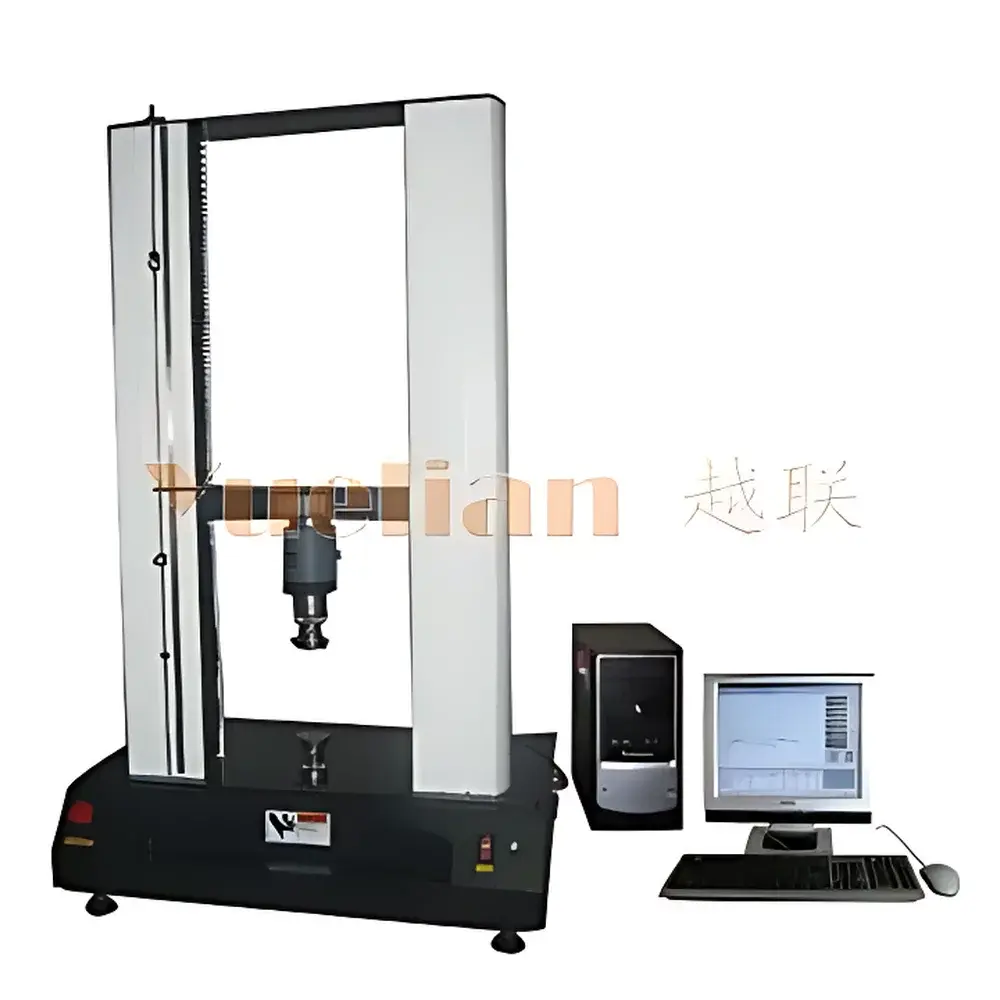
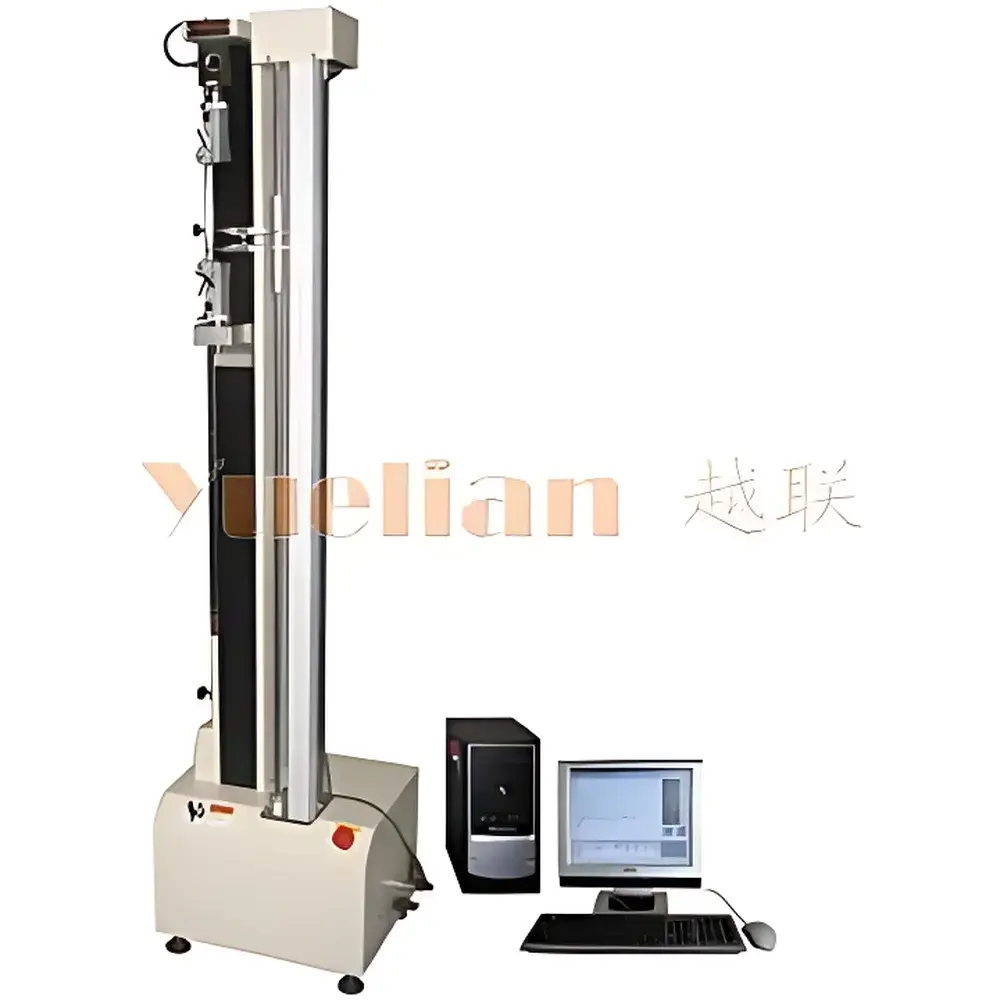
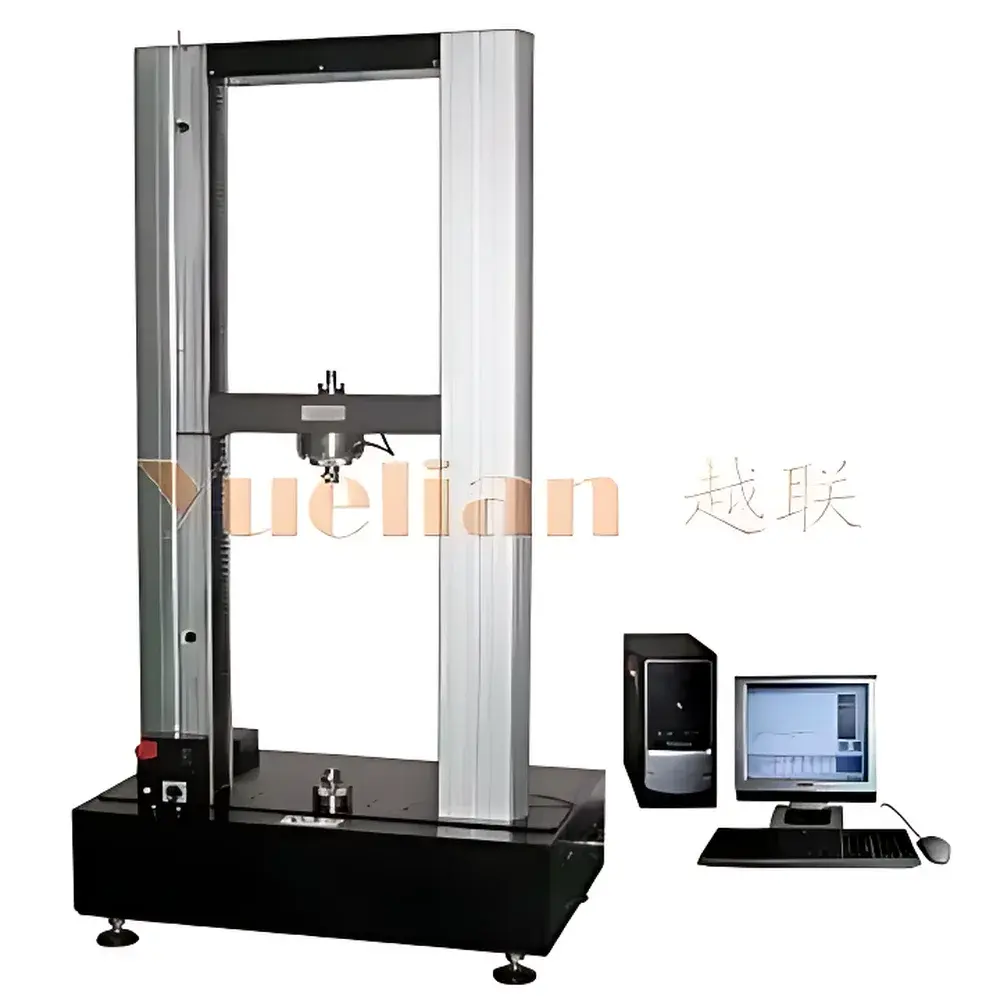
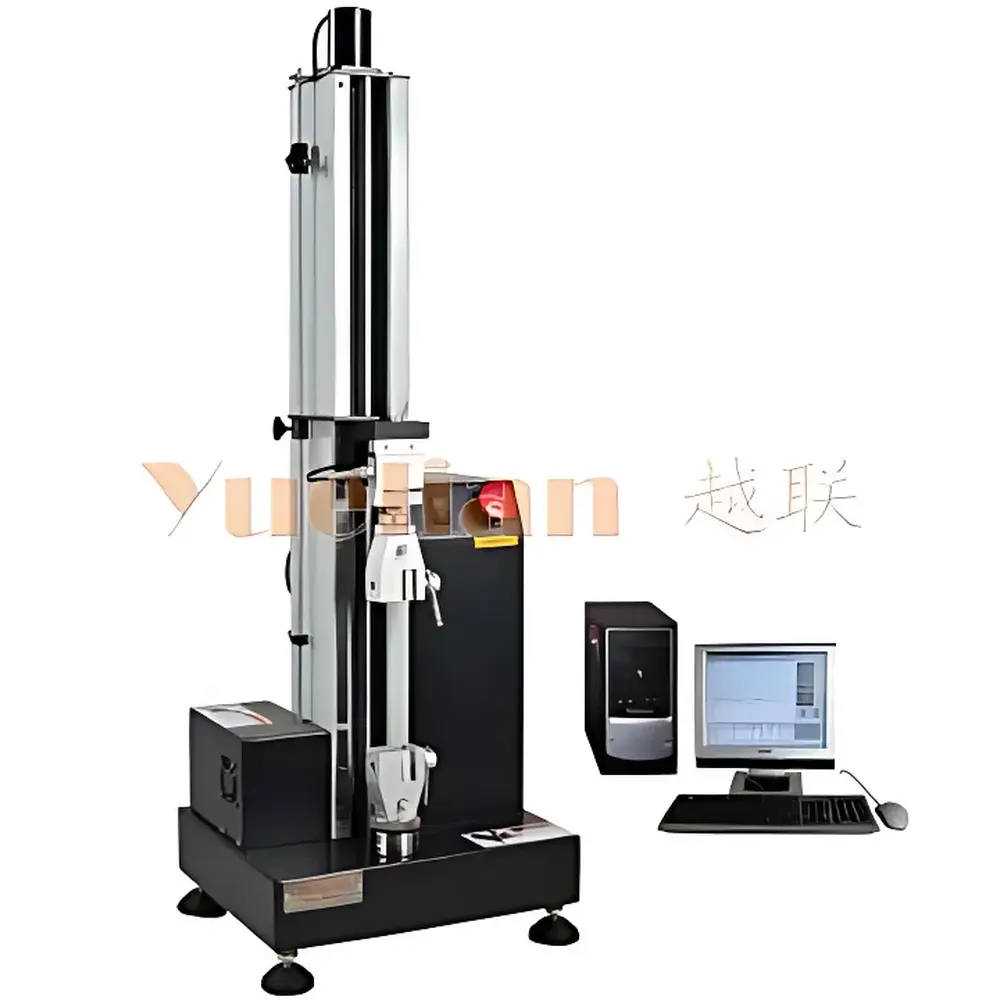
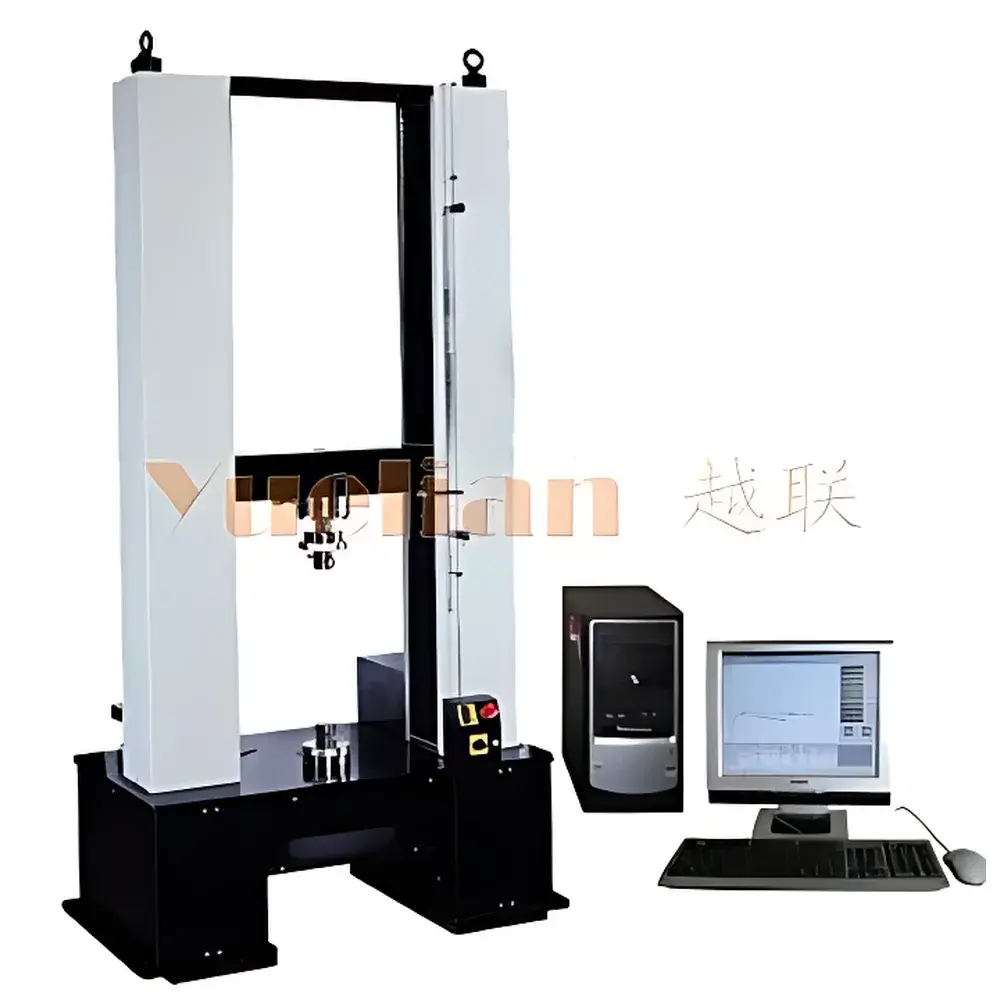
Yuelian YL-1123 Universal Electronic Material Testing Machine
| Brand | Yuelian |
|---|---|
| Origin | Guangdong, China |
| Instrument Type | Electronic Universal Testing Machine |
| Model | YL-1123 |
| Capacity Options | 10 N – 20 kN (dual-range configuration available) |
| Force Resolution | 1/500,000 full scale |
| Force Accuracy | ≤ ±0.5% of reading |
| Stroke Resolution | 0.005 mm |
| Test Speed Range | 0.01 – 1000 mm/min (computer-controlled, with manual grip jog buttons) |
| Maximum Test Stroke | 700 mm |
| Test Width | 350 mm |
| Drive System | Servo motor + precision ball screw + synchronous belt transmission |
| Power Supply | 220 V, 50/60 Hz, 10 A |
| Power Consumption | 400 W |
| Dimensions (W×D×H) | 72 × 52 × 130 cm |
| Weight | ~115 kg |
| Standard Configuration | One set of universal grips, PC-based test software, USB interface cable |
Overview
The Yuelian YL-1123 Universal Electronic Material Testing Machine is a high-precision, servo-driven mechanical testing system engineered for static mechanical characterization of solid materials under uniaxial loading conditions. Based on the fundamental principles of Hooke’s Law and standardized force-displacement transduction, it delivers traceable, repeatable measurements of tensile strength, compressive yield, flexural modulus, peel adhesion, tear resistance, and shear performance across diverse material classes. Designed in compliance with core mechanical testing standards—including ASTM E4, ASTM D638, ISO 6892-1, ISO 179, ISO 8510, and GB/T 228.1—the YL-1123 serves as a foundational platform for quality assurance laboratories, R&D departments, incoming inspection units, and academic mechanics research groups requiring ISO/IEC 17025-aligned data integrity.
Key Features
- Servo-motor actuation with precision ground ball screw and synchronous belt transmission ensures smooth, low-backlash motion control and long-term mechanical stability.
- Full computerized operation via Windows-based software enables real-time load–displacement curve acquisition, multi-step test programming, and automated parameter calculation (e.g., ultimate tensile strength, yield point offset, elastic modulus, elongation at break, peak peel force, and energy absorption).
- High-resolution force measurement system (1/500,000 full-scale resolution) and calibrated load cells meet ≤ ±0.5% accuracy requirements per ASTM E74 and ISO 376—validated at multiple points across the selected capacity range.
- Adjustable crosshead travel (700 mm stroke) and wide test width (350 mm) accommodate standard and custom specimen geometries, including ASTM Type I–V tensile bars, ISO 527 dumbbells, peel strips, and three-point bending fixtures.
- Intelligent stop logic includes overload protection, emergency stop activation, specimen rupture detection, programmable upper/lower displacement or force limits, and automatic return-to-initial-position functionality—enhancing operator safety and test repeatability.
- Multi-unit force conversion (N, kN, kgf, lbf, tonf, MPa) and SI-compatible reporting support global regulatory submissions and cross-laboratory data harmonization.
Sample Compatibility & Compliance
The YL-1123 accommodates a broad spectrum of specimen types and material categories: thermoplastics and elastomers (ASTM D638, ISO 527), metallic foils and wires (ISO 6892-1), textile fabrics and nonwovens (ISO 13934-1), paperboard and corrugated packaging (ISO 1924, TAPPI T811), adhesive tapes and laminates (ISO 8510-2, ASTM D3330), rubber compounds (ISO 37), and composite coupons (ASTM D3039). All hardware and firmware architecture supports GLP-compliant audit trails, electronic signature capability, and 21 CFR Part 11–ready data archiving when deployed with validated software configurations. Mechanical calibration certificates are provided per ISO/IEC 17025-accredited procedures.
Software & Data Management
The embedded PC-based Test & Control System operates on Windows OS and integrates seamlessly with MS Access relational databases for structured test record storage. It supports synchronized multi-sensor inputs (load, displacement, extensometer, environmental chamber signals), real-time video overlay (optional camera interface), and customizable report templates compliant with internal QA protocols or external accreditation bodies (e.g., CNAS, UKAS, A2LA). Raw data export is available in CSV, XML, and PDF formats; curve overlays, statistical batch analysis, and pass/fail threshold mapping are native functions. Software validation documentation (IQ/OQ/PQ protocols) is available upon request for regulated environments.
Applications
- Quality control of polymer extrusions, injection-molded parts, and elastomeric seals in automotive and medical device manufacturing.
- Incoming raw material verification for metal alloys, carbon fiber prepregs, and industrial textiles.
- Mechanical property benchmarking during formulation development of adhesives, coatings, and biodegradable films.
- Failure mode analysis in packaging integrity studies (peel strength of pouch seals, burst resistance of flexible laminates).
- Academic instruction and thesis-level research in solid mechanics, viscoelasticity, and fracture behavior of heterogeneous materials.
FAQ
What standards does the YL-1123 comply with for calibration and testing?
It adheres to ASTM E4 (force verification), ASTM E83 (extensometer verification), ISO 376 (load cell calibration), and ISO 7500-1 (static testing machine verification), with optional factory calibration reports traceable to NIM (China) or NIST-equivalent references.
Can the system be integrated into an existing LIMS or MES environment?
Yes—via configurable OPC UA or TCP/IP API interfaces, enabling bidirectional data exchange with laboratory information management systems and enterprise manufacturing execution platforms.
Is extensometer support available for strain-critical tests?
Standard models accept contact-type clip-on or non-contact video extensometers (sold separately); software automatically synchronizes displacement channels and computes true strain metrics.
What maintenance intervals are recommended for long-term accuracy?
Annual mechanical inspection and biannual load cell recalibration are advised; ball screw lubrication and drive belt tension checks should occur every 6 months under continuous operation.
Does the software support multi-user role-based access control?
Yes—administrator, operator, and reviewer profiles can be assigned with granular permissions for method editing, test execution, result approval, and audit log review—fully aligned with FDA 21 CFR Part 11 requirements.



