
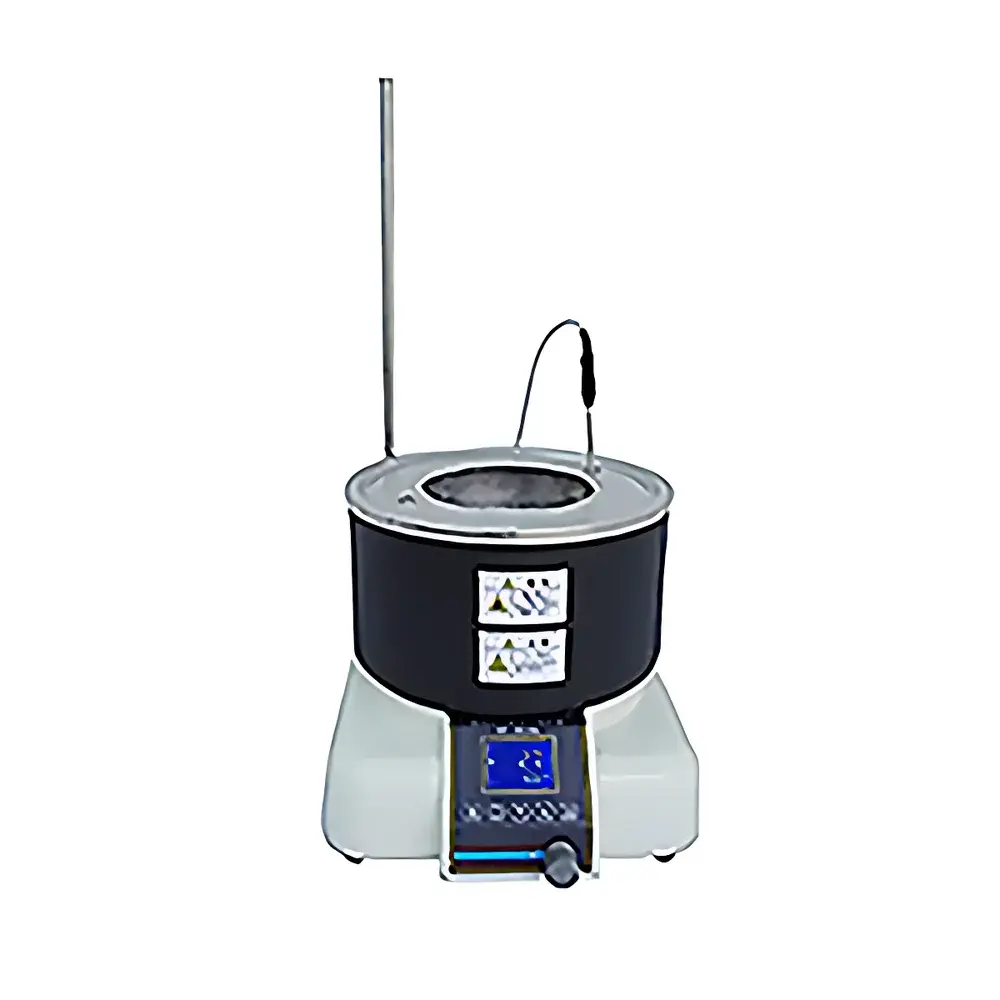
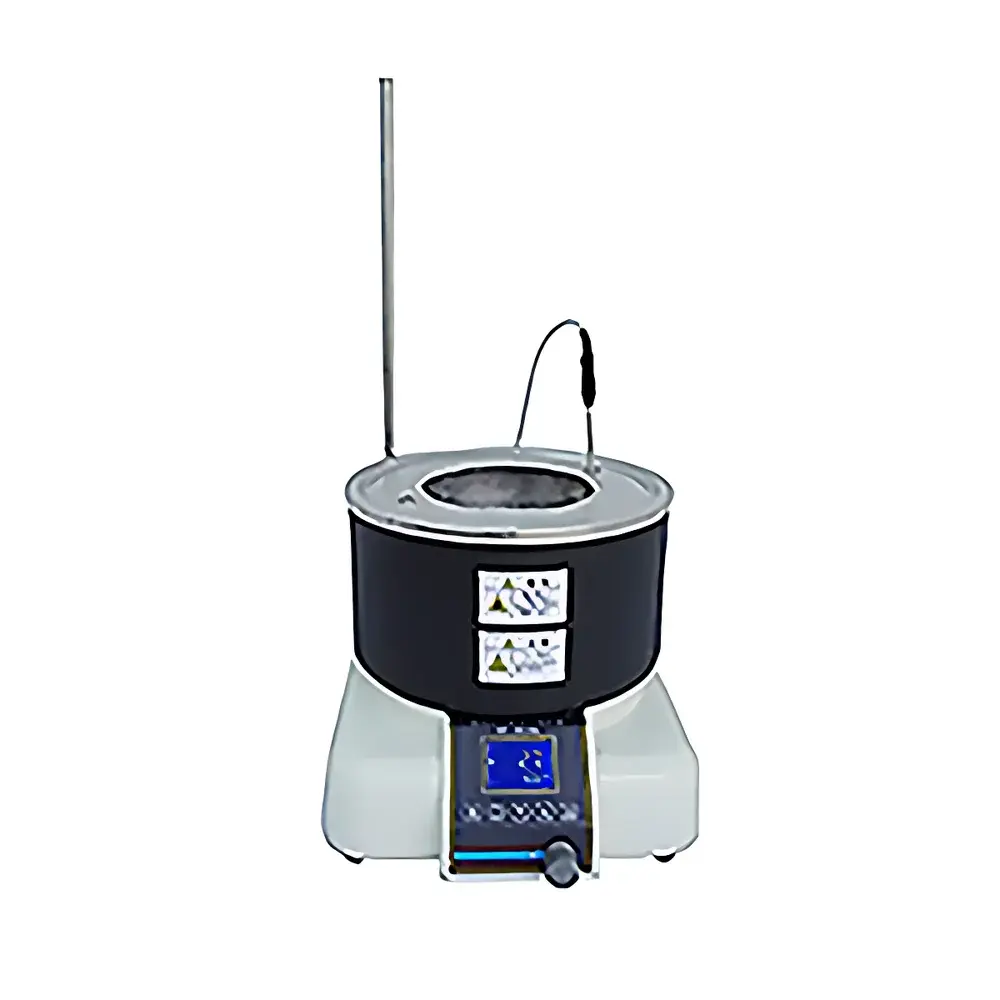
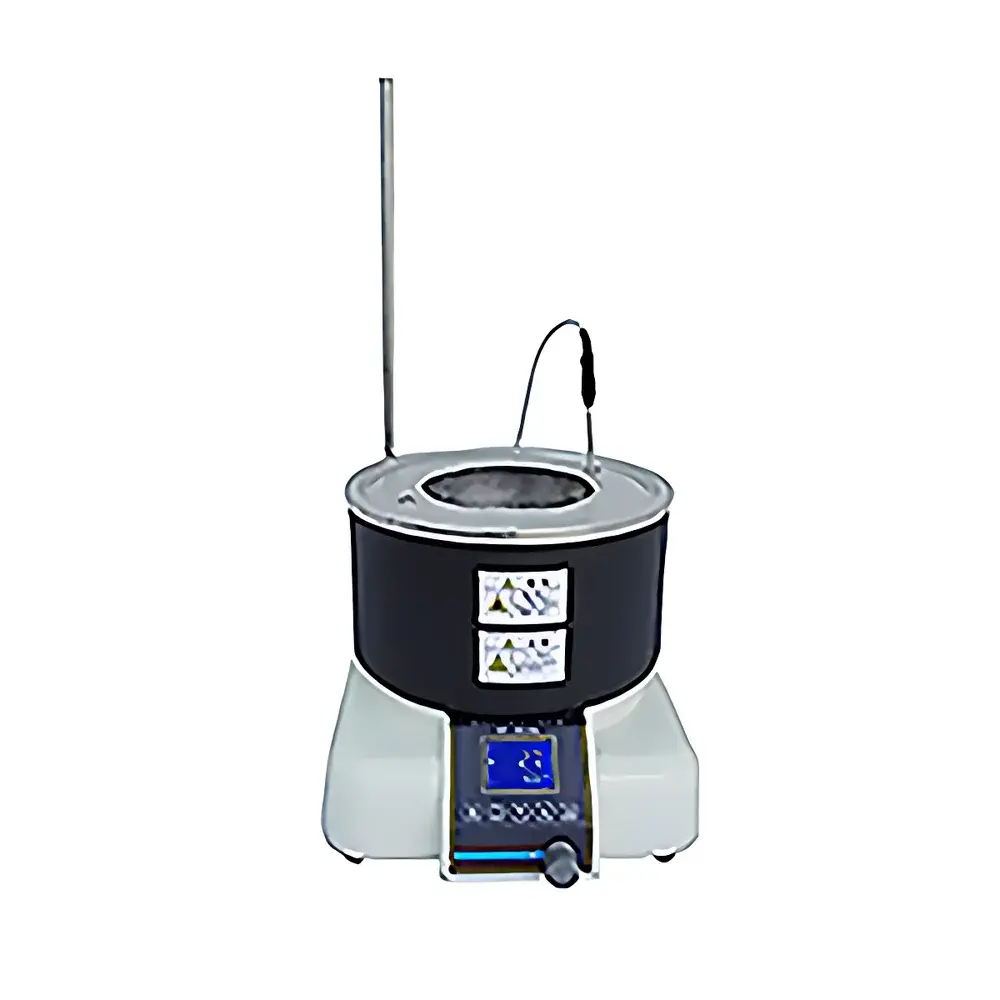
YUHUA DF-101SA Integrated Heating Magnetic Stirrer
| Brand | YUHUA (Gongyi Yuyi Instrument) |
|---|---|
| Origin | Henan, China |
| Model | DF-101SA |
| Stirrer Type | Magnetic Stirrer |
| Max. Stirring Volume | 2000 mL |
| Speed Range | 100–2000 rpm |
| Temperature Control Range | Ambient to 200 °C |
| Heating Power | ≤500 W |
| Temperature Sensor | PT100 |
| Temp. Display Accuracy | < ±0.5% FS |
| Speed Display Accuracy | ±1 rpm |
| Control Method | Adaptive Fuzzy PID Temperature Control + Closed-Loop Speed Regulation |
| Power Supply | AC 220 V ±10%, 50 Hz |
| Operating Environment | 0–40 °C, RH < 85% |
Overview
The YUHUA DF-101SA Integrated Heating Magnetic Stirrer is a precision-engineered laboratory instrument designed for simultaneous temperature-controlled heating and magnetic stirring of liquid samples in open or sealed vessels. Unlike conventional hotplate stirrers with separate heating and agitation modules, the DF-101SA integrates both functions into a single robust platform using a ceramic-coated aluminum heating block and a high-torque permanent-magnet drive system. Its operation relies on the principle of magnetic coupling: a rotating internal magnet—driven by a brushed DC motor under closed-loop speed regulation—induces synchronous rotation of a PTFE-coated stir bar immersed in the sample. Heat transfer occurs via conduction through the thermally conductive block, enabling uniform thermal distribution across the vessel base. This architecture supports reproducible reaction kinetics, dissolution testing, and synthesis protocols requiring stable thermal setpoints and consistent shear input—particularly where solvent volatility, viscosity changes, or exothermic behavior demand tight process control.
Key Features
- Integrated dual-function design: Simultaneous magnetic stirring and precise conductive heating within a single compact unit.
- Adaptive fuzzy PID temperature control algorithm: Delivers reduced overshoot (<1.5 °C), faster settling time (<8 min from ambient to 200 °C), and improved steady-state stability (±0.3 °C at 100 °C) compared to standard PID implementations.
- High-resolution LCD display with dual-window readout: Real-time independent display of setpoint and measured values for both temperature (0.0–200.0 °C) and rotational speed (100–2000 rpm).
- PT100 platinum resistance thermometer as primary temperature sensor: Ensures traceable accuracy and long-term drift stability per IEC 60751 Class B specifications.
- Programmable dual-zone PID parameters: Independent P/I/D tuning for low-temperature (≤100 °C) and high-temperature (>100 °C) operating regimes to maintain optimal control performance across the full range.
- Over-temperature protection with configurable alarm threshold (ALH: 0.0–100.0 °C): Automatically de-energizes the heater upon exceedance and activates visual/audible alerting.
- Self-tuning capability (AT mode): Initiates automatic parameter optimization for unknown load conditions—executed without external software or calibration equipment.
Sample Compatibility & Compliance
The DF-101SA accommodates standard laboratory glassware including round-bottom flasks (up to 2 L), beakers, and crystallization dishes. Its flat, chemically inert ceramic-aluminum heating surface ensures compatibility with aqueous, organic, and mildly corrosive media. While not certified for hazardous area use (e.g., ATEX or IECEx), the unit complies with basic electrical safety requirements per GB 4793.1–2019 (equivalent to IEC 61010-1:2010) for laboratory equipment. It supports GLP-aligned workflows through audit-ready features: timestamped error logging (Er-1 to SEr codes), non-volatile parameter storage, and password-protected access to internal calibration and control settings (Lc = 3 required). Though not FDA 21 CFR Part 11 compliant out-of-the-box, its deterministic control logic and deterministic error reporting facilitate validation documentation for regulated environments in pharmaceutical QC or contract research laboratories.
Software & Data Management
The DF-101SA operates as a standalone embedded system with no proprietary PC software dependency. All operational parameters—including temperature setpoint, speed setpoint, ALH threshold, timer duration, and dual-zone PID coefficients—are configured locally via membrane keypad and rotary encoder. Critical system events (e.g., sensor fault Er-1, overtemperature alarm, motor Hall error “Err”) are logged with persistent memory retention across power cycles. The controller supports RS-485 Modbus RTU communication (optional add-on module required; not included) for integration into centralized lab monitoring systems. For validation purposes, users may export configuration snapshots manually via documented key sequences—enabling version-controlled parameter archiving aligned with ISO/IEC 17025 Clause 7.7 (Control of Equipment Settings).
Applications
- Chemical synthesis: Controlled reflux, esterification, and Grignard reactions requiring precise thermal ramping and homogeneous mixing.
- Pharmaceutical development: Dissolution testing per USP , buffer preparation, and API crystallization studies.
- Environmental analysis: Digestion of soil/water samples prior to heavy metal quantification (EPA Methods 3015A, 3050B).
- Food science: Viscosity stabilization trials, emulsion formation, and enzyme activity assays at defined temperatures.
- Polymer processing: Solvent-based resin blending, crosslinker dispersion, and pre-polymer viscosity profiling.
- Materials science: Nanoparticle suspension homogenization and precursor solution aging under inert atmosphere (when used with septum-sealed vessels).
FAQ
What is the maximum recommended vessel diameter for optimal heat transfer?
For uniform thermal coupling and minimal edge cooling, use vessels with bottom diameters ≤120 mm. Larger diameters may result in radial temperature gradients exceeding ±2 °C at 200 °C.
Can the DF-101SA operate continuously at 200 °C for extended periods?
Yes—provided ambient temperature remains ≤30 °C and relative humidity <60%. Continuous operation above 180 °C requires periodic verification of PT100 calibration drift (recommended every 6 months under GxP conditions).
Is the unit compatible with corrosion-resistant stir bars for acidic solutions?
It supports all standard PTFE- or glass-coated stir bars. For HF or strong oxidizers, fused-silica stir bars (e.g., ChemGlass CG-1000 series) are recommended to prevent coating degradation.
How is temperature calibration performed?
Calibration uses the Pb1/Pb2 and PL1/PL2 offset/slope correction parameters. A NIST-traceable reference thermometer (e.g., Fluke 1523 with dry-block calibrator) is required to determine correction values at two points: 25 °C and 100 °C.
Does the device support timed ramp-and-soak temperature profiles?
No—the built-in timer controls only total run duration, not multi-step thermal programs. For programmable ramps, external PLC or third-party DAQ integration via RS-485 is necessary.



