
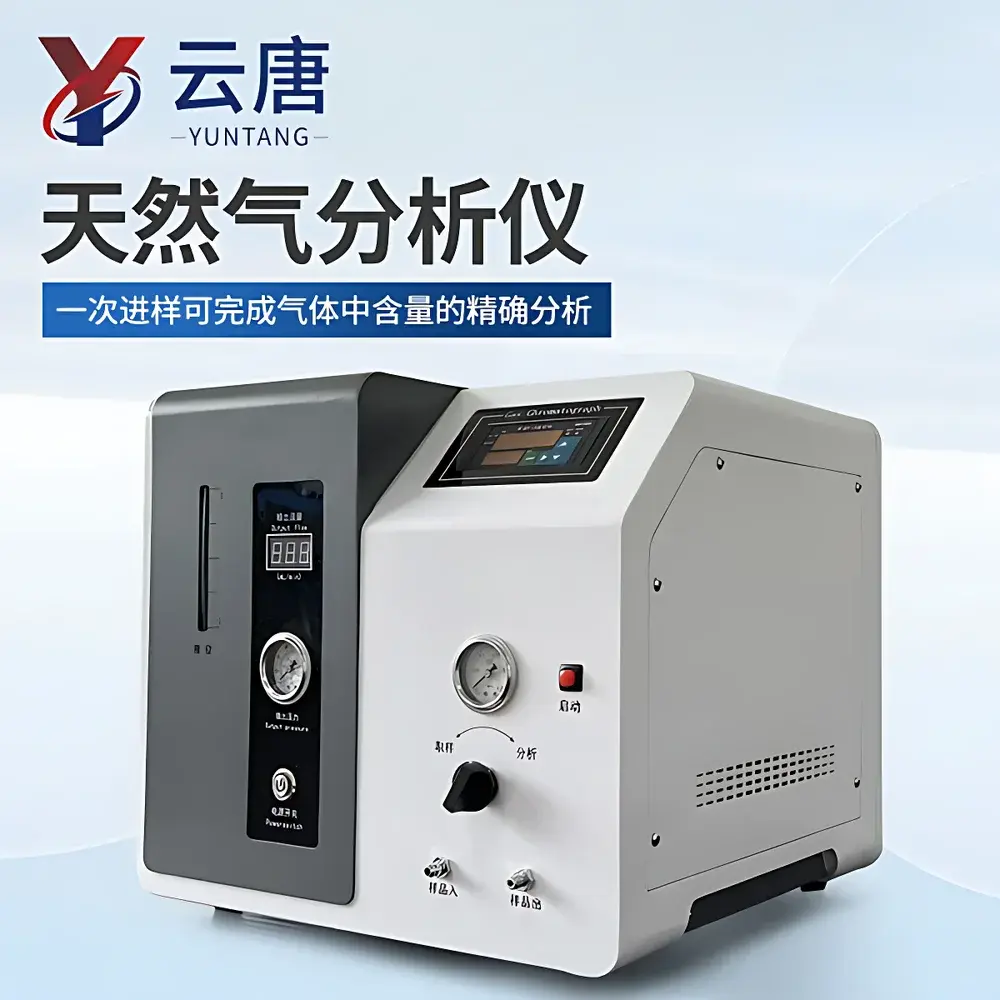
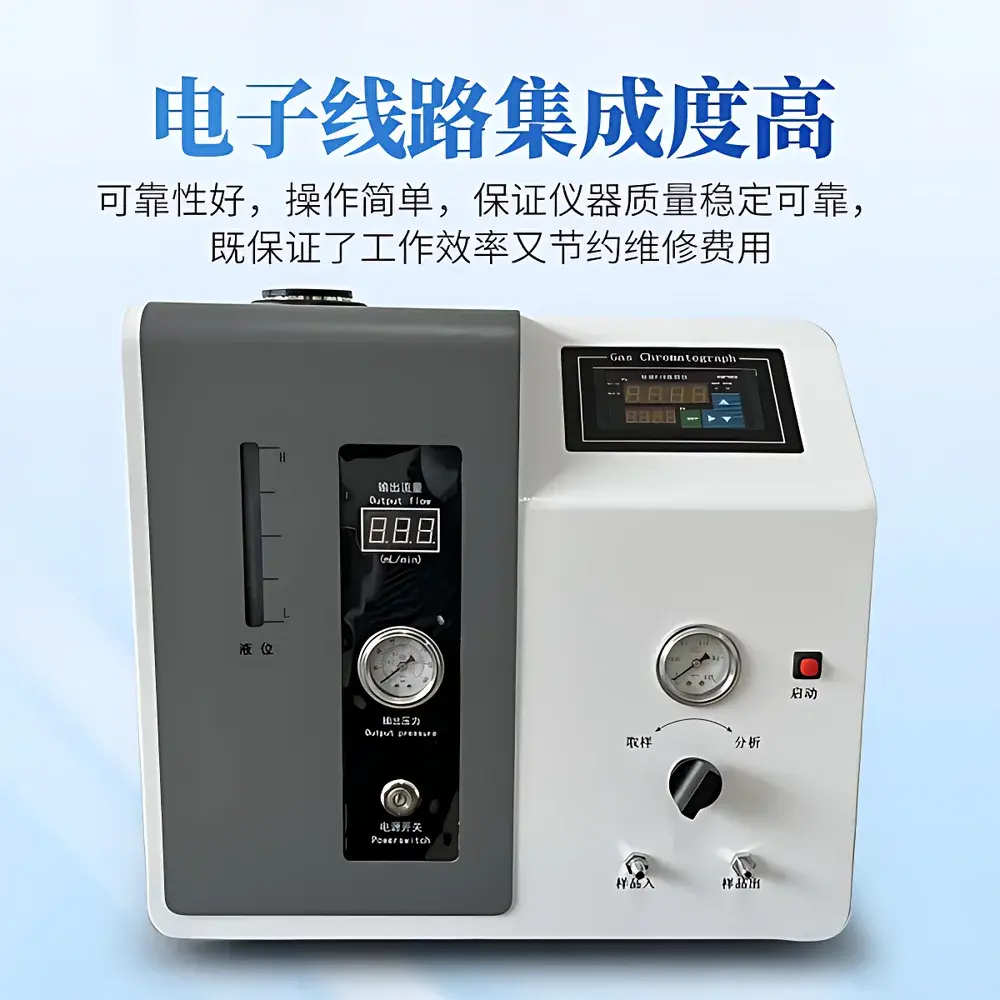
Yuntang GC-R1 Integrated Natural Gas Composition & Calorific Value Analyzer
| Brand | Yuntang |
|---|---|
| Origin | Shandong, China |
| Manufacturer Type | Direct Manufacturer |
| Country of Origin | China |
| Model | GC-R1 |
| Product Category | Natural Gas Analyzer |
| Dimensions | 540 × 390 × 360 mm (L×W×H) |
| Power Supply | AC 220 V |
| Column Oven Temperature Range | 5 °C above ambient to 200 °C (±0.1 °C stability) |
| Carrier Gas | Ultra-High-Purity Hydrogen (≥99.995%) |
| Detector | Thermal Conductivity Detector (TCD), Sensitivity ≥3000 mV·mL/mg (benzene), Noise ≤0.02 mV |
| Retention Time Precision | ≤0.02 min |
| Quantitative Repeatability | RSD ≤1% |
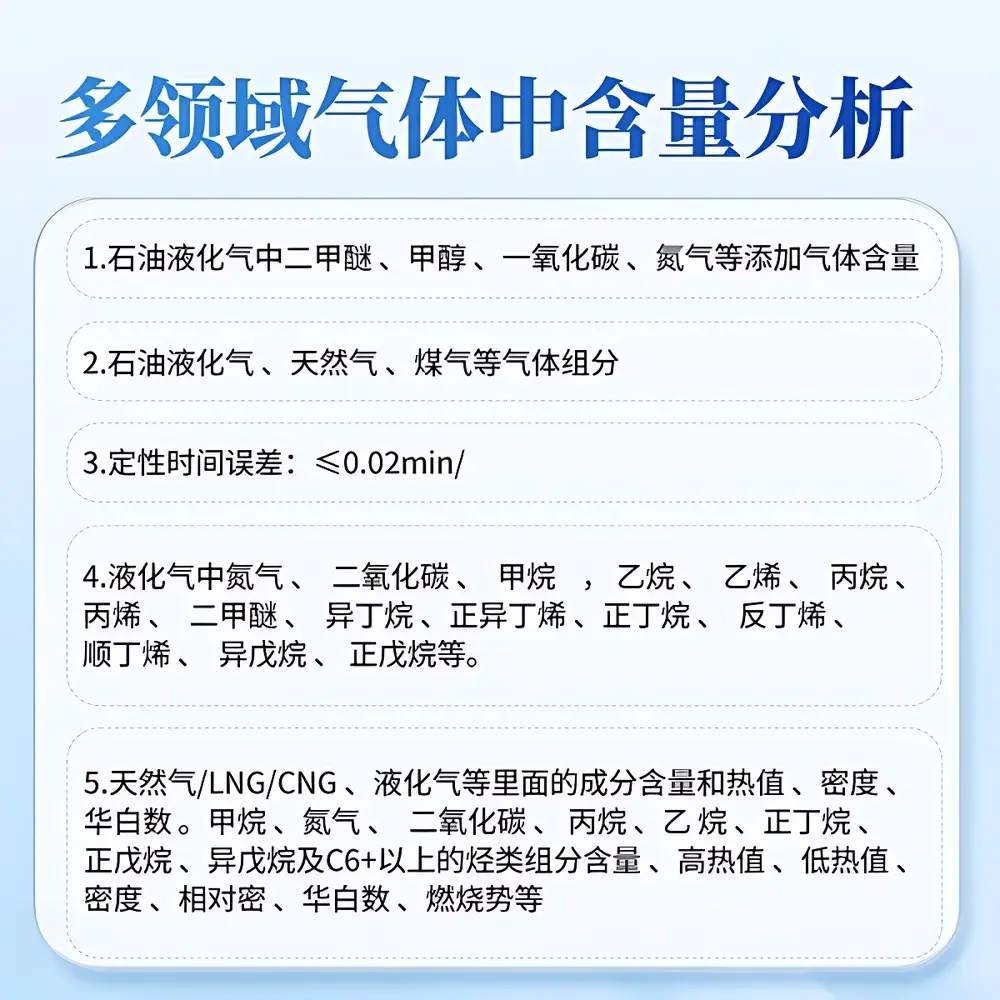
| Sample Compatibility | LPG, LNG, CNG, coalbed methane, shale gas, biogas, refinery off-gas, coke oven gas, blast furnace gas, and pipeline natural gas |
| Output Parameters | Methane, Ethane, Propane, n-Butane, i-Butane, Pentanes (n-/i-), C6+, CO₂, N₂, O₂, H₂, CO, DME, methanol, ethylene, propylene, butenes, Wobbe Index, Gross/Net Calorific Value (MJ/m³), Density, Relative Density, Combustion Potential |
Overview
The Yuntang GC-R1 Integrated Natural Gas Composition & Calorific Value Analyzer is a dedicated gas chromatographic system engineered for precise, automated compositional analysis and thermodynamic property derivation of hydrocarbon-rich fuel gases. Built upon a robust packed-column GC platform with integrated thermal conductivity detection (TCD), the GC-R1 implements a fixed-gas analysis methodology compliant with ASTM D1945, ISO 6974-1, and EN 15439 for natural gas and liquefied petroleum gas (LPG). Its core architecture unifies an on-board high-purity hydrogen generator, multi-port valve sequencing, temperature-controlled column oven, and dual-channel data acquisition—enabling single-injection quantification of permanent gases (H₂, O₂, N₂, CO, CO₂) and C₁–C₆+ hydrocarbons in accordance with ISO 6976 for calorific value calculation. Designed for continuous operation in field-deployed or laboratory-based quality control environments, the instrument delivers trace-level reproducibility and long-term baseline stability without external gas cylinders.
Key Features
- Fully integrated hydrogen generation system eliminates dependency on external gas cylinders—ensuring uninterrupted operation and reducing logistical overhead in remote or mobile deployment scenarios.
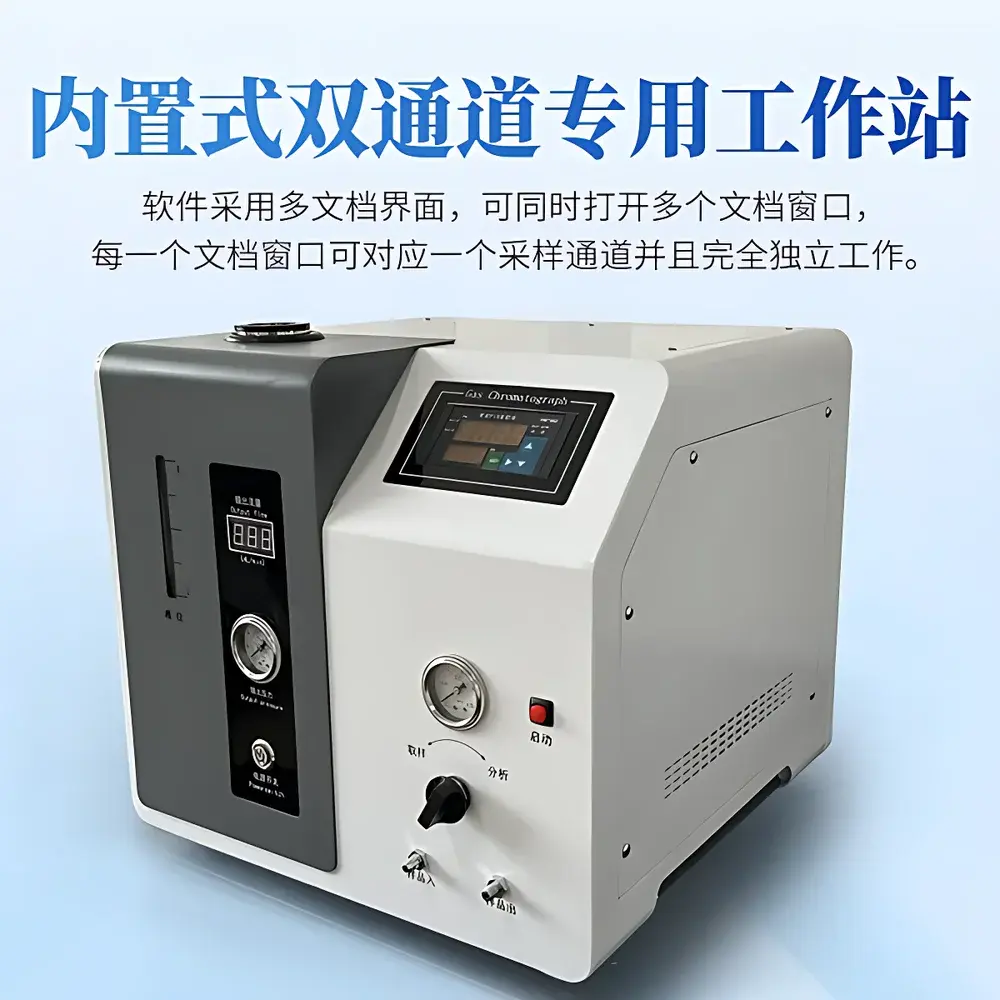
- Automated dual-channel acquisition workstation supports concurrent analysis of two independent sample streams, each with dedicated retention time libraries, calibration curves, and report templates.
- Modular valve manifold with precision-machined stainless-steel components ensures consistent carrier gas flow dynamics and minimizes carryover between injections—critical for high-repeatability quantitation of low-concentration impurities (e.g., CO₂ in LNG or DME in LPG).
- Column oven maintains ±0.1 °C isothermal stability across 5–200 °C range, enabling accurate elution profiling of volatile and semi-volatile components from methane through C₆+ saturates and olefins.
- Embedded software implements real-time thermodynamic property calculation per ISO 6976:2016—including gross/net calorific value (MJ/m³), Wobbe index, relative density, and combustion potential—based on measured mole fractions and standardized reference conditions (15 °C, 101.325 kPa).
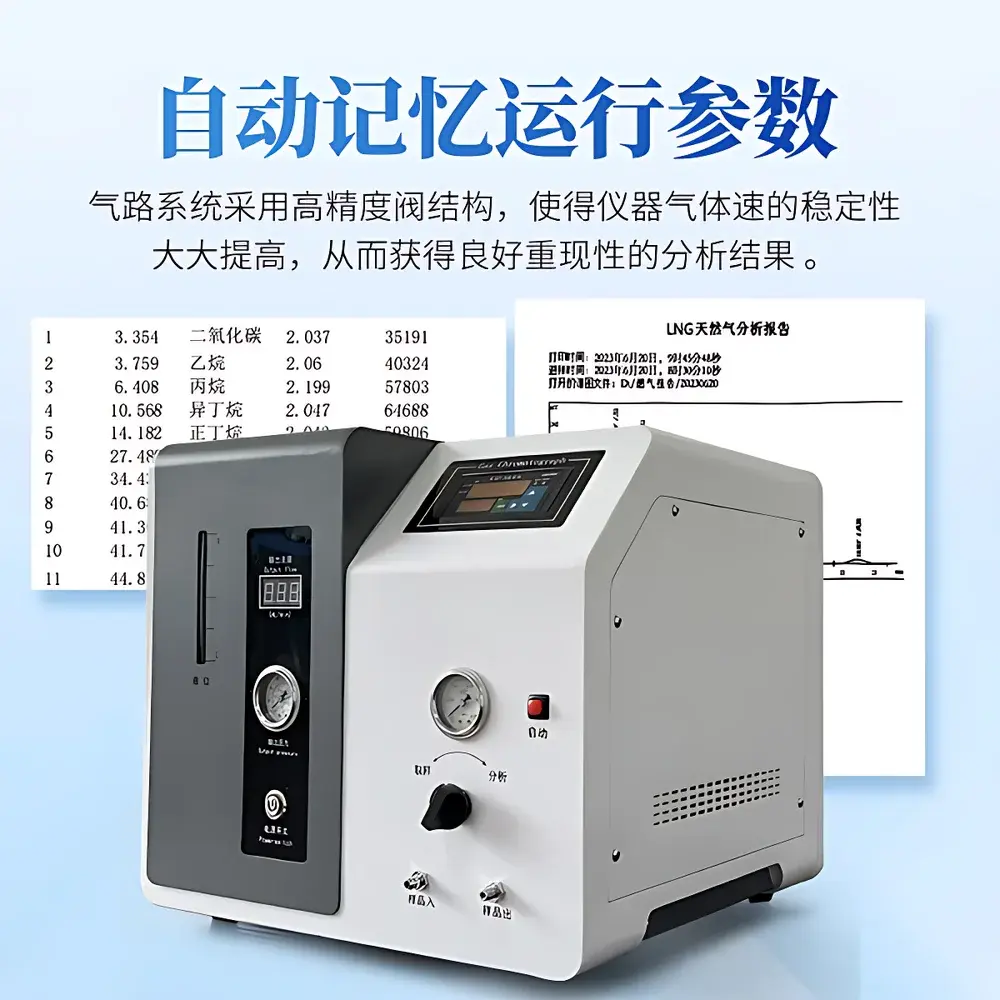
- Self-documenting operational parameters: instrument configuration, calibration history, and method settings are automatically saved and recalled at power-up, ensuring compliance with GLP audit requirements.
Sample Compatibility & Compliance
The GC-R1 is validated for direct analysis of raw and conditioned samples from upstream, midstream, and downstream natural gas infrastructure—including LNG terminals, CNG refueling stations, biogas upgrading facilities, coalbed methane extraction sites, and petrochemical off-gas streams. It accommodates gas matrices containing up to 15% CO₂, <5% H₂S (with optional sulfur trap), and oxygenated additives such as dimethyl ether (DME) and methanol. Analytical performance meets the repeatability thresholds specified in ISO 6974-2 (RSD ≤1% for major components) and supports regulatory reporting under China’s GB/T 13610–2020 and GB/T 22723–2008 standards. Optional data integrity features—including user-access logging, electronic signatures, and audit-trail-enabled method versioning—facilitate alignment with FDA 21 CFR Part 11 requirements for regulated laboratories.
Software & Data Management
The GC-R1 operates via a Windows-based dual-channel chromatography workstation featuring multi-document interface (MDI) architecture. Each open document corresponds to an independent acquisition channel and displays synchronized chromatograms, peak tables, calibration reports, and thermodynamic summaries within a single resizable window. Split-view functionality permits simultaneous visualization of raw signal traces and processed quantitative results. All raw data (.raw), method files (.mth), and report exports (.pdf, .xlsx) are stored in a hierarchical directory structure with timestamped metadata. The software supports automated export to LIMS via CSV or OPC UA protocols and includes built-in validation tools for linearity assessment (5-point calibration), system suitability testing (retention time shift, peak symmetry), and drift monitoring over 24-hour sequences.
Applications
- Real-time composition verification of LNG cargoes prior to regasification—ensuring compliance with pipeline specification limits for Wobbe index and inert content.
- Monitoring DME adulteration in commercial LPG supplies across distribution networks and retail outlets.
- Quality assurance testing of syngas and coke oven gas in integrated steel mills and metallurgical plants.
- Calorific value certification for biogas feedstock entering anaerobic digestion-to-grid injection systems.
- In-process analysis of refinery fuel gas streams to optimize flare gas recovery and minimize emissions reporting discrepancies.
- Field-deployed verification of pipeline natural gas composition during custody transfer at interconnection points.
FAQ
Does the GC-R1 require external hydrogen supply?
No—the instrument incorporates an integrated electrolytic hydrogen generator capable of producing ≥30 mL/min of ≥99.995% pure H₂, eliminating cylinder logistics and safety concerns.
Can the system quantify C6+ hydrocarbons as a group?
Yes—using a pre-packed Porapak Q column with FID-compatible TCD response calibration, the GC-R1 reports C6+ as a summed fraction based on empirical response factors derived from certified natural gas standards.
Is the software compliant with 21 CFR Part 11?
The base workstation supports audit trail generation and user role management; full Part 11 compliance requires optional validation package including IQ/OQ documentation and electronic signature modules.
What maintenance intervals are recommended?
Column conditioning every 3 months, TCD filament inspection every 6 months, and valve seal replacement annually—under typical 8-hr/day operation in clean, dry sample environments.
Can the GC-R1 be configured for biogas-specific analysis?
Yes—factory-configurable methods include optimized temperature ramping for H₂S removal, extended runtimes for siloxane screening (with optional guard column), and methane/CO₂ ratio reporting aligned with EN 15439 Annex A.





