
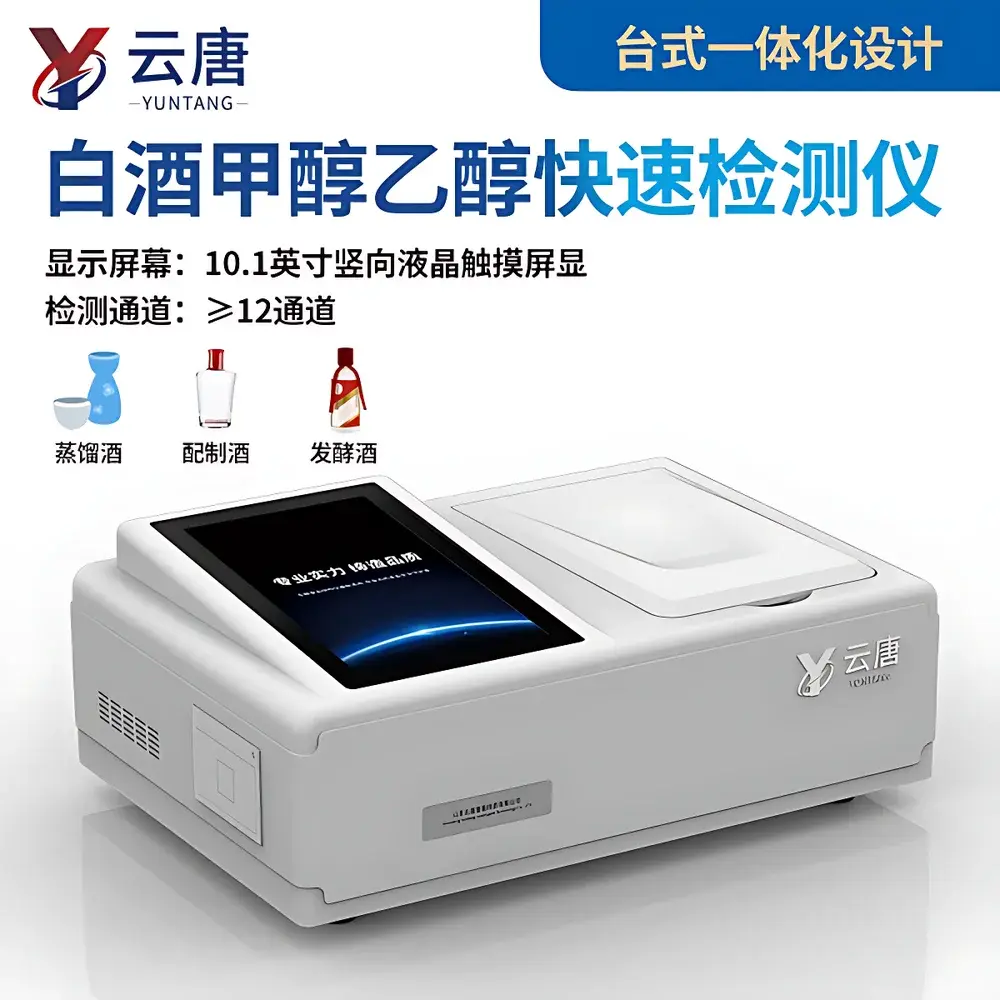

Yuntang YT-JC12 / YT-JYC12T Alcoholic Beverage Ethanol and Methanol Analyzer
| Brand | Yuntang |
|---|---|
| Origin | Shandong, China |
| Manufacturer Type | Manufacturer |
| Product Category | Domestic |
| Model | YT-JC12 / YT-JYC12T |
| Instrument Type | Benchtop Integrated Spectrophotometric Analyzer for Alcoholic Beverages |
| Application | Laboratory-based Food Safety Testing |
| Measurement Time | ≤3 min per sample |
| Ethanol Range | 0–12 % v/v |
| pH Range | 0–14 |
| Dimensions (L×W×H) | 43 × 35 × 20 cm |
| Weight | 5.1 kg |
| Core Technology | Integrated Benchtop Spectrophotometry with Multi-Wavelength Optical Engine |
| Sample Throughput | Configurable per assay protocol (1–12 simultaneous channels) |
| Detection Principle | Absorbance-based Quantitative Analysis via Fixed-Wavelength Photometry (410 / 520 / 590 / 630 nm), Expandable to 64 Wavelengths via Patented Optical Path Switching |
Overview
The Yuntang YT-JC12 and YT-JYC12T Alcoholic Beverage Ethanol and Methanol Analyzer is a CE-compliant, benchtop-integrated spectrophotometric instrument engineered for rapid, quantitative determination of ethanol and methanol concentrations in distilled spirits, fermented wines, and blended alcoholic beverages. It operates on the principle of fixed-wavelength absorbance photometry—leveraging calibrated optical pathways at 410 nm, 520 nm, 590 nm, and 630 nm—to resolve analyte-specific chromogenic reactions in pre-formulated reagent kits. The system employs a patented optical path switching mechanism (Patent No. ZL202022821055.2), enabling precise wavelength selection across up to 64 discrete bands without mechanical filter wheels or source drift. Designed for regulatory-constrained environments, it supports method validation under ISO/IEC 17025 frameworks and aligns with national food safety standards (e.g., GB 5009.266–2016 for methanol; GB 5009.225–2016 for ethanol in alcoholic beverages). Its architecture integrates optical detection, digital signal processing, wireless data transmission, and embedded database management into a single compact unit—eliminating external PC dependency while maintaining traceability, audit readiness, and GLP-aligned operational integrity.
Key Features
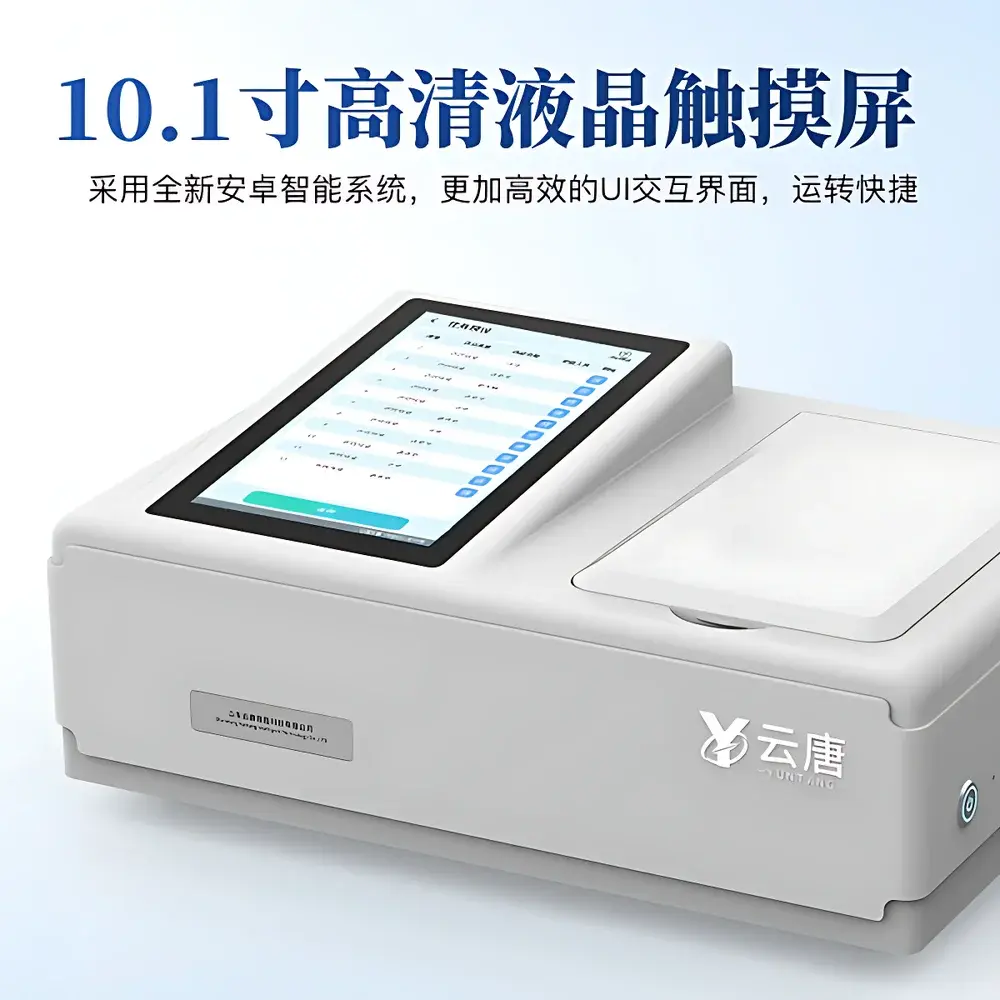
- Benchtop all-in-one design with 10.1-inch vertical capacitive touchscreen running Android OS (ARM Cortex-A7, RK3288 quad-core @ 1.88 GHz), supporting intuitive multi-channel assay configuration and real-time result visualization.
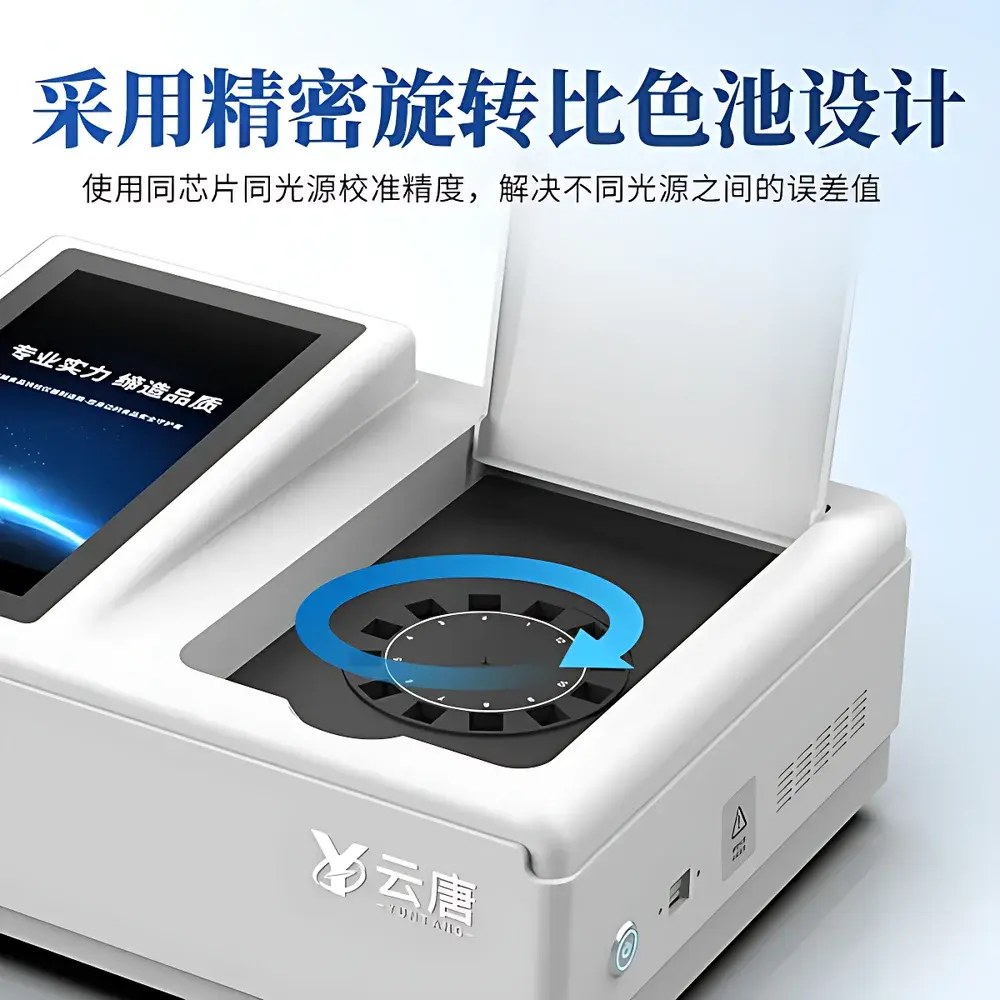
- 12-channel precision rotating cuvette holder with inter-channel deviation ≤0.1%, ensuring high reproducibility across parallel analyses and minimizing calibration drift between positions.
- Four independently calibrated cold-light sources per channel (410/520/590/630 nm), coupled with an automated optical path switching module for extended spectral flexibility and cross-method compatibility.
- On-device calibration workflow with auto-save functionality: reference values stored in Android SP memory, immune to power loss or firmware reset—ensuring consistent photometric baseline across sessions.
- Dual USB ports, RJ45 Ethernet, Bluetooth 5.0, and embedded 4G (APN) module for secure, multi-protocol data export—including direct upload to municipal or provincial food safety supervision platforms compliant with China’s Food Safety Information Traceability System (FSITS).
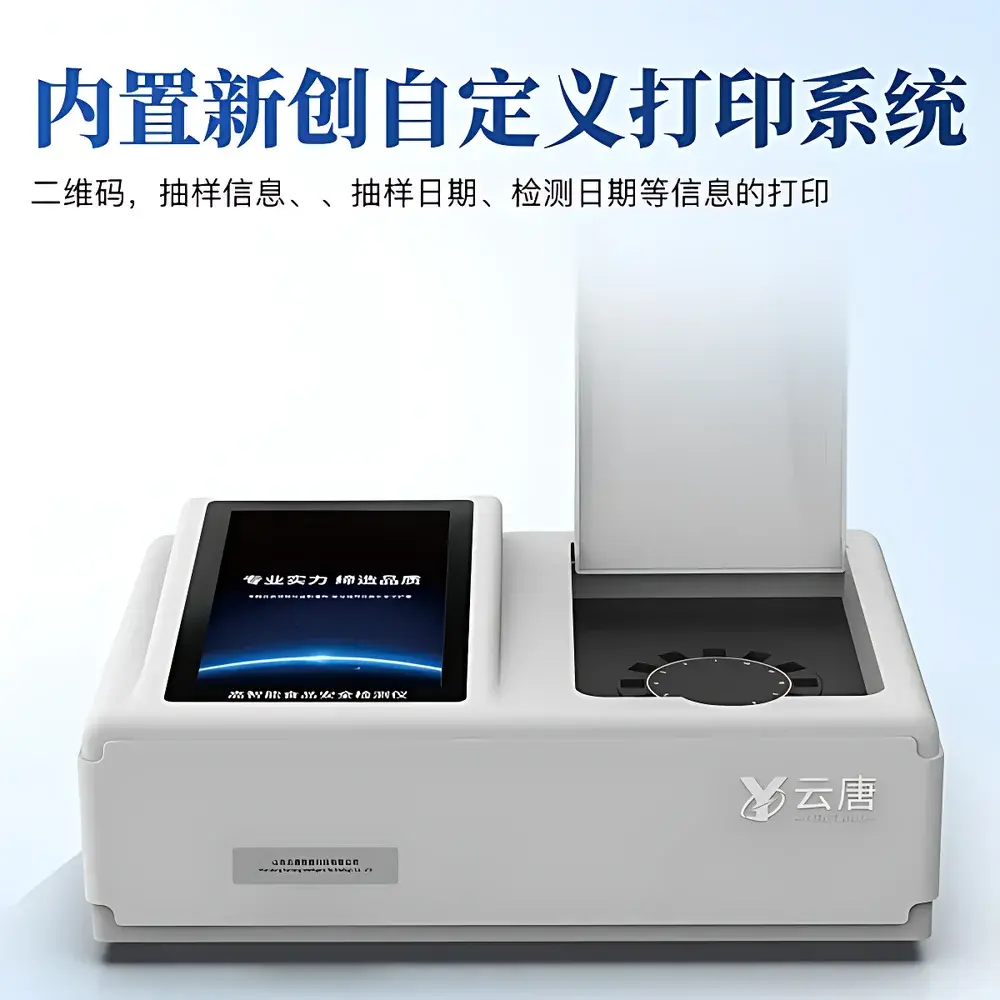
- Internal thermal printer + A4 report generation capability via Wi-Fi or wired LAN connection; customizable print templates include QR-coded batch IDs, sampling metadata, analyst signatures, and compliance status flags.
- Rechargeable 6 Ah lithium battery (DC 12 V input), enabling field-deployable operation in mobile inspection units, rural distilleries, or temporary market surveillance checkpoints.
Sample Compatibility & Compliance
The analyzer accepts liquid samples from diverse alcoholic beverage matrices—including baijiu (Chinese distilled spirit), huangjiu (fermented rice wine), fruit wines, and flavored liquors—following standardized pretreatment protocols (e.g., dilution, filtration, derivatization where required). It complies with Chinese National Standards GB/T 5009.266 (methanol) and GB/T 5009.225 (ethanol), and its data structure conforms to the requirements of SFDA’s “Food Safety Sampling Inspection Information Management System.” All measurement records include timestamped operator login credentials, instrument ID, calibration log references, and automatic pass/fail evaluation against jurisdictional limits—supporting full audit trails required under GB/T 27404–2008 (Laboratory Quality Control Guidelines) and facilitating FDA 21 CFR Part 11–compatible electronic signature implementation when integrated with validated LIMS environments.
Software & Data Management
The embedded software suite implements a relational database architecture with 14 categorized modules—including project templates, standard curve libraries, sampling logs, regulatory limit tables, and instrument calibration history—interlinked to enforce data consistency and prevent orphaned entries. Weekly/monthly analytical summaries are auto-generated with bar-chart visualizations of compliance rates, nonconformance trends, and matrix-specific outlier frequencies. Data export supports CSV and native Excel (.xlsx) formats with column headers mapped to ISO/IEC 17025 Annex A3 metadata fields. Remote firmware updates are delivered over-the-air (OTA) with version-controlled deployment targeting specific instrument serial numbers—bypassing physical return logistics and preserving calibration continuity. User access levels (admin, analyst, reviewer) enforce role-based permissions aligned with ISO/IEC 17025 clause 6.2.5 on personnel competence and data integrity.
Applications
This analyzer serves routine quality control in distillery QC labs, third-party contract testing facilities, and government food safety monitoring centers. It is routinely deployed for batch release testing of commercial baijiu, verification of label claims for alcohol content, screening of illicitly adulterated spirits, and post-harvest fermentation monitoring in artisanal winemaking. Its expandable platform supports future integration of assays for sulfites, heavy metals (e.g., lead, cadmium), biogenic amines, and mycotoxins—subject to reagent kit validation and regulatory clearance. Field applications include roadside inspections by market regulation bureaus, pop-up testing at wholesale liquor markets, and rapid response to foodborne illness outbreak investigations involving suspected methanol contamination.
FAQ
What regulatory standards does this instrument support for ethanol and methanol quantification?
It is validated against GB 5009.225–2016 (ethanol) and GB 5009.266–2016 (methanol) and supports method transfer documentation required under ISO/IEC 17025:2017 clause 7.2.2.
Can the instrument perform simultaneous multi-analyte detection in a single run?
Yes—up to 12 samples can be processed in parallel, with each channel independently configurable for different wavelengths and assay protocols, provided compatible reagent kits are used.
Is remote data synchronization with provincial food safety platforms supported?
Yes—via built-in 4G APN connectivity or Ethernet, enabling real-time submission to China’s National Food Safety Risk Monitoring Information System (NFMRIS) and regional supervision dashboards.
Does the system meet data integrity requirements for regulated laboratories?
It provides electronic audit trails, user authentication, immutable calibration logs, and exportable raw absorbance data—meeting core elements of ALCOA+ principles and supporting alignment with FDA 21 CFR Part 11 when deployed in validated configurations.
How is method validation performed for newly added test parameters?
Users load certified reference materials and follow in-house SOPs for linearity, LOD/LOQ, precision, and recovery studies; the software captures all intermediate calculations and stores validation reports within the integrated database.
Related Products






