
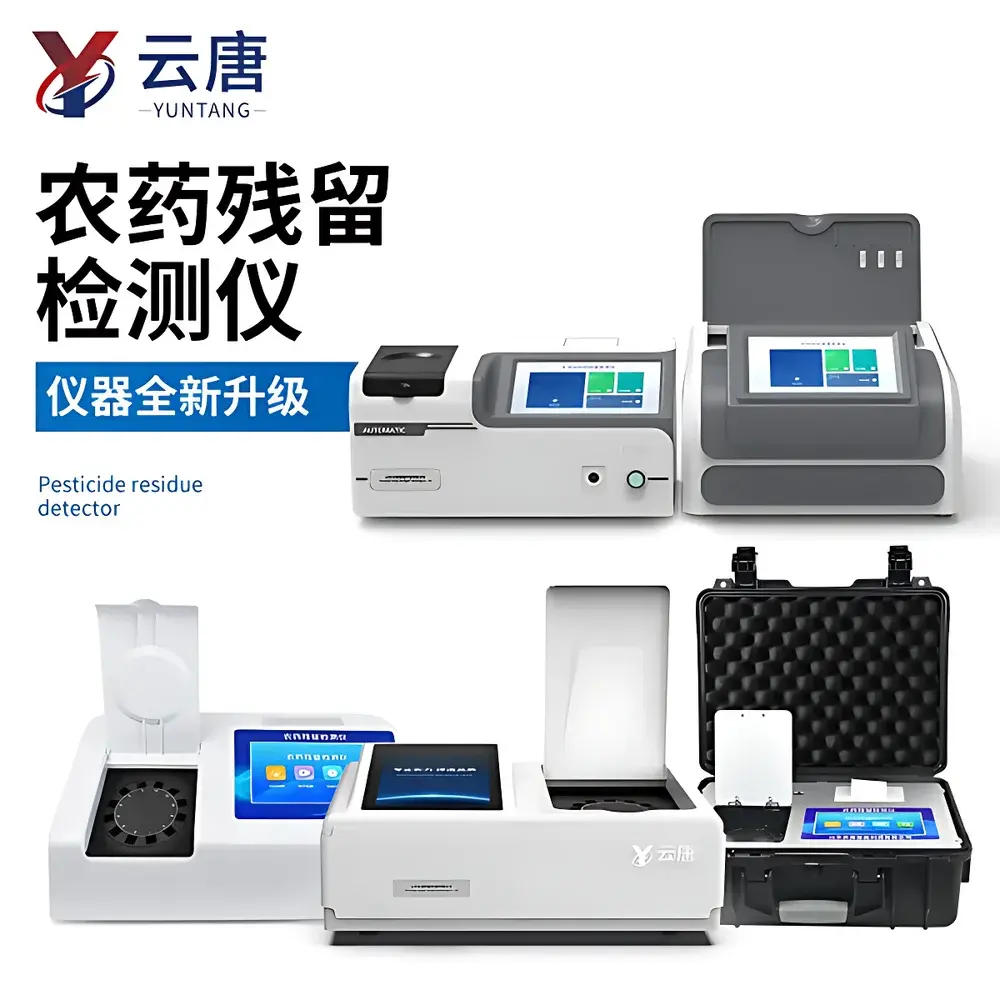
Yuntang YT-QN24 Fully Automated Pesticide Residue Analyzer for Fruits and Vegetables
| Brand | Yuntang |
|---|---|
| Origin | Shandong, China |
| Manufacturer Type | Direct Manufacturer |
| Country of Origin | China |
| Model | YT-QN24 |
| Detection Method | Enzyme Inhibition Colorimetric Method |
| Measurement Range | 0–100% inhibition rate |
| Number of Detection Channels | 12 |
| Measurement Error | ±0.1% |
| Limit of Detection (LOD) | 0.3 ppm |
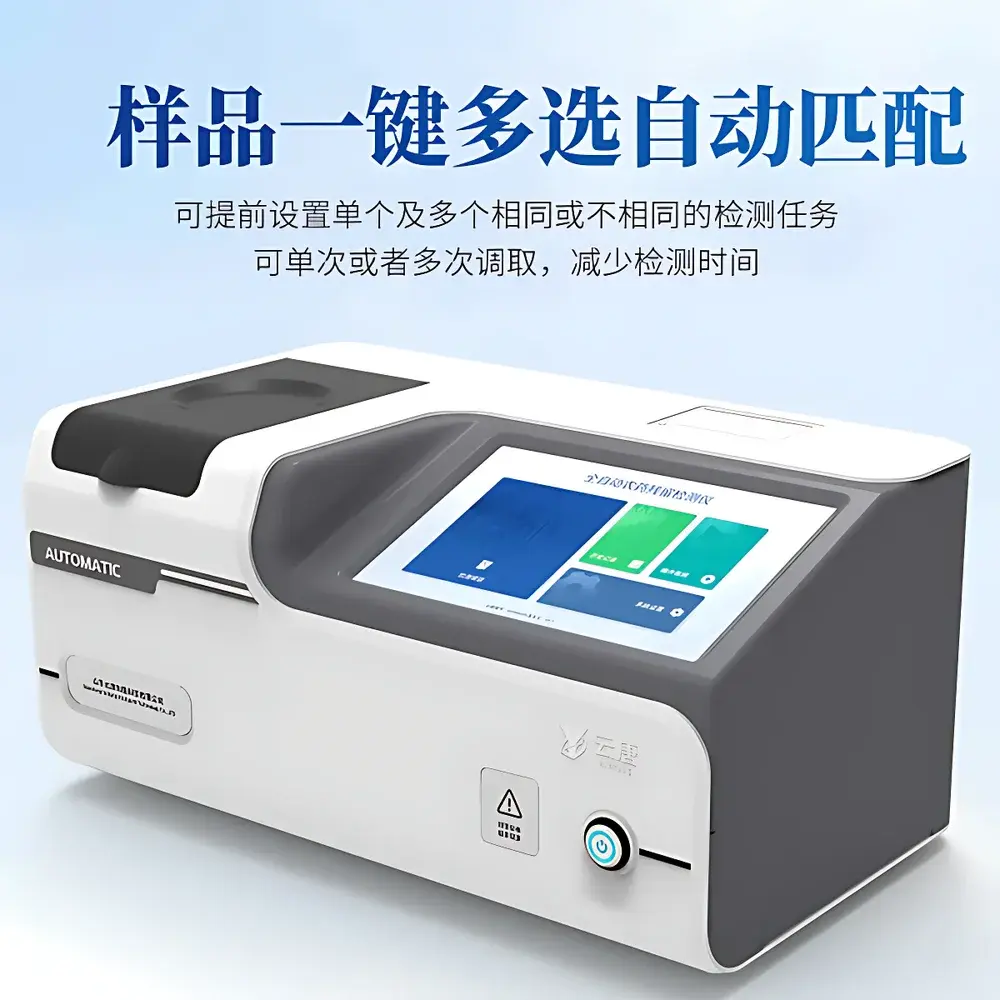
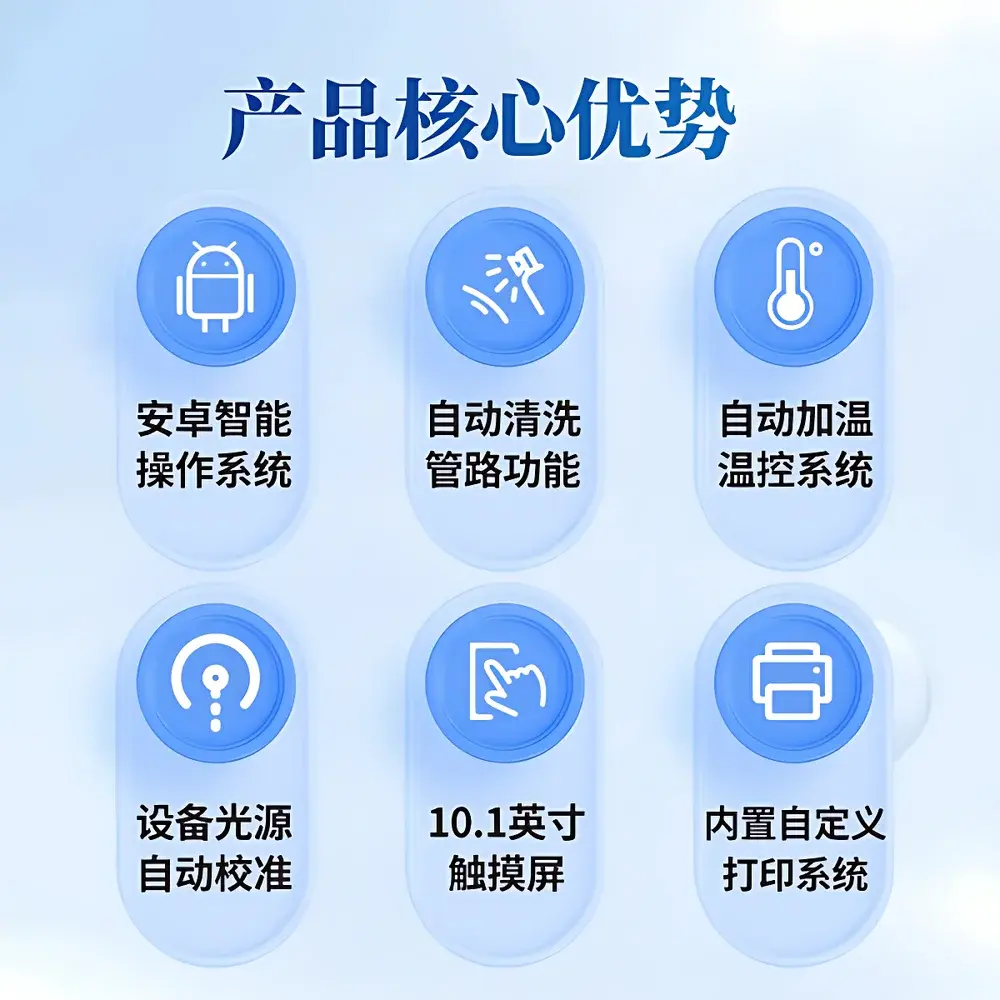
| Display | 10.1-inch HD capacitive touchscreen (1280 × 800) |
| Processor | ARM Cortex-A7 RK3288 quad-core |
| OS | Android 7.1.1 |
| RAM | 1 GB |
| Internal Storage | 16 GB (supports ≥5 million test records) |
| Temperature Control | Precise 37 °C ±0.1 °C thermostatic incubation |
| Fluid Handling | Automated reagent dispensing, sample aspiration, tubing rinse-back, and vortex mixing |
| Connectivity | 4G (APN), Wi-Fi, Bluetooth, USB 2.0, RJ45 Ethernet |
| Data Export & Integration | Cloud-sync capable, compatible with national food safety supervision platforms (e.g., China NIFDC, provincial SAMR systems) |
Overview
The Yuntang YT-QN24 Fully Automated Pesticide Residue Analyzer is a CE-compliant, benchtop rapid screening instrument engineered for quantitative detection of organophosphorus and carbamate pesticide residues in fresh produce—including fruits, leafy vegetables, root crops, and herbs. It operates on the internationally recognized enzyme inhibition colorimetric principle (per GB/T 5009.199–2003, equivalent to AOAC Official Method 992.11 and ISO 15145:2003), wherein acetylcholinesterase (AChE) activity is measured spectrophotometrically at 412 nm before and after exposure to sample extracts. Inhibition rates ≥50% indicate noncompliant residue levels per China’s GB 2763–2021 Maximum Residue Limits (MRLs). Designed for high-throughput operation in decentralized environments, the YT-QN24 eliminates manual pipetting, timing inconsistencies, and subjective endpoint interpretation—delivering reproducible results within 12 minutes per batch.
Key Features
- 12-channel rotating cuvette carousel: Enables parallel processing of up to 12 samples per run; channels are software-addressable and auto-mapped to sample IDs during loading.
- Integrated thermal management system: Maintains precise 37 °C incubation across all reaction wells with ±0.1 °C stability—critical for consistent enzymatic kinetics and assay repeatability.
- Three-reagent station architecture: Supports sequential addition of substrate (DTNB), enzyme (AChE), and sample extract without cross-contamination; volume accuracy calibrated to ±2 µL.
- Self-diagnostic fluidics: Real-time pressure monitoring detects clogged lines or low reagent volume; automatic rinse-back cycles purge residual reagents between assays using deionized water or ethanol-based cleaning solution.
- Vortex-assisted homogenization: Built-in orbital shaker ensures uniform dispersion of analyte–enzyme complexes prior to optical measurement.
- Automated photometric calibration: Onboard LED light source self-calibrates before each assay using integrated reference filters—eliminating drift-related bias over extended operation.
- Embedded regulatory-grade data handling: All test metadata—including operator ID, timestamp, GPS-tagged location (via 4G), raw absorbance values, inhibition %, and pass/fail status—are cryptographically hashed and stored locally with audit-trail timestamps compliant with GLP documentation requirements.
Sample Compatibility & Compliance
The YT-QN24 accepts homogenized aqueous extracts prepared from ≤5 g of comminuted produce, pre-processed per GB/T 5009.199–2003 guidelines (e.g., acetone extraction, centrifugation, filtration). Validated matrices include apples, tomatoes, lettuce, cabbage, cucumbers, peppers, spinach, and green beans. The instrument meets electromagnetic compatibility (EMC) standards IEC 61326-1:2013 and safety requirements IEC 61010-1:2010. Its assay protocol aligns with China’s National Food Safety Standard GB 2763–2021 and supports traceability under SAMR’s “Internet + Supervision” framework. While not FDA 510(k)-cleared, its methodology is referenced in USDA AMS Pesticide Data Program (PDP) validation protocols for rapid field screening.
Software & Data Management
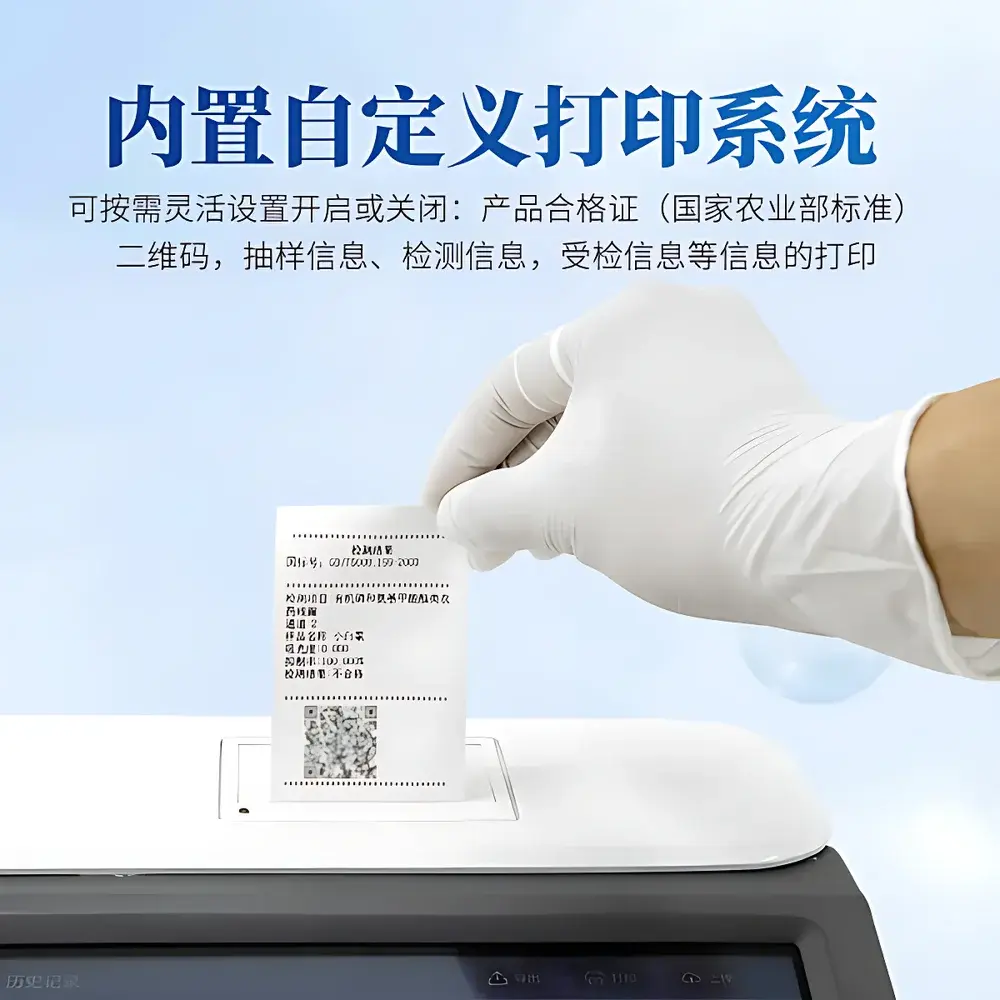
Running Android 7.1.1 on a hardened RK3288 platform, the YT-QN24 features a role-based access control (RBAC) interface supporting multi-user logins with password-protected administrator privileges. The embedded LIMS-ready software enables project templating (e.g., “Leafy Greens – OP Panel”), batch ID assignment, barcode scanning (via optional external scanner), and customizable report generation—including A4-format PDFs with QR-coded digital signatures verifiable against centralized blockchain-backed repositories. Data export options include encrypted CSV via USB, SFTP upload over Wi-Fi/Ethernet, or direct push to cloud platforms via MQTT/HTTPS APIs. All communications comply with TLS 1.2 encryption; local storage implements AES-256 full-disk encryption.
Applications
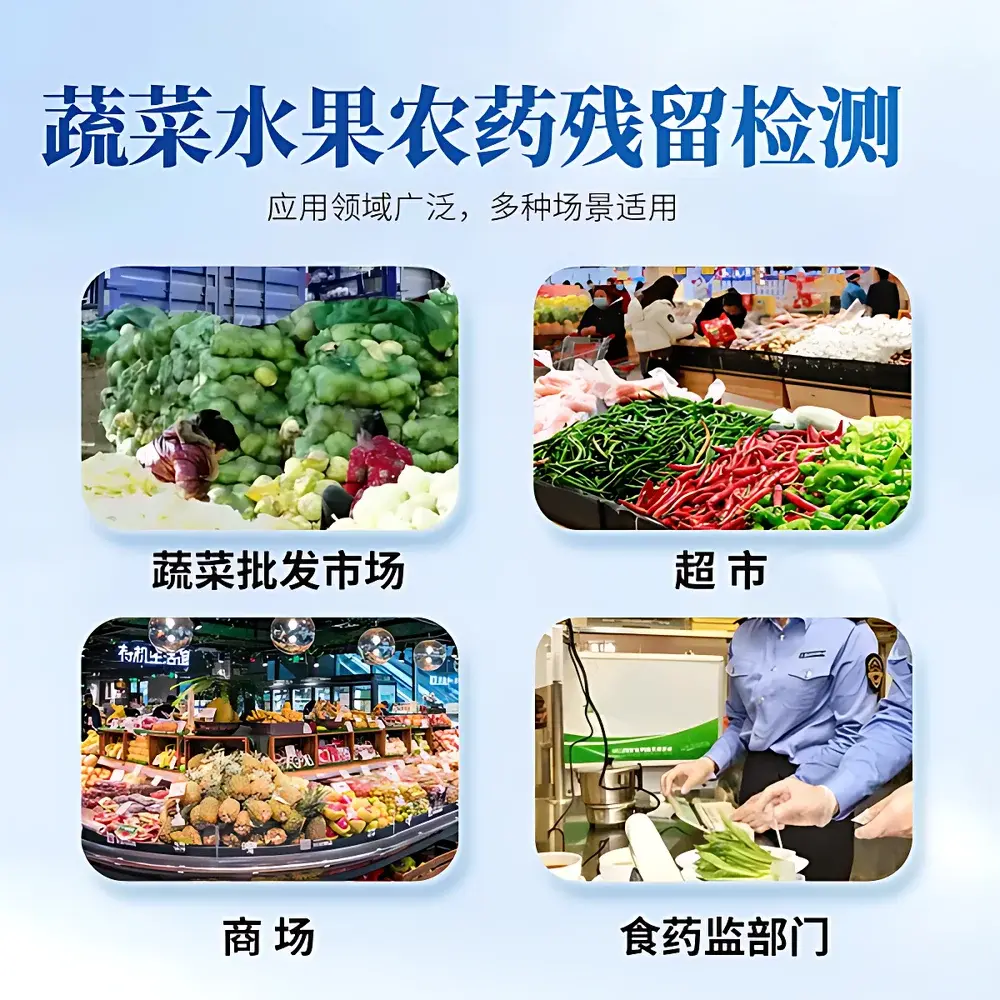
This analyzer serves as a frontline triage tool in food supply chain quality assurance: at origin farms for pre-harvest screening; in wholesale markets for vendor compliance verification; in supermarket QC labs for incoming goods inspection; and at municipal food safety supervision stations for routine surveillance. Its throughput (≥48 samples/shift) and portability (12 kg, 32 × 28 × 24 cm) support mobile deployment during market inspections or rural extension programs. When paired with certified reference materials (e.g., Sigma-Aldrich paraoxon and carbofuran standards), it delivers semi-quantitative results suitable for decision-making under HACCP Principle 2 (Critical Limit Establishment).
FAQ
What pesticides does the YT-QN24 detect?
It quantifies inhibition caused by organophosphorus (e.g., chlorpyrifos, diazinon) and carbamate (e.g., carbaryl, methomyl) compounds—covering >92% of pesticides regulated under GB 2763–2021 for fresh produce.
Is method validation documentation available?
Yes—Yuntang provides a full validation package including precision (RSD ≤4.2%), linearity (r² ≥0.997), specificity, and ruggedness data per ISO/IEC 17025:2017 Annex B guidelines.
Can the instrument interface with enterprise LIMS?
Yes—via configurable RESTful API endpoints and HL7-compatible message formatting; integration kits available for Thermo Fisher SampleManager, LabVantage, and custom SQL-based systems.
How is calibration maintained across long-term use?
The system performs daily self-checks using onboard optical references; annual third-party verification (ISO/IEC 17025-accredited lab) is recommended for regulatory audits.
Does it meet international export requirements?
The unit carries CE marking (2014/30/EU EMC Directive, 2014/35/EU LVD Directive); RoHS 3 and REACH declarations are provided upon request.





