
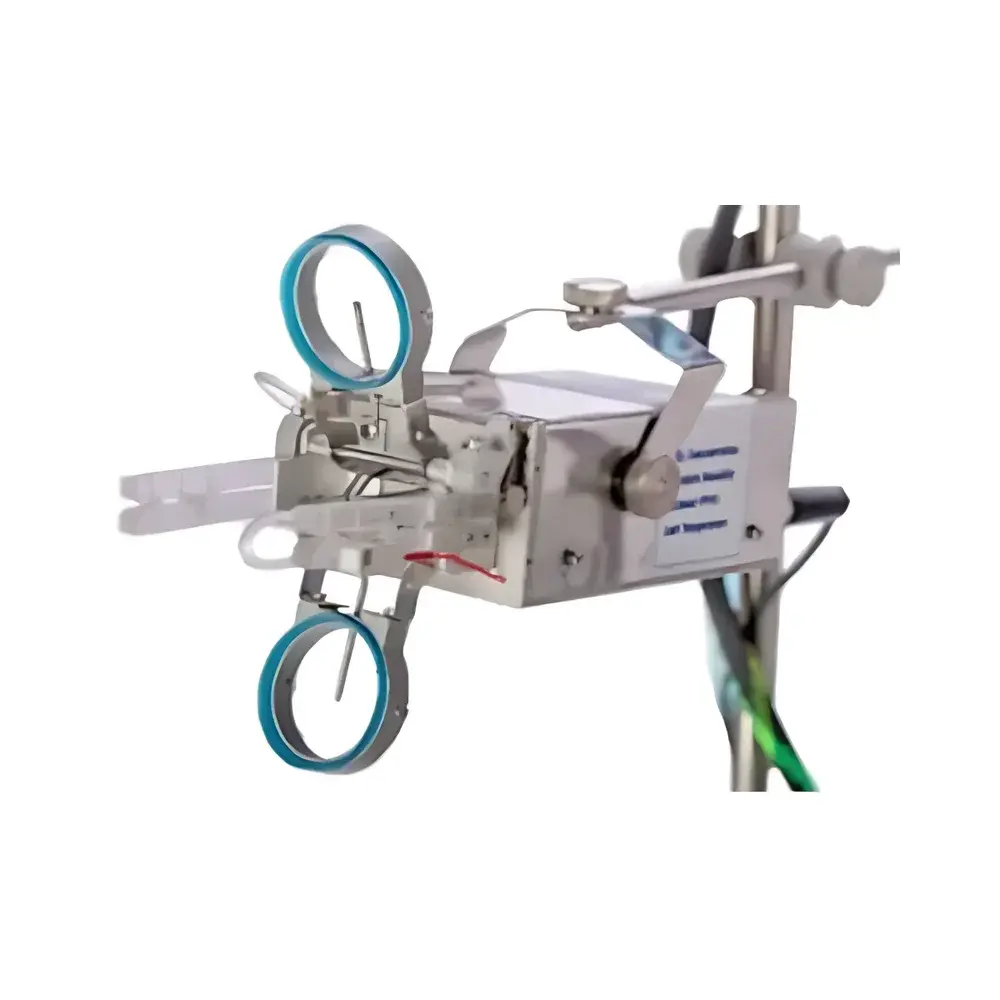
Zealquest AI PLS-10R Distributed Plant Photosynthetic Physiology & Environmental Monitoring System
| Brand | Zealquest AI Netherlands |
|---|---|
| Origin | Netherlands |
| Model | PLS-10R |
| Measurement Mode | Automated Continuous Monitoring |
| Leaf Chamber Type | Motorized Auto-Opening/Closing |
| Number of Chambers | Multi-channel (Configurable) |
| Chamber Area | 10 cm² (Circular, Rectangular Optional) |
| Operating Temperature | 5–50 °C |
| IP Rating | IP53 |
| Communication | Wireless (IEEE 802.15.4 / LoRaWAN compatible) |
| Data Logging Interval | Configurable from 1 s to 24 h |
| Supported External Sensors | PAR (0–2000 µmol·m⁻²·s⁻¹), Air Temp/RH, Leaf Temp (±0.15 °C), Stem Diameter Change (0.002 mm resolution), Fruit Growth (0.019–0.065 mm resolution), Sap Flow, Soil Moisture/Temperature/EC, Total Solar Radiation |
Overview
The Zealquest AI PLS-10R is a distributed, multi-parameter plant physiological and environmental monitoring system engineered for long-term, unattended field or controlled-environment studies. Unlike conventional portable photosynthesis systems designed for spot measurements, the PLS-10R implements a closed-path, differential infrared gas analysis (IRGA) architecture combined with precision microclimate control within motorized leaf chambers. It measures real-time CO2 and H2O gas exchange kinetics—net photosynthesis (An), transpiration (E), stomatal conductance (gs), intercellular CO2 concentration (Ci), and water use efficiency (WUE)—while simultaneously synchronizing data from up to 16 independent wireless sensor nodes. Its core design principle centers on minimizing physiological disturbance: leaf chambers remain fully open between measurement cycles, preserving natural leaf boundary layer conditions, light exposure, and thermal equilibrium. This enables high-fidelity diurnal and multi-day tracking of photosynthetic performance under ambient or manipulated environmental regimes.
Key Features
- Motorized auto-opening leaf chambers with programmable duty cycle (e.g., 30 s closed / 5 min open), reducing measurement-induced stress and enabling true long-term physiological integrity.
- Multi-channel architecture supporting up to 8 independently controlled leaf chambers per controller unit, each equipped with integrated PPFD (400–700 nm), air/leaf temperature, relative humidity, and barometric pressure sensors.
- Modular wireless sensor network compliant with IEEE 802.15.4 physical layer; supports seamless integration of Zealquest AI’s certified ecosystem—including RTH-50 (air T/RH/PAR), LT-4z (quad-point leaf thermometry), SD-6z (stem diameter variation, 0–5 mm, 0.002 mm resolution), FI-Sz (fruit growth, 7–45 mm range), SMTE-32z (dual-probe soil moisture/temperature/EC), and PRI-1z (photosynthetically active radiation).
- Onboard data logger with 8 GB internal flash memory and optional SD card expansion; supports local storage and scheduled cloud upload via LTE or Ethernet gateway.
- Embedded environmental compensation algorithms correcting for vapor pressure deficit (VPD), atmospheric CO2 drift, and temperature-dependent IRGA response nonlinearity—ensuring metrological traceability across extended deployments.
- IP53-rated enclosure for outdoor use in semi-exposed conditions; operating range validated from 5 °C to 50 °C ambient, with condensation-resistant optical path design.
Sample Compatibility & Compliance
The PLS-10R accommodates broad botanical diversity: herbaceous dicots (e.g., Arabidopsis, tomato, lettuce), monocots (maize, rice, wheat), woody perennials (grapevine, olive, apple), and epiphytic or succulent species. Leaf chamber geometry (standard 10 cm² circular aperture, custom rectangular options available) permits adaptation to leaf size, thickness, and venation patterns without mechanical clamping artifacts. All hardware and firmware comply with CE marking requirements (2014/30/EU EMC Directive, 2014/53/EU RED Directive). Data acquisition workflows support GLP-compliant metadata tagging (operator ID, protocol version, calibration timestamps) and are compatible with 21 CFR Part 11 audit trail configurations when deployed with Zealquest AI’s validated software suite (v4.2+). Sensor calibration certificates (NIST-traceable where applicable) are provided for all factory-calibrated modules, including IRGA cell linearity verification per ISO 17025-accredited procedures.
Software & Data Management
ZQ-Monitor v5.1 is the native cross-platform application (Windows/macOS/Linux) for system configuration, real-time visualization, and post-hoc analysis. It features a modular workflow engine allowing users to define measurement sequences (e.g., “light-response curve at 15-min intervals from 06:00–18:00”), sensor synchronization logic, and conditional triggers (e.g., initiate stem diameter logging if leaf VPD exceeds 1.8 kPa). Raw data exports conform to CF Metadata Conventions (v1.8) and are natively importable into R (plantecophys, photosynthesis packages), Python (netCDF4, xarray), and MATLAB. The software includes built-in tools for gap-filling using piecewise cubic Hermite interpolation (PCHIP), WUE partitioning (intrinsic vs. instantaneous), and time-series decomposition (STL) to isolate circadian, diurnal, and treatment-induced signals. Remote access is enabled via secure HTTPS API endpoints supporting OAuth2 authentication and JSON-formatted queries for integration into institutional LIMS or FAIR-aligned data repositories.
Applications
- Quantifying drought response thresholds through synchronized stomatal conductance, sap flow, and fruit growth dynamics under progressive soil drying protocols.
- Evaluating cultivar-specific carbon gain efficiency across photoperiod gradients in controlled-environment agriculture (CEA) facilities.
- Assessing canopy-scale carbon balance in Mediterranean shrublands by deploying PLS-10R nodes on Quercus coccifera and Pistacia lentiscus alongside eddy-covariance towers.
- Validating stomatal optimization models (e.g., Ball-Berry, Medlyn) using high-temporal-resolution gs-An-Ci triads collected over 72+ hours.
- Monitoring phenological shifts in orchard trees (e.g., peach budbreak → fruit set) via continuous stem diameter and fruit volume trajectories correlated with accumulated growing degree days (GDD).
- Supporting EU-funded agroecology trials (Horizon Europe Grant No. 101095012) investigating nitrogen-use efficiency in intercropped legume–cereal systems under variable PAR and VPD regimes.
FAQ
What is the maximum recommended deployment duration for unattended operation?
Field deployments exceeding 28 days are routinely achieved with lithium-thionyl chloride battery packs (12 Ah) and solar charging kits; system self-diagnostics monitor battery voltage, memory saturation, and sensor communication latency to trigger proactive alerts.
Can the PLS-10R operate in high-humidity tropical environments?
Yes—the IRGA optical path incorporates heated mirrors and desiccant-replenishable Nafion dryers; chamber sealing meets IP53 specifications, and firmware includes dew-point compensation for RH >95% conditions.
Is third-party sensor integration supported?
The system provides RS-485 and analog (0–5 V / 4–20 mA) expansion ports with documented Modbus RTU register maps; however, only Zealquest AI-certified sensors guarantee synchronized timestamp alignment and automatic unit conversion within ZQ-Monitor.
How is CO2 calibration performed in situ?
Two-point calibration (zero gas: N2; span gas: certified 400 ppm CO2 in air) is executed via automated solenoid valve sequencing; drift correction algorithms apply linear interpolation between scheduled calibrations based on reference cell stability logs.
Does the system meet FAIR data principles?
Yes—ZQ-Monitor generates machine-readable metadata (ISO 19115-3 XML) with persistent identifiers (DOIs assigned via institutional repositories), structured vocabularies (EnvO, PO, TO), and embedded provenance graphs detailing instrument configuration, calibration history, and processing steps.




