
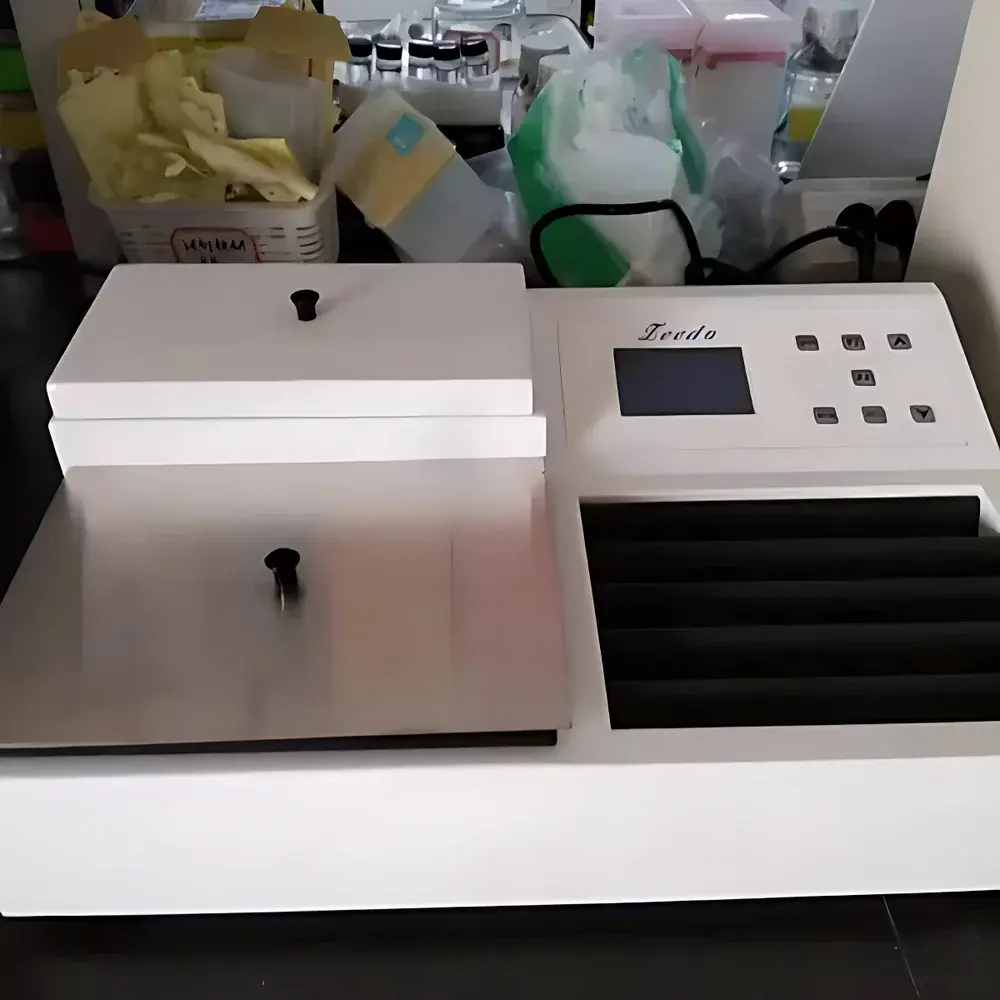
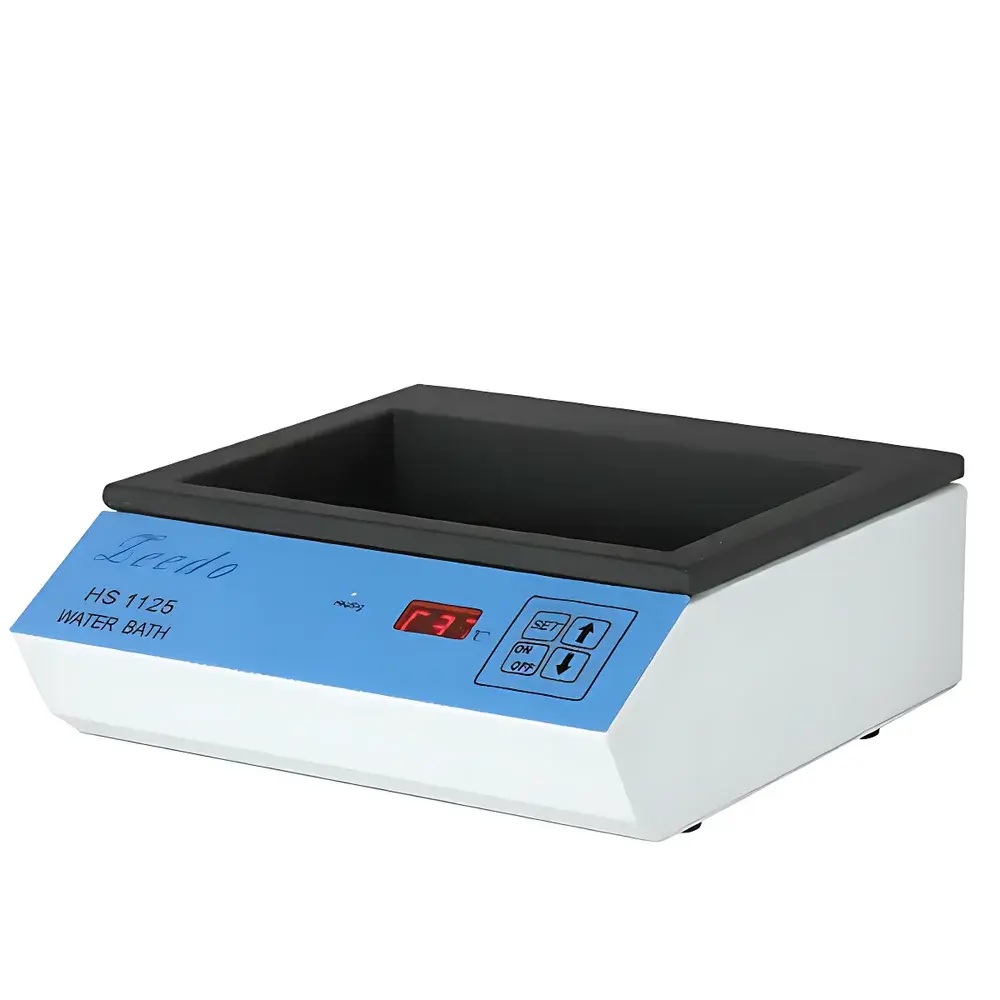
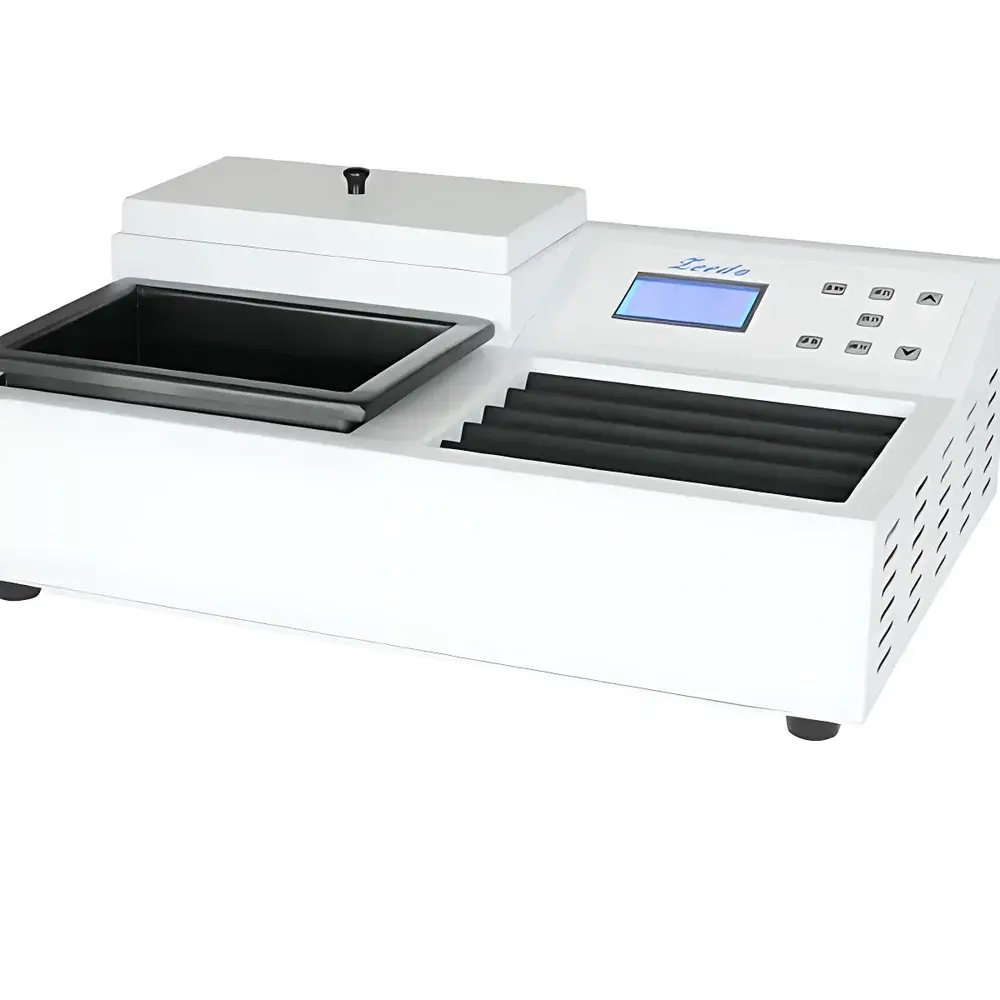
ZEEDO HS-1125 Tissue Flattening and Baking Station
| Brand | ZEEDO |
|---|---|
| Model | HS-1125 |
| Temperature Range | Ambient to 90 °C (adjustable) |
| Temperature Control Accuracy | ±1 °C |
| Power Supply | AC 220 V, 50 Hz / AC 110 V, 60 Hz |
| Power Consumption | 200 VA |
| Dimensions | 340 × 340 × 120 mm |
| Weight | 6 kg |
| Operating Environment | 0–40 °C |
Overview
The ZEEDO HS-1125 Tissue Flattening and Baking Station is a compact, benchtop pathology instrument engineered for precise thermal management during histological slide preparation. It integrates three critical pre-staining steps—water bath-based tissue section flotation (flattening), controlled thermal drying (baking), and uniform substrate adhesion enhancement—into a single, programmable platform. The device operates on the principle of conductive heating via an embedded high-efficiency heating element, coupled with PID-regulated temperature feedback to maintain stable thermal conditions across the aluminum-coated black anodized heating plate. Designed for routine use in clinical pathology laboratories, academic research facilities, and teaching institutions, the HS-1125 ensures reproducible flattening of paraffin-embedded tissue sections (typically 3–7 µm thick) onto glass slides prior to hematoxylin and eosin (H&E) or immunohistochemical (IHC) staining. Its thermal profile supports standard protocols aligned with CAP (College of American Pathologists) and ISO 15189-accredited workflows, where consistent slide adhesion minimizes section loss during automated staining cycles.
Key Features
- Programmable dual-display interface showing real-time and setpoint temperatures, enabling immediate verification of thermal equilibrium
- PID-controlled heating system with ±1 °C accuracy over the full 0–90 °C operating range, ensuring compliance with USP & CLSI-recommended baking parameters for optimal antigen retrieval
- Non-porous, corrosion-resistant black anodized aluminum heating surface—designed to resist chemical degradation from xylene, ethanol, and aqueous mounting media
- Auto-memory function retains last-used temperature setting after power cycling, reducing setup time between batches
- Low thermal inertia design enables rapid ramp-up from ambient to 75 °C in under 8 minutes, improving throughput in high-volume labs
- Universal voltage compatibility (AC 110 V / 220 V) with frequency auto-detection (50/60 Hz), facilitating deployment across North American, European, and APAC laboratory infrastructures
Sample Compatibility & Compliance
The HS-1125 accommodates standard microscope slides (25 × 75 mm, up to 1.2 mm thickness) and supports both conventional paraffin sections and frozen sections (post-cryostat mounting). Its flat, uniform heating zone ensures even thermal transfer without edge overheating—critical for preserving epitope integrity in IHC applications. The instrument meets IEC 61010-1:2010 safety requirements for laboratory electrical equipment and conforms to RoHS Directive 2011/65/EU for hazardous substance restriction. While not FDA-cleared as a medical device, it is routinely deployed in GLP-compliant environments where its temperature log traceability (via external data logger integration) satisfies internal QA documentation standards per ISO/IEC 17025 clause 7.8.1.
Software & Data Management
The HS-1125 operates as a standalone analog-digital hybrid unit with no embedded firmware or network interface. Temperature setpoints and real-time readings are managed exclusively through its front-panel membrane keypad and dual LED display. For audit-ready recordkeeping, users may integrate optional external USB thermocouple loggers (e.g., Omega OM-DAQPRO-5300) connected via RS-232 or analog 0–5 V output (available upon request with OEM adapter kit). This configuration supports 21 CFR Part 11–compliant electronic records when paired with validated LIMS or ELN platforms, provided timestamped calibration certificates and operator ID inputs are maintained per institutional SOPs.
Applications
- Routine H&E slide preparation in diagnostic pathology labs requiring >95% section adhesion yield
- Pre-baking step for immunofluorescence (IF) and multiplex IHC assays where controlled dehydration prevents antibody denaturation
- Teaching laboratories performing histology practicums with emphasis on standardized thermal protocol execution
- Biobanking operations requiring archival-grade slide stabilization prior to long-term storage at –20 °C
- Research studies evaluating tissue morphology under variable hydration states (e.g., comparative analysis of air-dried vs. baked sections)
FAQ
Does the HS-1125 support programmable multi-step temperature profiles?
No—it maintains a single user-defined setpoint until manually adjusted. For gradient baking protocols, external timer-based relays or third-party incubator controllers are required.
Can the heating plate be cleaned with xylene or 100% ethanol?
Yes—the black anodized surface is chemically inert to common histology solvents; however, abrasive pads or metal scrapers must be avoided to preserve surface integrity.
Is calibration certificate included with shipment?
A factory-verified NIST-traceable calibration report (covering 30 °C, 60 °C, and 85 °C points) is available upon request at order placement; standard units ship with operational verification only.
What is the maximum number of slides processed per cycle?
The 340 × 340 mm plate accommodates up to 48 standard slides in a 6 × 8 grid arrangement, assuming 5 mm inter-slide spacing for optimal heat distribution.
Does the unit comply with CE marking requirements?
Yes—certified to EN 61010-1:2010 + A1:2011 and EMC Directive 2014/30/EU; CE mark is affixed to rear panel and included in technical documentation.




