
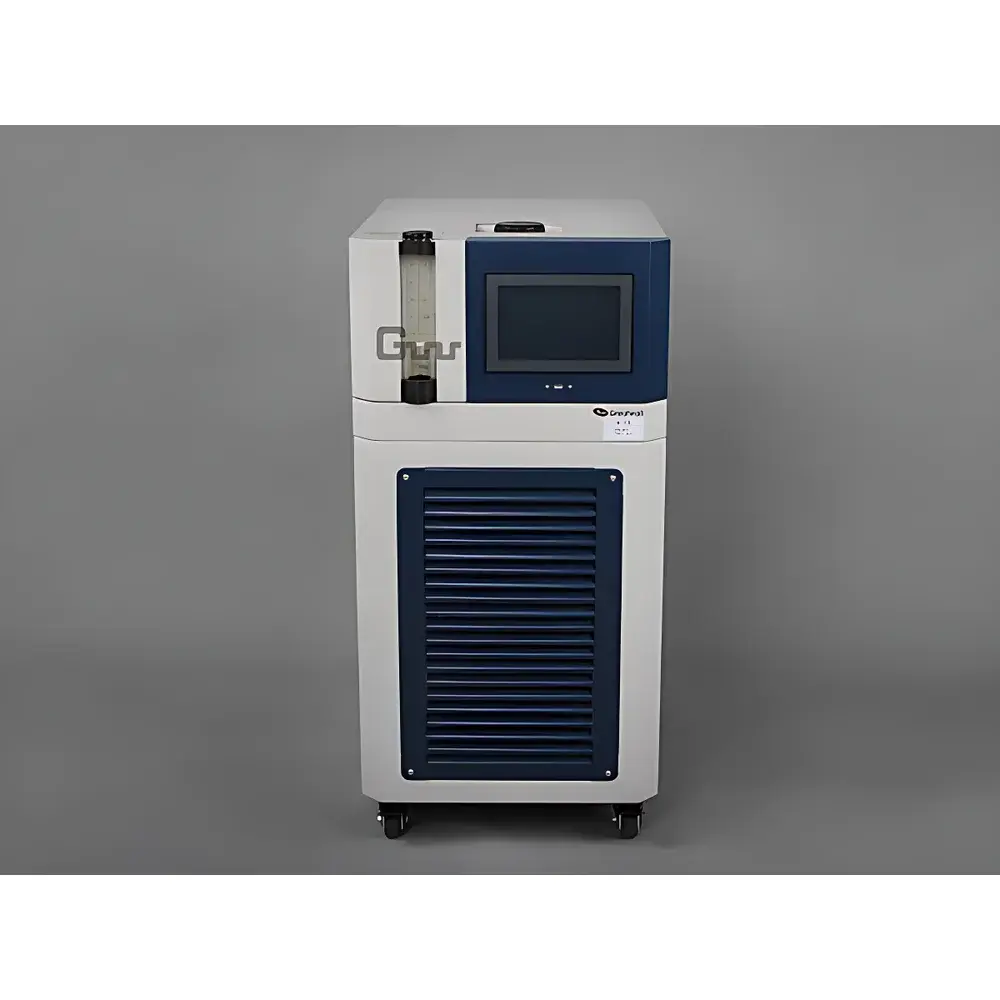
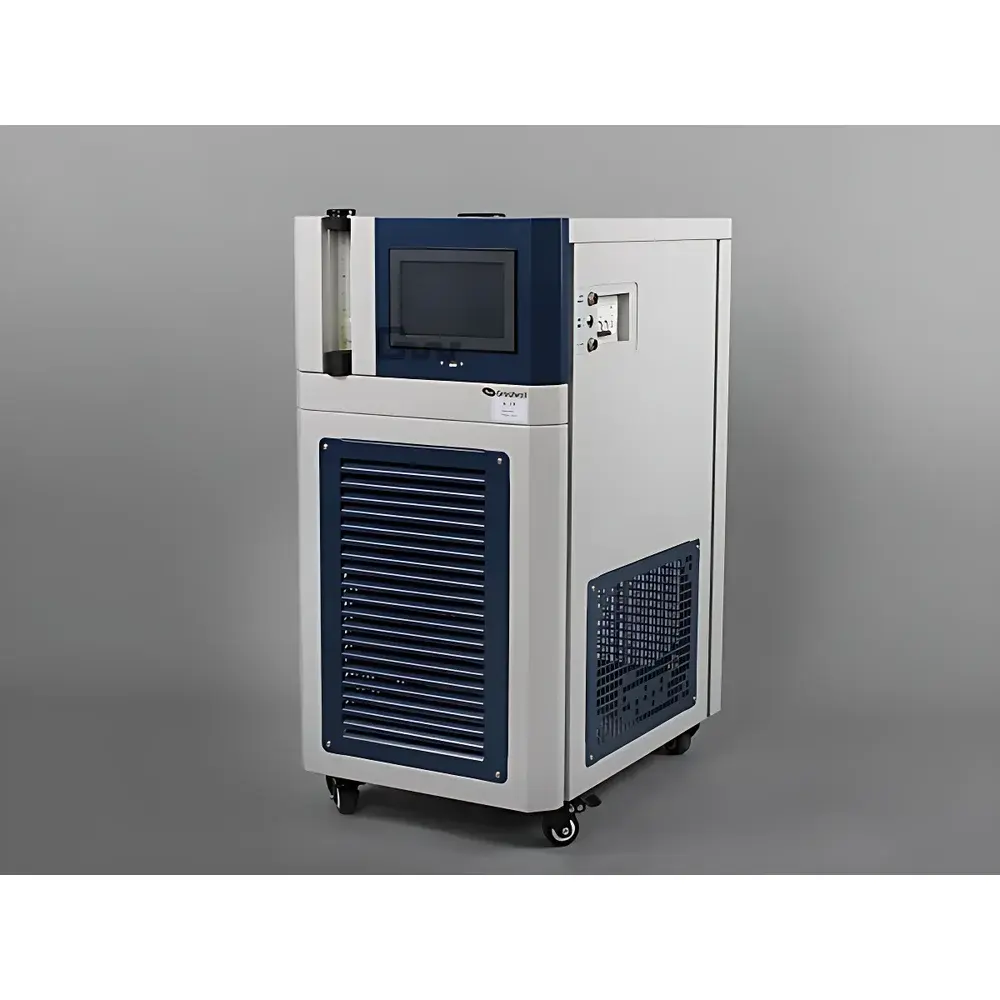
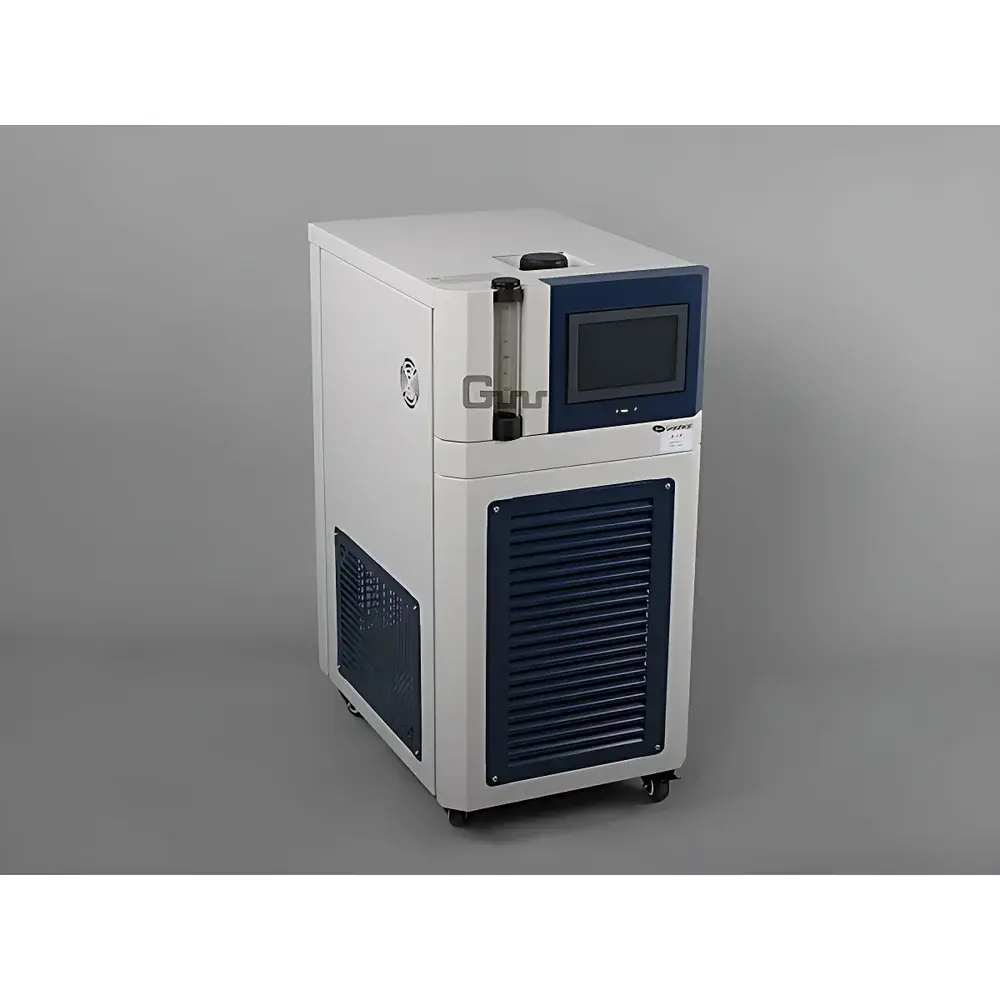
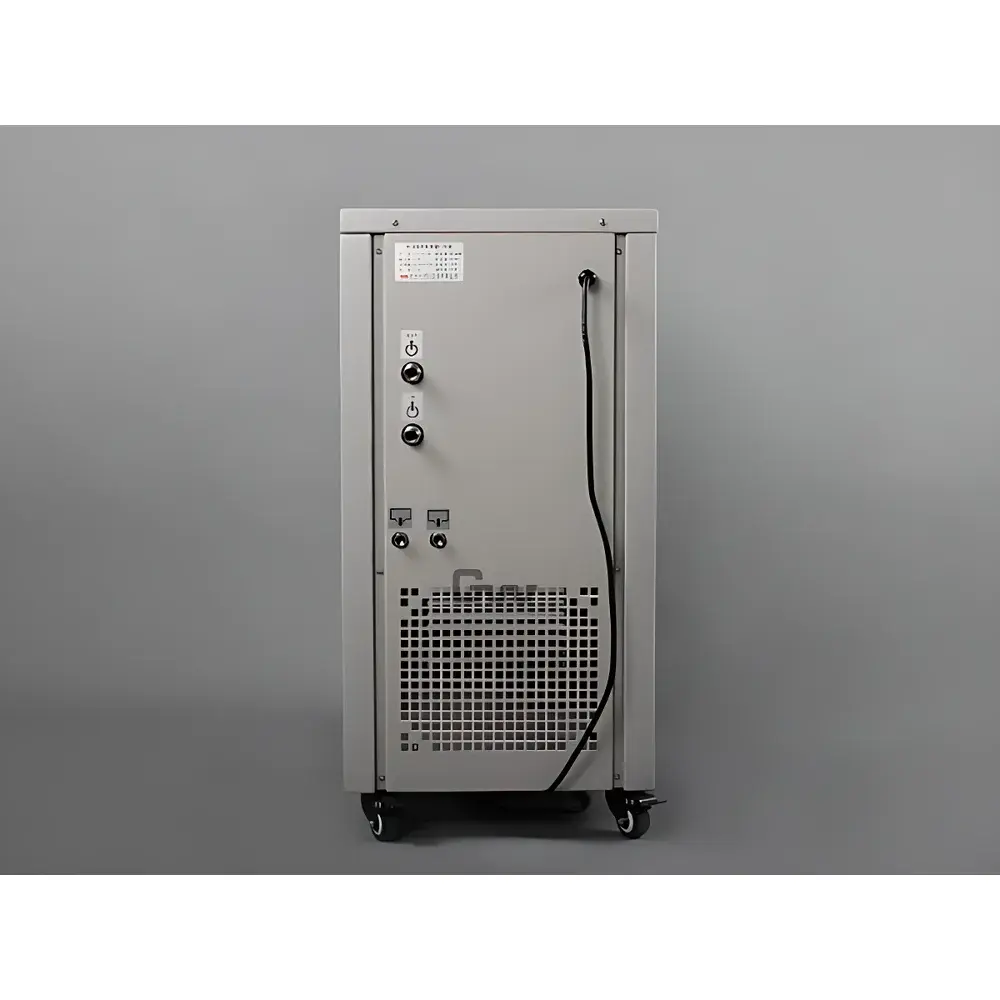
Zhengzhou Great Wall ZT-5-200-30 High-Low Temperature Circulating Chiller/Heater
| Brand | The Great Wall |
|---|---|
| Origin | Henan, China |
| Manufacturer Type | Direct Manufacturer |
| Country of Origin | China |
| Model | ZT-5-200-30 |
| Quotation | Upon Request |
| Temperature Stability (Reactor) | ±0.5 °C |
| Operating Temperature Range | −30 °C to +200 °C |
| Ambient Temperature Range | 5 °C to 35 °C |
| Ambient Humidity | ≤70% RH |
| Power Supply | 220–240 V~, 50 Hz |
| Safety Protections | Delayed Start, Overcurrent, Overheat, and Overshoot Protection |
| Total Power Consumption | 3 kW |
| Heating Power | 2 kW |
| Refrigerant | R404A |
| Cooling Capacity | 0.6 kW @ 200 °C, 0.6 kW @ 20 °C, 0.5 kW @ 0 °C, 0.4 kW @ −10 °C, 0.3 kW @ −20 °C, 0.2 kW @ −30 °C |
| Circulation Pump Power | 180 W |
| Flow Rate | 25 L/min |
| Max. System Pressure | 1.5 bar |
| External Port Size | 1/2″ BSP |
| Expansion Tank Material | SUS304 |
| Fluid Lines & Valves Material | SUS304 |
| Unit Dimensions (W×D×H) | 420 mm × 650 mm × 860 mm |
| Net Weight | 106 kg |
Overview
The Zhengzhou Great Wall ZT-5-200-30 is a high-performance, fully integrated temperature control system engineered for precise external circulation of heat transfer fluid in laboratory-scale chemical and bioprocess applications. Operating on a dual-mode thermodynamic principle—employing electric resistance heating combined with vapor-compression refrigeration using R404A—the unit delivers stable, programmable thermal energy across a wide operating range from −30 °C to +200 °C. Its closed-loop architecture eliminates direct exposure of process fluids to ambient air, minimizing oxidation, evaporation loss, and contamination risk—critical for moisture-sensitive syntheses, low-boiling-point solvent removal, or exothermic reaction quenching. Designed specifically for integration with jacketed reactors, rotary evaporators, calorimeters, and other externally temperature-controlled apparatus, the ZT-5-200-30 maintains reactor internal temperature stability within ±0.5 °C under dynamic load conditions, satisfying stringent requirements for kinetic studies, crystallization optimization, and reproducible scale-up experiments.
Key Features
- Wide operational temperature span (−30 °C to +200 °C) enabled by optimized compressor staging and high-efficiency heating elements
- Closed-circuit stainless-steel fluid path (SUS304 expansion tank, piping, and valves) ensuring corrosion resistance and compatibility with organic solvents, aqueous buffers, and silicone oils
- High-flow, low-pulsation circulation pump (25 L/min at 1.5 bar max pressure) supporting uniform thermal distribution across large-volume or high-thermal-mass reactors
- Intuitive touchscreen LCD interface with real-time monitoring of setpoint, actual bath temperature, flow rate, system pressure, and fault status
- Comprehensive safety architecture including delayed startup logic, overcurrent protection, dual-stage overtemperature cutoff (electrical and fluid-sensing), and thermal overshoot prevention
- Modular design facilitating field serviceability and optional ATEX-compliant explosion-proof configurations for hazardous area deployment
Sample Compatibility & Compliance
The ZT-5-200-30 supports compatibility with a broad spectrum of process media—including water-glycol mixtures, silicone oils (e.g., DC200 series), and specialized synthetic heat transfer fluids—without degradation of seals or wetted components. All fluid-contact surfaces meet ASTM A240 Type 304 stainless steel specifications. While not certified to UL/CSA or IECEx out-of-the-box, the base configuration complies with general electrical safety requirements per IEC 61010-1 for laboratory equipment. Optional documentation packages support alignment with GLP and GMP environments, including configurable audit trails, user access levels, and electronic signature readiness when integrated with compliant LIMS or ELN platforms. The unit’s sealed refrigeration circuit and R404A charge (subject to local F-Gas regulation reporting) reflect adherence to environmental stewardship principles outlined in ISO 14001 frameworks.
Software & Data Management
The embedded controller supports RS485 Modbus RTU communication protocol for bidirectional integration with external PLCs, SCADA systems, or custom LabVIEW/Python-based automation suites. Real-time temperature and flow data can be streamed at user-defined intervals (1–60 s resolution) and logged locally to non-volatile memory (≥10,000 data points). Optional PC software enables remote parameter setting, trend visualization, alarm history export (CSV), and deviation reporting aligned with FDA 21 CFR Part 11 Annex 11 expectations—provided supplementary validation documentation and role-based authentication are implemented at the host system level. No cloud connectivity is embedded; all data remains on-premise unless explicitly routed via customer-controlled network infrastructure.
Applications
- Controlled-temperature synthesis in jacketed glass or stainless-steel reactors (e.g., Grignard, lithiation, hydrogenation)
- Condenser cooling and bath temperature stabilization during rotary evaporation of thermolabile compounds
- Thermal conditioning of analytical instrumentation (e.g., HPLC column ovens, DSC sample stages)
- Accelerated stability testing of pharmaceutical formulations under ICH Q1A-relevant temperature profiles
- Enzymatic reaction optimization requiring sub-zero activation or elevated denaturation thresholds
- Calibration verification of temperature probes and sensors against NIST-traceable references
FAQ
What types of heat transfer fluids are compatible with the ZT-5-200-30?
Water-glycol solutions (up to 60% v/v), silicone oils (viscosity range 10–100 cSt), and polyalphaolefin (PAO)-based synthetic fluids meeting ISO VG 10–46 specifications are validated for use. Ethanol, acetone, and low-flash-point hydrocarbons are strictly prohibited.
Can this unit operate unattended overnight?
Yes—when configured with appropriate safety interlocks (e.g., reactor-level sensors, emergency stop integration) and monitored via its Modbus interface, the system supports extended autonomous operation. However, continuous supervision is recommended during initial method development or first-time use with novel chemistries.
Is remote firmware update capability available?
No. Firmware updates require physical USB drive access and must be performed by authorized service personnel following documented change control procedures.
Does the unit include a built-in calibration certificate?
No. As supplied, it includes factory verification at three reference points (−20 °C, 25 °C, 100 °C). Users must perform periodic in-house calibration using traceable reference thermometers per ISO/IEC 17025 guidelines or engage an accredited third-party provider.
What maintenance intervals are recommended?
Compressor oil inspection every 12 months; refrigerant leak check annually; filter replacement every 6 months under continuous operation; full system performance validation every 24 months or after major component replacement.



