
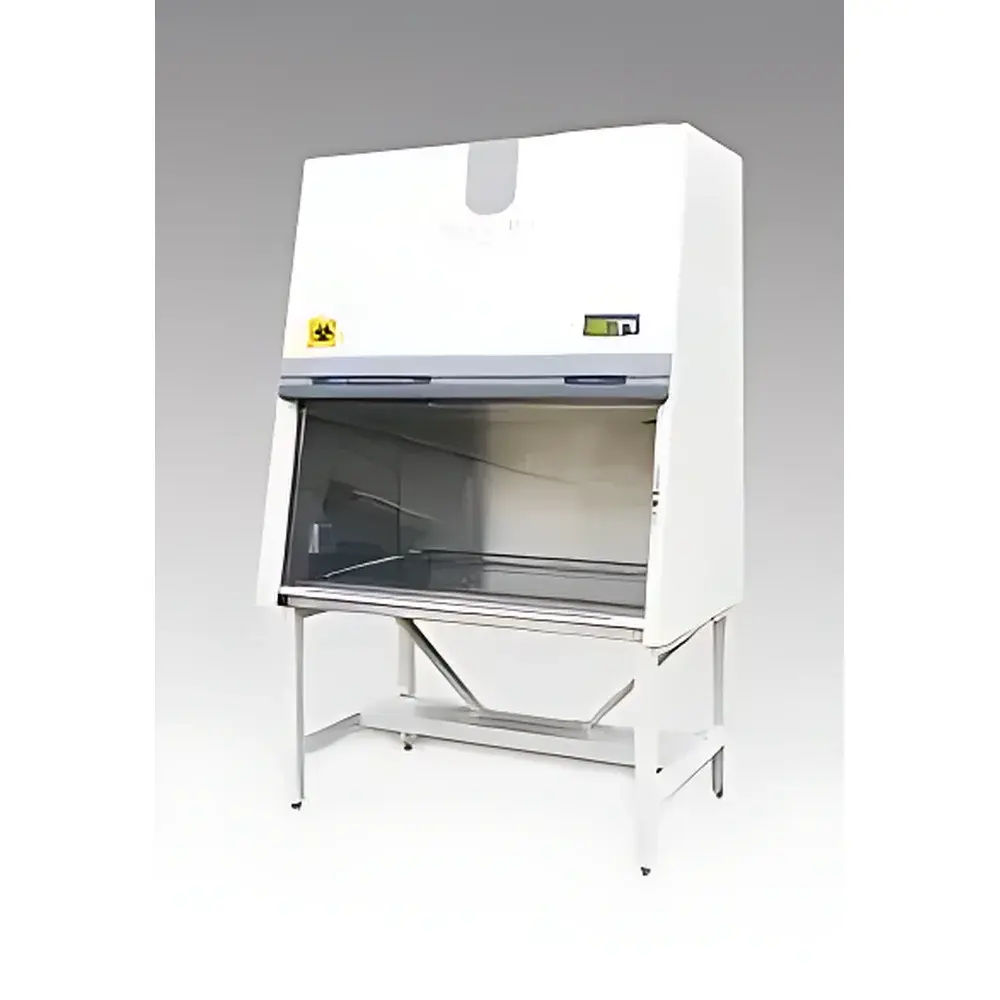
Zhicheng ZSB-1800ⅡA2 Class II A2 Biological Safety Cabinet
| Brand | Zhicheng |
|---|---|
| Origin | Shanghai, China |
| Manufacturer Type | Direct Manufacturer |
| Product Category | Domestic (China-made) |
| Model | ZSB-1800ⅡA2 |
| Pricing | Upon Request |
Overview
The Zhicheng ZSB-1800ⅡA2 is a certified Class II, Type A2 biological safety cabinet engineered for precision containment in biosafety level 2 (BSL-2) and select BSL-3 applications. It operates on the principle of inward airflow (inflow velocity), downward laminar airflow (downflow velocity), and recirculation through a ULPA filter—70% of the air is recirculated within the work area after filtration, while 30% is exhausted externally via ducted or canopy-connected ventilation. This dual-path airflow architecture ensures simultaneous protection of personnel, product (sample integrity), and environment—meeting NSF/ANSI 49-2022 and EN 12469:2000 performance requirements. The cabinet integrates real-time aerodynamic monitoring, dynamic pressure compensation, and redundant alarm logic to address long-standing operational vulnerabilities in conventional Class II A2 systems—including voltage-induced airflow drift, HEPA/ULPA degradation, and undetected filter breaches.
Key Features
- Constant Air Velocity Control System: Actively compensates for fluctuations in supply voltage and increasing filter resistance, maintaining inflow velocity at 0.5–0.6 m/s and downflow velocity at 0.25–0.5 m/s within ±0.015 m/s tolerance.
- Dual-Stage Filtration Architecture: Primary ULPA filter (≥99.999% efficiency against 0.1–0.2 µm particles) for recirculated air; secondary HEPA exhaust filter (≥99.99% efficiency against 0.3 µm particles) for safe discharge.
- Redundant Alarm Framework: Includes independent low-airflow detection circuitry separate from the main controller, ULPA/HEPA pre-failure warning, physical filter breach detection, and real-time multi-parameter status monitoring (air velocity, differential pressure, total airflow, filter runtime).
- Human-Centered Ergonomic Design: 10° inclined tempered laminated safety glass with anti-UV, anti-shatter, and non-glare dual-film coating; seamless one-piece stainless steel work surface (304 grade); integrated UV interlock preventing accidental exposure during sash operation.
- Comprehensive Environmental Monitoring: LCD interface displays real-time inflow/downflow velocity (0.01 m/s resolution), static pressure differential (0–500 Pa, ±1% accuracy), total airflow, filter status, and cumulative runtime—all with audible and visual alerts for out-of-spec conditions.
- Robust Mechanical Integration: High-static-pressure centrifugal blowers delivering >2× initial filter resistance; epoxy-coated stainless steel frame with gasket-sealed sash and base; built-in GFCI-protected electrical outlets with splash-proof covers; optional ducting kits for hard-piped external exhaust.
Sample Compatibility & Compliance
The ZSB-1800ⅡA2 supports a broad spectrum of life science workflows involving non-volatile chemical agents, low-to-moderate risk biological materials (e.g., E. coli K-12, Bacillus subtilis, mammalian cell lines), and aerosol-generating procedures such as pipetting, centrifugation, and microbial culturing. It complies with ISO 14644-1 Class 5 (ISO Class 5) cleanroom air quality standards for the work area. All safety-critical functions—including airflow verification, filter integrity validation, and alarm response—are designed to support GLP and GMP documentation requirements. While not inherently compliant with FDA 21 CFR Part 11, its event-logged parameter history (with timestamped alarms and manual/automatic mode switching) provides auditable traceability suitable for regulated QC/QA environments when paired with validated SOPs.
Software & Data Management
The cabinet features an embedded microcontroller-based control system with no external PC dependency. All operational parameters—including inflow velocity, downflow velocity, differential pressure across filters, total volumetric flow, and cumulative filter operating hours—are continuously sampled and stored locally. Alarms are time-stamped and categorized by severity (warning, fault, critical). The LCD interface supports bilingual display (English default; Chinese optional), enabling unambiguous interpretation across international lab teams. Data export is not supported via USB or network ports; however, the unit includes a real-time clock, programmable disinfection timer, and session-based runtime logging—enabling manual audit trail reconstruction per ISO/IEC 17025 clause 7.7 and CLSI GP26-A4 guidelines.
Applications
This cabinet is routinely deployed in pharmaceutical R&D labs for aseptic formulation development, biotech facilities conducting plasmid transfection and viral vector handling, clinical microbiology laboratories performing diagnostic culture isolation, environmental testing centers analyzing waterborne pathogens, and academic research groups working with recombinant DNA constructs under NIH Guidelines Appendix G. Its large work envelope (1840 × 635 × 655 mm internal dimensions) accommodates multi-user benchtop instrumentation including centrifuges, microplate readers, and automated liquid handlers—while maintaining strict containment integrity under sustained operational loads.
FAQ
What biosafety level does the ZSB-1800ⅡA2 support?
It is certified for BSL-2 applications and may be used for certain BSL-3 agents when combined with supplemental engineering controls and institutional biosafety committee approval.
Can this cabinet operate without external ducting?
Yes—it supports both recirculating (ducted) and canopy-connected (non-ducted) configurations, though external exhaust is required when volatile chemicals are used.
Does it meet NSF/ANSI 49 standards?
The design and performance specifications align with NSF/ANSI 49-2022 for Class II, Type A2 cabinets; formal third-party certification documentation is available upon request.
How is ULPA filter integrity verified?
The system monitors pressure differential across the ULPA filter and triggers pre-failure warnings at 85% of rated resistance, followed by failure alarms at 100%; physical breach detection activates upon abnormal airflow asymmetry or sudden pressure drop.
Is remote monitoring or data export supported?
No network interface or digital data export capability is included; all monitoring and logging occur locally on the embedded controller with visual/audible alerts only.
Related Products




