
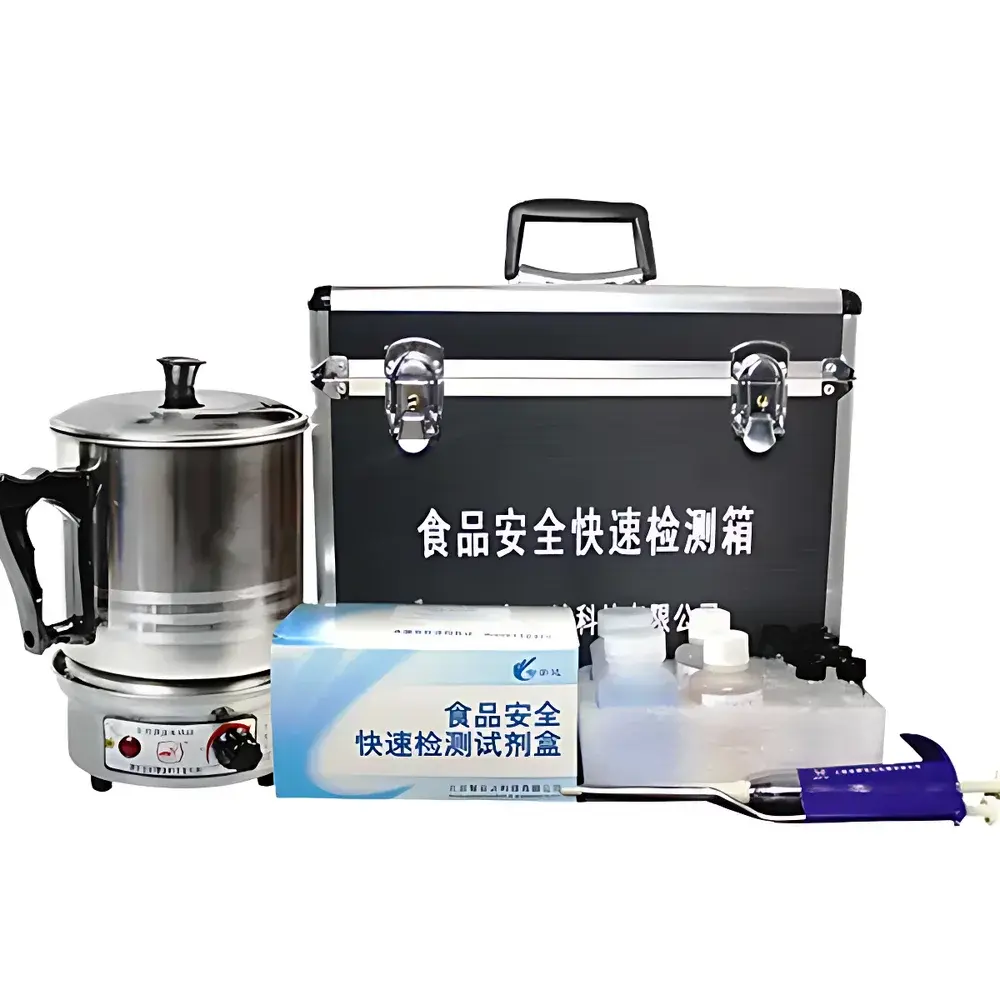
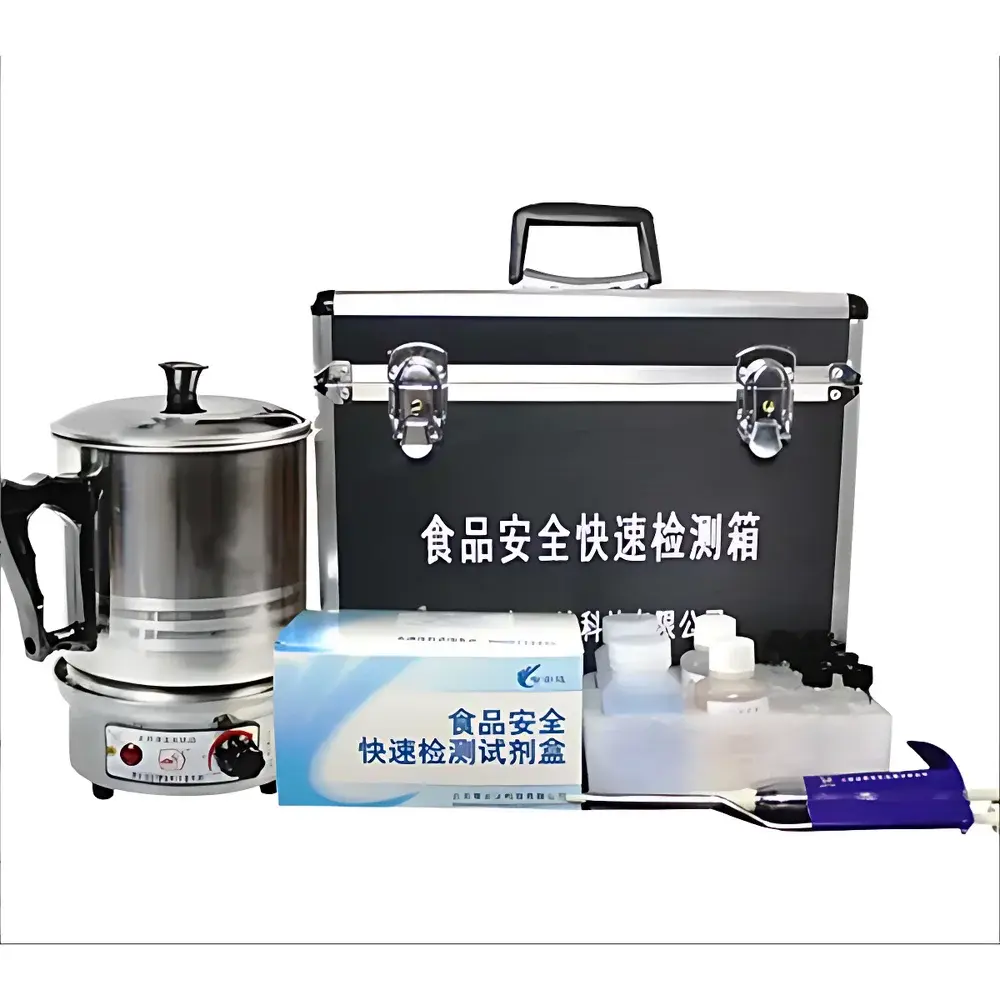
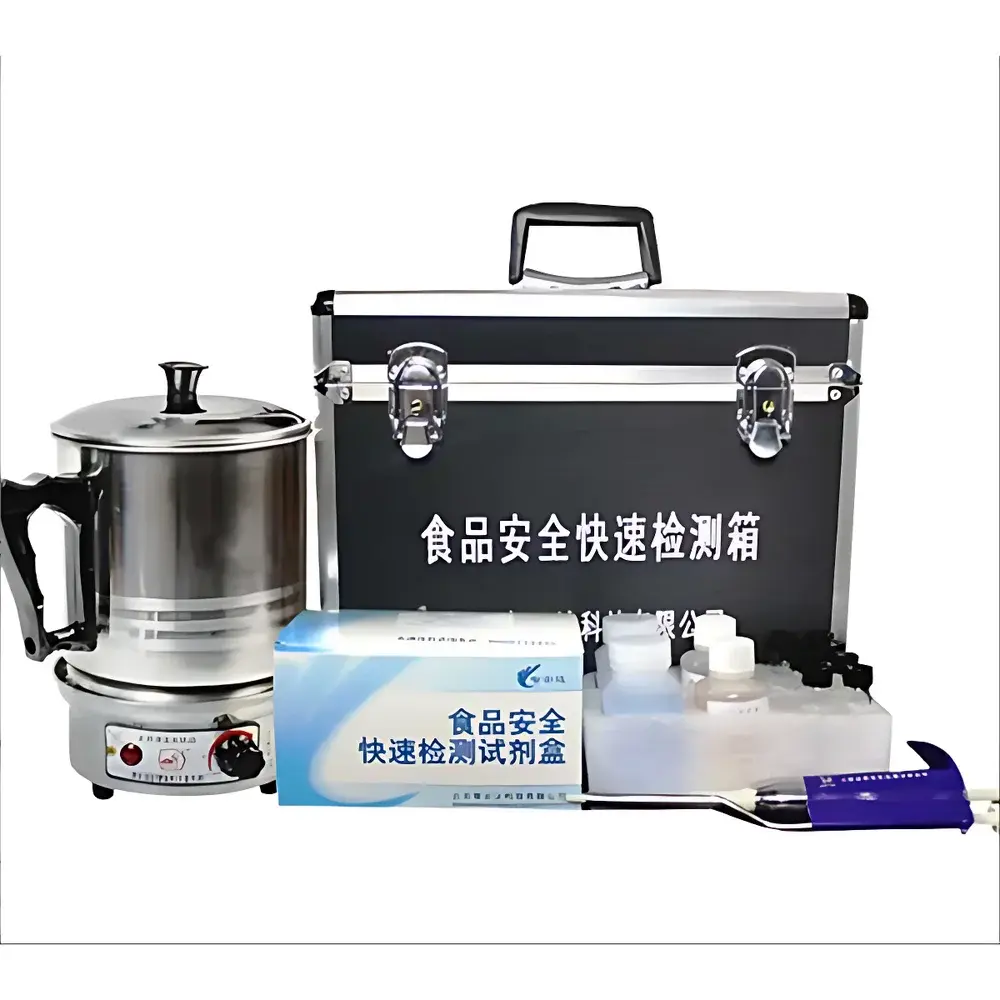
Zhiyunda ZYD-DGY-100 Multi-Parameter Rapid Screening Kit for Illegally Recycled Cooking Oil
| Brand | Zhiyunda |
|---|---|
| Origin | Beijing, China |
| Manufacturer Type | Authorized Distributor |
| Country of Manufacture | China |
| Model | ZYD-DGY-100 |
| Pricing | Upon Request |
Overview
The Zhiyunda ZYD-DGY-100 Multi-Parameter Rapid Screening Kit is a field-deployable, non-instrumental diagnostic system engineered for the qualitative assessment of illegally recycled cooking oil—commonly referred to as “gutter oil”—in food service environments, regulatory inspection workflows, and institutional kitchens. Unlike chromatographic or spectroscopic analytical platforms, this kit operates on a validated multi-parameter colorimetric principle, simultaneously evaluating four chemically distinct degradation and adulteration markers associated with thermal abuse, repeated frying, and illicit reprocessing of used cooking oils. Its design aligns with the Chinese Ministry of Health’s recommended on-site screening protocol (WS/T 405–2012), enabling presumptive identification without laboratory infrastructure or trained analytical personnel. The system delivers a binary outcome—“suspect” or “non-suspect”—based on integrated visual interpretation of reaction zones, supporting rapid triage prior to confirmatory analysis by GC-MS or FTIR.
Key Features
- Minimized Sample Preparation: Requires no extraction, filtration, or solvent dilution; direct application of liquid oil sample to test strips or reagent vials.
- Multi-Parameter Simultaneity: Assesses four independent chemical indicators—free fatty acid content, polar compound accumulation, anisidine value surrogates, and carbonyl group formation—in a single assay run.
- Time-Efficient Workflow: Full procedure completed in ≤25 minutes, including reagent mixing, incubation, and result interpretation.
- Visual Interpretation Standardization: Includes calibrated reference color charts and standardized viewing conditions (D65 daylight simulator lighting) to reduce inter-operator variability.
- Stability & Shelf Life: Lyophilized reagents retain activity for ≥18 months when stored at 2–8 °C; desiccant-sealed pouches ensure humidity resistance during field transport.
- Regulatory Alignment: Protocol referenced in GB 2716–2018 (Food Safety Standard for Edible Vegetable Oils) Annex C as a preliminary screening tool for suspect batches.
Sample Compatibility & Compliance
The ZYD-DGY-100 kit is validated for use with common edible vegetable oils—including soybean, rapeseed, peanut, palm, and blended cooking oils—at ambient temperature (15–30 °C). It accommodates viscous or particulate-contaminated samples typical of commercial fryer residues. Not intended for highly refined mineral oils, biodiesel blends, or silicone-based lubricants. All reagents comply with GB/T 27404–2008 (Laboratory Quality Control Guidelines) for diagnostic kits. The packaging meets UN 3316 classification for transport of diagnostic substances (Class 9, PG III). Documentation includes Certificate of Analysis per batch and traceable lot numbers for GLP-compliant recordkeeping.
Software & Data Management
This is a manual, non-digital assay system; no software, firmware, or data connectivity is included. However, the kit integrates seamlessly into regulated quality management ecosystems: result documentation templates conform to ISO/IEC 17025:2017 Clause 7.8 (Reporting of Results), and printed log sheets support 21 CFR Part 11–compliant handwritten entries when paired with controlled document systems. Optional QR-coded batch labels enable traceability integration with LIMS via external scanning workflows. Audit trails are maintained through physical chain-of-custody forms supplied with each 100-test kit.
Applications
- Routine surveillance testing by municipal food safety supervision agencies during routine inspections of street vendors and school canteens.
- Pre-shipment verification for catering suppliers delivering to hospitals, corporate campuses, or government facilities under contractual food safety clauses.
- Internal quality assurance in centralized kitchen operations managing >500 daily meals, where rapid rejection of suspect oil inventory prevents cross-contamination.
- Training modules for food handler certification programs, illustrating empirical correlation between sensory degradation and chemical marker elevation.
- Tiered testing strategy: serves as Tier 1 screening preceding Tier 2 confirmation via accredited methods (e.g., ASTM D7593 for polar compounds or AOCS Cd 18–90 for anisidine value).
FAQ
Is this kit suitable for quantitative measurement of individual contaminants?
No. The ZYD-DGY-100 provides qualitative, pass/fail classification only. Quantification requires HPLC, GC-MS, or enzymatic assays performed in an accredited laboratory.
Can results be challenged in legal proceedings?
Results are admissible as preliminary evidence under Article 87 of the PRC Food Safety Law but require confirmatory testing using ISO/IEC 17025-accredited methods for evidentiary weight in administrative or judicial hearings.
What is the shelf life after first opening a reagent vial?
Once opened, lyophilized reagents must be used within 4 hours under ambient lab conditions; unused vials should be resealed with paraffin film and stored at 2–8 °C for up to 72 hours.
Does the kit detect all types of gutter oil adulterants?
It detects chemical signatures associated with thermal degradation and reprocessing of waste cooking oil. It does not identify specific hydrocarbon adulterants (e.g., diesel) or animal fat blending—those require complementary tests such as fatty acid profile analysis.
Are there equivalents recognized by international food safety authorities?
While no direct Codex Alimentarius-endorsed equivalent exists, the methodology shares conceptual alignment with EU Regulation (EC) No 853/2004 Annex III Section IV requirements for sensory and physicochemical screening of used frying oils.
Related Products




