
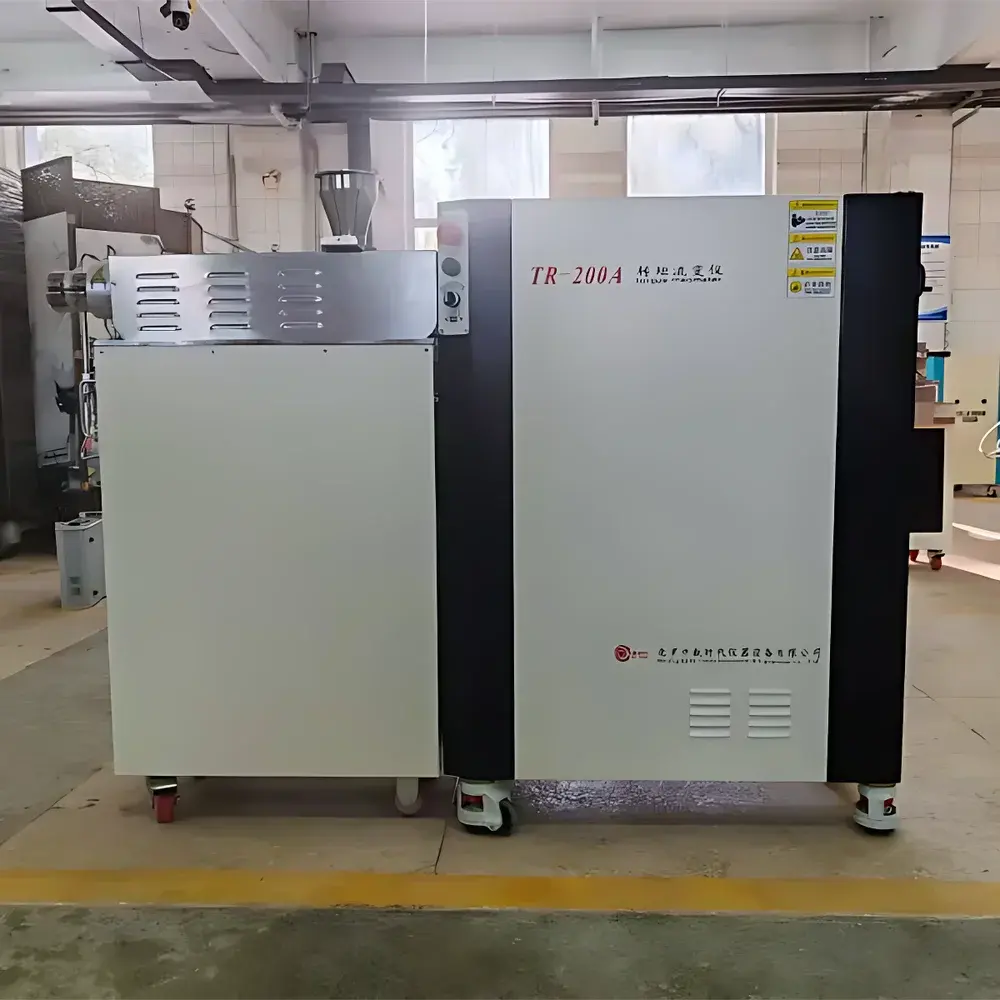
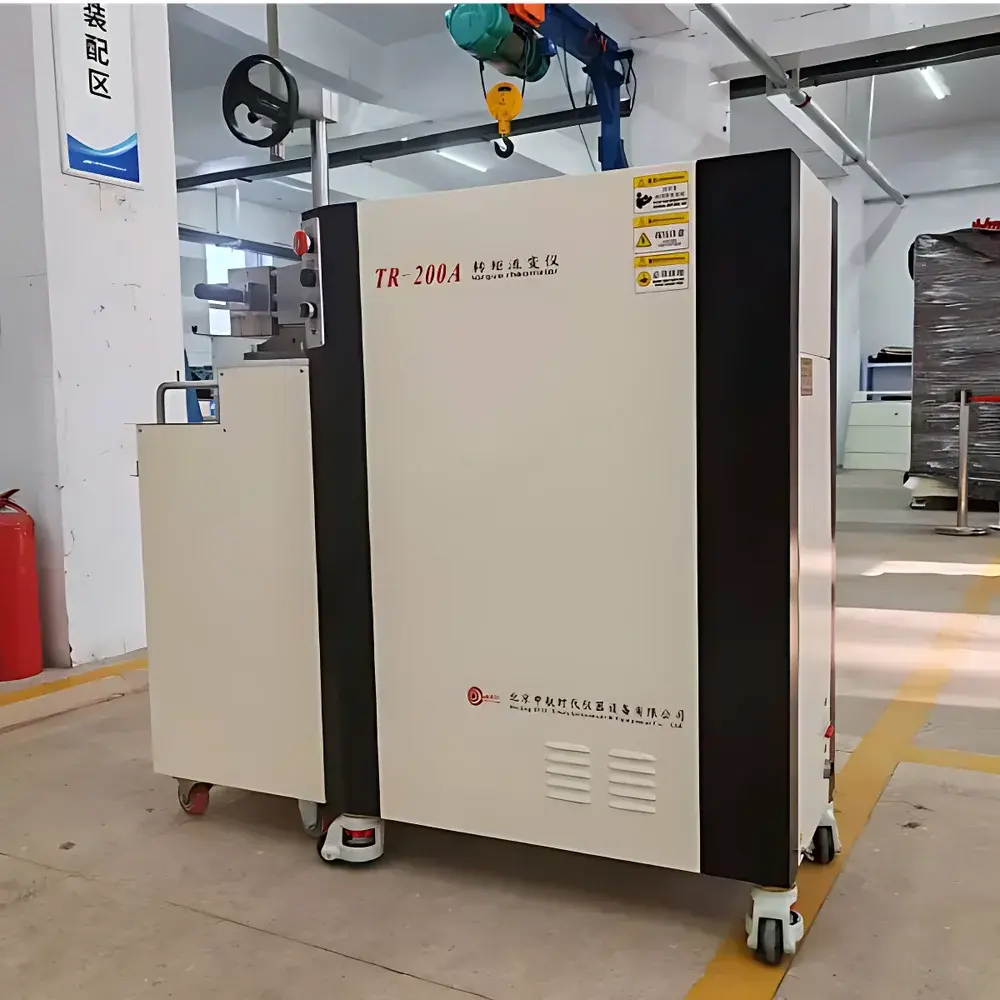
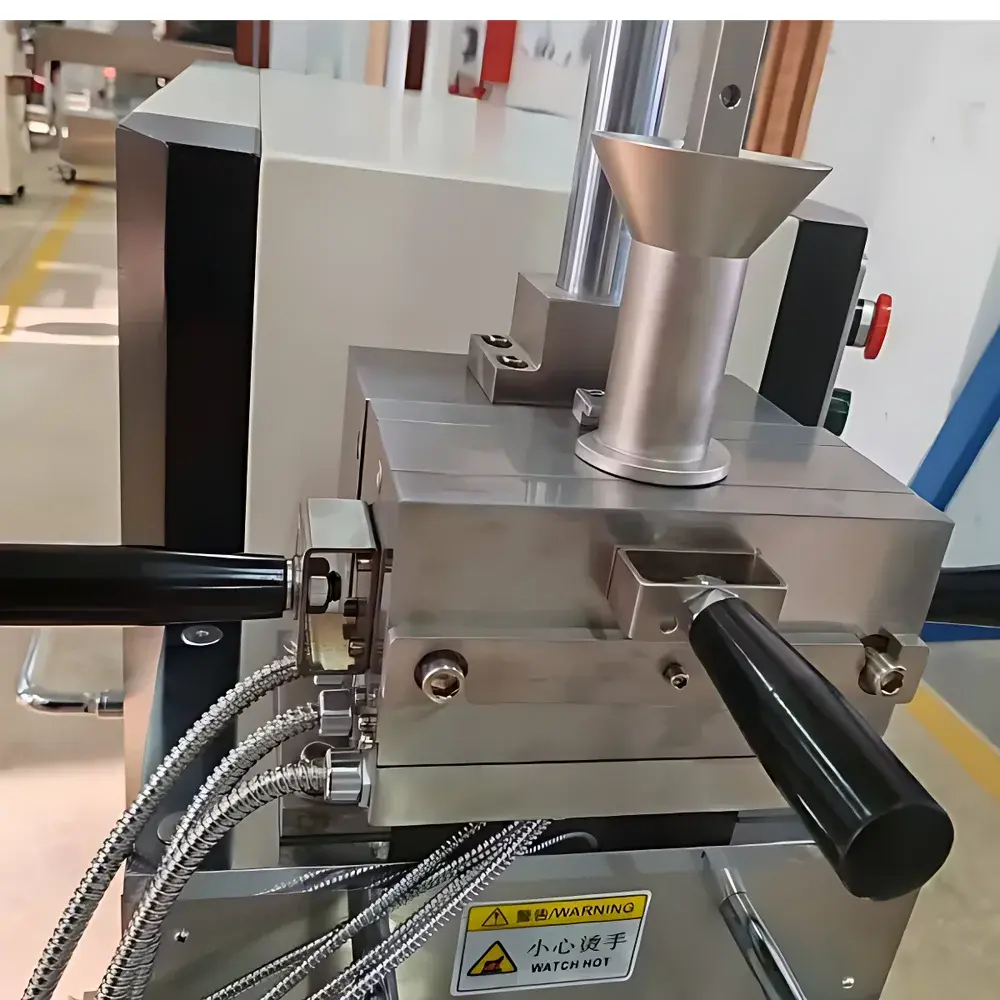
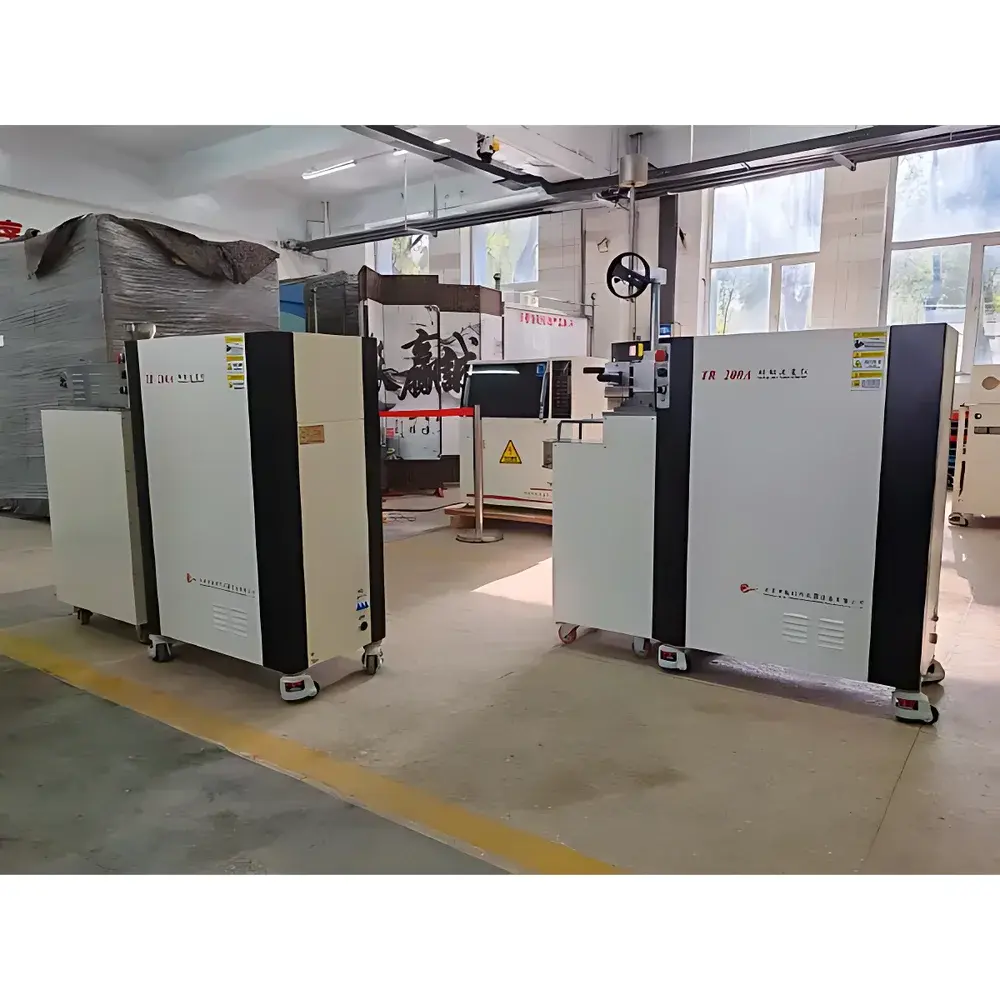
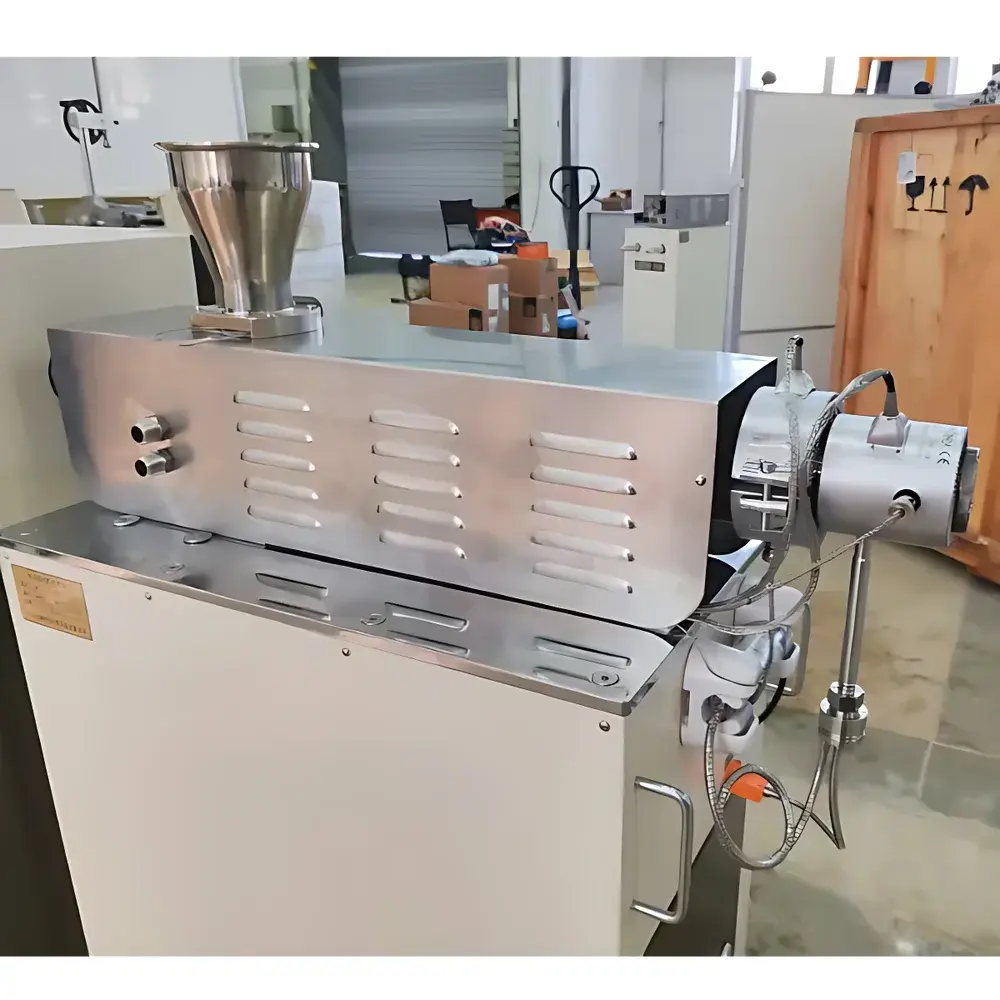
Zhonghang Shidai TR-200A Torque Rheometer
| Brand | Zhonghang Shidai |
|---|---|
| Origin | Beijing, China |
| Manufacturer Type | Direct Manufacturer |
| Instrument Type | Torque Rheometer |
| Model | TR-200A |
| Motor Power | 3.0 kW (Panasonic servo motor & drive) |
| Speed Range | 0.1–120 rpm (max mechanical speed: 2000 rpm) |
| Torque Range | 0–200 N·m (rated: 300 N·m) |
| Torque Resolution | < 100 nN·m |
| Torque Accuracy | ±0.3% F.S. |
| Temperature Control Range | Ambient to 350 °C (5-zone heating) |
| Temp. Control Accuracy | ±0.5 °C |
| Pressure Measurement Range | 0.1–100 MPa (optional, configurable) |
| Pressure Accuracy | ±0.3% F.S. |
| Data Acquisition Rate | 50 Hz |
| Heating Method | Electric (cartridge heaters) |
| Rotor Types | Roller (standard), Banbury/Cam/Delta (optional) |
| Mixer Volume | 60 mL (standard), 200 mL (optional) |
| Extruder | Single-screw, L/D = 25:1, Ø20 mm, 5-zone heating, max temp 350 °C |
| Compliance | Designed for ASTM D3835, ISO 6721-10, and USP <911> rheological simulation workflows |
| Software | Integrated Mixer, Plastic, and WinNian modules with GLP-compliant audit trail, curve overlay, real-time derivative analysis, and capillary rheometry correction algorithms |
Overview
The Zhonghang Shidai TR-200A Torque Rheometer is an industrial-grade, computer-controlled torque rheometer engineered for precise simulation of polymer processing conditions—including mixing, extrusion, crosslinking, and vulcanization—under controlled thermal and mechanical stress. It operates on the principle of controlled shear deformation in a confined geometry, where torque exerted on rotating elements (rotors or screws) is measured as a direct function of material resistance to flow under defined temperature, shear rate, and time profiles. Unlike rotational viscometers measuring steady-state viscosity, the TR-200A captures transient rheological responses—including melt fracture onset, thermal degradation kinetics, and dynamic torque–temperature–time signatures—enabling quantitative assessment of plasticization behavior, thermal stability, and process window definition. Its modular architecture supports interchangeable test units (mixer, single-screw extruder, optional twin-screw extruder), allowing laboratories to replicate industrial compounding, pelletizing, and profile extrusion environments with metrological traceability.
Key Features
- Modular Dual-Mode Architecture: One central control host interfaces seamlessly with either the 60 mL counter-rotating mixer (3:2 speed ratio, roller rotors) or the L/D 25:1 single-screw extruder (Ø20 mm, 5-zone heating), enabling switchable configuration between mixing rheology and capillary-based extrusion rheology without hardware reconfiguration.
- High-Fidelity Torque & Thermal Metrology: Equipped with a calibrated torque sensor (±0.3% F.S., resolution <100 nN·m) and five independent PID-controlled heating zones (ambient to 350 °C, ±0.5 °C stability), ensuring reproducible thermal history during time-resolved torque profiling.
- Panasonic Servo Drive System: 3.0 kW Panasonic AC servo motor with integrated controller delivers precise speed regulation (0.1–120 rpm, ±0.2% F.S.) and high dynamic response for ramped shear protocols, including linear-in-time shear rate sweeps used to assess shear sensitivity.
- Real-Time Multichannel Data Acquisition: 50 Hz synchronized sampling of torque, temperature, pressure (optional), and rotational speed enables detection of microsecond-scale transitions—such as gel point onset in thermosets or melt fracture initiation in high-MW polyolefins.
- Capillary Rheometry Integration: Compatible with standardized capillary dies (L/D = 20:1, 30:1, 40:1; Ø1.27 mm) and cylindrical die (Ø5/Ø10 mm), supporting apparent viscosity, shear stress, and Bagley correction calculations per ASTM D3835 and ISO 11443.
Sample Compatibility & Compliance
The TR-200A accommodates solid and powdered polymer feedstocks—including PVC resins, thermoplastic elastomers (TPEs), thermosetting epoxies, phenolics, and uncured rubber compounds—without pre-melting. Its robust 4Cr13 steel mixing chamber and 38CrMoALA screw barrel resist abrasive wear and chemical corrosion during extended thermal cycling. The system complies with engineering requirements for GLP/GMP-aligned development labs: all software modules (Mixer, Plastic, WinNian) support electronic signatures, full audit trails, and 21 CFR Part 11–compatible user access controls. Calibration records for torque, temperature, and pressure sensors are retained within the software database. Test methodologies align with ASTM D3835 (extrusion plastometers), ISO 6721-10 (dynamic mechanical thermal analysis), and USP <911> (rheological characterization of pharmaceutical excipients).
Software & Data Management
The TR-200A runs on a Windows-based, multi-module control suite comprising Mixer (for batch mixing protocols), Plastic (for continuous extrusion), and WinNian (for capillary rheometry data reduction). All modules feature synchronized real-time plotting, multi-curve overlay with independent axis scaling, automatic baseline subtraction, and smoothing via Savitzky-Golay filtering. Critical analytical functions include: time–torque curve deconvolution for plasticization onset detection; temperature–torque derivative analysis for identifying exothermic crosslinking peaks; and Weissenberg–Rabinowitsch correction for non-Newtonian capillary flow. Raw data export is supported in CSV, TXT, and HDF5 formats. Audit logs record operator ID, timestamp, parameter changes, and calibration events—ensuring full traceability for regulatory submissions or internal QA documentation.
Applications
- PVC Formulation Development: Quantifying fusion time, gelation temperature, and thermal degradation onset under shear to optimize stabilizer packages and processing aids.
- Thermoset Curing Kinetics: Monitoring torque rise during isothermal or programmed-temperature scans to determine gel time, vitrification temperature (Tv), and degree of conversion using time–temperature–transformation (TTT) modeling.
- Elastomer Vulcanization Profiling: Evaluating scorch safety, cure rate, and state-of-cure (MH–ML differential) in SBR, EPDM, and silicone compounds.
- Recycled Polymer Compatibility Assessment: Detecting interfacial instability or phase separation through torque hysteresis and oscillatory torque decay during repeated mixing cycles.
- Academic Polymer Physics Research: Generating master curves for time–temperature superposition (TTS), characterizing Payne effect in filled rubbers, and validating constitutive models (e.g., Kaye–Bernstein–Kearsley–Zapas).
FAQ
What sample forms can be tested on the TR-200A?
Solid granules, powders, flakes, and pre-compounded pellets—no pre-melting required. The mixer accepts up to 60 mL volume; the extruder handles feed rates from 0.5–15 g/min depending on formulation viscosity.
Is the system compliant with FDA or pharmaceutical standards?
Yes—the software supports 21 CFR Part 11 compliance (electronic signatures, audit trail, role-based access), and test protocols align with USP <911> for rheological characterization of polymer-based drug delivery systems.
Can the TR-200A measure extensional viscosity?
No—it is designed for shear-dominated measurements (rotational and capillary flow). Extensional rheology requires dedicated filament-stretching or opposed-nozzle geometries not included in standard configurations.
What calibration standards are provided?
NIST-traceable torque calibration certificates, ITS-90–compliant K-type thermocouple verification reports, and pressure transducer calibration data are supplied with each instrument shipment.
Are third-party software integrations supported?
Raw data streams (via TCP/IP or serial protocol) can be ingested into MATLAB, Python (NumPy/Pandas), or LabVIEW for custom analysis; no proprietary API lock-in is enforced.



