
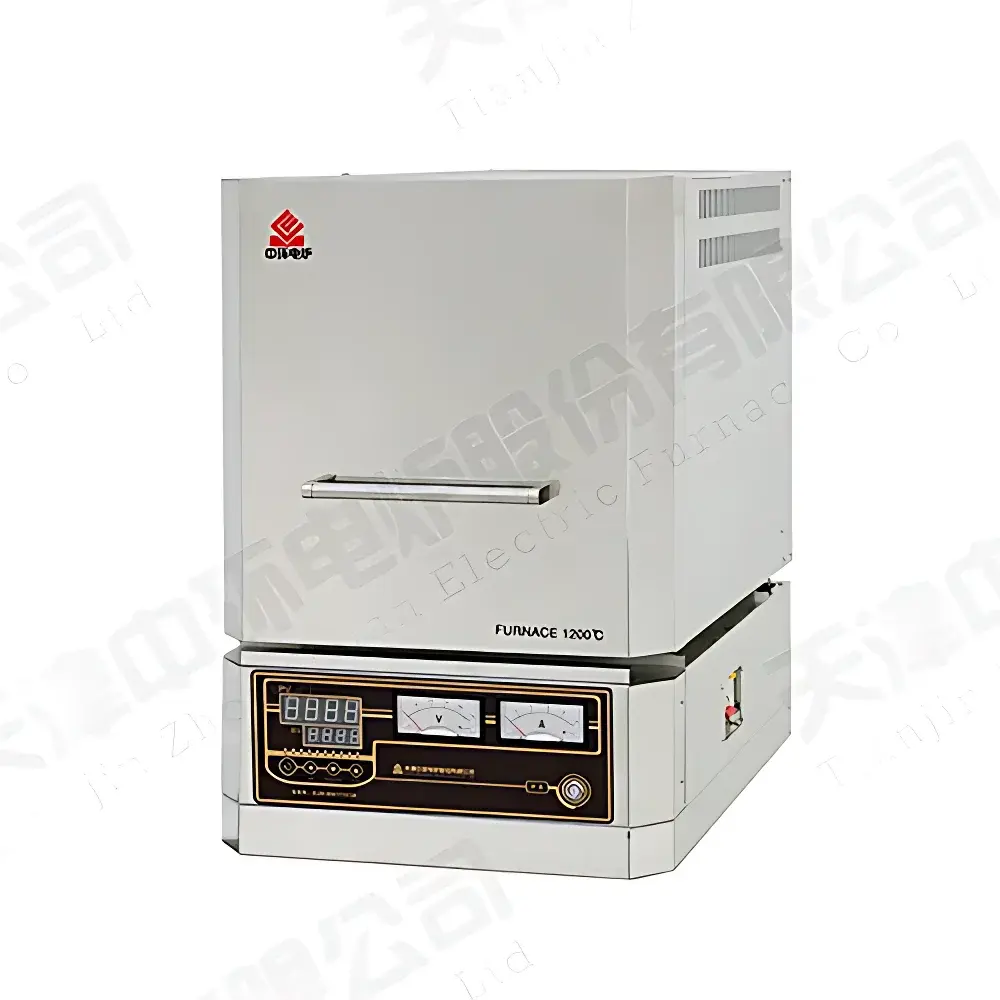
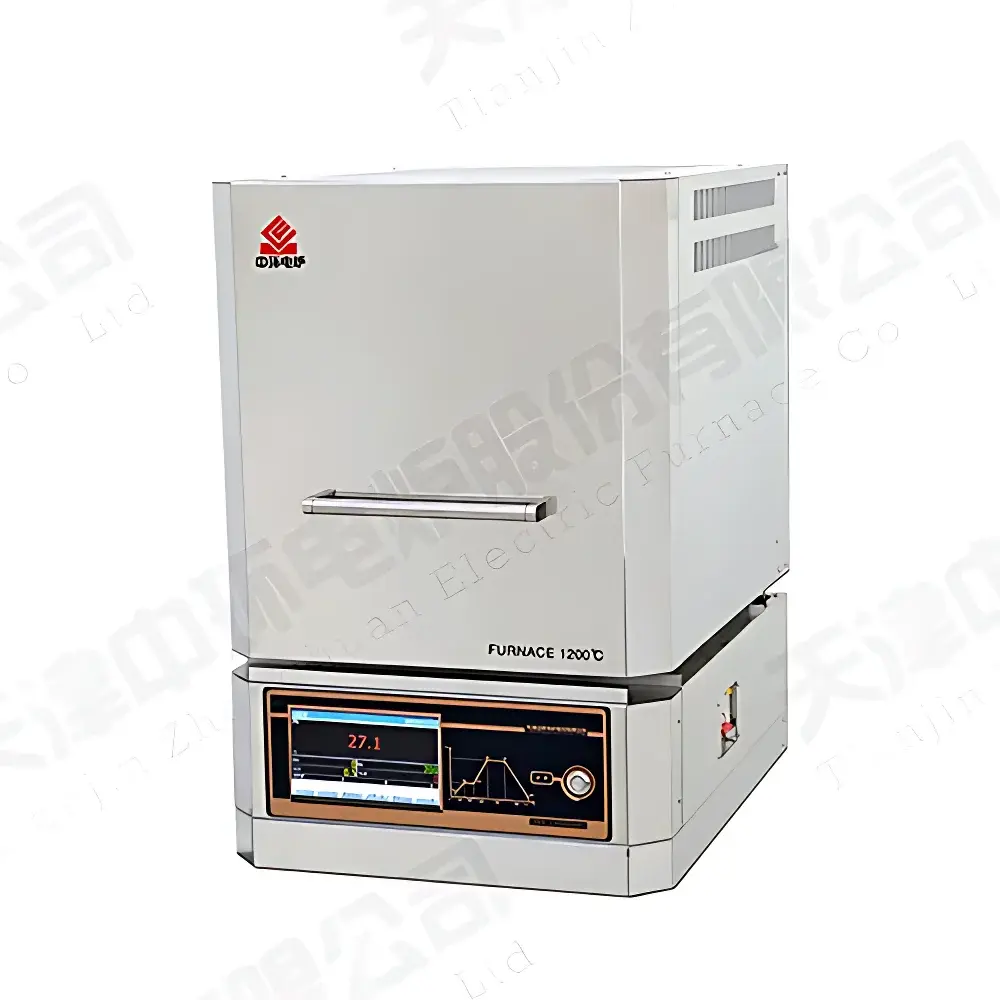
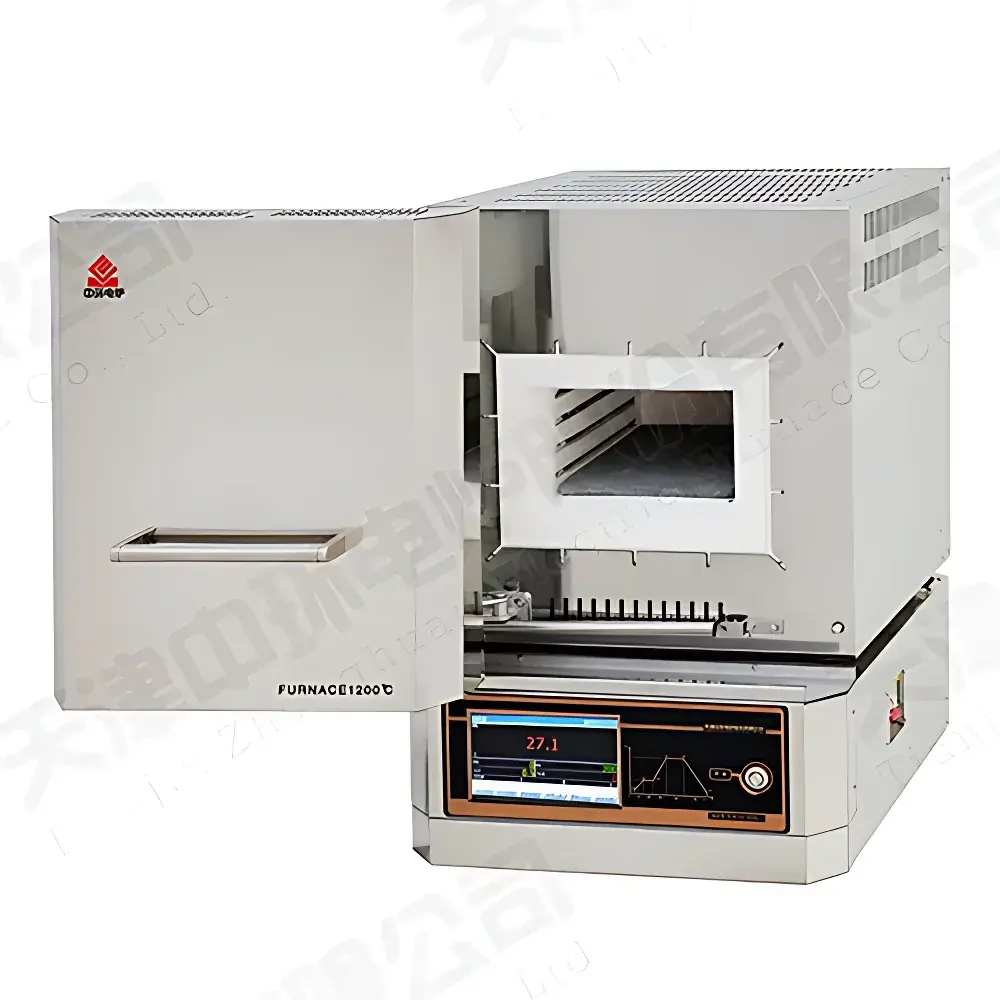
ZHONGHUAN FURNACE ZHX-B02103 Stainless Steel Energy-Efficient Box-Type Muffle Furnace (1200 °C Max)
| Brand | ZHONGHUAN FURNACE |
|---|---|
| Origin | Tianjin, China |
| Model | ZHX-B02103 |
| Type | Box-Type Muffle Furnace |
| Max Temperature | 1200 °C |
| Temperature Uniformity | ±1 °C |
| Chamber Dimensions | 200 × 120 × 100 mm |
| Chamber Volume | 2 L |
| Rated Power | 2.5 kW |
| Voltage | 220 V AC |
| Ramp Time to 1000 °C | ≤15 min |
| Safety Features | Door-Interlocked Power Cut-off, Over-Temperature Protection, Earth-Leakage Detection |
| Control System | PID + Fuzzy Logic with Auto-Tuning, 30-Stage Programmable Profile (Standard), RS-485 Interface for PC Integration |
Overview
The ZHONGHUAN FURNACE ZHX-B02103 is a precision-engineered, stainless steel box-type muffle furnace designed for laboratory-scale thermal processing under controlled atmospheric conditions. Operating on resistive heating principles, it utilizes high-stability 0Cr27Al7Mo2 alloy heating elements embedded in a vacuum-formed polycrystalline mullite fiber insulation chamber—delivering exceptional thermal efficiency and uniformity across the full operating range up to 1200 °C. Its muffle architecture isolates samples from direct contact with heating elements and combustion byproducts, making it suitable for oxidation studies, sintering of advanced ceramics, annealing of metallic alloys, and thermal treatment of functional and nanoscale materials where contamination control and reproducible thermal profiles are critical. The furnace complies with fundamental safety and electromagnetic compatibility requirements per IEC 61000-6-3 and IEC 61000-6-4, and its structural design supports GLP-compliant operation in accredited testing laboratories.
Key Features
- Stainless steel exterior housing fabricated from custom-ordered embossed stainless steel sheet—weld-free surface finish ensures corrosion resistance, cleanability, and long-term dimensional stability.
- Polycrystalline mullite fiber chamber with optimized density distribution achieves >50% energy reduction versus traditional refractory brick linings while maintaining radial and axial temperature uniformity within ±1 °C at setpoint.
- Intelligent thermal management system: integrated surface temperature sensor triggers automatic cooling fan activation when external casing exceeds 50 °C, preventing operator contact hazard and extending component service life.
- Dual-layer safety architecture: mechanical door interlock cuts power immediately upon opening; independent over-temperature cutoff circuit interrupts supply if internal sensor reading exceeds user-defined limit by >5 °C, accompanied by audible/visual alarm.
- RS-485 serial interface compliant with Modbus RTU protocol enables integration into centralized lab monitoring systems—supports remote parameter setting, real-time temperature logging, and synchronized multi-furnace sequencing (up to 200 units).
Sample Compatibility & Compliance
The ZHX-B02103 accommodates crucibles, boats, and sample holders made of alumina, silicon carbide, quartz, or inert metals—compatible with air, inert gas (N₂, Ar), and mildly oxidizing atmospheres. It meets essential requirements for ASTM C1171 (sintering of advanced ceramics), ISO 8501-1 (surface preparation prior to coating), and USP heavy metal testing protocols requiring precise thermal ramping. While not certified for Class I Div 1 hazardous locations, its earth-leakage protection circuit satisfies IEC 61000-4-5 surge immunity and EN 61000-3-2 harmonic current limits. Documentation includes factory calibration certificate traceable to CNAS-accredited reference standards.
Software & Data Management
The standard controller supports 30-segment programmable thermal profiles with dwell time, ramp rate, and soak parameters fully editable via front-panel keypad. Optional upgrade to imported controller extends profile capacity to 40 segments with enhanced interpolation algorithms. All versions provide USB data export (CSV format) of time-temperature logs, including timestamps, setpoints, actual readings, and status flags (e.g., “soak active”, “alarm triggered”). When connected to a local area network via optional Ethernet gateway, the furnace integrates with LIMS platforms using OPC UA or HTTP REST APIs—enabling audit-trail generation per FDA 21 CFR Part 11 requirements, including user authentication, electronic signatures, and immutable record retention.
Applications
This furnace serves as a core thermal processing tool across academic and industrial R&D environments. Typical use cases include: sintering of oxide and non-oxide ceramics (e.g., Al₂O₃, SiC, YSZ); phase transformation studies in shape-memory alloys; calcination of metal-organic frameworks (MOFs); ash content determination per AOAC 942.05; heat treatment of thermoelectric materials (Bi₂Te₃, PbTe); pre-oxidation of Ni-based superalloys; and thermal gravimetric analysis (TGA) sample conditioning. Its rapid heat-up capability (<15 min to 1000 °C) and tight thermal stability support high-throughput screening of material formulations in combinatorial libraries.
FAQ
What is the maximum continuous operating temperature?
The ZHX-B02103 is rated for continuous operation at 1200 °C. Sustained use above this temperature will degrade insulation integrity and void warranty.
Can the furnace be purged with inert gas?
Yes—two 6-mm BSP threaded ports (inlet and outlet) are provided on the rear panel for controlled gas flow; recommended purge rate is 0.5–2 L/min depending on chamber volume.
Is the temperature uniformity verified per industry standard?
Uniformity is validated per ASTM E2203 using nine-point mapping at 1000 °C; typical deviation across the working zone is ≤±1.2 °C.
Does the controller support data export for regulatory submissions?
Yes—CSV exports include UTC timestamps, operator ID, and digital signature fields; optional software module adds PDF report generation with embedded calibration certificates.
What maintenance intervals are recommended?
Inspect heating element continuity and insulation resistance annually; replace mullite fiber lining after 2000 cumulative hours at ≥1100 °C or if visible cracking exceeds 2 mm depth.



