
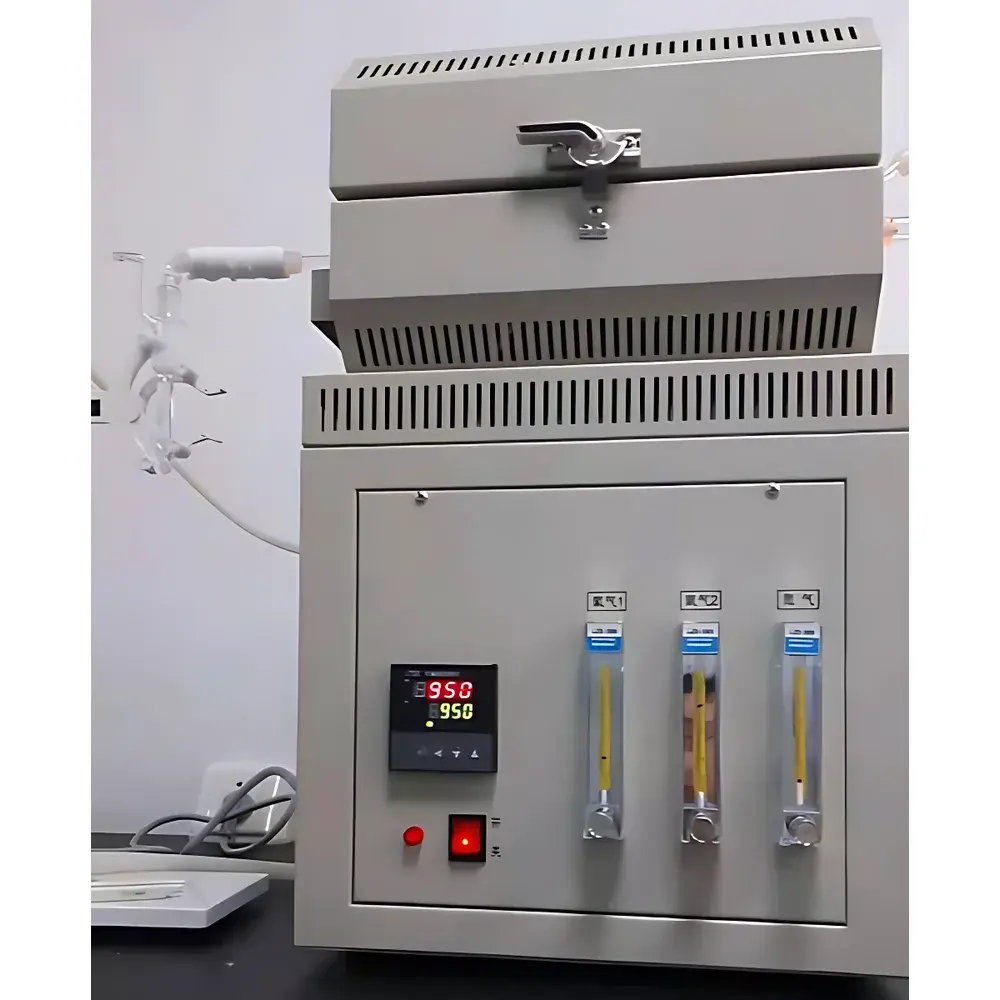
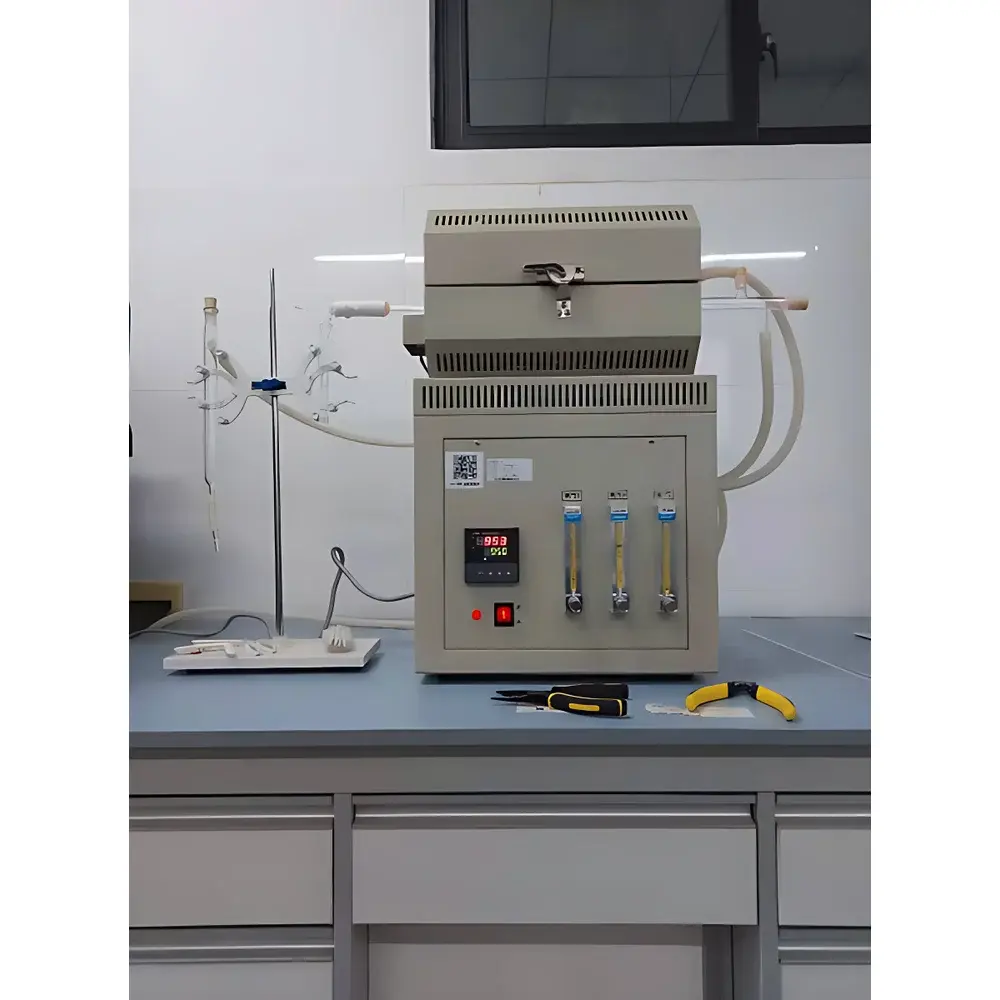
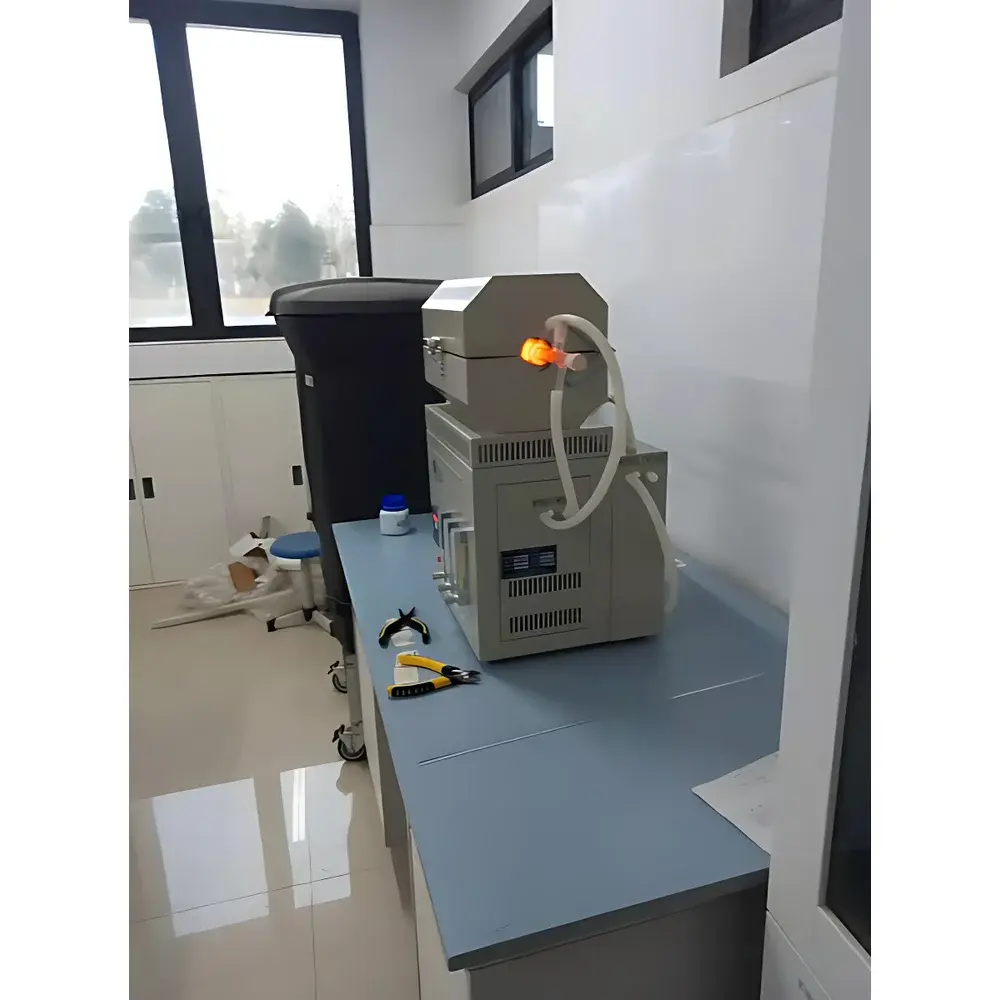
Zhuochi AOX-3-ZC Adsorbable Organic Halides (AOX) Analyzer
| Brand | Zhuochi |
|---|---|
| Origin | Zhejiang, China |
| Manufacturer Type | Authorized Distributor |
| Country of Origin | China |
| Model | AOX-3-ZC |
| Price | USD 4,200 (approx.) |
| Measurement Principle | Combustion-Coulometric Titration |
| Measurement Range | 5–1000 µg AOX per sample |
| Accuracy | ±1% (relative to certified reference material) |
| Repeatability (RSD) | ≤1% |
| Detection Limit | 0.8–1000 µg/L (sample-dependent, based on 100 mL preconcentration volume) |
| Resolution | 0.01 µg (coulometric current integration) |
Overview
The Zhuochi AOX-3-ZC Adsorbable Organic Halides (AOX) Analyzer is a dedicated benchtop instrument engineered for the quantitative determination of adsorbable organic halogen compounds—including chlorinated, brominated, and iodinated organics—in aqueous environmental matrices. It operates on the internationally standardized combustion-coulometric titration principle (DIN ISO 9562, EPA Method 1650, and EN ISO 9562), wherein halogenated organic substances are quantitatively adsorbed onto activated carbon, thermally combusted at 950 °C in an oxygen-rich quartz furnace, and the resulting halide ions (Cl⁻, Br⁻, I⁻) are absorbed into an electrolyte solution and measured via microcoulometric titration. This method delivers high specificity for total organic halogen content without interference from inorganic halides (e.g., chloride ions), provided proper sample pretreatment and blank correction protocols are followed. The system is designed for routine compliance testing in municipal wastewater treatment plants, industrial effluent monitoring labs, and environmental testing laboratories subject to national or regional discharge regulations.
Key Features
- Integrated dual-zone quartz combustion furnace with precise temperature control (up to 950 °C ±5 °C), ensuring complete pyrolysis and oxidation of adsorbed organohalogens.
- Dual-flow oxygen delivery system: inner tube flow (120–150 mL/min) for sample combustion; outer tube flow (40–60 mL/min) for thermal zone stabilization and ash removal—minimizing carryover and cross-contamination.
- Automated coulometric titration cell with Ag⁺/Ag redox electrode pair and real-time current integration, providing resolution down to 0.01 µg and linear response across the full 5–1000 µg measurement range.
- Modular adsorption unit compatible with standard 100 mL sample volumes and commercially available activated carbon cartridges (e.g., Norit SX2, Carbopack B), supporting both batch and semi-continuous operation.
- Robust architecture with corrosion-resistant PTFE and quartz gas pathways, optimized for long-term stability in high-halogen load environments.
- Compliance-ready design: supports manual audit trails, calibration log retention, and operator-defined method parameters aligned with GLP documentation requirements.
Sample Compatibility & Compliance
The AOX-3-ZC accepts raw, filtered (0.45 µm), or pretreated water samples—including surface water, groundwater, treated and untreated wastewater, leachates, and process effluents. High-chloride matrices (>1000 mg/L Cl⁻) require matrix-matched calibration or dilution to avoid saturation of the absorption solution. The analyzer conforms to the core procedural requirements of DIN ISO 9562:2021, EPA Method 1650 Rev. 4 (2012), and Chinese HJ 1037-2019. While not inherently 21 CFR Part 11 compliant, its manual data recording workflow meets minimum traceability standards for regulatory reporting under local environmental protection agency mandates. All critical parameters—including combustion temperature, oxygen flow rates, titration duration, and blank subtraction—are documented in the operator logbook as part of standard QA/QC practice.
Software & Data Management
The AOX-3-ZC operates in a manually supervised mode without embedded firmware-based software. All calculations—including blank correction, spike recovery, and final AOX concentration (µg/L) derived from mass balance (measured µg AOX / sample volume in L)—are performed externally using laboratory-developed Excel templates or LIMS-integrated spreadsheets. Each analysis requires entry of sample ID, volume, blank value, and calibration factor. Raw coulometric charge integrals (in µC) are recorded directly from the titrator display. For laboratories implementing electronic records, the system supports integration with validated spreadsheet controls (per ALCOA+ principles) and can be paired with optional USB-digital multimeters for automated data capture. Audit trail integrity relies on controlled access to logbooks and version-controlled calculation templates.
Applications
- Regulatory compliance monitoring of AOX in industrial discharges (e.g., pulp & paper, pharmaceutical synthesis, pesticide manufacturing).
- Performance evaluation of activated carbon filtration and advanced oxidation processes in water reclamation facilities.
- Source tracking of halogenated micropollutants in river basins and aquifer systems.
- Method validation studies supporting accreditation to CNAS (China National Accreditation Service) or ISO/IEC 17025:2017.
- Research-scale screening of emerging halogenated contaminants (e.g., brominated flame retardants, iodinated X-ray contrast media) when coupled with selective extraction protocols.
FAQ
What sample volume is required for one AOX determination?
Standard operation uses 100 mL of water sample, though volumes between 50–500 mL may be employed depending on expected AOX concentration and detection limit requirements.
Can the system measure individual halogens (e.g., AOX-Cl vs. AOX-Br)?
No—the combustion-coulometric method reports total adsorbable organic halogen (AOX) as chlorine-equivalent mass; speciation requires complementary techniques such as GC-MS/MS or IC-MS.
Is acidification or pH adjustment needed prior to adsorption?
Yes—samples must be acidified to pH ≤2.0 with HNO₃ prior to adsorption to ensure protonation of organic bases and maximize adsorption efficiency on activated carbon.
How often must the coulometric cell electrolyte be replaced?
Electrolyte (typically 0.1 M AgNO₃ in 10 % HNO₃) should be refreshed after every 10–15 analyses or immediately upon visible turbidity, precipitation, or drift exceeding ±2% in replicate blanks.
Does the instrument include certified reference materials?
No—CRM procurement (e.g., NIST SRM 2973 or equivalent) is the responsibility of the end user and must be included in each analytical batch for calibration verification and accuracy assessment.







