
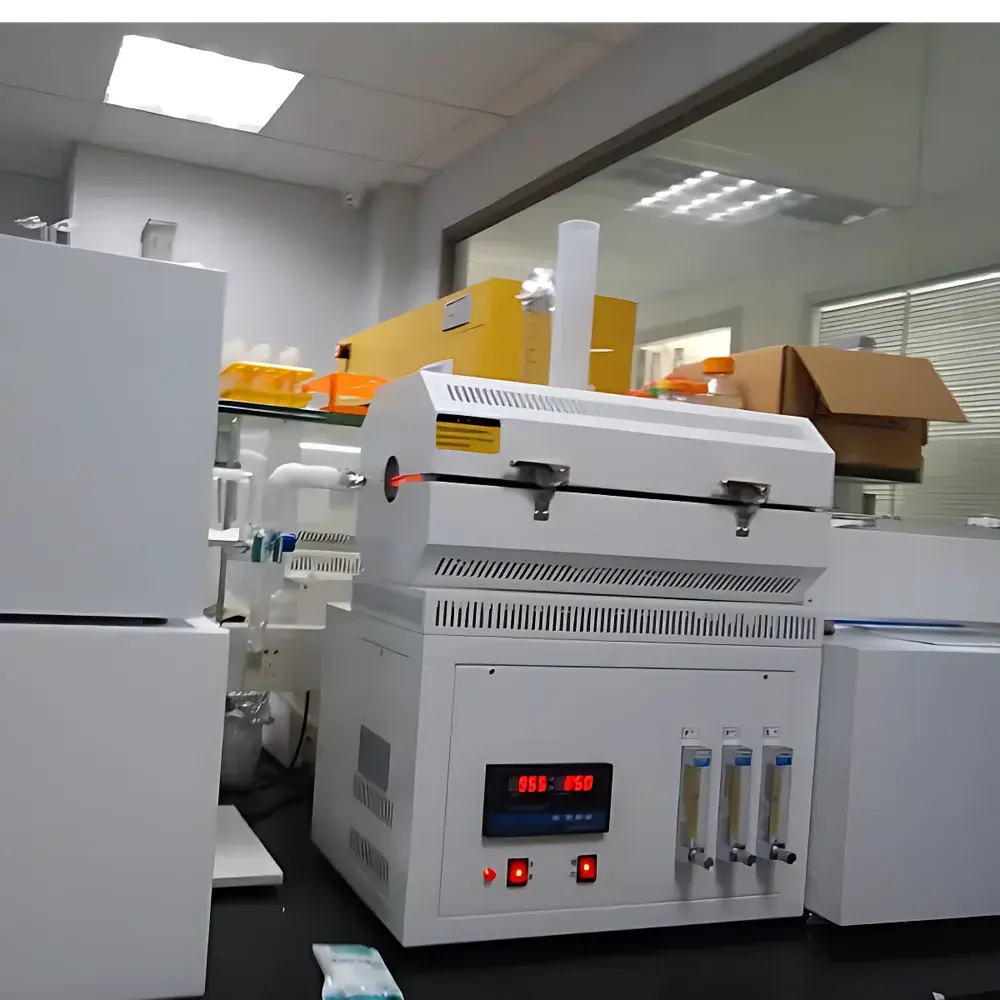
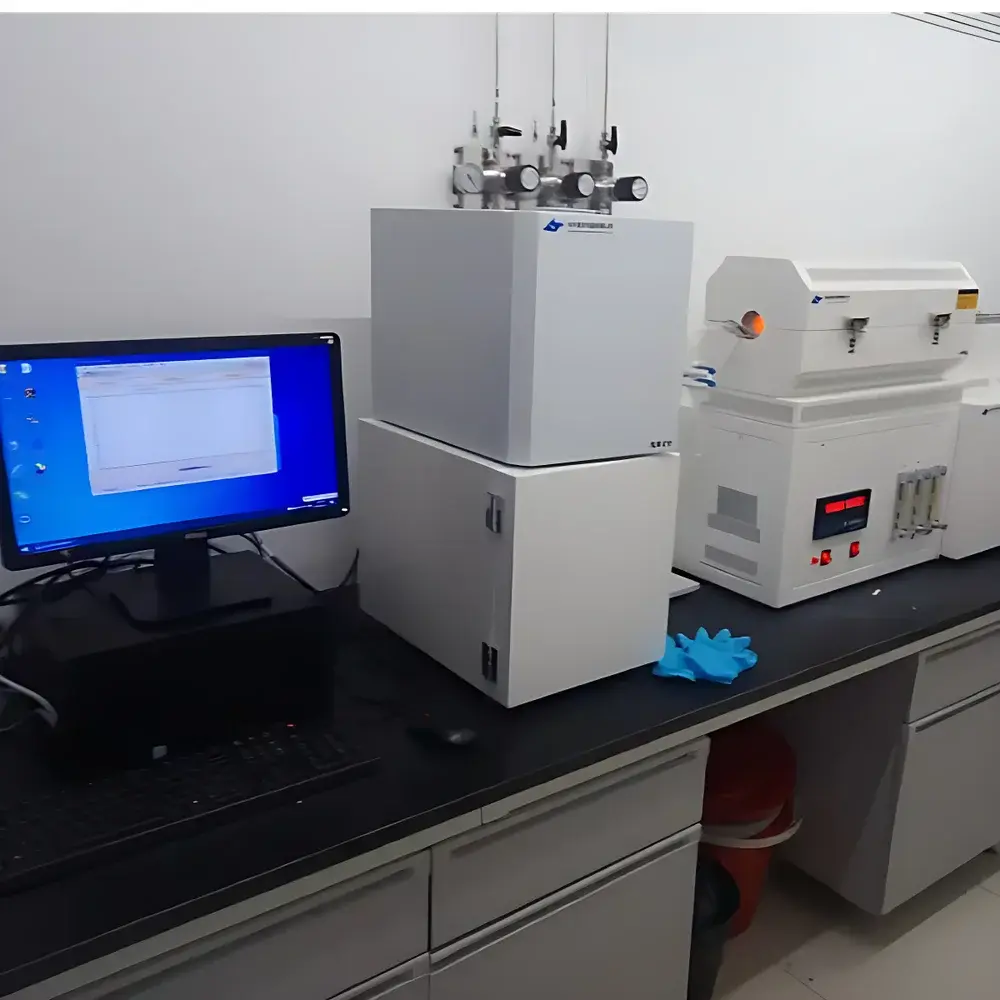
Zhuochi AOX-WK-S Microcoulometric Water Halogen Analyzer
| Brand | Zhuochi |
|---|---|
| Origin | Zhejiang, China |
| Manufacturer Type | Authorized Distributor |
| Country of Manufacture | China |
| Model | AOX-WK-S |
| Instrument Type | Laboratory Water Quality Analyzer |
| Target Analytes | Fluorine, Chlorine, Bromine |
| Regulatory Compliance | HJ 1214–2021 (PRC National Standard for Determination of Adsorbable Organic Halogens in Water by Microcoulometry) |
| Operating System | Windows-based GUI |
| Data Output | On-screen real-time display, disk storage, and printer-compatible reporting |
Overview
The Zhuochi AOX-WK-S Microcoulometric Water Halogen Analyzer is a dedicated laboratory instrument engineered for the quantitative determination of adsorbable organic halogens (AOX) — specifically fluorine, chlorine, and bromine — in aqueous environmental matrices. It operates on the principle of microcoulometric titration, wherein halogenated organic compounds are first adsorbed onto activated carbon, thermally combusted under oxygen-rich conditions to liberate halide ions (F⁻, Cl⁻, Br⁻), and subsequently quantified via electrochemical detection in a silver coulometric cell. This methodology conforms strictly to the analytical protocol defined in HJ 1214–2021, the official People’s Republic of China national standard for AOX measurement in surface water, groundwater, domestic wastewater, and industrial effluents. Unlike generic halogen analyzers, the AOX-WK-S integrates sample preparation automation, high-efficiency combustion control, and real-time coulometric signal integration to deliver reproducible results with low method detection limits suitable for regulatory monitoring and compliance verification.
Key Features
- Compliance-certified operation per HJ 1214–2021, including validated adsorption, pyrolysis, and microcoulometric detection workflows
- Dedicated hardware architecture optimized for low-background halogen recovery and minimal cross-contamination between sequential samples
- Integrated thermal desorption furnace with programmable temperature ramping (up to 950 °C) and precise oxygen flow control (0.1–2.0 L/min)
- Microcoulometric detection cell featuring high-purity silver anode, stable reference electrode, and auto-zeroing circuitry for baseline stability
- Windows-based graphical user interface enabling intuitive method setup, live signal visualization, and parameter logging
- On-board data handling with timestamped result storage, customizable report templates, and direct export to CSV or PDF formats
- Modular design supporting routine maintenance of carbon traps, quartz combustion tubes, and electrolyte reservoirs without system recalibration
Sample Compatibility & Compliance
The AOX-WK-S accepts liquid samples within a typical volume range of 10–500 mL, accommodating raw and filtered water matrices without pre-dilution when AOX concentrations fall between 5 µg/L and 1 mg/L. It supports both unfiltered (total AOX) and 0.45-µm membrane-filtered (dissolved AOX) protocols. Sample introduction is performed manually via calibrated syringe or optional autosampler integration. The system meets essential functional requirements for GLP-aligned laboratories: full audit trail capability (user login, method version, run time, calibration history), electronic signature support, and secure data archiving. While not certified to ISO/IEC 17025 out-of-the-box, its operational traceability and documented uncertainty estimation framework align with ISO 15197 and ASTM D5905 guidance for halogen speciation in environmental waters.
Software & Data Management
The embedded Windows 10 IoT Enterprise software provides role-based access control, method library management, and automated quality control flagging (e.g., drift correction alerts, peak shape validation, recovery check thresholds). All analytical parameters — including combustion temperature, oxygen flow rate, electrolyte concentration, and integration window — are stored with each analysis record. Raw coulometric current traces and integrated charge values (in µC) are retained alongside calculated AOX concentrations (reported as Cl⁻-equivalent, µg/L). Data export complies with common LIMS ingestion formats; optional OPC UA server module enables seamless integration into enterprise laboratory informatics systems. Audit logs capture operator actions, system events, and calibration interventions for FDA 21 CFR Part 11–compliant environments when deployed with external electronic signature infrastructure.
Applications
- Regulatory monitoring of AOX in municipal wastewater treatment plant influent and effluent streams
- Industrial discharge verification for pulp and paper, pharmaceutical, pesticide, and chlor-alkali manufacturing facilities
- Baseline AOX characterization in drinking water source assessment and watershed studies
- Method validation and inter-laboratory comparison studies under national environmental monitoring programs
- Research on halogenated disinfection byproduct formation and degradation kinetics in natural waters
FAQ
Does the AOX-WK-S comply with international standards such as ISO 9562 or EPA Method 1650?
The instrument is designed and validated exclusively against HJ 1214–2021. While its microcoulometric detection principle is functionally equivalent to ISO 9562 and EPA 1650, formal equivalency requires site-specific method validation per local accreditation requirements.
Can the system quantify iodine (I) in addition to F, Cl, and Br?
No. The current configuration is optimized for fluorine, chlorine, and bromine detection. Iodine recovery is inconsistent under standard combustion conditions and is not supported by HJ 1214–2021.
What maintenance intervals are recommended for the combustion tube and silver coulometric cell?
Quartz combustion tubes should be inspected after every 50 analyses and replaced if discoloration or cracking is observed. The silver coulometric cell electrolyte must be refreshed weekly or after 20 analyses, whichever occurs first.
Is remote diagnostics or firmware update capability available?
Yes — the system supports secure remote desktop access for technical support and over-the-air firmware updates via authenticated HTTPS connection.
How is method reproducibility verified during routine operation?
Each analytical batch includes at least one certified reference material (CRM) spike (e.g., 4-chlorophenol or potassium bromide solution) and a procedural blank. Recovery tolerance is set at 85–115% per HJ 1214–2021 guidelines.







