
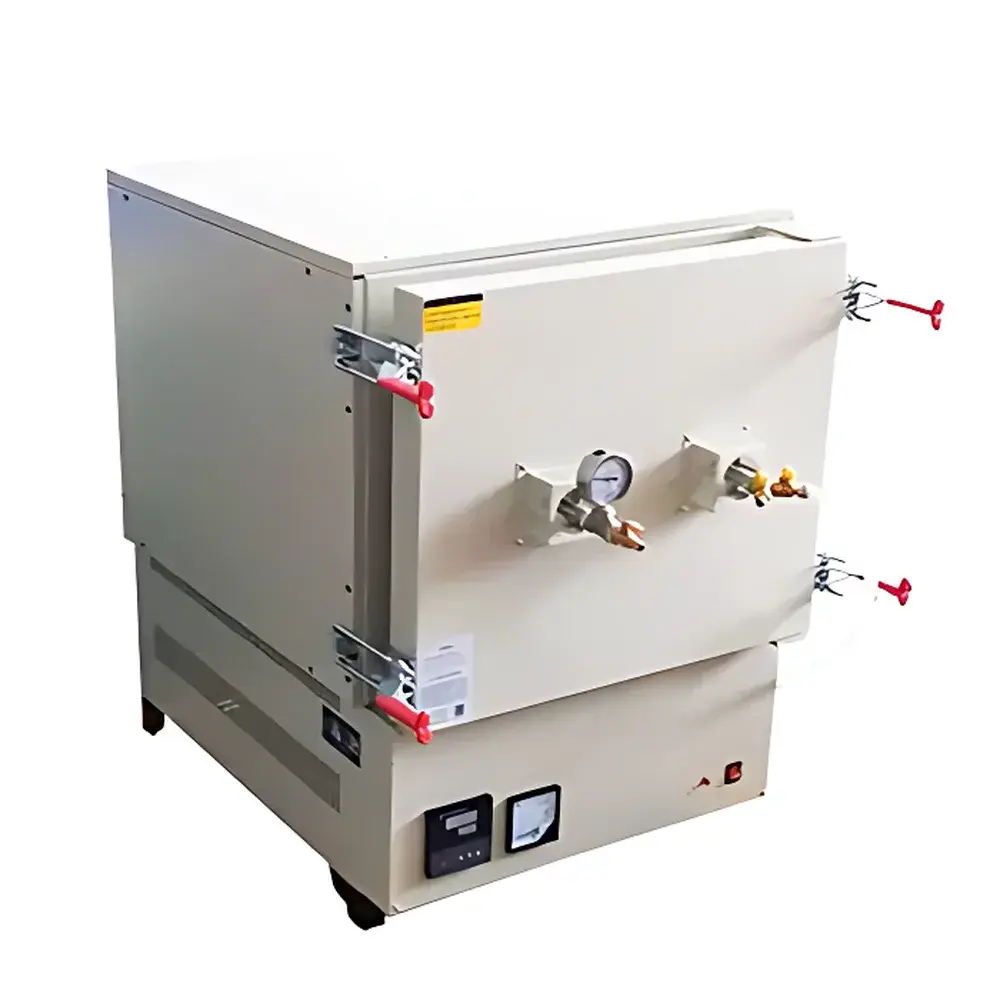
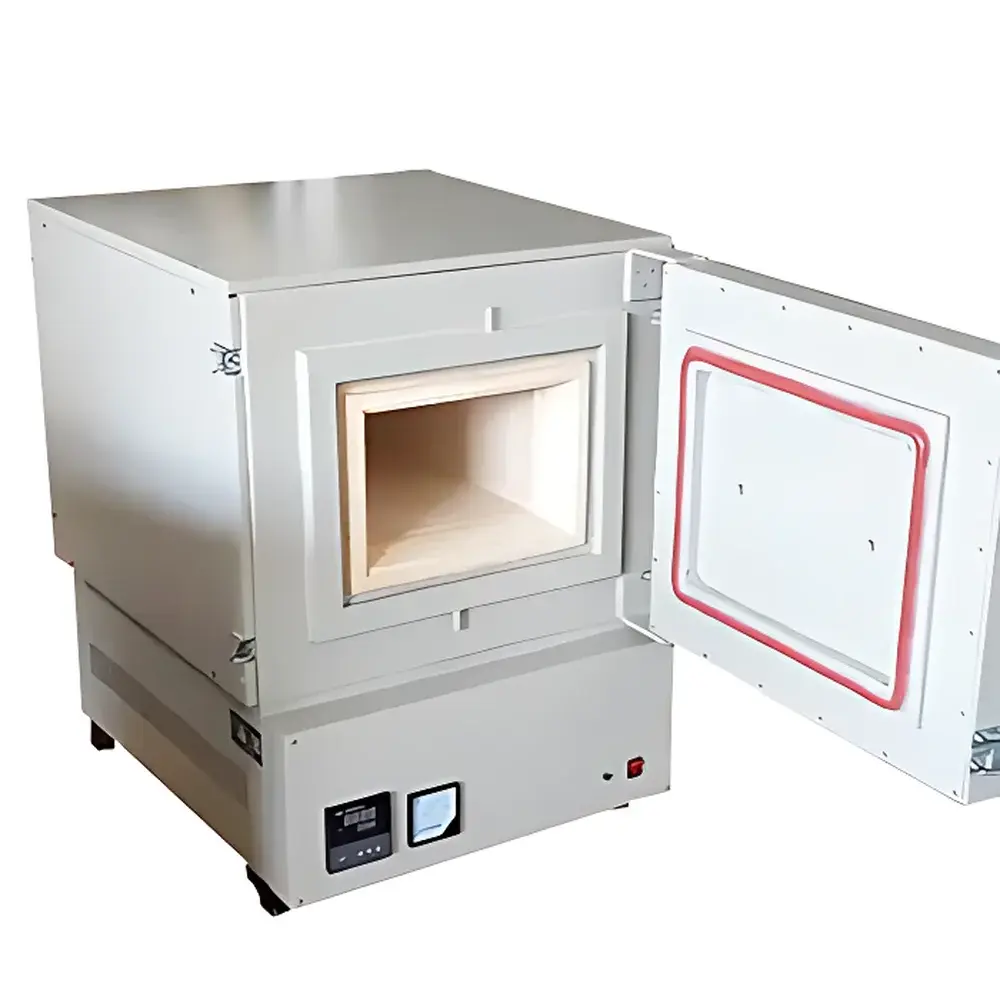
Zhuochi KSXB-1102 Vacuum Box Furnace
| Brand | Zhuochi |
|---|---|
| Origin | Zhejiang, China |
| Manufacturer Type | Authorized Distributor |
| Product Category | Domestic |
| Model | KSXB-1102 Vacuum Box Furnace |
| Instrument Type | Box-Type Furnace |
| Maximum Temperature | 1050 °C |
| Temperature Control Accuracy | ±1 °C |
| Rated Power | 2500 W |
| Heating Rate (to Max Temp) | ≤10 °C/min |
| Heating Element | Resistance Wire (Fe-Cr-Al Alloy) |
| Internal Chamber Dimensions | 200 × 120 × 80 mm (L × W × H) |
Overview
The Zhuochi KSXB-1102 Vacuum Box Furnace is a precision-engineered laboratory thermal processing system designed for controlled-atmosphere and high-vacuum high-temperature applications. It operates on resistive heating principles using high-stability Fe-Cr-Al alloy resistance wire elements, housed within a seamless, high-temperature stainless steel (austenitic grade) vacuum chamber. The furnace supports dual operational modes: inert-gas purged atmosphere processing (e.g., N₂, H₂, Ar) and high-vacuum thermal treatment (typically down to ≤10⁻¹ Pa when paired with an external two-stage rotary vane or turbomolecular pump). Its robust sealing architecture—featuring double O-ring flange joints, water-cooled door interface, and calibrated vacuum gauge integration—ensures long-term integrity under thermal cycling and pressure differentials. This design enables reproducible microstructural control in sintering, annealing, brazing, and oxidation-sensitive heat treatments, meeting foundational requirements for materials science R&D, ceramic processing, and metallurgical QA/QC workflows.
Key Features
- Vacuum-tight chamber constructed from high-purity austenitic stainless steel (equivalent to ASTM A240 UNS S30408), rated for continuous operation up to 1050 °C and compatible with vacuum levels <10⁻¹ Pa
- Integrated water-cooled furnace door assembly with quick-connect fittings; compatible with external recirculating chillers or tap-water cooling (for ≤800 °C operation)
- Dual-mode gas handling system: front-panel dual-port gas manifold with precision needle valves, stainless steel inlet/outlet ports, and standard 6 mm OD Swagelok-compatible tubing interfaces
- Calibrated analog vacuum pressure gauge (0–−0.1 MPa range) with mechanical damping for stable reading under dynamic evacuation cycles
- LTDE programmable temperature controller (PID algorithm) with 30-segment ramp-soak capability, real-time data logging via RS485 Modbus RTU, and ±1 °C setpoint accuracy over full range
- Safety-critical interlocks: automatic power cutoff upon door opening, overtemperature cutout (independent thermocouple), and cooling-flow monitoring circuit (optional add-on)
Sample Compatibility & Compliance
The KSXB-1102 accommodates samples up to 150 × 100 × 60 mm (typical loading envelope), suitable for crucibles (alumina, quartz, graphite), small ingots, powder compacts, thin-film substrates, and electronic components. All internal surfaces are passivated and free of organic coatings or lubricants to prevent outgassing contamination. The system complies with general-purpose electrical safety standards (IEC 61000-6-3, IEC 61000-6-4) and thermal equipment guidelines per ISO 15190:2012 (Laboratory Safety — Requirements for Laboratory Equipment). While not certified to UL or CE for standalone sale in the EU/US, it meets technical prerequisites for integration into GLP-compliant laboratories when operated with documented SOPs, calibration records (thermocouple NIST-traceable verification annually recommended), and audit-ready process logs.
Software & Data Management
The LTDE controller supports ASCII-formatted serial output (RS485) for integration with third-party SCADA or LIMS platforms. Raw temperature/time data can be exported as CSV files via USB-to-serial adapter (not included). For regulated environments, optional firmware upgrade enables 21 CFR Part 11-compliant audit trails—including user login timestamps, parameter change history, and electronic signature fields—when deployed with validated PC-based acquisition software (e.g., LabVIEW Runtime or custom Python scripts with SQLite journaling). All configuration changes are non-volatile and retained during power loss.
Applications
- Vacuum sintering of advanced ceramics (e.g., Si₃N₄, ZrO₂) and metal matrix composites without oxide formation
- Inert-atmosphere annealing of semiconductor wafers and battery electrode materials (LiCoO₂, NMC cathodes)
- Controlled-carbon potential heat treatment of tool steels and bearing alloys
- Thermal desorption studies and residual gas analysis (RGA) pre-conditioning of ultra-high vacuum components
- Research-scale hydrogen reduction of metal oxides (e.g., CuO → Cu) under monitored partial pressure
- Pre-oxidation stabilization of refractory metals prior to coating deposition
FAQ
What vacuum level can the KSXB-1102 achieve with a standard two-stage rotary vane pump?
With a properly maintained 4 m³/h two-stage pump and leak-free chamber sealing, base pressure typically reaches 5×10⁻² to 1×10⁻¹ Pa after 30 minutes of evacuation.
Is the furnace compatible with hydrogen gas atmospheres?
Yes—provided all gas lines use stainless steel or copper tubing, valves are hydrogen-rated (e.g., SS-4H series), and ventilation meets local H₂ safety codes (NFPA 55, IEC 60079-10-1). Hydrogen embrittlement risk is mitigated by limiting exposure time above 600 °C.
Can the temperature ramp rate be programmed below 10 °C/min?
Yes—the LTDE controller allows user-defined ramp rates from 0.1 to 20 °C/min; slower ramps improve thermal uniformity and reduce stress on sensitive samples.
Does the unit include a vacuum pump?
No—vacuum pumps, chillers, gas cylinders, and associated regulators are customer-supplied accessories; only the furnace body, controller, and basic gas/vacuum interface hardware are included.
What maintenance is required for long-term vacuum integrity?
Quarterly inspection of O-rings (replace every 12–18 months), annual cleaning of chamber interior with ethanol and lint-free wipes, and biannual verification of thermocouple drift using a reference calibrator.



