
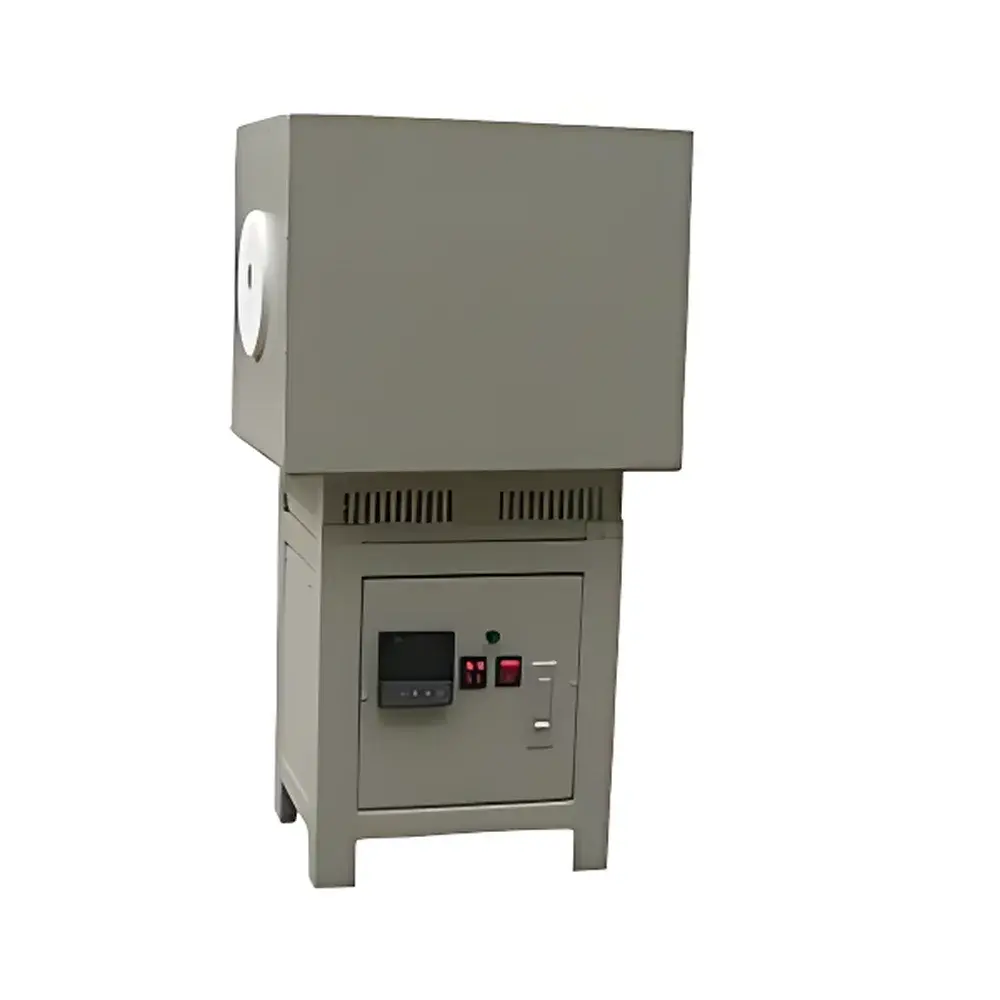
Zhuochi SK3-2.5-13-4 Combustion Furnace for Total Sulfur Determination by High-Temperature Oxidative Combustion
| Brand | Zhuochi |
|---|---|
| Origin | Zhejiang, China |
| Manufacturer Type | Authorized Distributor |
| Instrument Type | Laboratory Benchtop Combustion Furnace |
| Model | SK3-2.5-13-4 |
| Temperature Range | 100–1300 °C |
| Temperature Stability | ±1 °C |
| Display Resolution | 1 °C |
| Furnace Tube ID | φ22 mm |
| Heating Zone Length | 280 mm |
| Max. Ramp Rate | ≤50 °C/min (adjustable) |
| Power Rating | 2.5 kW |
| Supply Voltage | 220 V, 50 Hz |
| Net Weight | ~22 kg |
Overview
The Zhuochi SK3-2.5-13-4 Combustion Furnace is a precision-engineered laboratory system designed for quantitative sulfur determination in solid and liquid environmental samples via high-temperature oxidative combustion—principally aligned with ASTM D3177, ISO 10156, and EPA Method 5 and 19 for total sulfur analysis in coal, sludge, sediments, and wastewater solids. The furnace operates on the principle of complete sample oxidation at controlled elevated temperatures (up to 1300 °C), converting all sulfur species—including sulfides, sulfates, and organosulfur compounds—into sulfur dioxide (SO₂). This gaseous product is then carried by a purified oxygen or air stream through a series of gas-conditioning components (buffer bottle, scrubbing bottles, drying tower) before quantification via iodometric titration or downstream integration with an IR or UV fluorescence detector. Its modular architecture supports full method compliance with GLP and ISO/IEC 17025 laboratory quality systems when paired with validated wet-chemistry workflows.
Key Features
- Energy-efficient ceramic fiber insulation: Ultra-lightweight, low-thermal-mass chamber reduces power consumption by ~50% compared to conventional refractory brick furnaces.
- Robust heating element: High-purity insulated resistance wire rated for continuous operation up to 1300 °C; engineered for >5× service life versus standard silicon carbide rods or Fe-Cr-Al alloys.
- Programmable temperature control: LTDE-based PID+SSR system enables multi-step ramp-hold profiles with ±1 °C stability and user-defined heating rates (0.1–50 °C/min).
- Integrated safety architecture: Dual-stage overtemperature protection (mechanical and electronic), automatic shutdown upon thermal runaway, and fail-safe cooling fan activation.
- Modular gas train compatibility: Pre-configured ports and standardized fittings support seamless integration of sampling lines, quartz combustion tubes (φ22 mm OD), thermocouple (Type S Pt/Rh–Pt), and sealed inlet/outlet manifolds.
- Benchtop ergonomic design: All-electrical connections pre-wired; compact footprint (L×W×H ≈ 500×400×450 mm); powder-coated cold-rolled steel housing with corrosion-resistant phosphating treatment.
Sample Compatibility & Compliance
The SK3-2.5-13-4 accommodates heterogeneous matrices common in environmental laboratories: digested sludge, dried sediment cores, powdered coal, industrial filter cakes, and preserved water concentrates. Sample introduction occurs via ceramic combustion boats or direct placement into the quartz tube under inert or oxidizing carrier gas flow. System configuration adheres to regulatory requirements for trace sulfur analysis, including documented calibration traceability to NIST SRM 1633c (Coal Fly Ash) and compatibility with USP , ASTM D4294 (XRF sulfur reference), and ISO 8754 (combustion–iodometry). Full audit trails—enabled via optional data logging modules—are compliant with FDA 21 CFR Part 11 when used in certified water testing labs operating under GMP/GLP frameworks.
Software & Data Management
While the base unit features analog temperature display and manual titration endpoints, the furnace is fully compatible with third-party PC-based acquisition systems supporting RS485/Modbus RTU communication. Optional firmware upgrades enable time-stamped temperature logging, profile export (.CSV), and synchronization with titration burette controllers (e.g., Metrohm 809 Titrando) for automated endpoint detection. All operational parameters—including ramp rate, hold duration, and final setpoint—are stored in non-volatile memory and recoverable after power interruption. Calibration certificates for integrated Type S thermocouples are provided with NIST-traceable verification reports.
Applications
- Determination of total sulfur content in municipal and industrial wastewater sludges per ISO 11908.
- Compliance testing of coal and coke for sulfur emissions reporting under EU Directive 2010/75/EU (IED).
- Quality control of desulfurized flue gas scrubber residues and FGD gypsum.
- Research-scale pyrolysis studies requiring precise thermal decomposition environments (e.g., sulfur speciation kinetics in organic-rich sediments).
- Validation of field-deployable sulfur sensors using certified reference materials generated in-house.
FAQ
What is the maximum recommended operating temperature for continuous use?
The furnace is rated for sustained operation at 1250 °C; 1300 °C is specified as the absolute upper limit for short-duration (<30 min) calibration or method development runs.
Can this system be integrated with an automated titrator?
Yes—standardized analog voltage output (0–10 V) and Modbus-compatible digital interface allow direct coupling with commercial titration platforms for unattended endpoint detection and calculation.
Is the quartz combustion tube included in the standard configuration?
A single high-purity fused silica tube (φ22 mm OD × 380 mm L) is supplied; additional spares and custom-length variants are available under separate part numbers.
Does the system meet CE or UL certification requirements?
The furnace complies with IEC 61000-6-3 (EMC) and IEC 61010-1 (safety); CE marking is applied for export to EEA markets; UL listing requires customer-initiated regional certification due to local electrical infrastructure variations.
How often must the thermocouple be recalibrated?
Annual verification against a calibrated reference thermocouple (e.g., Fluke 1523) is recommended; drift exceeding ±2 °C at 1000 °C warrants replacement or professional recalibration.
Related Products







