
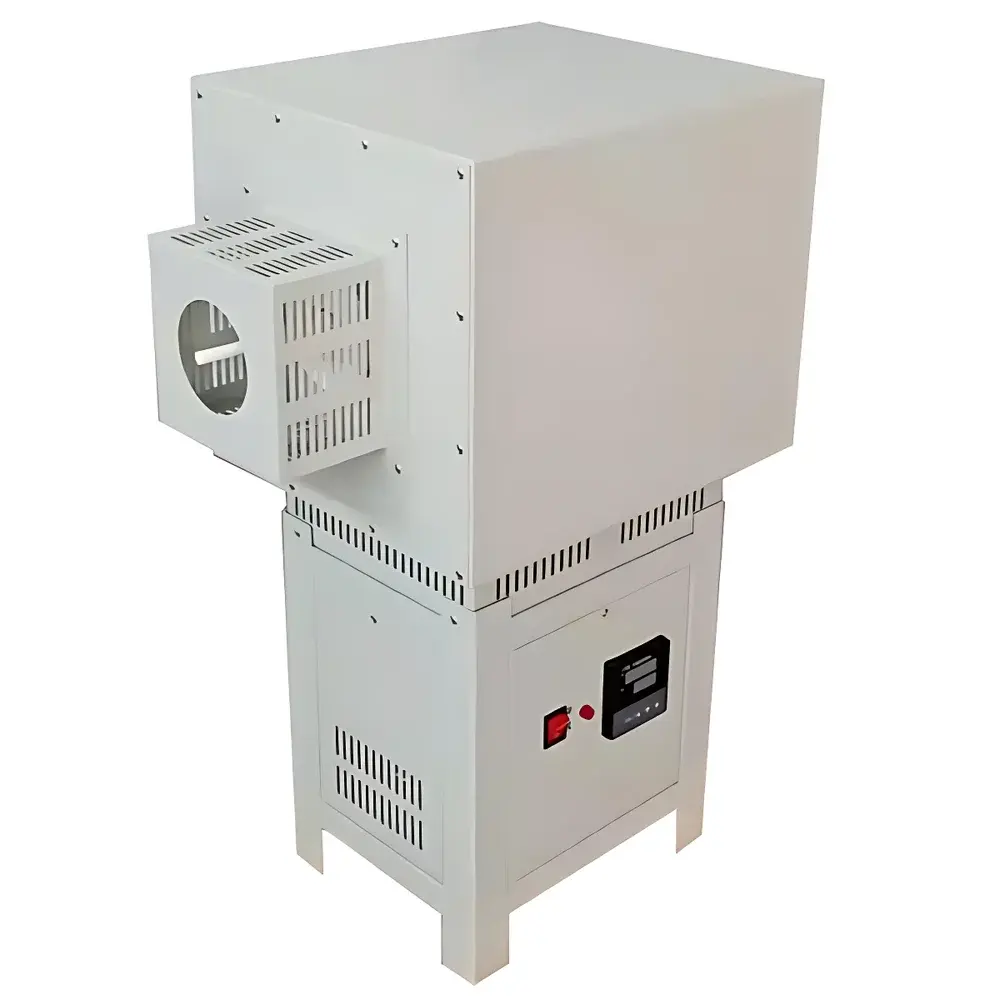
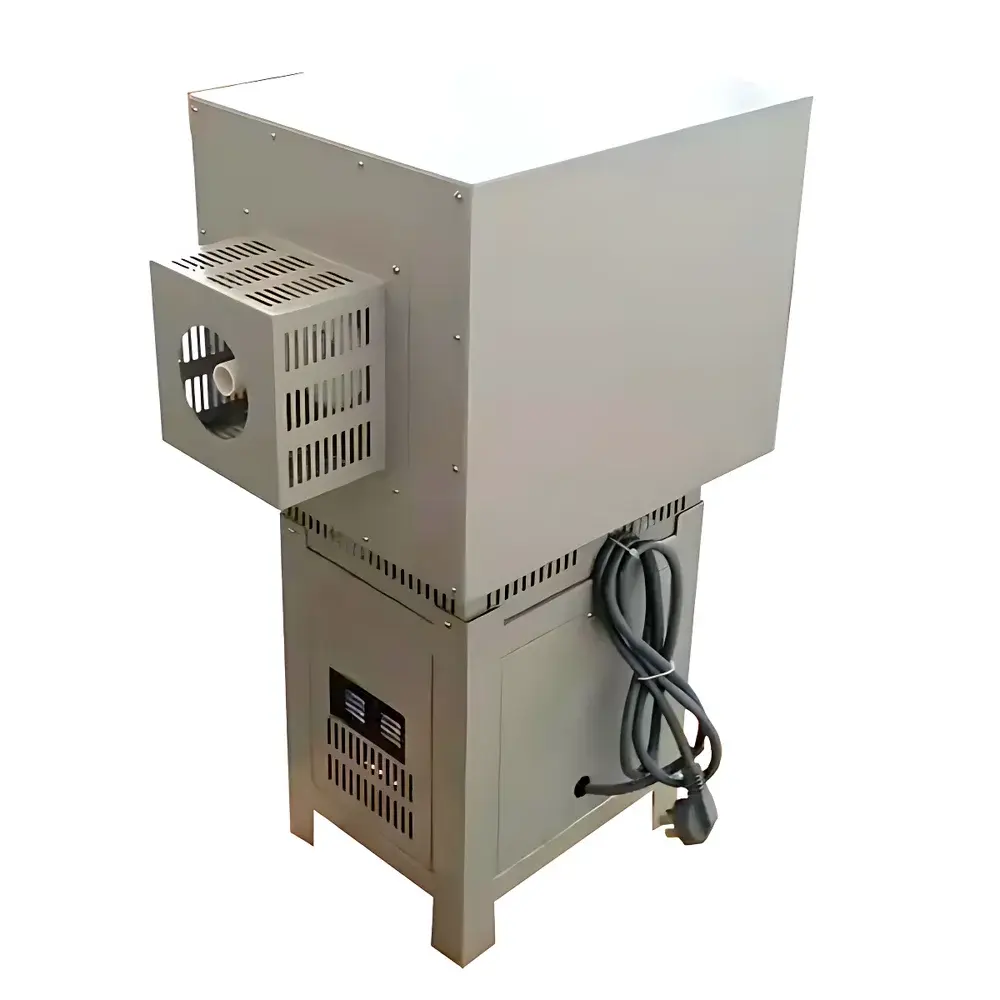
Zhuochi SK3-2.5-13 High-Temperature Programmable Tube Furnace for Total Sulfur Determination in Forest Soils per LYT 1255–1999
| Brand | Zhuochi |
|---|---|
| Origin | Zhejiang, China |
| Manufacturer Type | Authorized Distributor |
| Instrument Type | Laboratory Benchtop Furnace |
| Model | SK3-2.5-13 |
| Temperature Range | 100–1300 °C |
| Temperature Uniformity | ±1 °C |
| Heating Rate | Adjustable up to 50 °C/min |
| Furnace Chamber | φ22 × 380 mm |
| Heating Zone Length | 280 mm |
| Power Rating | 2.5 kW |
| Supply Voltage | 220 V, 50 Hz |
| Weight | ~22 kg |
| Compliance Standard | LYT 1255–1999 (Determination of Total Sulfur in Forest Soils) |
Overview
The Zhuochi SK3-2.5-13 is a precision-engineered, programmable tube furnace designed specifically for high-temperature combustion-based total sulfur quantification in forest soils, fully compliant with the Chinese forestry industry standard LYT 1255–1999. This method relies on high-temperature oxidative combustion (typically 1200–1300 °C) to convert all sulfur species—including sulfides, sulfates, and organosulfur compounds—into sulfur dioxide (SO₂), which is subsequently absorbed and titrimetrically or spectrophotometrically quantified. The furnace serves as the core thermal module in a complete analytical workflow, interfacing with gas absorption units, conductivity detectors, or UV-Vis spectrometers. Its robust ceramic fiber architecture, optimized thermal mass, and precise PID-controlled ramp/soak profiles ensure reproducible combustion efficiency across heterogeneous soil matrices—critical for achieving the ±5% relative standard deviation required by LYT 1255–1999 for inter-laboratory comparability.
Key Features
- Ultra-lightweight, high-purity alumina-silica ceramic fiber insulation (six-sided modular construction), reducing thermal inertia and enabling rapid, energy-efficient heating cycles—energy consumption is approximately 50% lower than conventional muffle furnaces.
- Dual-stage overtemperature protection: primary control via LTDE programmable PID controller with SSR output, secondary hardware cut-off at 1400 °C using fail-safe thermocouple monitoring.
- High-stability S-type platinum-rhodium/platinum thermocouple (IEC 60584-1 Class 1) mounted through bottom port for accurate, drift-resistant temperature measurement within the active heating zone.
- Integrated controller base housing: all electrical connections pre-wired at factory; plug-and-play operation after single-phase 220 V AC connection—no field wiring required.
- Programmable multi-step thermal profiles: independent ramp rate (0.1–50 °C/min), hold time (0–999 min), and target temperature settings stored in non-volatile memory.
- Corrosion-resistant cold-rolled steel enclosure with phosphate conversion coating and electrostatic gray powder finish; external surface temperature remains below 60 °C during continuous operation at 1300 °C.
Sample Compatibility & Compliance
The SK3-2.5-13 is validated for use with standard quartz or high-purity silica combustion tubes (ID 18–20 mm, OD 22 mm) and ceramic combustion boats (supplied: 20 pcs). It accommodates sample masses of 0.5–2.0 g dry-weight soil, consistent with LYT 1255–1999 Section 5.2. The furnace’s uniform axial temperature profile (±1 °C over 280 mm zone) ensures complete oxidation without localized charring or incomplete sulfate decomposition. While LYT 1255–1999 is a national forestry standard, the combustion methodology aligns with internationally recognized principles found in ASTM D3177 (Total Sulfur in Coal and Coke) and ISO 10156 (Gas Analysis—Determination of Sulfur Compounds), supporting cross-method validation. For regulated environmental testing laboratories, the instrument supports GLP-compliant documentation when paired with validated data acquisition software (see Software & Data Management).
Software & Data Management
The LTDE controller provides local parameter logging (time-stamped temperature setpoints, actual readings, and event flags) with USB export capability. When integrated into a full LYT 1255–1999-compliant system, the furnace interfaces via analog 4–20 mA or RS485 Modbus RTU with third-party data acquisition platforms (e.g., LabVIEW, MATLAB, or custom SCADA). Audit trails—including user logins, method modifications, and calibration events—can be generated to satisfy internal QA requirements. Though not FDA 21 CFR Part 11-certified out-of-the-box, the system architecture permits configuration for electronic signature and data integrity controls when deployed under formal GxP frameworks.
Applications
- Quantitative determination of total sulfur in forest topsoil, subsoil, and litter layers per LYT 1255–1999 for ecological sulfur cycling studies.
- Pre-treatment step for sequential extraction protocols requiring complete sulfur mineralization prior to ICP-OES or ion chromatography analysis.
- Method development for sulfur speciation in contaminated sites (e.g., mining-impacted soils), where combustion efficiency must be verified against certified reference materials (CRMs) such as NIST SRM 2710a or GBW07401.
- Calibration verification of portable XRF analyzers used for field sulfur screening—lab-based furnace results serve as traceable reference values.
- Research on sulfur retention mechanisms in acid forest soils, including sulfate adsorption kinetics and pyrite oxidation modeling.
FAQ
Is the SK3-2.5-13 compatible with automated sample introduction systems?
Yes—its RS485 interface and analog output support integration with robotic autosamplers and pneumatic sample feeders, provided external synchronization signals are configured per user-defined timing logic.
What maintenance is required for long-term thermal stability?
Annual recalibration of the S-type thermocouple against a certified reference thermometer is recommended; ceramic fiber lining requires no routine replacement but should be inspected visually for cracking after 500+ cycles above 1200 °C.
Can this furnace be used for ASTM D4294 (Sulfur in Petroleum) analysis?
No—the LYT 1255–1999 method specifies soil-specific combustion conditions (e.g., oxygen flow rate, boat geometry, and post-combustion gas scrubbing); ASTM D4294 requires distinct instrumentation (XRF-based) and is not furnace-dependent.
Does the unit include validation documentation for ISO/IEC 17025 accreditation?
Factory calibration certificates (as-found/as-left) and uncertainty budgets are provided upon request; full IQ/OQ/PQ protocol development is available as an optional service.
Related Products







