
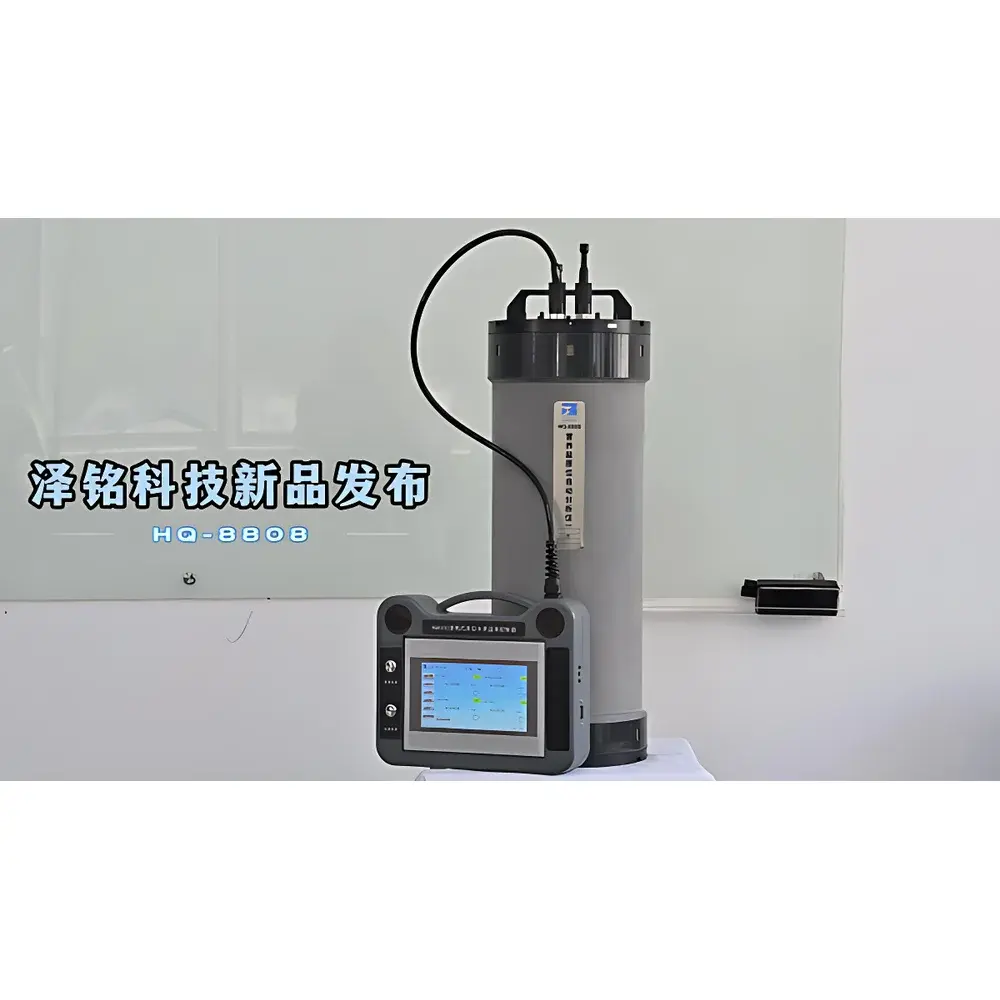
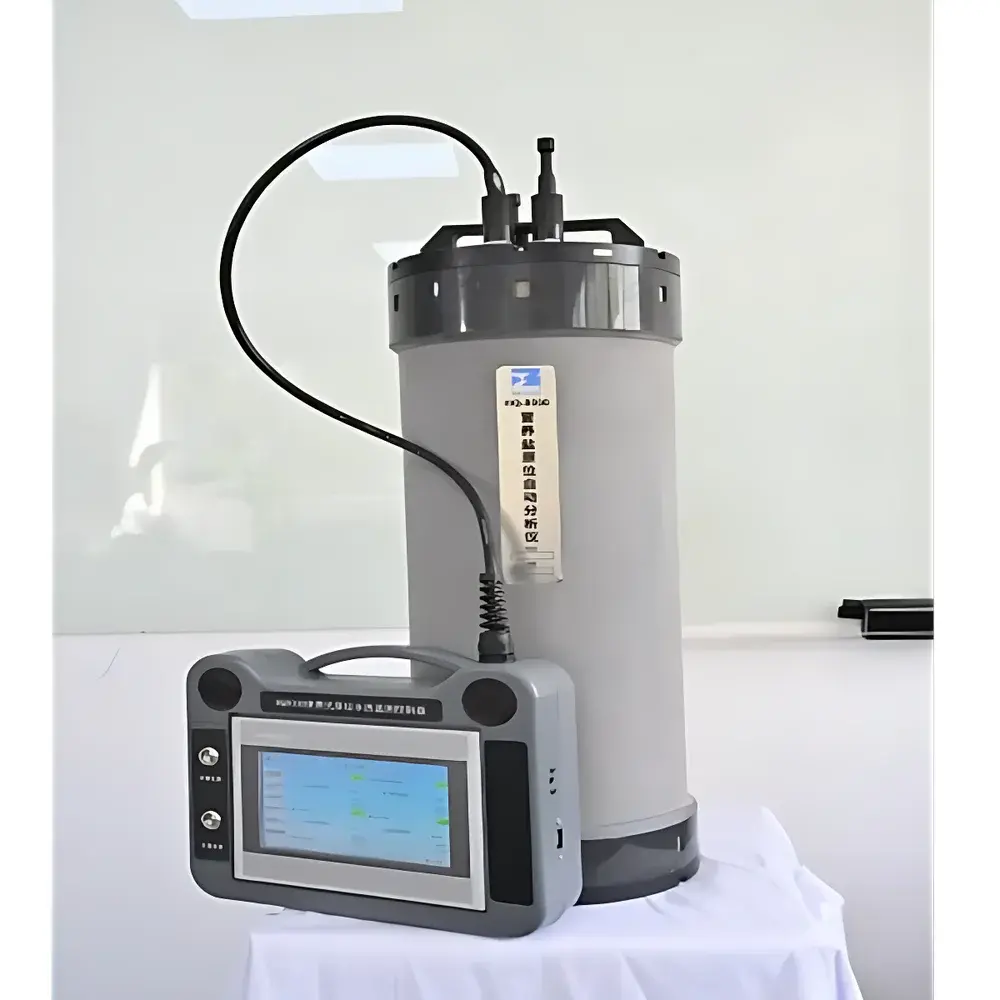
Zming Environmental HQ-8808 In-situ Automatic Analyzer for Total Nitrogen Species and Orthophosphate
| Brand | Zming Environmental Technology Co., Ltd. |
|---|---|
| Origin | Shanghai, China |
| Manufacturer Type | Authorized Distributor |
| Country of Origin | China |
| Model | HQ-8808 |
| Price | Upon Request |
| Measurement Principles | Molybdenum Blue Colorimetry (PO₄-P), Fluorescence (NH₃-N), Cd-Reduction + NED Colorimetry (NO₃-N), NED Colorimetry (NO₂-N) |
| Detection Limits | 0.005 mg/L for all four analytes |
| Accuracy | ±5% FS |
| Repeatability | 3–5% RSD |
| Zero/Scale Drift | ≤2% over 24 h |
| Measurement Cycle | 10–15 min per parameter |
| Linearity | R² ≥ 0.995 |
| Resolution | 0.001 mg/L |
| Power Supply | 12 V DC |
| Avg. Power Consumption | 12 W (Max 20 W) |
| Operating Temp. | 0–50 °C |
| Enclosure Rating | IP68 |
| Dimensions | 530 mm (L) × 225 mm (Ø) |
| Max Submersion Depth | 20 m |
| Communication | RS-232 (ASCII or MODBUS RTU) |
| Turbidity Compensation | Yes |
| Anti-fouling | Integrated biofouling-resistant flow path & recirculating sampling |
| Reagent Consumption | ~30 mL/month per reagent (at 4 tests/day) |
Overview
The Zming Environmental HQ-8808 In-situ Automatic Analyzer for Total Nitrogen Species and Orthophosphate is an integrated, submersible water quality monitoring platform engineered for long-term, unattended deployment in dynamic aquatic environments—including coastal zones, estuaries, rivers, reservoirs, and lake littoral zones. Unlike laboratory-based or grab-sample analytical systems, the HQ-8808 performs real-time, multi-parameter in-situ quantification of orthophosphate (PO₄-P), ammonia nitrogen (NH₃-N), nitrate nitrogen (NO₃-N), and nitrite nitrogen (NO₂-N) using standardized wet-chemistry methodologies compliant with international water analysis protocols. Its operational principle relies on sequential, automated colorimetric and fluorometric reactions executed within a sealed, pressure-rated reaction chamber: phosphate is determined via molybdenum blue formation; ammonia nitrogen is measured by indophenol blue fluorescence under controlled pH and reagent dosing; nitrate is reduced to nitrite using a solid-phase cadmium column prior to NED (N-(1-Naphthyl)ethylenediamine) diazotization; and nitrite is directly quantified by the same NED coupling reaction. All optical measurements are performed using stable LED light sources and precision photodiodes calibrated against NIST-traceable standards.
Key Features
- True in-situ operation with rated submersion depth of 20 meters—enabling direct integration into buoys, mooring platforms, and autonomous surface vehicles without external sample pumping or conditioning lines.
- Integrated turbidity sensor with real-time compensation algorithm, minimizing interferences from suspended solids during colorimetric assays—critical for estuarine and sediment-laden inland waters.
- Dual environmental monitoring: internal chamber temperature and humidity sensors ensure diagnostic traceability and support thermal drift correction across extended deployments.
- Anti-biofouling fluidic architecture featuring stainless-steel wetted parts, pulsed-flow recirculation, and periodic reagent flush cycles—validated under field conditions exceeding 90 days in eutrophic coastal sites.
- Ultra-low reagent consumption: ≤30 mL per month per assay channel at 4-cycle-per-day operation, reducing logistics burden and enabling >6-month autonomy with standard onboard reagent reservoirs.
- Low-power design optimized for renewable energy: average power draw of 12 W (peak 20 W), compatible with 12 V DC solar-charged battery systems meeting IEC 62133 safety requirements.
- Onboard handheld display module enables offline configuration, calibration verification, diagnostic logging, and up to 10 full measurement sequences without host PC or network connection.
- Compliant with ISO 15839 (Water quality — Specifications and performance criteria for automatic analyzers), ASTM D3867 (Nitrate/Nitrite in Water), and EPA Method 365.3 (Phosphorus).
Sample Compatibility & Compliance
The HQ-8808 is validated for natural freshwater, brackish, and marine matrices with salinity up to 35 PSU and turbidity up to 100 NTU. Its flow-through cell design accommodates particulate loadings typical of non-filtered surface waters, while the turbidity compensation function maintains accuracy without inline filtration—reducing maintenance frequency and avoiding filter clogging artifacts. All wetted materials (316L SS, PTFE, FFKM) meet USP Class VI and FDA 21 CFR 177.2600 requirements for contact with potable and environmental water. The instrument’s firmware supports audit trail logging per GLP/GMP principles, including timestamped calibration events, reagent lot tracking, and error flagging—facilitating compliance with ISO/IEC 17025-accredited monitoring programs.
Software & Data Management
Data output adheres to ASCII and MODBUS RTU protocols over RS-232, enabling seamless integration with SCADA systems, telemetry gateways (e.g., cellular or LoRaWAN), and central data lakes. Each measurement packet includes analyte concentration, QC flags (e.g., low signal, high blank, overflow), internal temperature/humidity, turbidity reading, and cycle duration. Firmware v3.2+ supports remote firmware updates via secure serial tunneling and includes configurable alarm thresholds with relay outputs for external actuation (e.g., pump control, warning beacon). Raw absorbance/fluorescence values and calibration coefficients are stored locally for retrospective validation and method transfer studies.
Applications
- Long-term nutrient trend monitoring in oligotrophic and eutrophic lakes under EU WFD or US Clean Water Act Section 303(d) reporting frameworks.
- Nutrient flux quantification at river mouths and tidal inlets to support nitrogen loading models used in TMDL development.
- Real-time early-warning detection of agricultural runoff events (e.g., post-rainfall NH₃-N spikes) or wastewater discharge incidents.
- Validation and ground-truthing of hyperspectral remote sensing products for chlorophyll-a and total suspended matter.
- Research-grade time-series studies of nitrification/denitrification dynamics in benthic boundary layers and sediment-water interfaces.
FAQ
Does the HQ-8808 require external filtration or sample pre-treatment?
No. The system operates on raw, unfiltered water and incorporates turbidity compensation and anti-fouling flow management to maintain integrity across high-sediment environments.
Can it be deployed in seawater?
Yes—certified for continuous operation in salinities up to 35 PSU; all wetted components are corrosion-resistant and pressure-rated to 20 m depth.
What calibration standards are required for routine maintenance?
NIST-traceable single-element standards for PO₄-P, NH₃-N, NO₃-N, and NO₂-N (1–5 mg/L range); certified reference materials recommended quarterly per ISO 17025 QA/QC protocols.
Is the instrument compliant with regulatory reporting requirements?
Yes—the methodology aligns with ISO 15681-1 (PO₄-P), ISO 11732 (NH₃-N), ISO 10304-1 (NO₃-N/NO₂-N), and has received formal comparative validation from the State Oceanic Administration’s National Marine Environmental Monitoring Center (NMEMC).
How is data security and traceability ensured?
All measurement events include cryptographic timestamps, operator ID (if configured), and immutable QC metadata; optional firmware extension enables 21 CFR Part 11-compliant electronic signatures and audit trails.







