
ZOLIX DInSb Series Indium Antimonide (InSb) Cryogenic Detectors
| Brand | ZOLIX |
|---|---|
| Model | DInSb5-De02 / DInSb5-HS |
| Origin | Beijing, China |
| Manufacturer | ZOLIX Photonics Inc. |
| Cooling Method | Liquid Nitrogen (77 K) |
| Spectral Range | 1–5.5 µm |
| Photosensitive Area Options | Ø1 mm, Ø2 mm (standard for DInSb5-De02), 1×1 mm² (square, DInSb5-HS), Ø4 mm, Ø7 mm |
| Peak Detectivity (D*, 1 kHz) | 1 × 10¹¹ cm·Hz¹ᐟ²/W |
| NEP (@λ� | ₑₐₖ, 1 kHz): 1.6 pW/Hz¹ᐟ² |
| Dark Current (77 K) | ≤30 µA |
| Response Time (DInSb5-HS) | <25 ns |
| Integrated Preamplifier (DInSb5-HS) | Yes, 20 MHz bandwidth |
| Output Signal Polarity | Positive (P) |
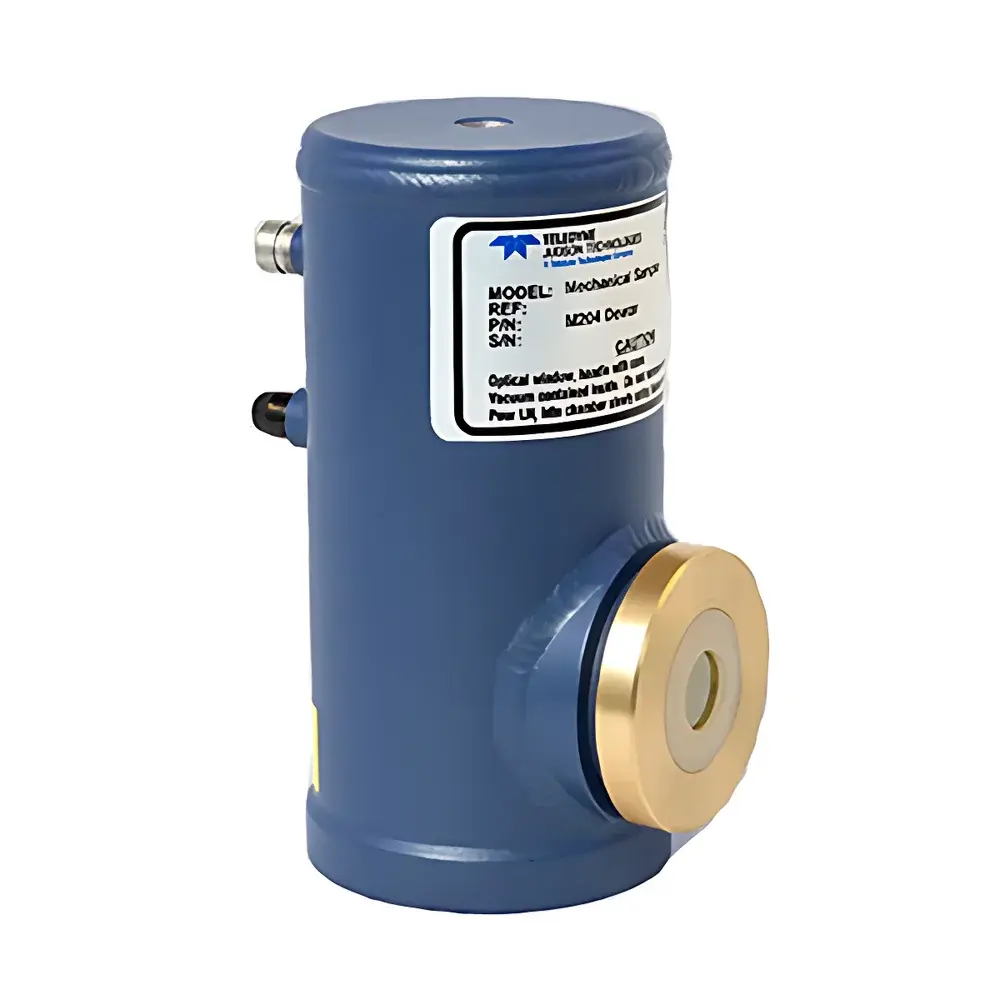
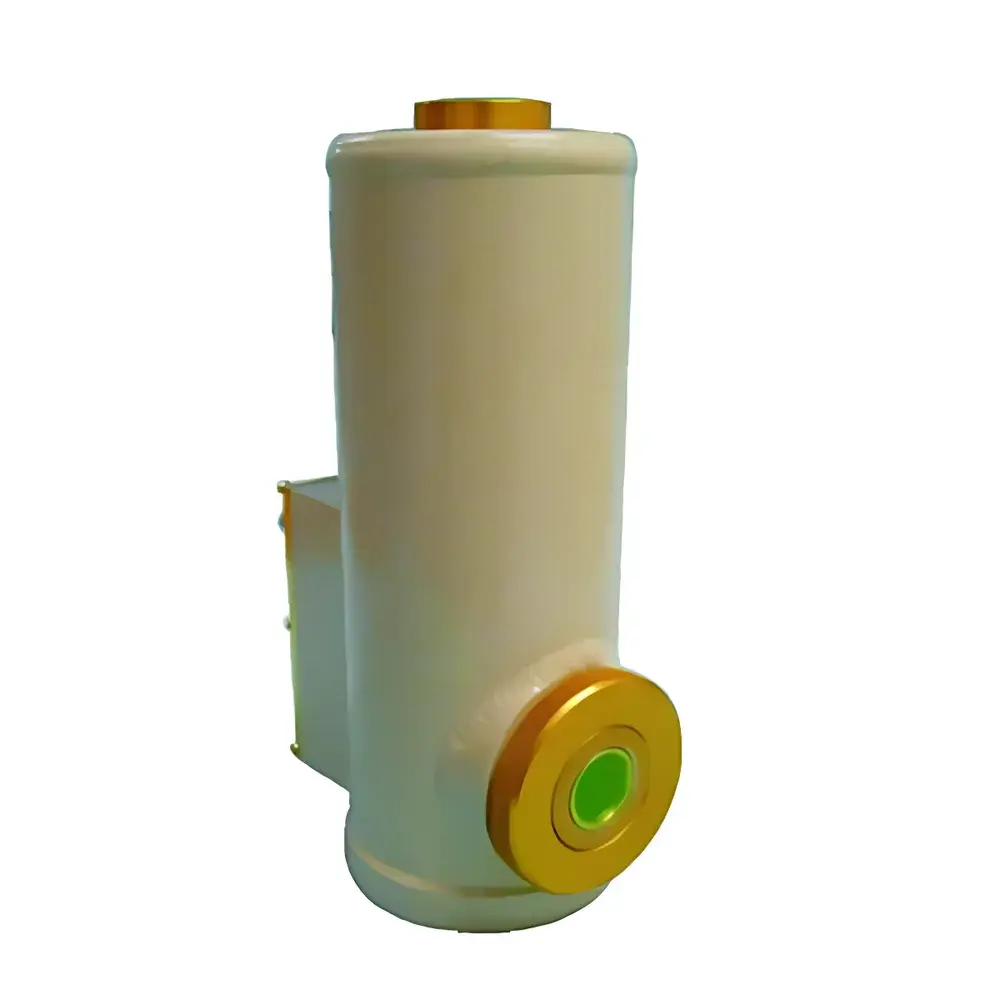
| Housing | DEC-Series Dewar Detector Chamber (DEC-M204 for DInSb5-De02 |
| Compliance | Designed for integration with ISO/IEC 17025-compliant spectroscopic systems |
Overview
ZOLIX DInSb Series Indium Antimonide (InSb) cryogenic detectors are high-sensitivity, liquid nitrogen–cooled photodetectors engineered for precision near- to mid-infrared (NIR–MIR) spectral measurements in laboratory and industrial analytical environments. Operating at 77 K, these detectors leverage the intrinsic photoconductive properties of single-crystal InSb to deliver exceptional responsivity across a broad spectral band from 1.0 to 5.5 µm—covering key molecular absorption features of hydrocarbons, CO, CO₂, NOₓ, and numerous organic functional groups. The DInSb5-De02 variant is optimized for high signal-to-noise ratio (SNR) in steady-state spectroscopy applications such as FTIR, dispersive grating spectrometers, and laser-induced absorption spectroscopy. In contrast, the DInSb5-HS model integrates a low-noise, wideband (20 MHz) transimpedance preamplifier directly within its DEC-KJ dewar housing, enabling time-resolved detection with sub-25 ns temporal resolution—ideal for pump-probe experiments, ultrafast IR transient absorption, and gated detection synchronized with pulsed laser sources.
Key Features
- Cryogenic operation at 77 K via integrated liquid nitrogen dewar (DEC-series), ensuring thermal stability and minimized dark current (≤30 µA)
- High specific detectivity (D* = 1 × 10¹¹ cm·Hz¹ᐟ²/W @ λₚₑₐₖ, 1 kHz) and low noise-equivalent power (NEP = 1.6 pW/Hz¹ᐟ²), critical for weak-signal IR detection
- Modular DEC-series detector chamber design (DEC-M204 for DInSb5-De02; DEC-KJ for DInSb5-HS) compatible with standard spectrograph slit interfaces per ISO 9022-5 mechanical mounting specifications
- Dual output configurations: current-mode (DInSb5-De02, requires external amplification) and voltage-mode (DInSb5-HS, integrated preamp with positive-polarity output)
- Configurable photosensitive area options—including Ø1 mm, Ø2 mm (standard), 1×1 mm² square, Ø4 mm, and Ø7 mm—to balance spatial resolution, étendue matching, and optical throughput
- Robust hermetic TO-8 or custom ceramic package encapsulation, qualified for continuous operation under vacuum or dry nitrogen purge environments
Sample Compatibility & Compliance
The DInSb series is designed for use with solid, liquid, and gas-phase samples analyzed via transmission, reflection, or photoacoustic IR spectroscopy. Its 1–5.5 µm spectral response aligns with fundamental vibrational bands of most organic and inorganic compounds, supporting compliance-driven applications in pharmaceutical QC (per USP and EP 2.2.24), environmental monitoring (EPA Method 300.1), and materials science R&D. When integrated into ZOLIX monochromators or FTIR systems, the detectors meet mechanical and electrical interface requirements defined in IEC 61000-6-3 (EMC immunity) and ISO/IEC 17025 calibration traceability frameworks. While the detector itself does not carry CE or UKCA marking, its architecture enables full system-level conformity when deployed with validated acquisition hardware and software meeting FDA 21 CFR Part 11 audit-trail and electronic signature requirements.
Software & Data Management
ZOLIX detectors interface seamlessly with industry-standard data acquisition platforms including National Instruments DAQmx, Keysight PathWave, and MATLAB-based spectral processing toolboxes. For lock-in detection workflows, the DInSb5-De02 is routinely paired with ZPA-7 or ZAMP preamplifiers and SR830/SR865 lock-in amplifiers—enabling phase-sensitive measurement with >120 dB dynamic range. The DInSb5-HS supports direct oscilloscope coupling (e.g., Tektronix MSO5 Series) for real-time waveform capture and time-domain analysis. All configurations support ASCII and HDF5 export formats, facilitating integration into LIMS and ELN ecosystems. Firmware and driver libraries (Windows/Linux x64) are provided with full API documentation, enabling automated wavelength calibration, dark-current subtraction, and nonlinearity correction routines compliant with ASTM E1421–22 guidelines for infrared detector characterization.
Applications
- Fourier-transform infrared (FTIR) spectroscopy for polymer identification and degradation analysis
- Gas-phase quantitative analysis of combustion byproducts (CO, CH₄, N₂O) in emissions testing
- Time-resolved infrared spectroscopy (TR-IR) of photocatalytic intermediates and excited-state dynamics
- In-line process monitoring of pharmaceutical tablet coating uniformity via NIR-MIR reflectance
- Research-grade mid-IR microscopy and focal-plane array synchronization in synchrotron beamlines
- Calibration reference sources for radiometric validation of IR imaging systems (per ISO 18526-2)
FAQ
What cooling method is required for stable operation?
Liquid nitrogen (LN₂) is mandatory; the detector must be operated at 77 K. A standard DEC-series dewar provides ≥8 hours of hold time per fill. No thermoelectric or closed-cycle cooler alternatives are supported.
Can the DInSb5-De02 be used without an external preamplifier?
No. It outputs raw photocurrent only. Use with ZPA-7, ZAMP, or DCS300PA is required for signal conditioning and noise optimization.
Is the DInSb5-HS compatible with oscilloscopes from major vendors?
Yes—its 50 Ω output impedance and ±5 V full-scale range ensure compatibility with Tektronix, Keysight, and LeCroy digital storage oscilloscopes equipped with ≥1 GHz bandwidth.
Are custom photosensitive areas available beyond the listed options?
Yes. Custom geometries (e.g., linear arrays, annular apertures) can be fabricated upon request under NDA; lead time is typically 12–16 weeks.
Does ZOLIX provide calibration certificates traceable to NIST standards?
Yes—optional factory calibration includes spectral responsivity (A/W) and D* measurements at 1 kHz, traceable to NIST SRM 2031 and ISO 15312-1 protocols. Certificates include uncertainty budgets per GUM (JCGM 100:2008).




