
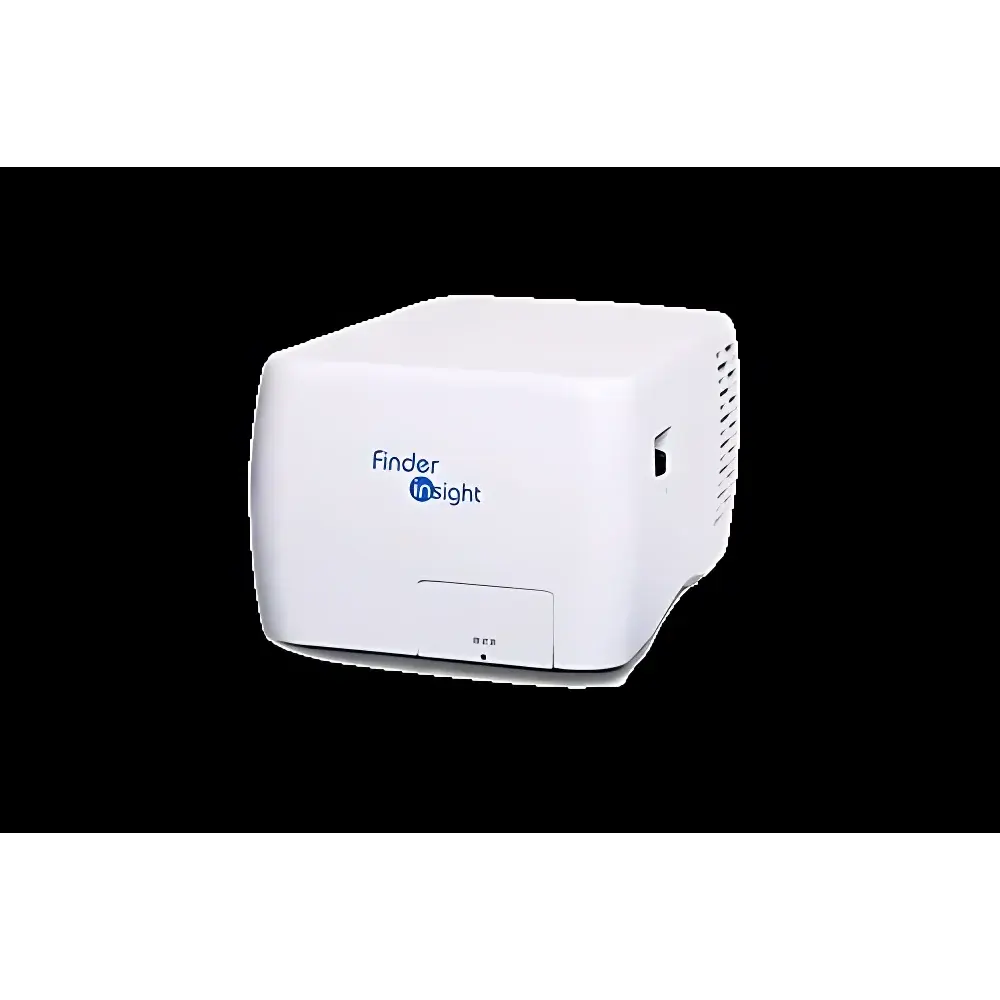
ZOLIX Finder Insight Series Compact Laser Raman Spectrometer
| Brand | ZOLIX |
|---|---|
| Origin | Beijing, China |
| Manufacturer Type | OEM Manufacturer |
| Regional Classification | Domestic (China) |
| Model | Finder Insight |
| Price Range | USD 28,000 – 42,500 |
| Instrument Type | Portable / Handheld Raman Spectrometer |
| Spectral Range | 200–2000 cm⁻¹ (FI-R-A) |
| Spectral Resolution | 6–10 cm⁻¹ |
| Spatial Resolution | Micron-level |
| Minimum Wavenumber | 150 cm⁻¹ |
| Spectral Repeatability | ≤ ±0.25 cm⁻¹ |
| Excitation Wavelengths | 785 nm (FI-R-A), 532 nm (FI-G-A) |
| Laser Power | 100 mW (785 nm), 50 mW (532 nm) |
| Detector | Scientific-grade thermoelectrically cooled CCD, NIR-enhanced |
| F-number | f/3 |
| Power Supply | Standard AC 110/220 V with 12 V @ 4 A DC output |
| Dimensions (W×H×L) | 216 × 166 × 352 mm |
| Weight | 5 kg |
Overview
The ZOLIX Finder Insight Series Compact Laser Raman Spectrometer is a purpose-engineered portable analytical platform designed for high-fidelity Raman spectral acquisition under field-deployable or benchtop-limited conditions. Based on confocal laser excitation and dispersive spectroscopy using a high-throughput Czerny–Turner optical architecture, the system delivers reproducible vibrational fingerprinting across solid, liquid, gel, and powder samples without destructive preparation. Its core optical design emphasizes signal-to-noise ratio optimization via direct-coupled illumination pathways and an f/3 spectrometer aperture—enabling efficient photon collection even at low laser powers. The integration of a scientific-grade, thermoelectrically cooled CCD detector with NIR quantum efficiency enhancement ensures stable baseline performance over extended acquisition periods, critical for quantitative batch verification in regulated environments.
Key Features
- Portable form factor (5 kg, 216 × 166 × 352 mm) engineered for lab-to-field continuity—fully operational with optional rechargeable polymer battery or standard AC/DC power supply.
- Dual-wavelength platform: FI-R-A variant employs 785 nm excitation (100 mW) optimized for fluorescence suppression in organic and biological matrices; FI-G-A variant uses 532 nm (50 mW) for enhanced sensitivity in inorganic and crystalline materials.
- Real-time visual alignment via integrated monitoring optical path—enables precise targeting of micron-scale regions of interest without auxiliary imaging hardware.
- Vertical incident geometry accommodates heterogeneous, irregular, or non-planar samples—including tablets, fibers, geological specimens, and cultural heritage artifacts—without reorientation or stage modification.
- Spectral stability maintained through active thermal regulation of the detector and optical bench, ensuring repeatability ≤ ±0.25 cm⁻¹ across diurnal temperature fluctuations typical of non-climate-controlled settings.
Sample Compatibility & Compliance
The Finder Insight supports non-contact, non-destructive analysis of diverse sample classes: pharmaceutical actives and excipients, polymer blends, semiconductor thin films, mineral inclusions, ink and pigment layers in historical documents, and forensic trace evidence (e.g., illicit drugs, explosives residues). Its optical configuration complies with ASTM E1840-22 (Standard Guide for Raman Spectroscopy Data Acquisition and Processing) and aligns with ISO/IEC 17025 requirements for instrument calibration traceability. While not pre-certified for FDA 21 CFR Part 11, the system’s data export architecture (CSV, ASCII, .spa) facilitates integration into validated LIMS or ELN workflows supporting GLP/GMP audit trails when paired with appropriate metadata logging protocols.
Software & Data Management
Controlled via ZOLIX SpectraSight™ v4.x software, the platform provides real-time spectral preview, automated cosmic ray removal, baseline correction (Asymmetric Least Squares), peak deconvolution (Voigt fitting), and library matching against integrated reference databases (e.g., RRUFF, ICDD PDF-4+ Raman). All raw spectra are timestamped and tagged with instrument parameters (laser power, integration time, grating position), enabling full experimental provenance. Export formats include vendor-neutral ASCII and industry-standard JCAMP-DX, ensuring compatibility with third-party chemometric tools (e.g., MATLAB, Python scikit-learn, Unscrambler X) for multivariate modeling and classification.
Applications
- Pharmaceutical QA/QC: Polymorph identification, blend uniformity assessment, and counterfeit drug screening per USP and ICH Q5C guidelines.
- Materials science: Stress/strain mapping in 2D materials (graphene, MoS₂), phase transitions in battery cathodes (LiCoO₂, NMC), and defect characterization in SiC wafers.
- Environmental forensics: Microplastic identification in water sediments and airborne particulates using spectral unmixing algorithms.
- Cultural heritage: Non-invasive pigment stratigraphy in oil paintings and corrosion product analysis on archaeological metal objects.
- Law enforcement: On-site identification of narcotics (fentanyl analogues), explosives precursors (TATP, PETN), and chemical warfare agent simulants.
FAQ
Is the Finder Insight suitable for quantitative analysis?
Yes—when operated with internal intensity calibration standards and consistent geometric alignment, it achieves relative standard deviations <3% for peak area ratios in repeated measurements of homogeneous solids under controlled ambient conditions.
Can the system be calibrated for wavelength accuracy?
Yes—factory calibration uses NIST-traceable neon and argon emission lines; users may perform routine verification using silicon (520.7 cm⁻¹) or cyclohexane (2902 cm⁻¹ C–H stretch) reference peaks.
What spectral processing capabilities are embedded in SpectraSight™?
Baseline correction, smoothing (Savitzky–Golay), cosmic ray filtering, peak finding (centroid + FWHM), and user-defined region-of-interest integration are available in real time; advanced chemometrics require external software integration.
Does the instrument support fiber-optic probe coupling?
No—the optical path is fixed and optimized for direct-sample illumination; however, optional motorized XYZ stages enable automated raster mapping for spatially resolved analysis.
How is thermal drift managed during long acquisitions?
The CCD operates at −20 °C stabilized via multi-stage Peltier cooling; optical housing features passive thermal mass design and low-expansion material selection to minimize focal shift over 60-minute continuous operation.




