
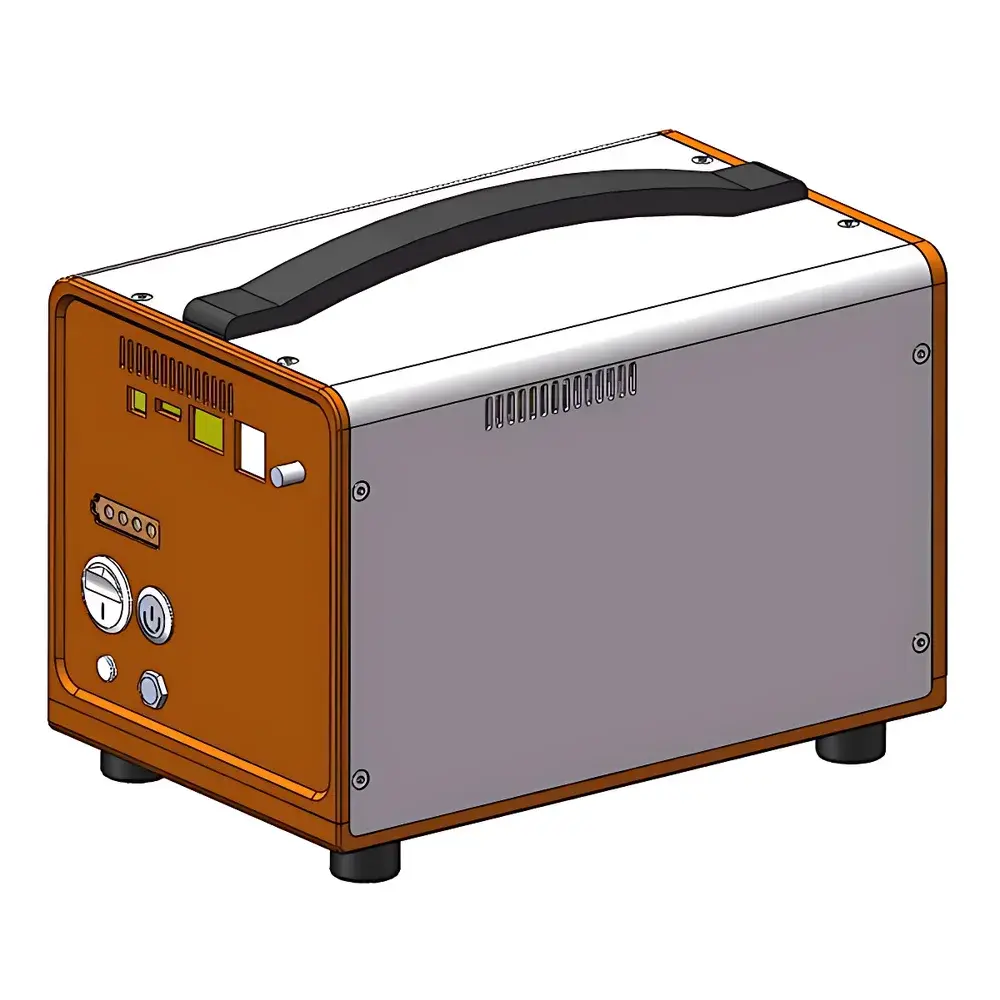
ZOLIX GaiaField Pro-N17E Lite Portable Short-Wave Infrared Hyperspectral Imaging System
| Brand | ZOLIX |
|---|---|
| Origin | Beijing, China |
| Manufacturer Type | Original Equipment Manufacturer (OEM) |
| Product Origin | Domestic (China) |
| Model | GaiaField Pro-N17E Lite |
| Operating Principle | Push-broom Scanning |
| Imaging Mode | 3D Spatial-Spectral Cube Acquisition |
| Deployment Flexibility | Ground-based and Airborne Compatible |
| Spectral Range | 960–1640 nm |
| Spectral Resolution | 5 nm (FWHM) |
| Numerical Aperture | f/2.0 |
| Slit Dimensions | 30 µm × 14.2 mm |
| Detector | InGaAs |
| Spatial × Spectral Pixels | 256 × 320 |
| Spectral Bands | 320 (standard), 160 (binning mode) |
| Dynamic Range | 12-bit |
| Field of View (TFOV) | 12.2° (@ 30 mm lens) |
| Image Spatial Resolution | 256 × 400 pixels per cube |
| Scan Speed | 4 s/cube |
| Weight | 7.5 kg |
| Integrated Battery | 120 Wh (operational duration > 2 h) |
| Connectivity | Wi-Fi (Android/iOS remote control), optional serial RF link for long-range telemetry |
| Data Format | ENVI-compatible BIL/BIP, supports Evince, ENVI, SpecSight, and MATLAB workflows |
Overview
The ZOLIX GaiaField Pro-N17E Lite is a field-deployable, short-wave infrared (SWIR) push-broom hyperspectral imaging system engineered for high-fidelity spectral-spatial data acquisition in demanding outdoor and airborne environments. It operates on the principle of spatial scanning coupled with dispersive spectroscopy—using a precision diffraction grating and an InGaAs focal plane array to resolve incident radiance across 320 contiguous spectral channels within the 960–1640 nm range. Each acquired data cube comprises 256 spatial pixels × 400 line scans × 320 spectral bands, delivering a fully calibrated 3D hypercube with intrinsic geometric and radiometric fidelity. Designed for rapid deployment without external computing infrastructure, the system integrates real-time onboard processing, embedded calibration routines, and application-specific spectral analysis engines—making it suitable for time-critical operational use in defense, environmental monitoring, precision agriculture, and cultural heritage diagnostics.
Key Features
- Self-contained acquisition platform: No external PC required; all data capture, preprocessing, and visualization occur onboard.
- Dual-mode spectral acquisition: Supports full-resolution (320-band) and binned (160-band) modes to balance signal-to-noise ratio and throughput.
- Integrated HD guide camera: Enables precise region-of-interest selection, geo-referenced framing, and real-time visual alignment prior to hyperspectral scan initiation.
- Onboard radiometric and reflectance calibration: Includes dark current subtraction, flat-field correction, lens vignetting compensation, and spatial uniformity normalization—executed automatically before or during acquisition.
- Real-time analytical modeling: Preloaded algorithms for NDVI, camouflage detection, material spectral matching, and target identification—capable of pixel-level classification with sub-second latency.
- Modular optical interface: Interchangeable lenses (e.g., 30 mm f/2.0 standard) support variable ground sampling distances and field-of-view configurations.
- Wireless operational control: Native Wi-Fi connectivity enables full remote operation via Android, iOS, or iPadOS devices—including live preview, parameter adjustment, and cube download.
- Battery-integrated architecture: 120 Wh Li-ion pack delivers >2 hours of continuous scanning under typical ambient conditions; hot-swappable design supports extended missions.
Sample Compatibility & Compliance
The GaiaField Pro-N17E Lite is optimized for non-contact, passive reflectance and radiance measurements of natural and engineered surfaces—including vegetation canopies, soil substrates, painted or camouflaged materials, mineral outcrops, biological tissues, and historical artifacts. Its SWIR sensitivity enables discrimination of C–H, O–H, and N–H vibrational overtones critical for organic compound identification and moisture content estimation. The system adheres to ISO 17025-aligned calibration traceability protocols for radiometric stability and spectral fidelity. While not certified for regulatory submission per se, its output formats (ENVI BIL/BIP), metadata structure, and audit-ready logging meet foundational requirements for GLP-compliant field data collection. Raw data files retain unprocessed detector counts, enabling retrospective reprocessing under updated calibration models or third-party atmospheric correction pipelines.
Software & Data Management
The embedded firmware runs a deterministic real-time OS supporting deterministic frame capture timing and memory-mapped I/O for zero-latency sensor synchronization. Acquired cubes are stored in industry-standard ENVI format with full header compliance—including wavelength vectors, FWHM metadata, GPS/IMU timestamps (when externally synchronized), and calibration coefficients. The system exports directly to Evince, ENVI, SpecSight, and MATLAB without format conversion. All onboard processing modules generate versioned log entries with timestamp, user ID, and parameter set hash—supporting basic 21 CFR Part 11 audit trail functionality for QA/QC workflows. Custom model deployment follows a secure, signed plugin architecture compatible with Python-based scikit-learn or TensorFlow Lite inference engines.
Applications
- Military & Defense: Real-time detection of synthetic camouflage netting, vehicle thermal signatures, and concealed ordnance via spectral anomaly mapping in SWIR.
- Precision Agriculture: Quantitative assessment of crop water stress, nitrogen status, and disease onset through targeted band ratio indices beyond NDVI.
- Environmental Remote Sensing: Discrimination of aquatic vegetation species, sediment load estimation in turbid waters, and hydrocarbon spill characterization on land or sea surface.
- Cultural Heritage: Non-invasive pigment identification, underdrawing revelation, and binder differentiation in paintings and manuscripts using SWIR spectral absorption features.
- Forensic Science: Detection of altered documents, latent blood traces, and counterfeit currency through spectral response divergence in the 1000–1600 nm window.
- Industrial Sorting: On-line quality grading of plastics, pharmaceutical tablets, and food products based on molecular fingerprinting in SWIR.
FAQ
Does the system support automatic focus adjustment?
No—the GaiaField Pro-N17E Lite does not include motorized autofocus. Focus is manually set per lens configuration and verified using the integrated HD guide camera.
Is GPS/IMU data embedded in the hyperspectral cubes?
GPS and IMU data are not natively recorded onboard but can be synchronized externally via TTL or NMEA serial input; position and attitude metadata may then be appended during post-processing.
What spectral calibration standards are used?
Factory calibration employs NIST-traceable tungsten-halogen and blackbody sources across the 960–1640 nm range; users may perform field recalibration using portable reflectance panels with known bidirectional reflectance distribution function (BRDF) characteristics.
Can the system operate continuously beyond two hours?
Yes—external 12 V DC power input is supported, enabling indefinite operation when tethered to a vehicle battery or portable power station.
Is raw detector data accessible for custom processing?
Yes—unprocessed 12-bit digital numbers (DNs) are available in the native acquisition buffer and exportable in binary or HDF5 format upon request.





