
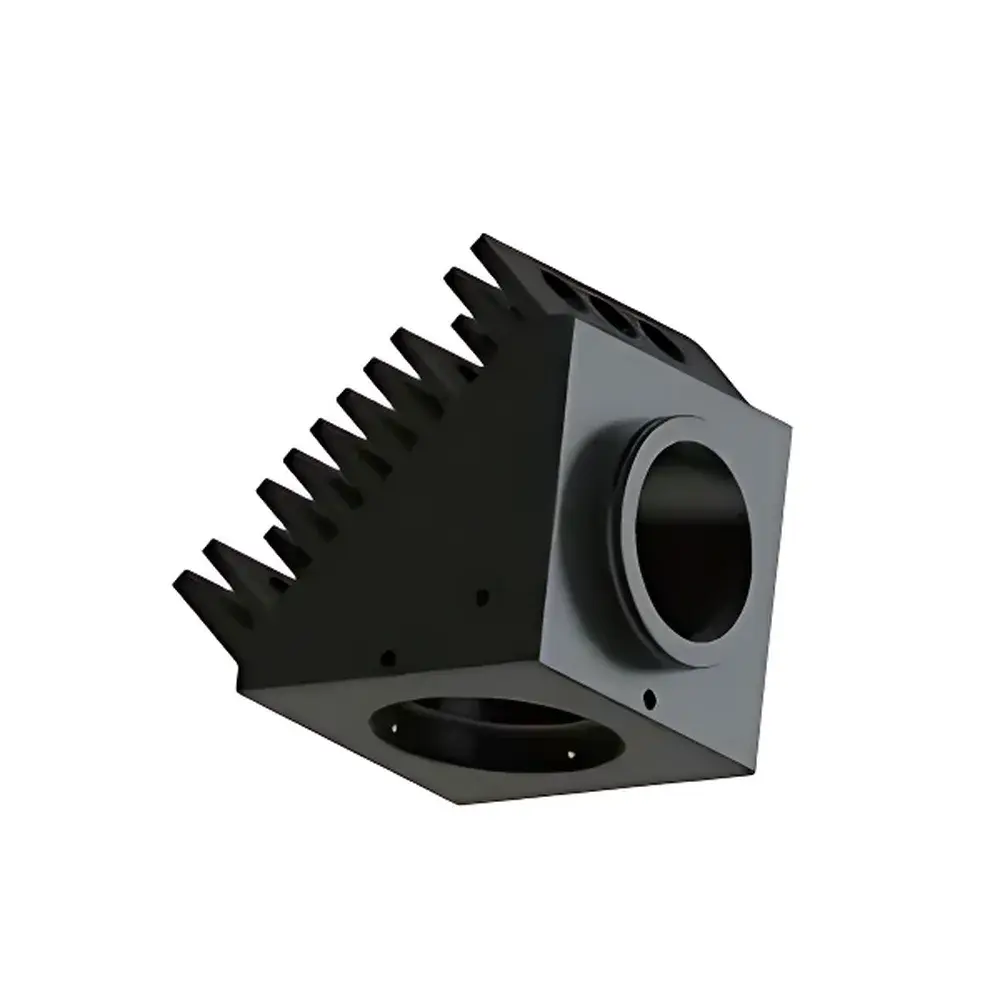
ZOLIX GLORIA Series Light Source Accessories
| Brand | ZOLIX |
|---|---|
| Origin | Beijing, China |
| Manufacturer Type | OEM Manufacturer |
| Product Category | Domestic |
| Model | Light Source Accessories |
| Light Source Type | Xenon Lamp |
| Illumination Mode | External (Side-Illumination) |
| Output Port Diameter | 59 mm |
| Compatible Instruments | GLORIA Series Lamps, Omni-λ Spectrometers, SR540 Chopper, SD Filter Wheels |
| Optical Interface Standard | M3/M6 Threaded Mounting |
| Compliance | Designed for ISO/IEC 17025-aligned optical laboratories, compatible with GLP/GMP-relevant experimental workflows |
Overview
The ZOLIX GLORIA Series Light Source Accessories are precision-engineered optical interface components designed to extend the functionality and adaptability of ZOLIX’s high-stability xenon arc lamp systems. These accessories enable rigorous control over beam geometry, spectral content, intensity, and spatial delivery—critical parameters in spectroscopic, photochemical, and quantum efficiency measurement applications. The GLORIA platform emits collimated output with a standardized 59 mm output port diameter, ensuring mechanical and optical interoperability across the full accessory ecosystem. All components adhere to metrological traceability principles common in calibration-grade optical laboratories and are engineered for long-term thermal stability under continuous 200 W+ xenon lamp operation.
Key Features
- Standardized 59 mm mechanical interface across all accessories—including lenses, filter holders, light-tight tubes, and beam steering units—enabling modular, repeatable system assembly.
- Optically optimized lens mounts (e.g., LLM50.8) with M3 locking screws for precise focal plane adjustment; M6 mounting compatibility for rigid integration into optical tables or spectrometer enclosures.
- Light-tight extension tubes (TLS-F1 to TLS-F5) with variable-length telescoping design (90–175 mm range), enabling full enclosure of the lamp-to-spectrometer path while preserving alignment integrity and minimizing ambient stray light contamination.
- Dual-mode filter holders: LFM1-50 (open-frame, triple-slot, 50×50 mm or Ø50 mm filter capacity) and LFM2-50 (sealed single-slot, 10 mm max thickness, ideal for ND or bandpass filtering in regulated environments).
- Manually adjustable iris diaphragm (LMI50): 2–50 mm aperture range, front-mounted for intensity and spot-size tuning; includes IR-blocking compatibility guidance for ≥200 W lamps to prevent thermal degradation.
- UV–Vis broadband beam steering unit (LBT46): 45° or 90° reflection configuration with replaceable dielectric mirrors; supports wavelength-selective redirection when combined with external interference filters.
- Fiber coupling modules (FCM-GF2.2 / FCM-QF2.2 / FCM-QF2.2-SMA): F/2.2 achromatic focusing optics with Ø50.8 mm outer diameter; compatible with both silica and fused-silica fiber bundles (8 mm or 16 mm cladding), including SMA905 termination.
Sample Compatibility & Compliance
These accessories are validated for use with ZOLIX GLORIA xenon lamp systems and fully interoperable with the Omni-λ series monochromators and spectrographs. TLS-series tubes support manual slit configurations only (not motorized slits), and retain native compatibility with SD filter wheels and SR540 optical choppers via dedicated mounting flanges. All metallic components are CNC-machined from anodized aluminum with blackened internal surfaces to minimize scatter. Materials comply with RoHS Directive 2011/65/EU and are suitable for installation in ISO Class 5–7 cleanroom-adjacent optical labs. No proprietary adhesives or outgassing elastomers are used—ensuring suitability for vacuum-compatible or UHV-adjacent setups where required.
Software & Data Management
While the accessories themselves are passive optical components, their integration supports full auditability in regulated environments. When deployed in conjunction with ZOLIX’s Omni-λ spectrograph control software (Omnispec v5.x+) or third-party platforms (e.g., LabVIEW, Python-based PyVISA drivers), users can log accessory configuration metadata—including filter type, aperture setting, and tube length—as part of experimental metadata records. This enables traceable correlation between hardware state and spectral acquisition parameters, satisfying documentation requirements under FDA 21 CFR Part 11 (when paired with electronic signature-capable acquisition software) and supporting GLP-compliant lab notebook practices.
Applications
- Monochromator calibration and spectral responsivity mapping using tunable xenon continuum illumination.
- Photoelectrochemical cell characterization requiring stable, collimated UV–Vis irradiance with controlled intensity and defined spectral cutoffs.
- Fluorescence excitation profiling with wavelength-selective filtering and fiber-delivered illumination.
- Time-resolved spectroscopy setups incorporating SR540 chopper synchronization and light-tight path isolation.
- Quantum yield measurements per ASTM E2048–22, where reproducible beam geometry and spectral purity are mandatory.
- Accelerated aging studies (e.g., ISO 4892–2) using filtered xenon output to simulate solar spectra under controlled irradiance profiles.
FAQ
Are TLS-F series tubes compatible with motorized slit spectrometers?
No—TLS-F1 through TLS-F5 are mechanically designed for manual-slit Omni-λ models only. Motorized slit mechanisms interfere with the TLS tube’s telescoping interface and mounting clearance.
Can I use LFM2-50 with >10 mm thick interference filters?
No—the sealed housing limits maximum filter thickness to 10 mm. For thicker optics, use LFM1-50 with custom spacers or LFM3-50.8 as an insert module.
Is the LBT46 beam steering mirror coated for UV enhancement?
Standard LBT46 units feature protected aluminum coating (R > 88% from 250–1000 nm); optional MgF₂-overcoated versions are available for extended UV performance down to 190 nm.
Do FCM fiber couplers include focus calibration targets?
Yes—each FCM unit ships with a removable alignment target plate and calibrated focus scale engraved on the housing, enabling sub-50 µm core-centering repeatability.
What is the maximum permissible operating temperature at the LMI50 iris aperture?
When used downstream of a 300 W xenon lamp without pre-filtering, surface temperature at the iris may exceed 120 °C. ZOLIX recommends installing an IR-cut filter (e.g., Schott KG5 or equivalent) upstream of LMI50 for sustained operation.





