
ZOLIX GLORIA-X150A 150W Short-Arc Xenon Lamp Light Source
| Brand | ZOLIX |
|---|---|
| Origin | Beijing, China |
| Manufacturer Type | Direct Manufacturer |
| Product Category | Domestic |
| Model | GLORIA-X150A |
| Light Source Type | Xenon Lamp |
| Illumination Mode | External (Collimated Beam) |
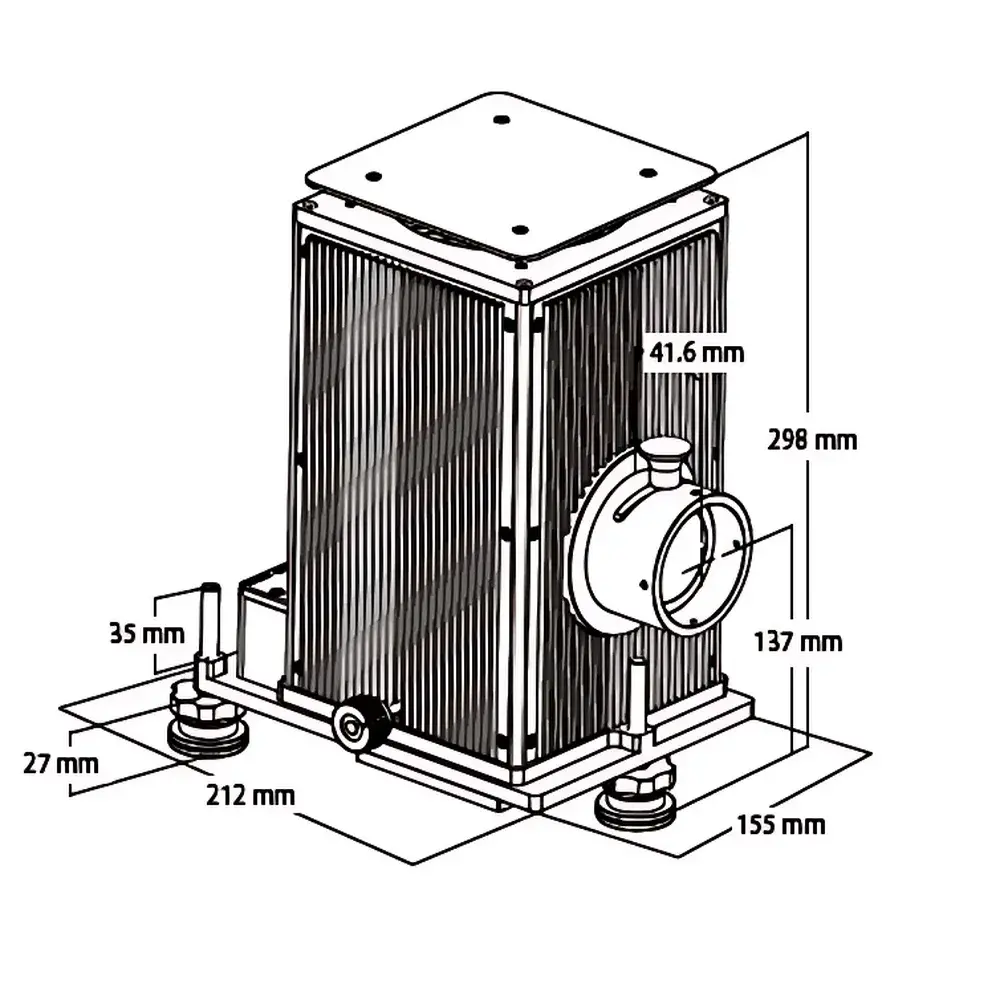
| Collimated Beam Diameter | 46 mm |
| Adjustable Optical Height Range | 137–173 mm |
| Spectral Range (with LSB-X150AUV lamp) | 200–2500 nm |
| Lamp Cooling | Forced-air convection via integrated fan |
| Reflector Design | Rear-mounted elliptical reflector (60% collection efficiency gain) |
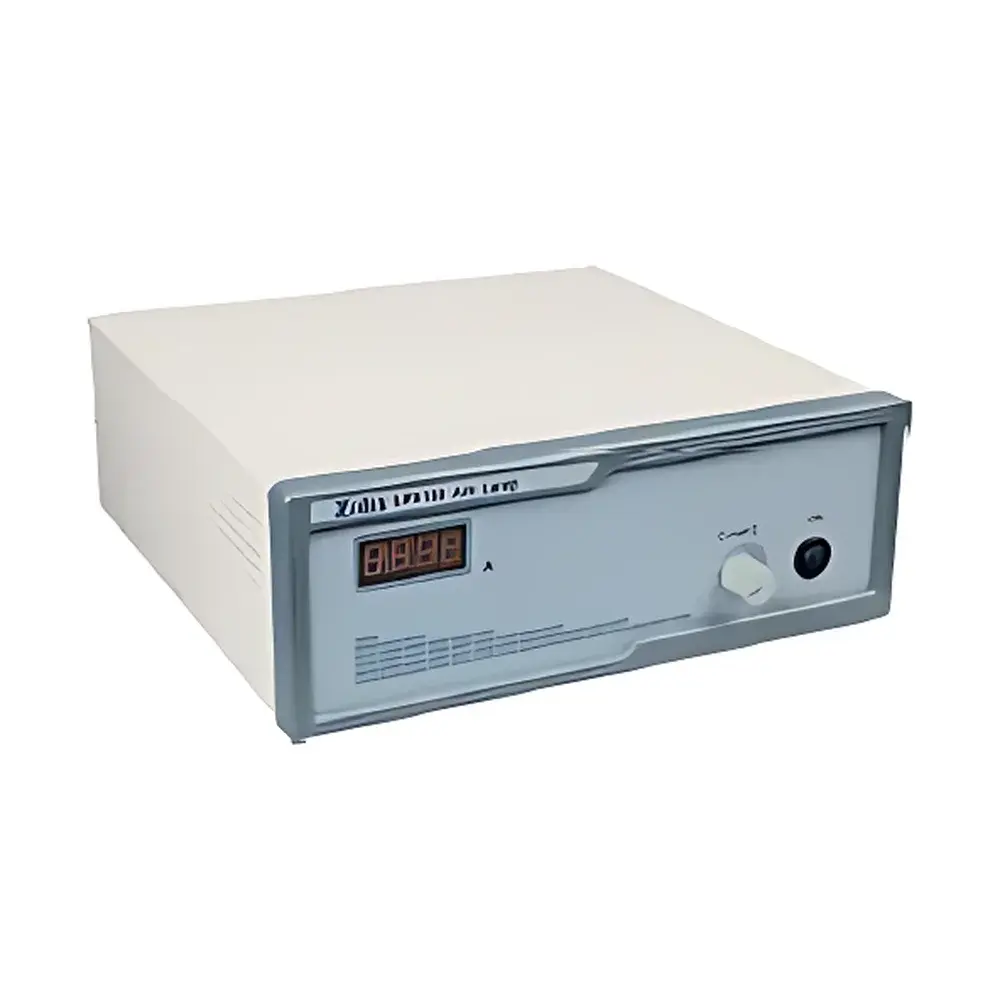
| Current Stability | ≤0.5% RMS fluctuation |
| Ignition | High-voltage pulse trigger (≥25 kV) |
| Lamp Positioning | External fine-adjustment knob for filament alignment |
| Safety Compliance | CE-marked enclosure, interlocked lamp chamber, UV/IR shielding compatible |
Overview
The ZOLIX GLORIA-X150A is a precision-engineered 150W short-arc xenon lamp light source designed for demanding optical laboratory applications requiring high radiance, broad spectral continuity, and long-term photometric stability. Based on the fundamental principle of high-pressure DC arc discharge in pure xenon gas, the system generates an intense, near-point-source emission with color temperature ≈6000 K—spectrally approximating natural sunlight across the ultraviolet (UV), visible (VIS), and near-infrared (NIR) regions. The lamp operates under stabilized DC current supplied by a low-ripple (<0.5% RMS) constant-current power supply, minimizing arc wander and intensity drift—critical parameters for quantitative spectroscopic, photochemical, and calibration workflows. Its collimated 46 mm output beam enables direct coupling to monochromators, spectrophotometers, fluorescence microscopes, and solar simulators without intermediate optics. The source integrates a rear-mounted elliptical reflector that enhances radiant flux collection efficiency by 60% compared to conventional front-reflector configurations, while maintaining spatial coherence and beam uniformity.
Key Features
- Stable 150W DC-powered short-arc xenon lamp with <0.5% RMS optical output instability over 8-hour continuous operation
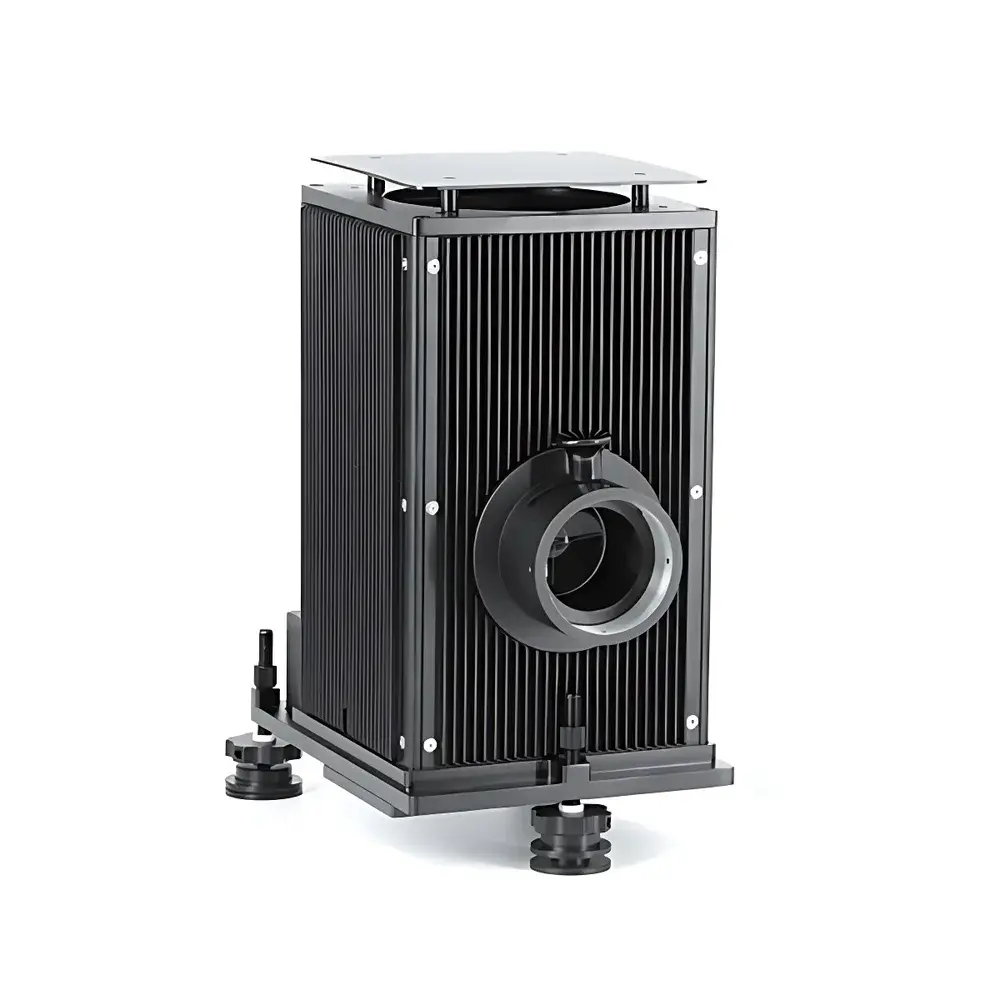
- Modular lamp chamber with external filament positioning control—enabling precise alignment to fiber couplers, entrance slits, or optical benches
- Integrated forced-air cooling system with thermally optimized airflow path—prevents thermal lensing, suppresses air turbulence-induced beam jitter, and extends lamp lifetime
- Rear elliptical reflector geometry maximizing photon collection from the small arc plasma (typical dimensions: 0.5 × 1.6 mm for LSB-X150AUV)
- High-voltage ignition module delivering ≥25 kV pulses with sub-microsecond rise time—ensuring reliable cold-start ignition and consistent arc establishment
- Adjustable optical height (137–173 mm) via mechanical leveling feet for seamless integration into multi-component optical trains
- Interlocked lamp housing with safety cutoff circuitry—prevents operation with cover open and mitigates UV/IR exposure hazards
Sample Compatibility & Compliance
The GLORIA-X150A supports interchangeable lamp types—including standard (LSB-X150), ozone-free visible/NIR (LSB-X150AOF), and UV-enhanced (LSB-X150AUV, 200–2500 nm)—all sharing identical mechanical and electrical interfaces. When equipped with the LSB-X150AUV lamp, the system complies with ISO 9001 manufacturing controls and meets key requirements for UV-sensitive applications per ASTM E2912 (standard practice for solar simulator classification). All units are CE-certified for electromagnetic compatibility (EMC Directive 2014/30/EU) and low-voltage safety (LVD Directive 2014/35/EU). For regulated environments (e.g., pharmaceutical QC labs), optional audit-trail-enabled firmware supports 21 CFR Part 11-compliant operation when paired with ZOLIX’s LabControl Pro software suite.
Software & Data Management
While the GLORIA-X150A operates as a standalone analog instrument, it features RS-232 and analog 0–5 V control interfaces for integration into automated test systems. Optional LabControl Pro v4.2 software provides remote monitoring of lamp voltage, current, operating hours, and thermal status; logs timestamped operational events; and supports scheduled ramp-up/down protocols to minimize thermal shock. All data exports to CSV or HDF5 formats for traceability and GLP/GMP documentation. Firmware updates are delivered via secure HTTPS—ensuring continued compliance with evolving IEC 61000-4 immunity standards.
Applications
- UV-Vis-NIR spectrophotometry calibration and reference light source for NIST-traceable absorbance measurements
- Excitation source for steady-state and time-resolved fluorescence spectroscopy (e.g., quantum yield determination, FRET assays)
- Irradiance standard in photobiological safety testing (IEC 62471) and solar cell EQE characterization
- Primary illumination for hyperspectral imaging systems requiring broadband spectral fidelity
- Accelerated weathering and material degradation studies under simulated solar spectra
- Optical component transmittance/reflectance mapping using integrating sphere setups
FAQ
What is the recommended warm-up time before photometric measurements?
Allow ≥15 minutes after ignition for thermal equilibrium; output stabilizes to ±0.3% after 20 minutes.
Can the GLORIA-X150A be used with liquid light guides or fiber bundles?
Yes—its 46 mm collimated output is optimized for coupling to 10–25 mm diameter liquid light guides or SMA905-terminated multimode fibers.
Is ozone generation a concern with the UV-enhanced lamp option?
The LSB-X150AUV lamp emits below 200 nm where ozone forms; use only in ventilated enclosures or with active ozone exhaust ducting.
How does current adjustment compensate for lamp aging?
As electrode erosion reduces efficacy (~30% loss over rated life), increasing drive current within the 7.5–8.5 A range maintains constant radiant exitance—per manufacturer’s lifetime optimization protocol.
What maintenance intervals are required for optimal performance?
Clean reflector surface quarterly with spectroscopic-grade methanol; replace air filter every 500 operating hours; inspect lamp envelope for devitrification annually.





