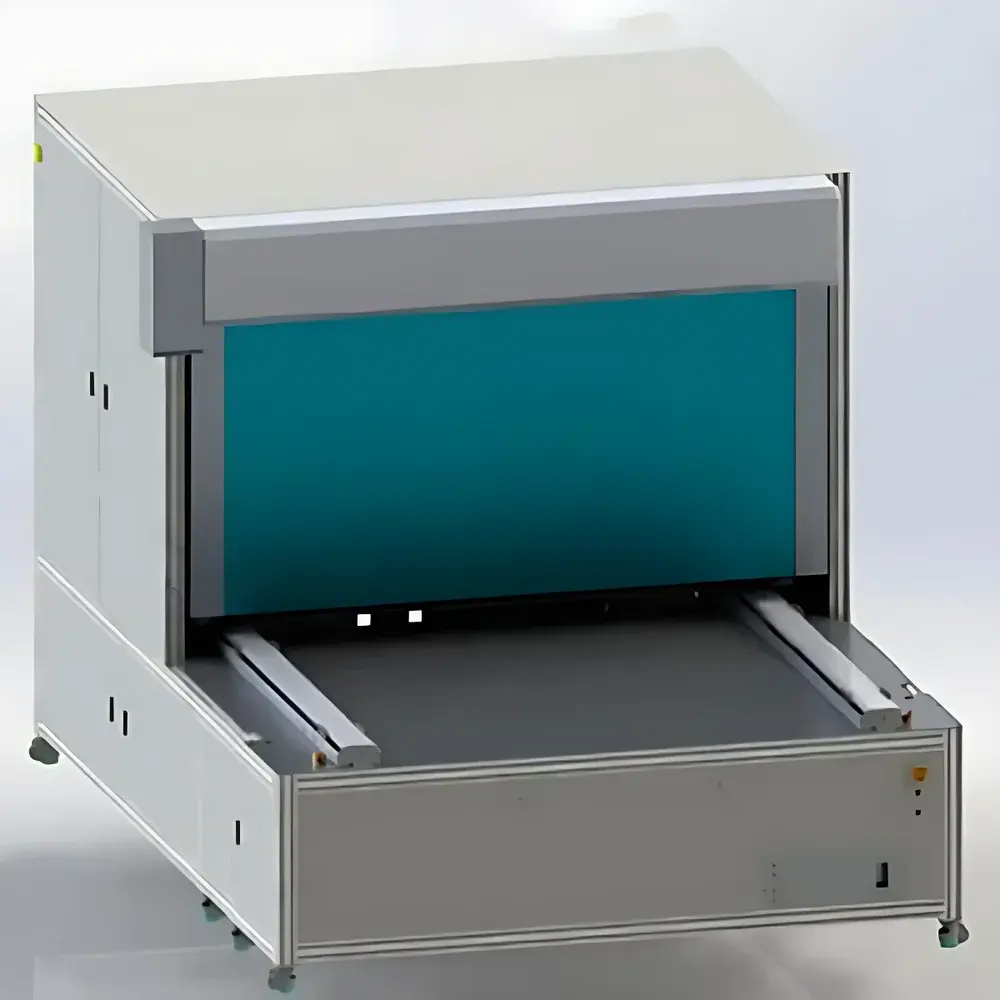
ZOLIX HUD Automated Inspection System
| Brand | ZOLIX |
|---|---|
| Origin | Beijing, China |
| Manufacturer Type | Authorized Distributor |
| Product Origin | Domestic (China) |
| Model | HUD |
| Price Range | USD 7,000 – 70,000 |
| Motion Accuracy | ±0.01 mm linear, <0.1° angular |
| Measurement Parameters | Luminance uniformity, reflection-induced optical distortion (refractive/reflective aberration), luminance (cd/m²), chromaticity deviation at image center (CIE x,y), chromaticity uniformity across FOV, luminance gain factor, field-of-view (FOV) angular extent, virtual image distance (VID), virtual image contrast ratio |
Overview
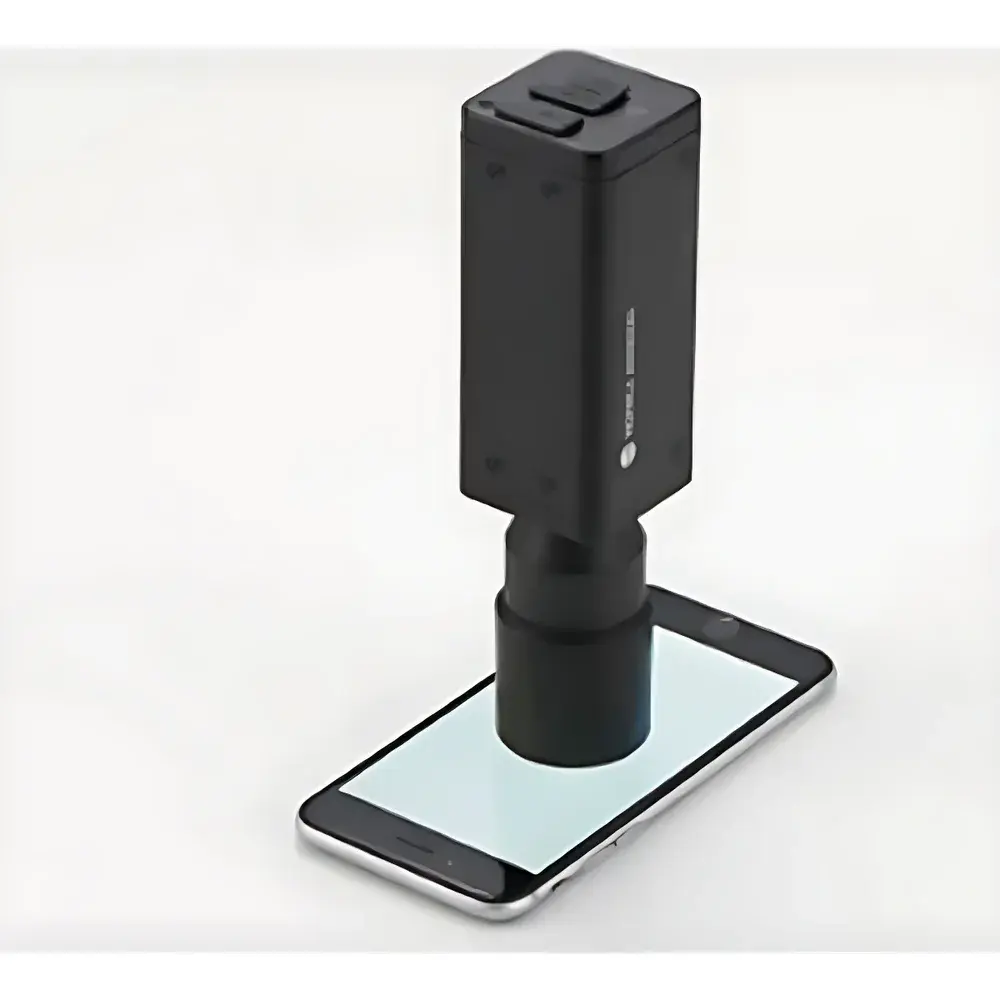
The ZOLIX HUD Automated Inspection System is a turnkey optical metrology platform engineered for quantitative, repeatable evaluation of automotive head-up display (HUD) units during R&D validation and final quality control. It operates on the principle of calibrated imaging photometry and geometric ray-tracing analysis: a high-dynamic-range scientific CMOS camera—mounted on a programmable multi-axis motion stage—captures spatially resolved luminance and chromaticity data from the virtual image projected by the HUD onto a reference plane or combiner surface. Simultaneous motorized positioning enables precise sampling across the full field of view (FOV), while synchronized illumination and dark-box isolation eliminate ambient light interference. The system reconstructs optical performance metrics—including virtual image distance (VID), angular FOV, and reflection-induced geometric distortion—by correlating camera pose, projection geometry, and pixel-level radiometric calibration traceable to NIST-traceable standards.
Key Features
- Multi-degree-of-freedom precision motion architecture: Linear translation accuracy ±0.01 mm; angular rotation resolution <0.1°, enabling sub-pixel registration of HUD virtual image features across variable eyebox positions.
- Modular mechanical interface: Accommodates HUD units ranging from compact combiner-based (e.g., TIR prism) to large windshield-integrated configurations via adjustable mounting fixtures and adaptive alignment routines.
- Full-FOV automated scanning: Motorized goniometric stage supports azimuth/elevation sweeps to emulate driver head movement, capturing luminance and chromaticity maps under realistic viewing angles (±15° horizontal, ±10° vertical).
- Integrated dark enclosure with EMI-shielded interior: Black anodized aluminum chamber with light-tight seals and non-reflective matte surfaces ensures <0.001 cd/m² ambient light rejection—critical for low-contrast virtual image measurement.
- Traceable photometric calibration: Factory-calibrated using standard luminance targets and CIE 1931 colorimetric references; supports user-performed recalibration with optional NIST-traceable reference sources.
Sample Compatibility & Compliance
The system is compatible with all major HUD architectures: combiner-based, windshield-projected (W-HUD), and augmented reality (AR-HUD) units incorporating diffractive waveguides or holographic optical elements (HOEs). It meets foundational requirements of ISO 15008:2017 (Ergonomics of driving — Visual requirements for electronic visual displays), SAE J1757-2 (Head-Up Display Performance Requirements), and supports audit-ready documentation per GLP and ISO/IEC 17025 laboratory accreditation frameworks. All measurement reports include timestamped metadata, instrument configuration logs, and operator ID—enabling full traceability in regulated automotive Tier-1 supplier environments.
Software & Data Management
The proprietary ZOLIX HUD Analysis Suite runs on an embedded industrial PC with real-time Linux OS. It provides scriptable test sequences, automated pass/fail decision logic based on configurable thresholds (e.g., luminance uniformity ≤ ±15%, center chromaticity deviation Δu’v’ ≤ 0.005), and export to CSV, XML, and PDF formats compliant with AIAG Core Tools. Audit trail functionality records every parameter change, measurement trigger, and software update—fully satisfying FDA 21 CFR Part 11 electronic record and signature requirements when deployed in IATF 16949-certified facilities. Raw image datasets are stored in TIFF-64 format with embedded EXIF metadata for third-party reanalysis.
Applications
- Validation of optical design iterations during HUD optical engine development (e.g., collimator lens alignment, combiner curvature optimization).
- Production line end-of-line (EOL) testing for luminance, chromaticity, FOV, and VID consistency across batches.
- Root-cause analysis of reflection-induced distortion (e.g., windscreen-induced keystone or pincushion artifacts) via comparative ray-trace overlay on captured images.
- Support for AR-HUD verification including virtual object registration accuracy, depth perception fidelity, and dynamic focus plane assessment across variable accommodation distances.
- Supplier qualification testing per OEM-specific HUD specification documents (e.g., BMW GS95024, Ford WSS-M99P1111-A).
FAQ
Does the system support calibration against customer-specific HUD reference units?
Yes—custom reference characterization mode allows users to define baseline performance profiles from golden units and perform delta-comparison reporting.
Can the software generate ISO 15008-compliant readability scores?
It calculates luminance contrast ratio, angular size, and background luminance inputs required by Clause 6.3 of ISO 15008; full readability scoring requires integration with external vision modeling tools.
Is remote diagnostics and firmware updates supported?
Yes—via secure TLS-encrypted Ethernet connection; remote access requires prior authorization and adheres to ISO/SAE 21434 cybersecurity guidelines.
What is the typical measurement cycle time for a full FOV scan?
Standard 5×5 angular grid scan completes in ≤ 180 seconds; high-resolution 11×11 grid requires ≤ 420 seconds depending on exposure settings and signal-to-noise requirements.
Are third-party spectral radiometers or gonioscopic accessories compatible?
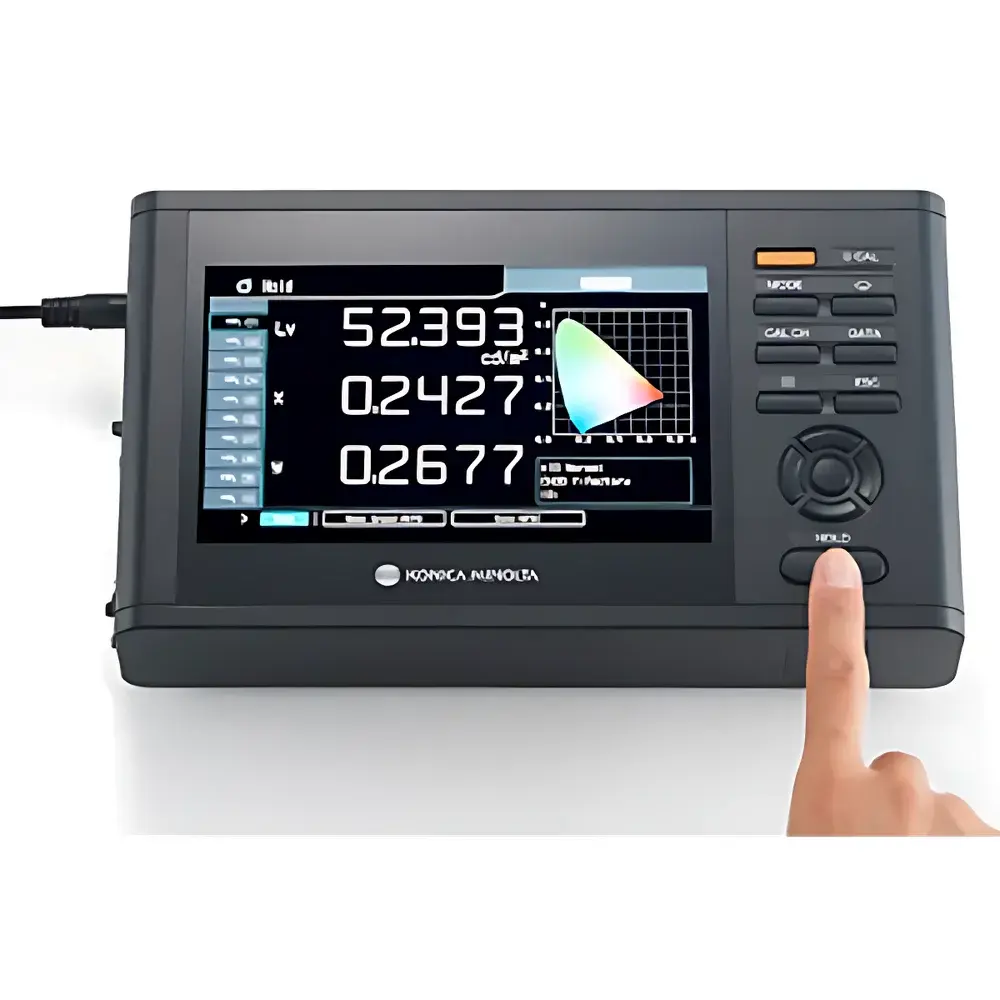
The system includes IEEE 1394 and USB3.0 instrumentation ports; integration with calibrated spectroradiometers (e.g., Konica Minolta CS-2000) is supported via custom API drivers.