
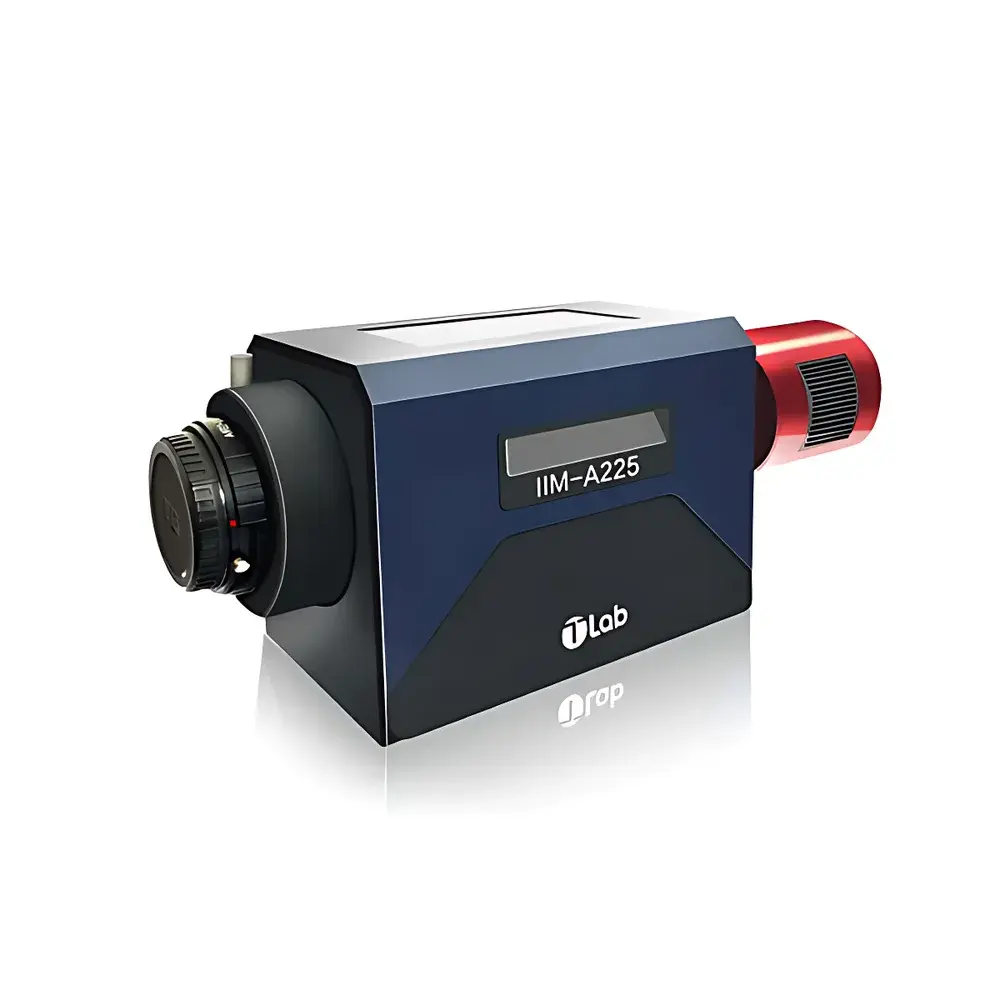
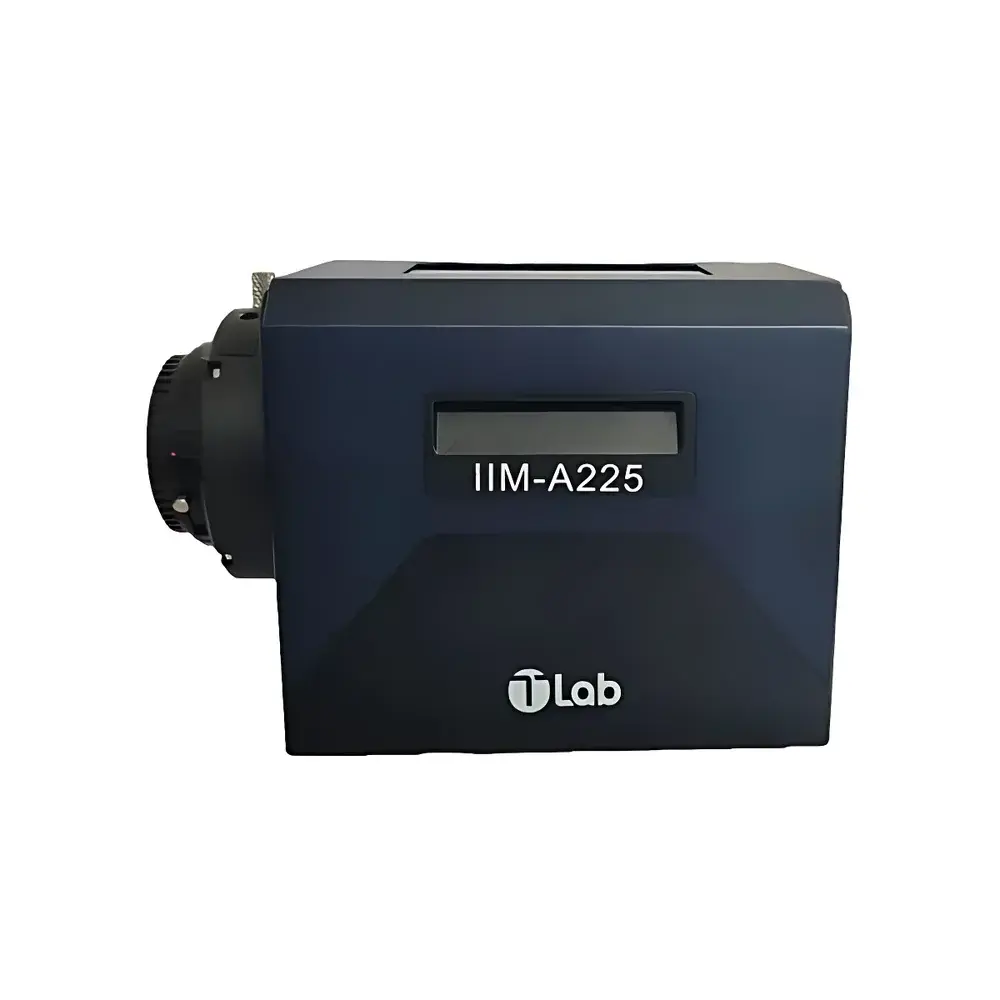
ZOLIX IIM Series Image Intensifier Modules
| Brand | ZOLIX |
|---|---|
| Origin | Beijing, China |
| Manufacturer Type | OEM/ODM Manufacturer |
| Product Origin | Domestic (China) |
| Model | IIM-A125 / IIM-A225 / IIM-B125 / IIM-B225 / IIM-C125 / IIM-C225 |
| Pricing | Upon Request |
| Cathode Diameter | 25 mm |
| Photocathode Options | S20, Solar-Blind, Bialkali, LNS20, S25 |
| MCP Configuration | Single-Stage (MCP125) or Dual-Stage (MCP225) |
| Phosphor Screen | P20 (high-brightness) or P46 (ultra-fast decay <300 ns) |
| Spatial Resolution | ≥35 lp/mm (MCP125), ≥20 lp/mm (MCP225) |
| Radiant Gain @500 nm | ≥10⁴ W/W (MCP125/P20), ≥2.5×10⁵ W/W (MCP225/P46) |
| Gating Width | Fast mode ≤3 ns, Slow mode ≥50 ns |
| Internal Trigger Frequency Range | 0.01 Hz – 100 kHz |
| External Trigger Frequency Range | 0.01 Hz – 300 kHz |
| Trigger Edge | Selectable rising/falling |
| Relay Lens | 50 mm f/1.0, 1:1 or 2:1 magnification, low-distortion, high-NA design |
| Input/Output Interface | Nikon F-mount (C-mount optional) |
| Control Interface | Integrated touchscreen (IIM-A/B), remote control box (IIM-B), manual knobs (IIM-C) |
| USB 2.0 Remote Desktop Control | Supported (IIM-A/B only) |
| Mechanical Shutter | Integrated, electrically actuated |
| Filter Slot | 25 mm diameter, slide-in type |
| Anode Current Monitoring | Optional real-time readout |
Overview
The ZOLIX IIM Series Image Intensifier Modules are high-performance, vacuum-sealed electro-optical amplification systems engineered for ultra-low-light and time-resolved imaging applications. Based on proximity-focused microchannel plate (MCP) intensifier architecture, the IIM modules operate via photoelectron multiplication: incident photons strike a photocathode (e.g., S20, Bialkali, or solar-blind variants), generating photoelectrons accelerated across a high-voltage potential into an MCP stack where cascaded secondary emission yields signal gains of up to 10⁶. Emitted electrons then impact a phosphor screen (P20 or P46), converting amplified electron flux back into visible light—preserving spatial fidelity while enabling single-photon-level detection. Designed explicitly for integration with scientific cameras—including sCMOS, EMCCD, high-speed CMOS, and spectroscopic CCDs—the IIM series bridges critical sensitivity gaps in transient optical measurement, supporting gate widths down to 3 ns and frame rates exceeding 1 MHz when paired with P46 phosphor and fast-readout sensors. Its modular mechanical architecture ensures compatibility with standard optical train interfaces (Nikon F-mount primary; C-mount available), while maintaining rigorous alignment stability and vacuum integrity over extended operational lifetimes.
Key Features
- 25 mm effective photocathode diameter enabling wide-field coupling with large-aperture collection optics and full-frame camera sensors
- Dual MCP configurations: MCP125 (single-stage) for balanced gain/resolution; MCP225 (dual-stage) for maximum radiant gain (>2.5×10⁵ W/W at 500 nm) and sub-nanosecond temporal response
- Ultra-fast P46 phosphor screen with <300 ns decay time, optimized for high-repetition-rate gated imaging and time-correlated single-photon counting (TCSPC) workflows
- Custom-designed relay lens system: 50 mm focal length, f/1.0, 1:1 or 2:1 magnification options, low geometric distortion (<0.5%), and high transmission across 185–900 nm
- Three mechanically distinct platform variants: IIM-A (benchtop integrated touchscreen), IIM-B (compact remote-control configuration with safety-rated trigger isolation), and IIM-C (minimalist manual operation variant)
- Integrated electrically actuated mechanical shutter and 25 mm filter slot for spectral band selection without external accessories
- Real-time anode current monitoring (optional) for quantitative gain calibration and exposure feedback control
- Fully compliant with vacuum integrity standards per MIL-STD-883 Method 1014.10; hermetically sealed metal-ceramic housing rated for >10-year operational lifetime under continuous gating
Sample Compatibility & Compliance
The IIM modules support direct integration with commercially available scientific imaging platforms including Andor iXon, Hamamatsu ORCA-Fusion BT, PCO.dimax HS4, and Princeton Instruments PI-MAX4 intensified CCD systems. All models conform to ISO 9001:2015 manufacturing protocols and undergo individual vacuum leak testing and photocathode quantum efficiency validation prior to shipment. For regulated environments, the IIM-A/B firmware supports audit-trail logging of all parameter changes (gain, gate width, delay, trigger mode), satisfying GLP/GMP documentation requirements under FDA 21 CFR Part 11 when used with validated acquisition software. The P46 phosphor meets ASTM E1787-20 specifications for fast-decay scintillators, and the S20/S25 photocathodes comply with ISO 11664-5:2019 spectral responsivity definitions. No hazardous substances are employed in construction; RoHS 3 and REACH SVHC declarations are available upon request.
Software & Data Management
IIM-A and IIM-B modules feature embedded ARM-based controllers with native USB 2.0 interface supporting remote desktop control via Windows/Linux host systems. The ZOLIX Intensifier Control Suite (v3.2+) provides GUI-driven access to all hardware parameters—including precise nanosecond-resolution gate width (1 ns step), programmable delay (0–2 s), internal trigger frequency sweep (0.01 Hz–100 kHz), and gain mapping calibration tables. All settings are non-volatile and persist across power cycles. Exported metadata (including timestamped gate parameters, anode current logs, and environmental temperature readings) embed directly into TIFF/ND2/FITS headers, ensuring traceability in automated pipelines. API libraries (C/C++, Python ctypes, MATLAB COM) enable integration with LabVIEW, MATLAB Image Acquisition Toolbox, and custom Python-based acquisition frameworks using OpenCV or PyVISA. Firmware updates are performed via signed binary packages verified through SHA-256 checksum and ECDSA signature validation.
Applications
- Particle Image Velocimetry (PIV): Nanosecond-gated illumination synchronized with double-pulse lasers enables high-fidelity velocity vector field reconstruction in turbulent combustion and aerodynamic flows
- Laser-Induced Fluorescence (LIF): Sub-microsecond gating suppresses background thermal emission during flame chemiluminescence studies, improving species-specific signal-to-noise ratio by >40 dB
- Plasma diagnostics: Time-resolved imaging of transient discharge structures in pulsed plasma thrusters and dielectric barrier discharges at repetition rates up to 300 kHz
- Single-molecule fluorescence microscopy: Integration with TIRF or HILO illumination paths achieves photon-limited localization precision <15 nm with minimal photobleaching
- Astronomical adaptive optics wavefront sensing: Low-noise, high-dynamic-range detection of faint guide stars under moonlit sky conditions (limiting magnitude ~18.5)
- Bioluminescence tomography: Quantitative reconstruction of deep-tissue luciferase expression patterns in murine models using spectral unmixing with P20/P46 dual-screen configurations
- Ultrafast spectroscopy: Coupling to Czerny–Turner spectrometers enables time-stamped spectral acquisition with 10 ps temporal resolution when combined with streak camera triggers
FAQ
What is the minimum detectable photon flux supported by the IIM series?
The system achieves single-photon detection capability under optimal conditions (P46 + MCP225 + cooled sCMOS), with dark count rates <0.002 e⁻/pixel/s at −25°C sensor temperature.
Can the IIM module be used with fiber-optic input instead of free-space F-mount coupling?
Yes—custom fiber-optic taper adapters (1:1 or 2:1) are available for direct coupling to fused silica or UV-grade multimode fibers (core Ø 200–1000 µm).
Is vacuum maintenance required by the end user?
No. Each unit is permanently sealed during manufacturing and includes a built-in non-evaporable getter (NEG) that sustains operational vacuum for >10 years without service intervention.
How is synchronization achieved between the IIM gate and external laser sources?
Via SMA-trigger inputs supporting TTL/LVDS logic levels; jitter is <150 ps RMS when driven by calibrated pulse generators meeting IEEE 1139-2008 timing standards.
Does the IIM series support NIST-traceable calibration services?
Yes—ZOLIX offers optional factory calibration against NIST SRM 2032 (photometric standard) and SRM 2068 (phosphor decay standard), delivered with ISO/IEC 17025-accredited certificates.





