
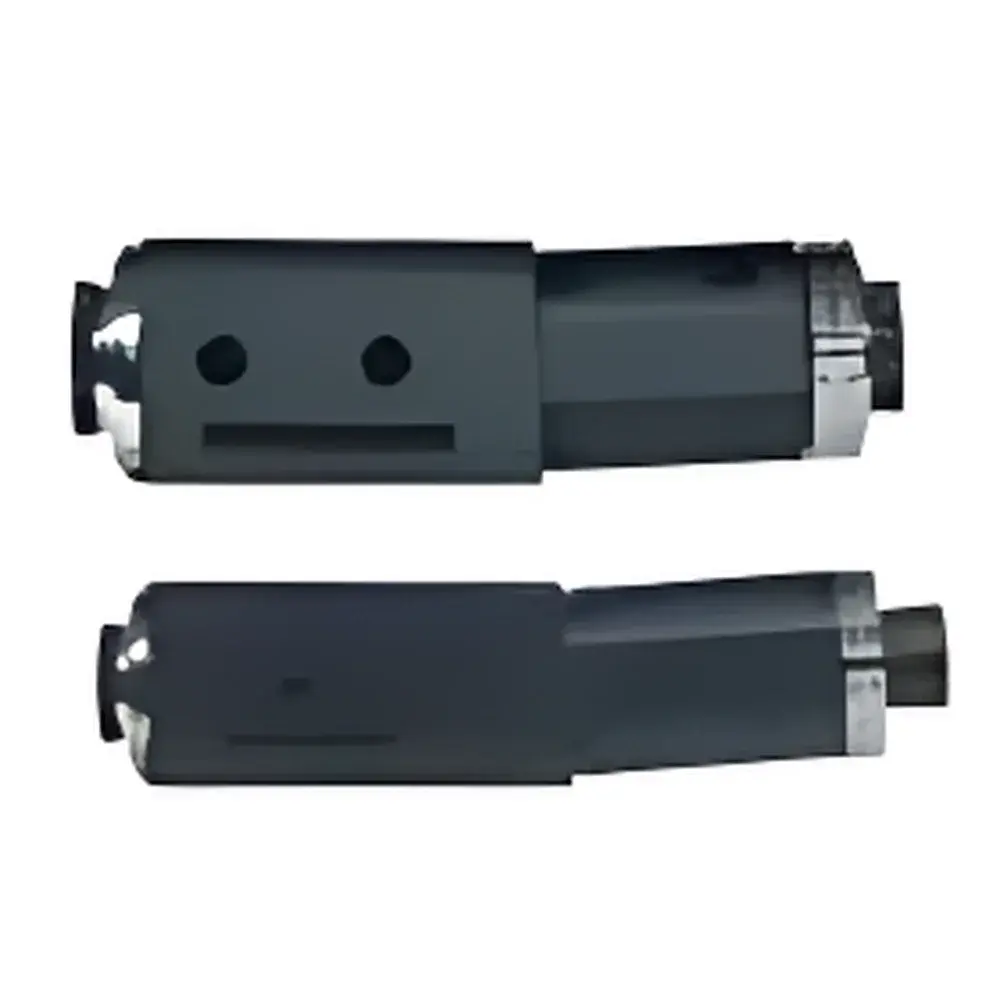
ZOLIX Imspector Series Imaging Spectrometer
| Brand | ZOLIX |
|---|---|
| Model | Imspector Series |
| Type | Grating-Based Imaging Spectrometer |
| Wavelength Ranges | UV (200–400 nm), VIS (380–780 nm), VNIR (400–1000 nm), NIR (900–1700 nm), SWIR (1000–2500 nm), MWIR (3000–5000 nm), LWIR (8000–12000 nm) |
| Detector Interface | Compatible with 2/3″ and larger area array detectors |
| Frame Rate (Fast Version) | Up to 1500 spectra/s |
| Optical Design | Transmissive grating-based, Czerny-Turner or Offner relay architecture (model-dependent) |
| Compliance | Designed for laboratory and field-deployable spectroscopic imaging applications in accordance with ISO 17025-aligned calibration practices |
Overview
The ZOLIX Imspector Series Imaging Spectrometer is a high-performance, grating-based spectroscopic imaging platform engineered for spatially resolved spectral analysis across ultraviolet (UV), visible (VIS), near-infrared (VNIR), short-wave infrared (SWIR), mid-wave infrared (MWIR), and long-wave infrared (LWIR) spectral regions. Unlike conventional point-scanning spectrometers, the Imspector acquires full two-dimensional spatial-spectral datacubes (x, y, λ) in a single exposure via push-broom or snapshot imaging modalities—enabling pixel-level spectral fingerprinting without mechanical scanning. Its optical architecture employs precision transmissive diffraction gratings in conjunction with optimized relay optics, delivering high throughput and minimal aberration across model variants. Each configuration is purpose-built for distinct operational requirements: standard models prioritize compactness and integration flexibility; enhanced versions emphasize optical fidelity and spatial resolution; fast variants support dynamic process monitoring; and thermal infrared variants incorporate cooled MCT or InSb focal plane arrays for low-noise MWIR/LWIR detection. The system operates on first-principles of dispersive spectroscopy, where incident light is collimated, diffracted by a ruled or holographic grating, and reimaged onto a 2D detector such that one axis encodes spatial information and the orthogonal axis encodes spectral information.
Key Features
- Modular wavelength coverage: Seven dedicated spectral bands—from deep UV (200 nm) to far-IR (12 µm)—each optimized for detector quantum efficiency, grating blaze angle, and optical coating transmission.
- Scalable optical interface: Supports standard C-mount and F-mount lenses; compatible with 2/3″, 1″, and larger scientific CMOS/CCD/InSb/MCT detectors for trade-off adjustment between field-of-view, spatial sampling, and signal-to-noise ratio.
- Low-distortion imaging optics: Enhanced models utilize aspheric relay elements and telecentric designs to suppress keystone and smile distortion—critical for quantitative hyperspectral unmixing and chemometric modeling.
- High-speed acquisition capability: Fast10 variant achieves up to 1500 line spectra per second with hardware-triggered synchronization, suitable for real-time industrial sorting, combustion diagnostics, or laser-induced breakdown spectroscopy (LIBS) imaging.
- Thermal IR readiness: LWIR and MWIR configurations integrate thermoelectric or liquid-nitrogen-cooled detectors with dewar housings, meeting background-limited performance requirements per ASTM E1985 and ISO 18564 standards.
- Robust mechanical construction: Aluminum alloy chassis with precision-machined optical mounts ensures thermal stability and repeatability under laboratory and mobile deployment conditions.
Sample Compatibility & Compliance
The Imspector series accommodates diverse sample geometries—including reflective surfaces, transmitted thin films, biological tissues, particulate streams, and remote scenes—via interchangeable fore-optics (e.g., prism lenses, fiber-coupled input, or telescope interfaces). All models support NIST-traceable spectral calibration using Hg/Ar/Ne emission lamps or calibrated reflectance standards. Data acquisition workflows comply with GLP and GMP documentation requirements when paired with optional audit-trail-enabled software modules. System validation adheres to ISO/IEC 17025 guidelines for spectral instrument calibration, including wavelength accuracy (±0.2 nm typical in VIS), radiometric linearity (>99.5% over 4-decade dynamic range), and spatial uniformity testing per ISO 15739.
Software & Data Management
ZOLIX provides the SpectraView Suite—a cross-platform application supporting real-time preview, spectral cube export (ENVI .hdr/.dat, HDF5, TIFF stack), and batch processing via Python API. The software implements dark-current subtraction, flat-field correction, geometric rectification, and spectral resampling algorithms. For regulated environments, optional FDA 21 CFR Part 11-compliant modules provide electronic signatures, role-based access control, and immutable audit logs. Raw data conforms to FAIR principles (Findable, Accessible, Interoperable, Reusable), with metadata embedded per the Spectral Data Interchange Format (SDIF) specification.
Applications
- Remote sensing and environmental monitoring: Vegetation stress assessment (NDVI, PRI), mineral mapping, atmospheric gas profiling.
- Pharmaceutical QA/QC: Tablet coating uniformity analysis, counterfeit drug detection via spectral library matching.
- Materials science: Bandgap mapping of perovskite solar cells, defect identification in semiconductor wafers.
- Food safety: Detection of mycotoxins, adulterants, and spoilage indicators through characteristic absorption features.
- Defense & security: Camouflage detection, explosive residue identification, and standoff chemical threat sensing.
- Biomedical research: Label-free histopathology, retinal oximetry, and fluorescence lifetime spectral unmixing.
FAQ
What spectral calibration standards are supported?
NIST-traceable Hg, Ar, and Ne emission lamps; certified reflectance standards (e.g., Spectralon®); user-defined custom calibrations with polynomial or spline fitting.
Can the Imspector be integrated into an automated production line?
Yes—RS-232, USB 3.0, and GigE Vision interfaces enable synchronization with PLCs, motion controllers, and industrial cameras; SDKs available for C++, Python, and LabVIEW.
Is radiometric calibration included with purchase?
Factory radiometric calibration is provided for VIS/VNIR models; MWIR/LWIR systems include optional NIST-traceable blackbody calibration kits.
How is stray light managed in broadband operation?
Multi-stage order-sorting filters (e.g., VBG, dielectric edge filters) and optimized grating groove density minimize overlapping diffraction orders; software-based order correction algorithms are included.
What maintenance is required for long-term wavelength stability?
Annual verification against reference sources is recommended; no routine optical alignment is needed due to monolithic optomechanical design and athermalized mounting.






