
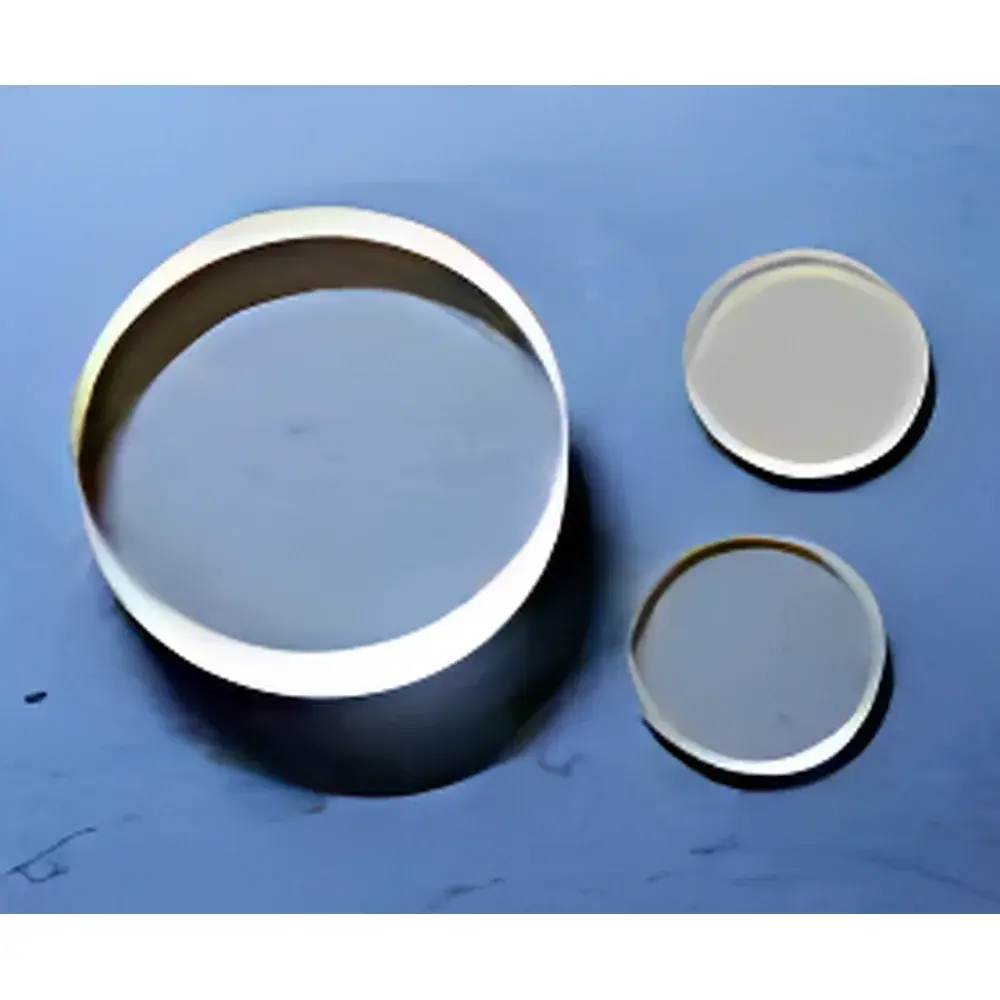
ZOLIX Laser Windows and Ground Glass Optics
| Key | Brand: ZOLIX |
|---|---|
| Origin | Beijing, China |
| Manufacturer Type | OEM/ODM Manufacturer |
| Origin Category | Domestic (China) |
| Model Range | OGW11, OGW12, OGW21, OGW22, OMD Series |
| Pricing | Upon Request |
Overview
ZOLIX Laser Windows and Ground Glass Optics are precision-engineered optical components designed for demanding laser systems, spectroscopic instrumentation, and optical alignment applications. These components serve two distinct yet complementary functions: (1) laser windows provide hermetic, low-distortion transmission surfaces for beam containment, environmental isolation, and pressure/vacuum sealing; and (2) ground glass diffusers enable controlled beam homogenization, spatial intensity redistribution, and speckle reduction in illumination paths. All windows are fabricated from optically homogeneous, stress-relieved substrates—either precision-annealed K9 (BK7) borosilicate crown glass or UV-grade fused silica—and manufactured to stringent surface figure, parallelism, and scratch-dig specifications per ISO 10110-7. The measurement principle governing performance relies on wavefront fidelity preservation: minimal deviation from ideal plane-parallel geometry ensures negligible beam deviation (<1 arcsecond typical), while high surface quality minimizes scatter-induced loss and ghost reflections critical in interferometric and cavity-based systems.
Key Features
- Material Options: Dual-substrate architecture—K9 (BK7) for cost-optimized visible–NIR applications (330–2100 nm), and synthetic fused silica for extended UV–IR transmission (185–2500 nm), ultra-low thermal expansion (α ≈ 0.54 × 10⁻⁶ K⁻¹), and superior laser-induced damage threshold (LIDT).
- Precision Tolerancing: Two accuracy tiers: Standard Precision (λ/2 @ 633 nm surface flatness, <1 arcmin parallelism, 3–4 scratch-dig) and High Precision (λ/10 @ 633 nm surface flatness, <10 arcsec parallelism, 1–2 scratch-dig), enabling selection based on system-level wavefront error budgets.
- Geometric Flexibility: Circular windows available in diameters from 20 mm to 120 mm; square/rectangular ground glass options up to 120 × 120 mm; thicknesses scalable from 2 mm to 10 mm to accommodate mechanical mounting constraints and thermal load distribution.
- Surface Engineering: Ground glass variants feature controlled matte-side roughness characterized by standardized grit-number equivalents (e.g., ~220–600 grit), ensuring repeatable Lambertian scattering profiles with minimal backside reflection due to polished counter-surface finish.
- Manufacturing Traceability: Each batch undergoes interferometric verification (Zygo or equivalent), spectral transmittance mapping (200–2500 nm), and dimensional metrology per ISO 10110-1, with full QC documentation available upon request for GLP/GMP-aligned laboratories.
Sample Compatibility & Compliance
ZOLIX optical windows are compatible with continuous-wave (CW) and pulsed laser sources across UV, visible, and NIR bands—including excimer (193 nm, 248 nm), Nd:YAG (1064 nm, 532 nm, 355 nm), Ti:sapphire (700–1000 nm), and fiber laser platforms. All fused silica variants meet ASTM F796-22 requirements for optical grade fused quartz and comply with MIL-O-13830A for surface quality classification. K9 windows conform to ISO 10110-4 for refractive index homogeneity (Δn ≤ ±2 × 10⁻⁶) and are suitable for non-critical vacuum interfaces up to 10⁻⁵ Torr. Neither product line contains RoHS-restricted substances; material certifications (including CoC and REACH SVHC declarations) are supplied with commercial orders.
Software & Data Management
While these passive optical components do not incorporate embedded firmware or software, ZOLIX provides comprehensive digital asset support for integration into optical design workflows. Customers receive native-format Zemax (.ZAR), Code V (.CFG), and ASAP (.ASD) surface models for all standard catalog items, including measured surface error maps and measured transmission spectra. For custom configurations, ZOLIX delivers full metrology reports in PDF and CSV formats—containing interferogram data, spectral transmittance curves, and dimensional inspection records—structured to align with FDA 21 CFR Part 11 audit trail requirements when archived within validated LIMS or PLM systems.
Applications
- Laser cavity end windows and Brewster-angle mounts in solid-state and gas lasers
- Vacuum chamber viewports for in situ process monitoring (e.g., PVD, CVD, plasma etching)
- Beam homogenizers and diffusion plates in machine vision lighting, fluorescence microscopy, and projector optics
- Reference flats and calibration standards in optical testing labs (e.g., autocollimation, Fizeau interferometry)
- UV-transmitting windows in ozone generation, photolithography alignment, and synchrotron beamline instrumentation
- Environmental protection barriers for sensitive detectors (CCD/CMOS sensors, photomultiplier tubes) in outdoor or industrial enclosures
FAQ
What is the maximum recommended laser power density for OGW22-series fused silica windows?
ZOLIX specifies a CW damage threshold of ≥15 J/cm² at 1064 nm (10 ns pulse, 10 Hz, Ø0.5 mm spot) for coated versions; uncoated variants require system-specific LIDT validation per ISO 21254-2. Contact engineering support for application-specific modeling.
Are anti-reflection coatings available as an option?
Yes—single-layer MgF₂, broadband BBAR (400–700 nm, R<0.25% avg), and V-coatings (e.g., 532 nm ±2 nm, R<0.1%) can be applied to any window variant. Coating durability meets MIL-C-48497A Class I specifications.
Can ZOLIX supply windows with custom centration or wedge angles?
Yes—custom wedge (≤10 arcmin), centration tolerance (≤5 µm), and edge treatments (e.g., bevel, chamfer, blackened edges) are available under OEM agreements with minimum order quantities.
Do ground glass diffusers maintain polarization integrity?
No—ground glass introduces depolarization due to randomized scattering. For polarization-preserving diffusion, consider engineered microlens arrays or holographic diffusers instead.
Is ISO 9001 certification applicable to this product line?
Yes—ZOLIX maintains ISO 9001:2015 certification for its entire optical component manufacturing process, including incoming material inspection, CNC grinding/polishing, cleanroom coating, and final metrology.



