
ZOLIX OmniRS Series Modular Confocal Raman Spectroscopy System
| Brand | ZOLIX |
|---|---|
| Origin | Beijing, China |
| Manufacturer Type | Original Equipment Manufacturer (OEM) |
| Product Category | Domestic |
| Model | OmniRS-New |
| Price Range | USD 14,000 – 28,000 |
| Instrument Type | Confocal Micro-Raman Spectrometer |
| Spectral Range | 200–2500 nm |
| Spectral Resolution | 200–4000 cm⁻¹ (typical) |
| Spectral Bandwidth (FWHM) | ≤5 cm⁻¹ |
| Minimum Wavenumber Shift | 5 cm⁻¹ |
| Wavenumber Repeatability | < ±0.1 cm⁻¹ |
Overview
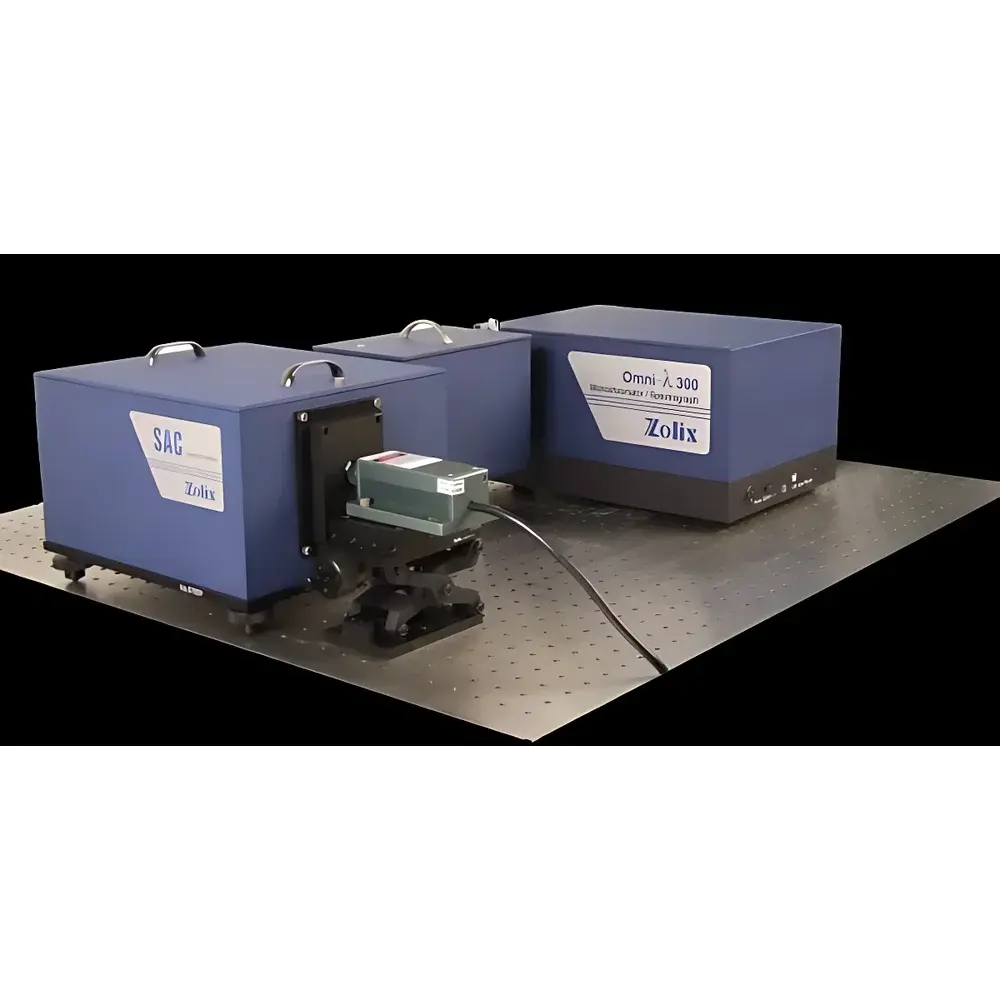
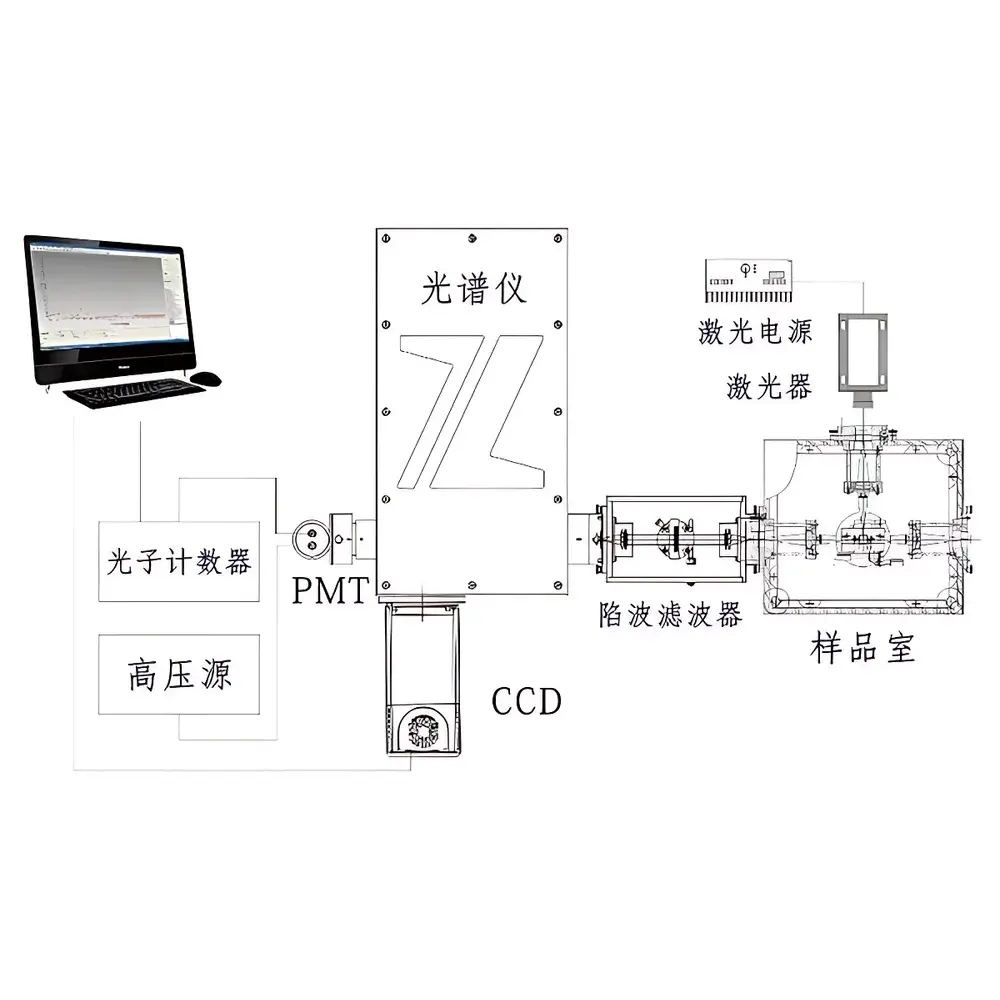
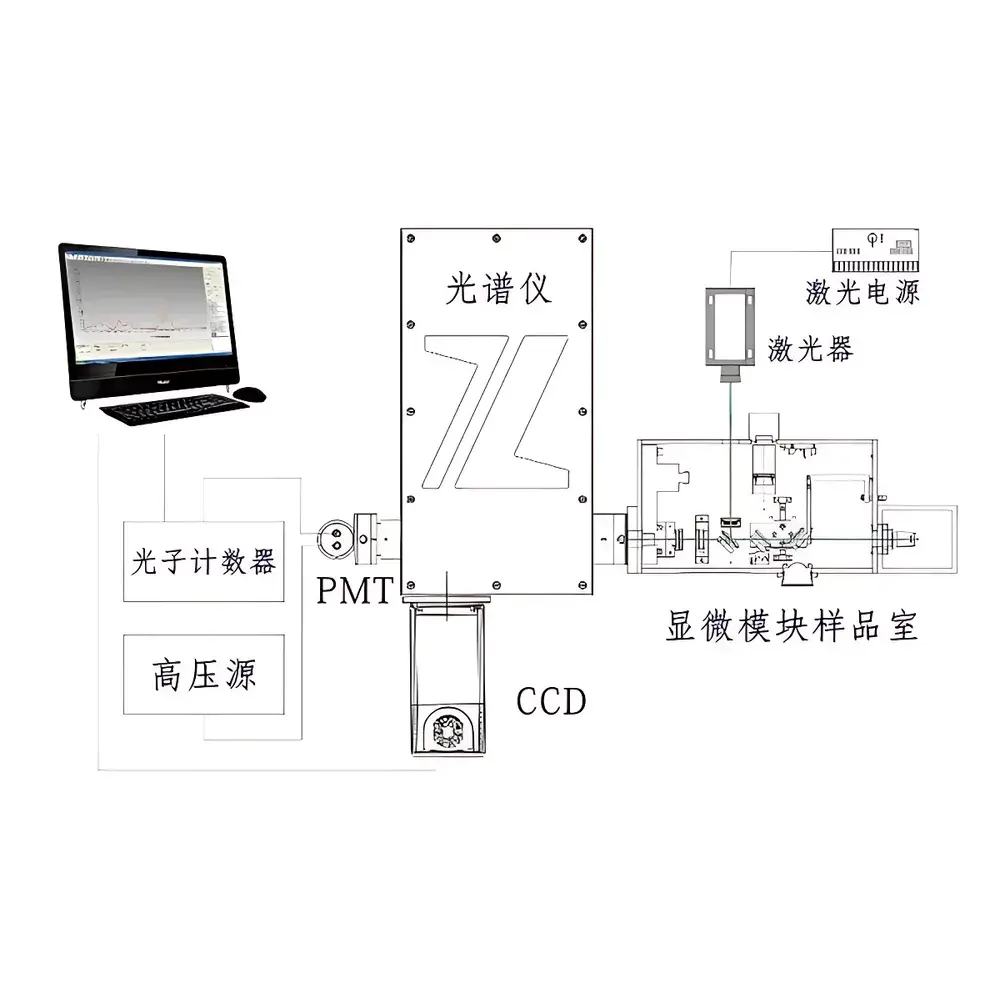
The ZOLIX OmniRS Series Modular Confocal Raman Spectroscopy System is an engineered platform for high-fidelity vibrational spectroscopic analysis based on inelastic light scattering—Raman scattering—under controlled excitation conditions. Designed around a modular optical architecture, the system enables precise configuration of excitation lasers, spectral dispersion units, detection pathways, and sample interfaces to meet diverse experimental requirements in academic research, materials science, pharmaceutical development, and nanotechnology characterization. Its confocal micro-optical design ensures spatial discrimination at the micron scale, suppressing out-of-focus background and enhancing signal-to-noise ratio for heterogeneous or layered samples. The system operates across visible to near-infrared wavelengths (200–2500 nm), supporting multi-laser excitation (e.g., 488 nm, 532 nm, 632.8 nm, 785 nm) with optimized rejection of Rayleigh scattering via high-optical-density notch or edge filters. All core components—including long-focal-length, image-corrected spectrographs with triple-grating turret, thermoelectrically cooled CCD detectors, and precision motorized stages—are selected for metrological stability and long-term reproducibility under laboratory-grade environmental conditions.
Key Features
- Modular architecture enabling flexible integration of excitation sources, spectrometers, detectors, and accessories without hardware redesign
- Confocal micro-Raman configuration with diffraction-limited spatial resolution (≤1 µm lateral, ~2 µm axial) for depth-resolved spectral mapping
- Triple-grating spectrograph (500 mm focal length) with image correction for minimal astigmatism and high throughput across broad spectral ranges
- Cryogenically stabilized CCD detector (2000 × 256 pixels, 200–1100 nm response) with dark current <100 cps and USB 2.0 interface compatibility
- Dual detection options: photon-counting DCS202PC module (5 Mcps max count rate) or analog-integrated CCD readout, selectable per application need
- Standard 532 nm DPSS laser (100 mW, TEM₀₀ mode); optional lasers include 488 nm (Ar⁺), 632.8 nm (HeNe), and 785 nm (diode), each with dedicated filter alignment protocols
- Multi-sample handling support: XYZ-adjustable vertical stage, horizontal liquid cell mount, solid/powder holders, and optional motorized stage for automated raster scanning
Sample Compatibility & Compliance
The OmniRS system accommodates a wide range of physical sample forms—including bulk solids, thin films, powders, colloidal suspensions, biological tissues, and single-crystal wafers—without destructive preparation. Its open optical path allows direct coupling to cryostats, environmental chambers, or electrochemical cells via standardized kinematic mounts. All optical components comply with ISO 10110 surface quality standards; laser safety conforms to IEC 60825-1 Class 3B requirements. Data acquisition and processing workflows are structured to support audit-ready documentation per GLP and GMP guidelines. While not pre-certified for FDA 21 CFR Part 11, the software architecture supports user-defined electronic signatures, time-stamped metadata logging, and immutable raw-data archiving—enabling laboratory-level validation for regulated environments.
Software & Data Management
Control and analysis are executed via ZOLIX’s proprietary RamanSuite software, a Windows-based application developed for scientific rigor and workflow transparency. It provides real-time spectral preview, multi-channel background subtraction (polynomial, SNIP, morphological), peak fitting (Voigt/Gaussian/Lorentzian models), spectral library matching (user-expandable NIST-compatible database), and 2D/3D chemical mapping with coordinate-referenced pixel registration. Raw data files are saved in HDF5 format with embedded calibration metadata (wavelength axis, grating position, laser wavelength, detector temperature), ensuring traceability and interoperability with third-party tools (e.g., Python SciPy, MATLAB, OriginPro). Export options include CSV, ASCII, and JCAMP-DX for archival or cross-platform analysis. No cloud dependency; all processing occurs locally to preserve data sovereignty and confidentiality.
Applications
- Functional group identification and molecular conformation analysis in organic/inorganic compounds
- Stress/strain mapping in semiconductor heterostructures and 2D materials (e.g., graphene, MoS₂)
- Phase quantification and crystallinity assessment in polymers and pharmaceutical co-crystals
- In situ monitoring of electrochemical reactions and catalytic surface processes
- Carbon nanotube chirality distribution profiling via radial breathing mode (RBM) analysis
- Biomedical tissue classification using fingerprint-region (600–1800 cm⁻¹) spectral signatures
- Thin-film thickness and interfacial layer characterization via interference-modulated Raman intensity profiles
FAQ
What laser wavelengths are supported, and how does wavelength selection affect measurement sensitivity?
The system supports 488 nm, 532 nm, 632.8 nm, and 785 nm excitation. Shorter wavelengths (e.g., 488/532 nm) yield higher Raman scattering cross-sections but increase fluorescence interference risk; longer wavelengths (e.g., 785 nm) suppress fluorescence at the cost of reduced signal intensity. Optimal choice depends on sample composition and matrix effects.
Is the system compatible with external environmental control stages?
Yes—standard kinematic flanges and electrical feedthroughs allow integration with cryogenic stages (4–300 K), heating stages (up to 800 °C), or gas/liquid flow cells. Custom mounting adapters are available upon request.
Can spectral calibration be performed in-house, and what reference standards are recommended?
Yes—calibration uses NIST-traceable standards including silicon (520.7 cm⁻¹), cyclohexane (2847 cm⁻¹ C–H stretch), and sulfur (153 cm⁻¹). Software includes automated peak search and polynomial fit routines with residual error reporting.
Does the system support time-resolved or kinetic Raman measurements?
With optional DCS202PC photon-counting module and external TTL triggering, acquisition rates up to 100 spectra/sec are achievable for reaction kinetics or pump-probe experiments.
What maintenance is required for long-term spectral stability?
Annual recalibration of grating angles and detector linearity is recommended. Optical alignment checks should be performed after transport or significant thermal cycling. No consumables are required beyond standard lab-grade laser diodes with >10,000-hour lifetimes.




