
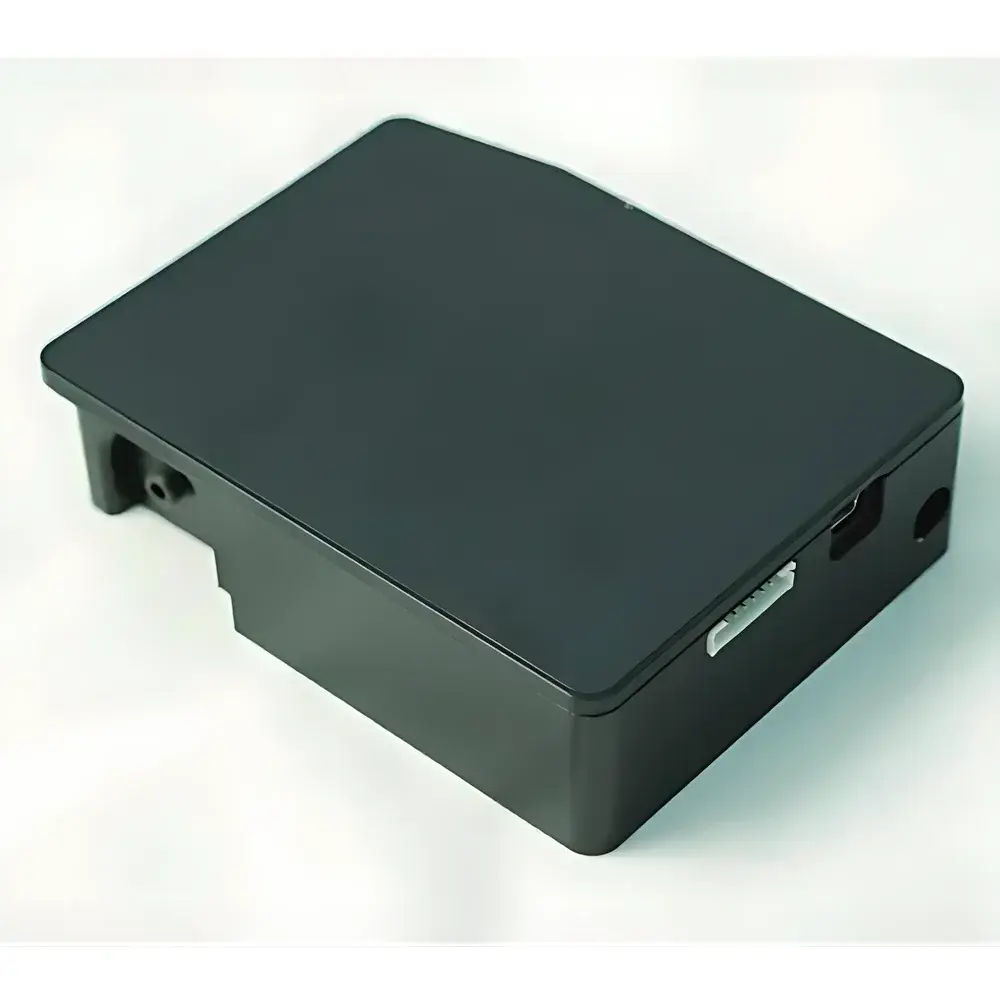
ZOLIX SGM2030 Series Miniature Fiber Optic Spectrometer
| Brand | ZOLIX |
|---|---|
| Origin | Beijing, China |
| Manufacturer Type | Original Equipment Manufacturer (OEM) |
| Detector Type | CMOS |
| Spectral Range | 180–1025 nm |
| Signal-to-Noise Ratio | 330:1 |
| Detector Model | Hamamatsu S11639 (2048-pixel linear CMOS array) |
| Integration Time | 0.2 ms to 65 s |
| A/D Resolution | 16-bit @ 15 MHz |
| Interface | USB 2.0 (480 Mbps, plug-and-play) |
Overview
The ZOLIX SGM2030 Series Miniature Fiber Optic Spectrometer is a compact, high-stability optical measurement instrument engineered for routine ultraviolet (UV), visible (VIS), and near-infrared (NIR) spectral analysis in laboratory, industrial, and field-deployable environments. Based on a fixed-grating Czerny-Turner optical architecture with optimized light path design, the SGM2030 delivers consistent spectral response across its full 180–1025 nm range—spanning deep UV through silicon detector cutoff—without mechanical wavelength scanning. Its monolithic optical bench minimizes alignment drift under thermal cycling or mechanical stress, ensuring long-term wavelength fidelity (< ±0.1 nm thermal shift over 0–40 °C) and intensity reproducibility (RSD < 0.5% over 8-hour continuous operation). The spectrometer’s palm-sized footprint (85 × 60 × 30 mm) and low power consumption (< 500 mW) support seamless integration into OEM analytical platforms, portable sensing systems, and automated process monitoring stations.
Key Features
- High-fidelity spectral acquisition enabled by Hamamatsu S11639 2048-pixel linear CMOS sensor—optimized for UV quantum efficiency (>25% at 200 nm) and low dark current (<10 e⁻/pixel/s at 25 °C)
- Programmable integration time from 0.2 milliseconds to 65 seconds, supporting both transient event capture and low-light signal averaging
- 16-bit analog-to-digital conversion at 15 MHz sampling rate, delivering >72 dB dynamic range and minimal quantization noise
- USB 2.0 high-speed interface (480 Mbps) with vendor-neutral communication protocol—compatible with Windows, Linux, and macOS via standard HID or VCP drivers
- Ruggedized aluminum housing with anodized finish, rated IP50 for dust resistance and qualified for operation in 0–40 °C ambient temperature with ≤80% non-condensing humidity
- Factory-calibrated wavelength and radiometric response traceable to NIST-traceable standards; optional user recalibration kit available
Sample Compatibility & Compliance
The SGM2030 interfaces directly with standard SMA905 fiber optic cables (core diameters: 50–600 µm), enabling flexible coupling to cuvettes, integrating spheres, flow cells, LED/laser sources, and remote probes. It supports compliance-critical workflows through configurable metadata tagging (time stamp, integration time, detector gain, temperature) and audit-ready data export formats (CSV, HDF5, and vendor-neutral JCAMP-DX). While not certified as a medical device, the system meets electromagnetic compatibility requirements per EN 61326-1:2013 and safety standards per IEC 61010-1:2010. Its firmware architecture supports optional GLP/GMP-enabling features—including electronic signature-capable acquisition logs and 21 CFR Part 11-compliant software validation packages upon request.
Software & Data Management
ZOLIX provides the cross-platform SpectraSuite™ SDK (C/C++, Python, LabVIEW, MATLAB APIs) and GUI application for real-time spectral visualization, baseline correction, peak identification, and multivariate calibration (e.g., PLS regression). Raw spectra are stored with embedded EXIF-like headers containing hardware configuration, environmental sensor readings (onboard thermistor), and calibration checksums. Batch processing pipelines support automated QA/QC flagging (e.g., SNR ±0.3 nm), generating ISO/IEC 17025-aligned reports. All data files conform to the ASTM E131-22 standard for spectroscopic terminology and metadata structure.
Applications
- UV-VIS-NIR absorbance and reflectance measurements in pharmaceutical raw material ID (per USP and EP 2.2.25)
- In-line colorimetric monitoring of dye concentrations, catalyst activity, or enzymatic reaction kinetics
- Portable water quality assessment (nitrate, nitrite, organic carbon via UV absorption bands)
- LED and laser diode spectral characterization (FWHM, centroid wavelength, side-mode suppression ratio)
- Biomedical point-of-care prototyping—e.g., hemoglobin oxygen saturation estimation using dual-wavelength ratiometry at 540/575 nm
- Environmental gas sensing via differential optical absorption spectroscopy (DOAS) when paired with broadband deuterium-halogen sources
FAQ
What spectral resolution can be achieved with the SGM2030?
Spectral resolution is configuration-dependent and determined primarily by slit width and grating groove density. Typical FWHM values range from 1.2 nm (with 50 µm slit) to 4.5 nm (with 200 µm slit) across the 180–1025 nm range.
Is external triggering supported?
Yes—the SGM2030 features TTL-compatible trigger input and output ports for synchronization with pulsed light sources, motion stages, or data acquisition systems.
Can the device operate without a PC?
No—the SGM2030 requires host-based control and data streaming via USB; it does not include onboard storage or autonomous logging capability.
Are OEM integration services available?
ZOLIX offers mechanical, electrical, and firmware co-design support—including custom firmware builds, mechanical mounting brackets, and API abstraction layers for embedded Linux platforms.
How often should wavelength calibration be performed?
For GLP-compliant applications, wavelength calibration is recommended before each analytical session or after any significant thermal excursion (>5 °C ambient change); factory calibration remains valid for 12 months under stable lab conditions.




