
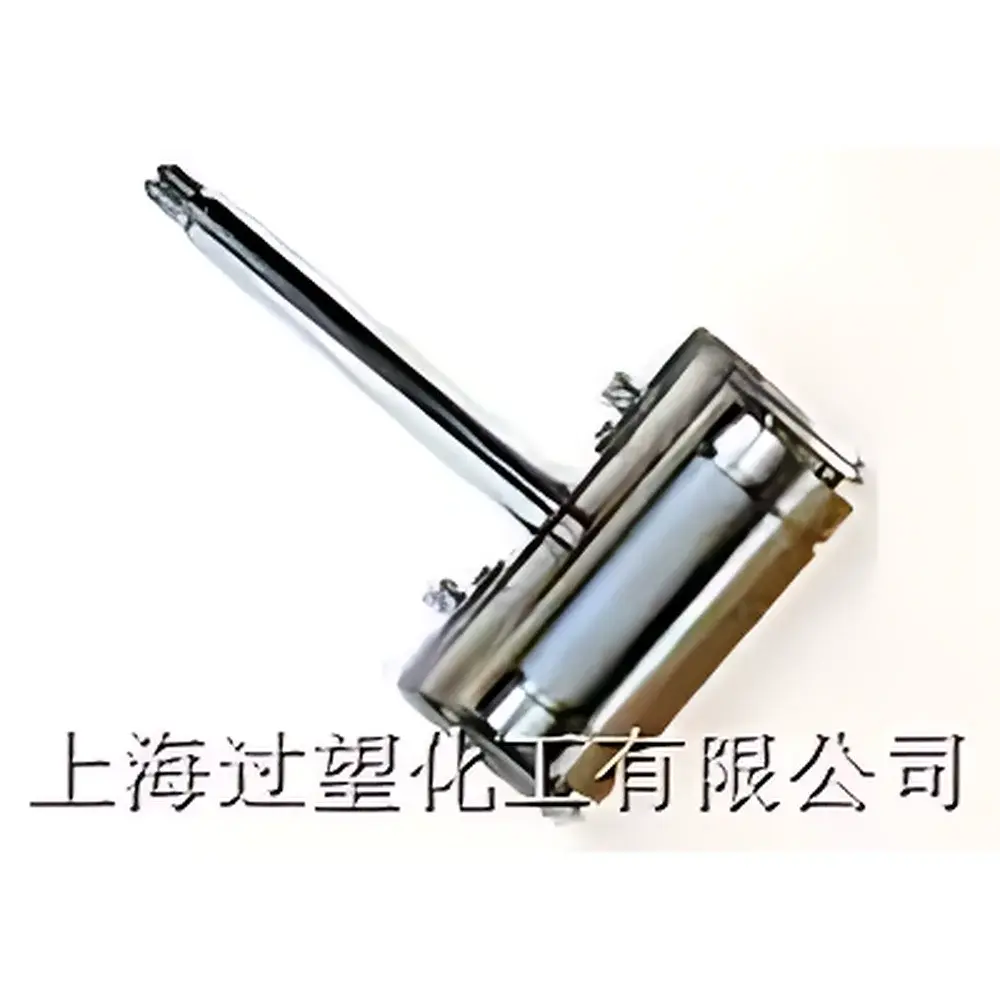
ZS Manual Drawdown Wheel
| Origin | Shanghai, China |
|---|---|
| Manufacturer Type | Distributor |
| Product Origin | Domestic (China) |
| Model | ZS |
| Pricing | Upon Request |
| Print Width | 70 mm |
| Line Count Range | 100–300 lines per inch |
Overview
The ZS Manual Drawdown Wheel is a precision-engineered laboratory tool designed for the controlled, reproducible application of liquid coatings—including gravure inks, flexographic inks, and general-purpose liquid paints—onto standardized substrates. Operating on the principle of fixed-gap drawdown via a calibrated engraved wheel, it enables consistent film thickness generation through mechanical shear and capillary transfer, independent of operator technique. Unlike motorized or automated applicators, this manual instrument delivers high inter-lot repeatability when used under defined environmental conditions (e.g., 23 °C ± 2 °C, 50 % RH ± 5 %), making it suitable for QC screening, formulation development, and comparative evaluation in R&D laboratories and production environments.
Key Features
- Calibrated engraved steel wheel with precisely machined groove geometry, supporting line counts from 100 to 300 lines per inch (lpi), enabling systematic variation of wet film thickness across standard substrate types.
- Fixed print width of 70 mm ensures uniform lateral coverage and compatibility with common test cards, Leneta charts, and ISO-standard coated papers.
- Ergonomic aluminum alloy handle with non-slip grip facilitates steady, low-torque manual rotation—minimizing operator-induced variability during drawdown.
- Modular wheel mounting system allows rapid interchange of wheels with different line counts without recalibration or alignment tools.
- No external power supply or compressed air required; fully portable and suitable for benchtop use in ISO Class 7 cleanrooms or production-floor settings.
Sample Compatibility & Compliance
The ZS Drawdown Wheel accommodates a broad range of Newtonian and mildly non-Newtonian liquid coatings, including solvent-based gravure inks, water-based flexographic formulations, UV-curable resins, and pigment dispersions with viscosity up to 500 mPa·s (measured at 25 °C, 10 s⁻¹ shear rate). Substrate compatibility includes uncoated and coated paper, polyester film (PET), polypropylene (PP), aluminum foil, and glass slides—provided surface energy exceeds 38 mN/m for adequate wetting. The device conforms to ASTM D1347 (Standard Practice for Application of Liquid Coatings Using Drawdown Bars and Wheels), ISO 2808 (Paints and Varnishes — Determination of Film Thickness), and supports GLP-compliant documentation workflows when paired with traceable substrate lot numbers and environmental log entries.
Software & Data Management
As a purely mechanical, non-electronic instrument, the ZS Manual Drawdown Wheel does not incorporate embedded firmware, sensors, or digital interfaces. Its operation requires no software installation, driver configuration, or data export protocols. However, it integrates seamlessly into regulated quality systems: users may record drawdown parameters (wheel lpi, substrate type, ambient temperature/humidity, ink batch ID) in electronic lab notebooks (ELNs) compliant with 21 CFR Part 11, or link results to LIMS via structured CSV templates. Audit trails for calibration verification (per internal SOPs referencing NIST-traceable micrometer measurements of wheel groove depth) are maintained manually or within validated QMS platforms.
Applications
- Routine QC testing of ink consistency and batch-to-batch reproducibility in printing ink manufacturing facilities.
- Formulation optimization of pigment loading, rheology modifiers, and solvent blends by correlating wheel line count with dry film appearance (gloss, mottle, orange peel).
- Substrate adhesion pre-screening prior to full-scale press trials—especially for novel biopolymer films or metallized laminates.
- Accelerated weathering sample preparation where uniform wet-film thickness is critical for UV exposure dose normalization (per ISO 4892-3).
- Educational use in polymer science and graphic arts curricula to demonstrate the relationship between engraved geometry, capillary flow, and final coating morphology.
FAQ
What line count should I select for gravure ink evaluation?
For standard solvent-based gravure inks, begin with 200–250 lpi to approximate typical cylinder engraving depths; adjust downward (150 lpi) for high-viscosity inks or upward (300 lpi) for low-viscosity, high-solids formulations.
Can the wheel be cleaned with aggressive solvents?
Yes—steel wheels tolerate acetone, ethyl acetate, and toluene; however, repeated exposure to chlorinated solvents (e.g., methylene chloride) is not recommended due to potential stress corrosion cracking.
Is traceable calibration available for this instrument?
The wheel itself is not individually certified, but groove depth and pitch can be verified using ISO 17025-accredited metrology services; users should maintain calibration records per internal SOPs aligned with ISO/IEC 17025 Clause 6.5.
Does the device meet FDA requirements for food-contact ink testing?
While the ZS wheel is not FDA-listed, its stainless-steel construction and absence of leachable polymers satisfy material eligibility criteria outlined in FDA 21 CFR §175.300 for indirect food additive applications—subject to end-user validation.



