
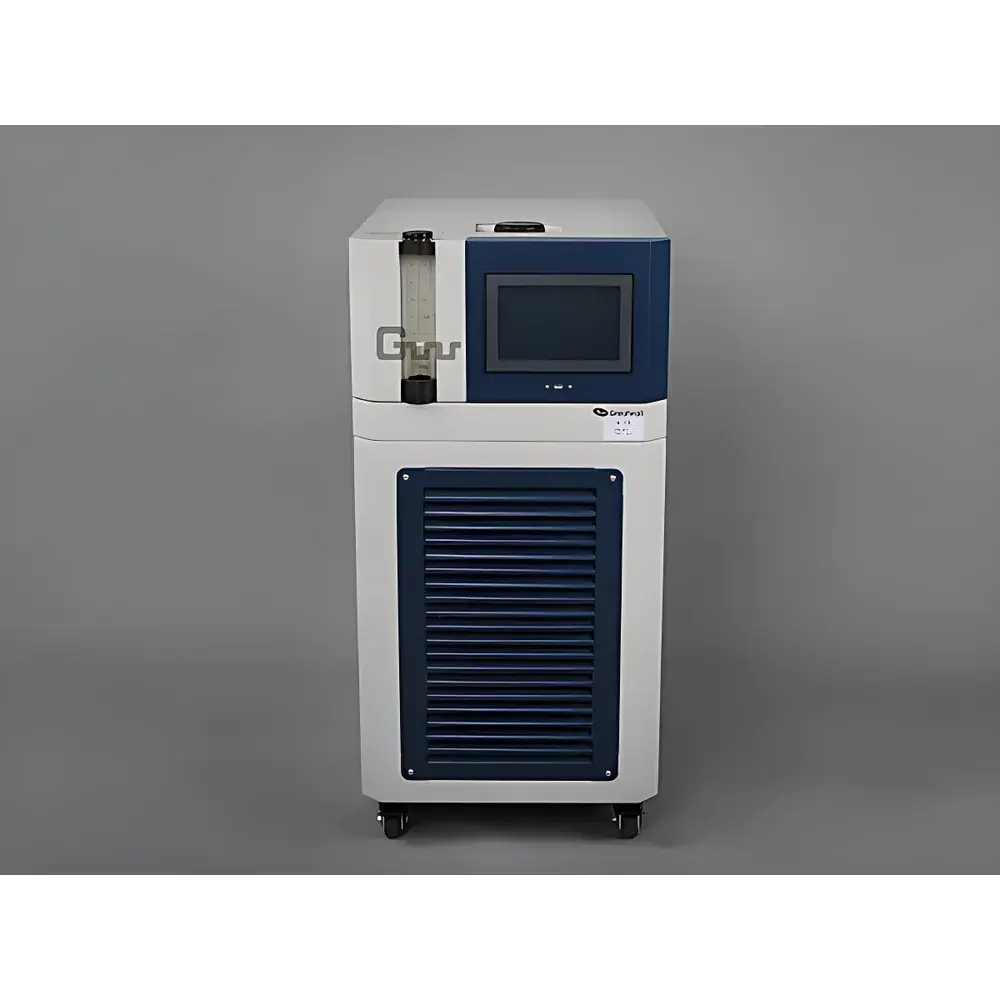
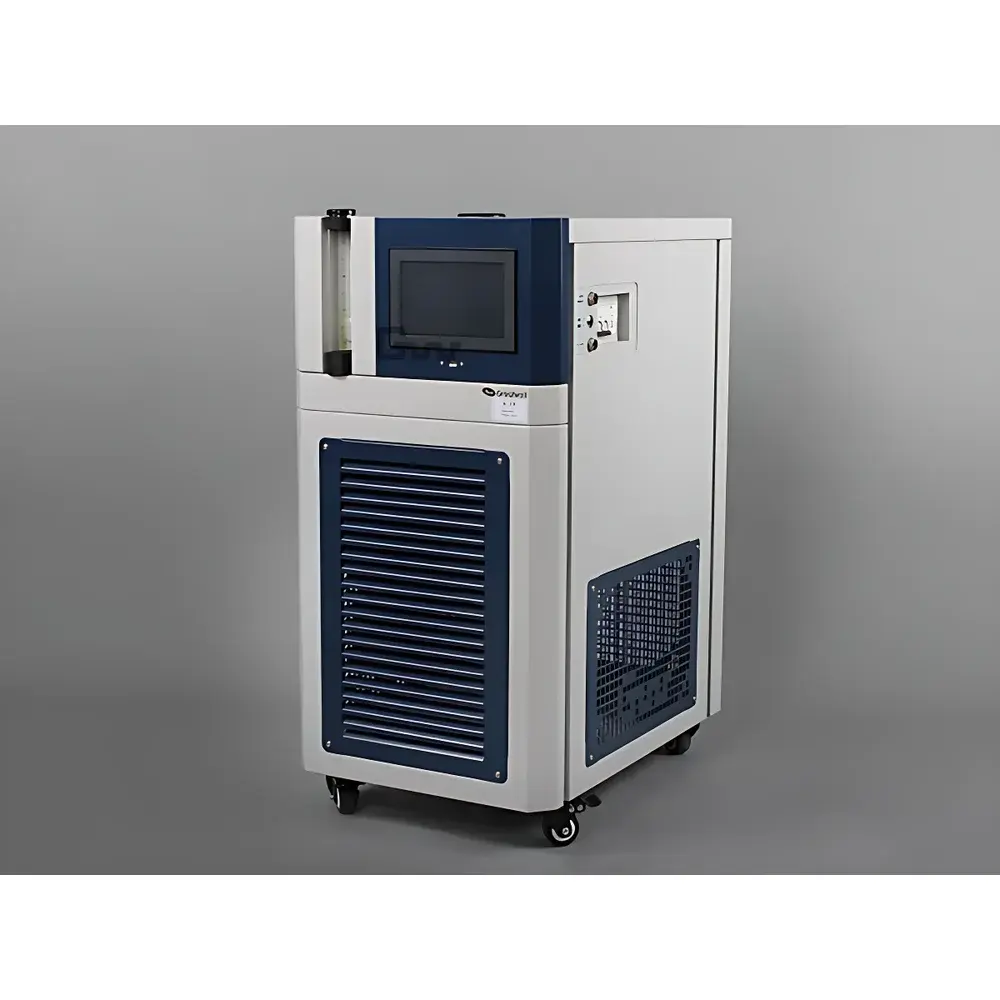
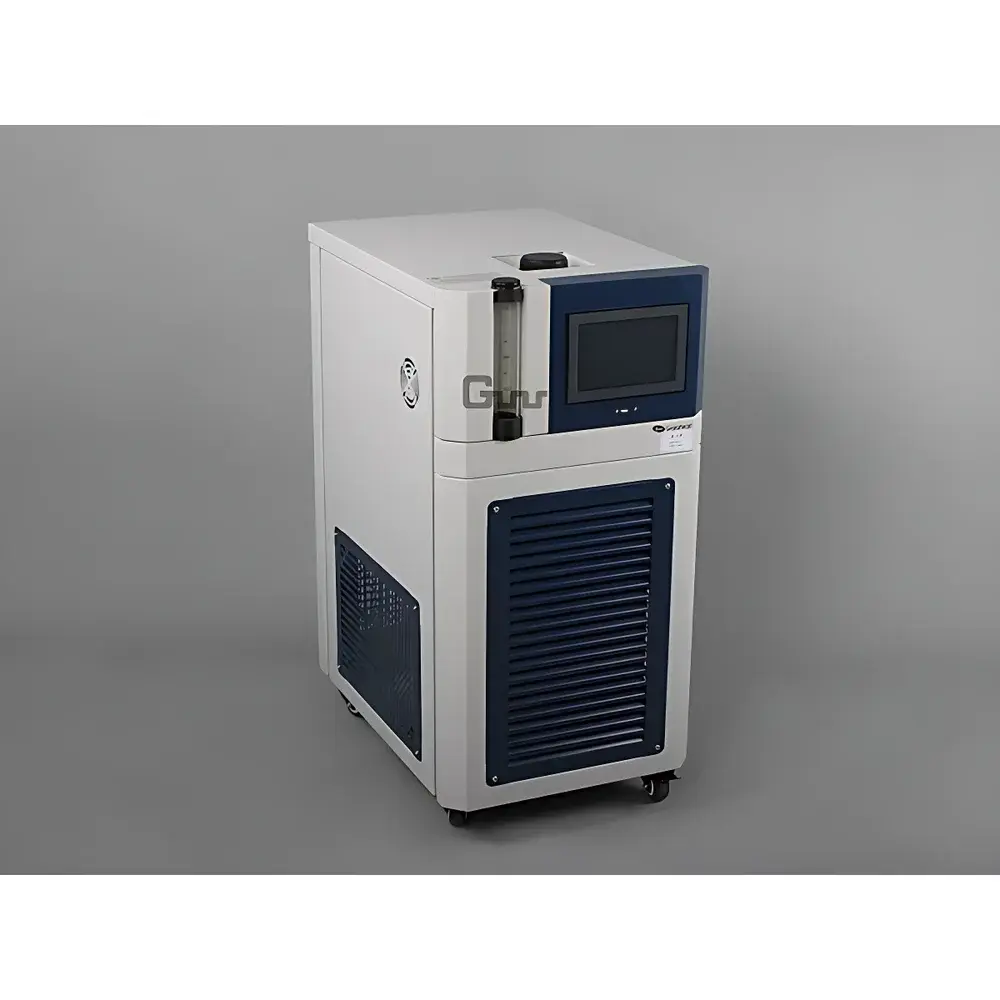
ZT-20-200-30H Closed-Loop Refrigerated & Heated Circulator by The Great Wall
| Brand | The Great Wall |
|---|---|
| Origin | Henan, China |
| Manufacturer Type | OEM Manufacturer |
| Country of Origin | China |
| Model | ZT-20-200-30 |
| Temperature Range | −30 °C to 200 °C |
| Temperature Stability | ±0.5 °C |
| Power Supply | 220–240 V~, 50 Hz |
| Total Power | 4.7 kW |
| Heating Power | 3 kW |
| Cooling Capacity | 1.7 kW @ 200 °C |
| Refrigerant | R22 |
| Bath Fluid Volume | 10 L |
| Pump Flow Rate | 30 L/min |
| Pump Pressure | 1 bar |
| Dimensions (W×D×H) | 580 × 825 × 1370 mm |
| Weight | 172 kg |
Overview
The ZT-20-200-30H Closed-Loop Refrigerated & Heated Circulator is an engineered thermal management system designed for precise, bidirectional temperature control of external laboratory equipment—including jacketed reactors, rotary evaporators, calorimeters, and analytical instrumentation. Operating on a dual-mode thermodynamic cycle, the unit integrates a high-efficiency compressor-based refrigeration circuit with a resistive heating system, enabling seamless transition between cooling and heating without manual intervention. Its closed-loop architecture prevents evaporation, oxidation, or contamination of heat transfer fluid—critical for long-duration reactions, temperature ramping protocols, and sensitive synthesis workflows. With a certified operational range of −30 °C to +200 °C and stability maintained within ±0.5 °C under dynamic load conditions, the ZT-20-200-30H meets the stringent thermal consistency requirements of ISO/IEC 17025-accredited laboratories and GMP-compliant process development environments.
Key Features
- Wide temperature span: −30 °C to 200 °C in a single unit—eliminates need for separate chillers and heaters
- High-flow, low-pulsation circulation pump delivering 30 L/min at 1 bar pressure—ensures uniform thermal distribution across large-volume jackets or multi-point manifolds
- Intelligent dual-circuit control: independent regulation of refrigeration output and heating power enables rapid setpoint acquisition and minimal overshoot
- R22 refrigerant system optimized for reliability and thermal responsiveness in ambient temperatures up to 35 °C
- Stainless steel fluid reservoir and wetted parts compatible with common heat transfer media (e.g., silicone oil, ethylene glycol/water mixtures)
- Integrated safety systems including dry-run protection, overtemperature cutoff, high-pressure shutdown, and refrigerant leak detection
- Optional explosion-proof configuration (ATEX/IECEx compliant) available for Class I, Division 1 hazardous areas
Sample Compatibility & Compliance
The ZT-20-200-30H supports external thermal coupling via standard 1/2″–3/4″ NPT or G-threaded ports, accommodating both rigid and reinforced flexible tubing. It is validated for use with glass-jacketed reactors (up to 50 L volume), falling-film evaporators, and Peltier-cooled spectrometer stages. The unit complies with IEC 61000-6-3 (EMC emissions), IEC 61000-6-2 (immunity), and GB 4793.1–2007 (safety requirements for electrical equipment used in measurement, control, and laboratory use). While not pre-certified to UL or CE for direct EU/US market placement, its design adheres to foundational principles of EN 61010-1 and incorporates hardware-level safeguards aligned with FDA 21 CFR Part 11 data integrity expectations when integrated with compliant software platforms.
Software & Data Management
The circulator features an embedded PID controller with programmable ramp-soak profiles, real-time temperature logging (internal SD card, 30-day buffer), and RS485 Modbus RTU interface for integration into LabView, DeltaV, or SCADA-based monitoring networks. Optional PC software provides remote setpoint adjustment, alarm history export (CSV), and calibration traceability logs—including timestamped entries for parameter changes, fault events, and maintenance interventions. Audit trail functionality satisfies GLP documentation requirements for method validation and equipment qualification (IQ/OQ/PQ). Firmware updates are delivered via secure USB import; no cloud connectivity or proprietary vendor lock-in is implemented.
Applications
- Controlled exothermic/endothermic reaction initiation and quenching in fine chemical synthesis
- Temperature-dependent crystallization studies requiring sub-zero nucleation and gradual annealing
- Accelerated stability testing per ICH Q1A(R3) guidelines using defined thermal stress profiles
- Calibration of infrared thermography systems and reference-grade thermocouples
- Thermal preconditioning of polymer samples prior to DSC or TGA analysis
- Multi-stage extraction protocols in natural product isolation (e.g., cold maceration followed by hot reflux)
FAQ
What is the recommended heat transfer fluid for operation across the full −30 °C to 200 °C range?
Silicone oil (e.g., Dow Corning 200 Fluid, viscosity grade 100 cSt) is validated for continuous use across this span. Ethylene glycol/water blends are acceptable above −10 °C but not recommended below freezing due to increased viscosity and reduced pump efficiency.
Does the unit support external temperature feedback from a reactor’s internal sensor?
Yes—via optional PT100 input channel, enabling cascade control mode where the circulator modulates output based on actual reactor wall or bath temperature rather than its own outlet reading.
Is R22 refrigerant still permissible for new installations in the EU or North America?
R22 is phased out under EU F-Gas Regulation (No. 517/2014) and EPA SNAP rules; however, the ZT-20-200-30H remains serviceable with reclaimed or stockpiled R22. Retrofit kits for R404A or R513A are available upon request for regulatory compliance upgrades.
What maintenance intervals are specified for optimal long-term performance?
Compressor oil inspection every 12 months; refrigerant charge verification every 24 months; pump impeller and seal inspection every 36 months. Full service documentation and OEM spare parts kits are supplied with each unit.
Can the circulator be integrated into a centralized building management system (BMS)?
Yes—through Modbus RTU over RS485, it supports read/write access to setpoints, status registers, alarms, and energy consumption metrics, enabling interoperability with BACnet/IP gateways via protocol conversion.



