
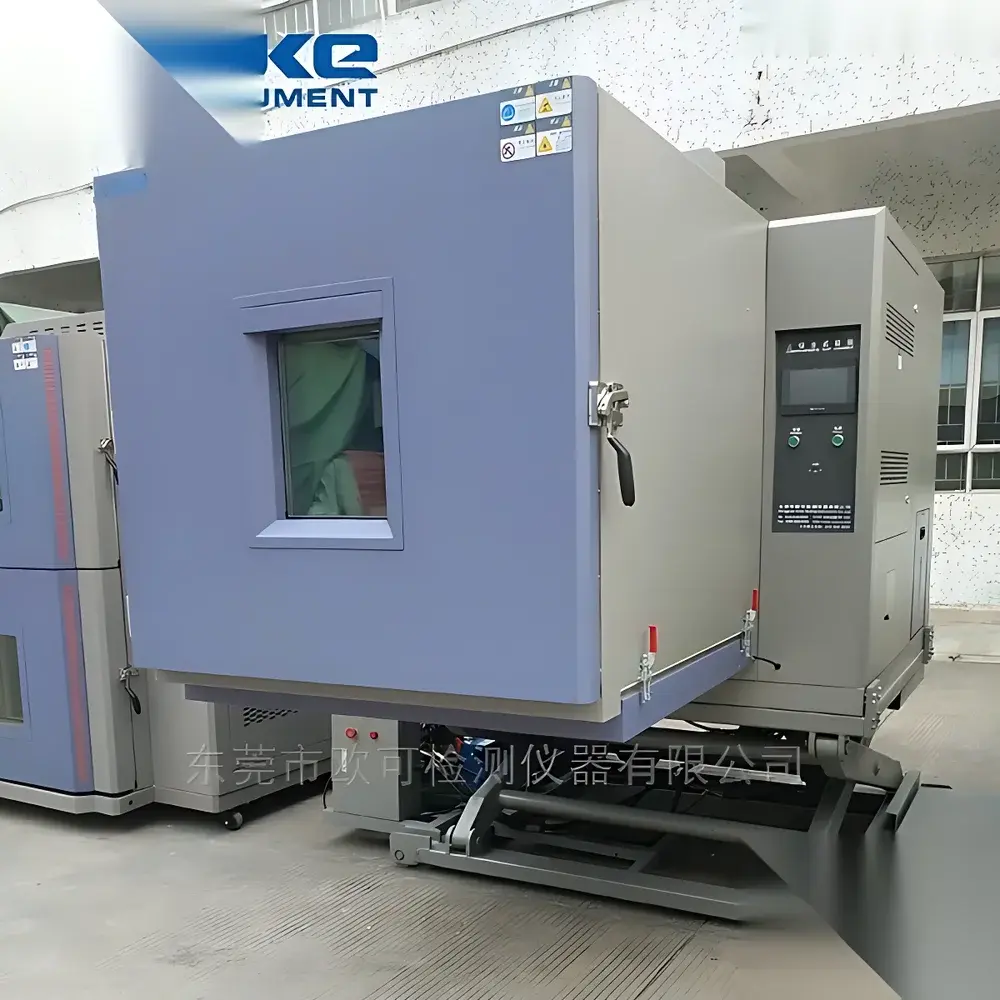
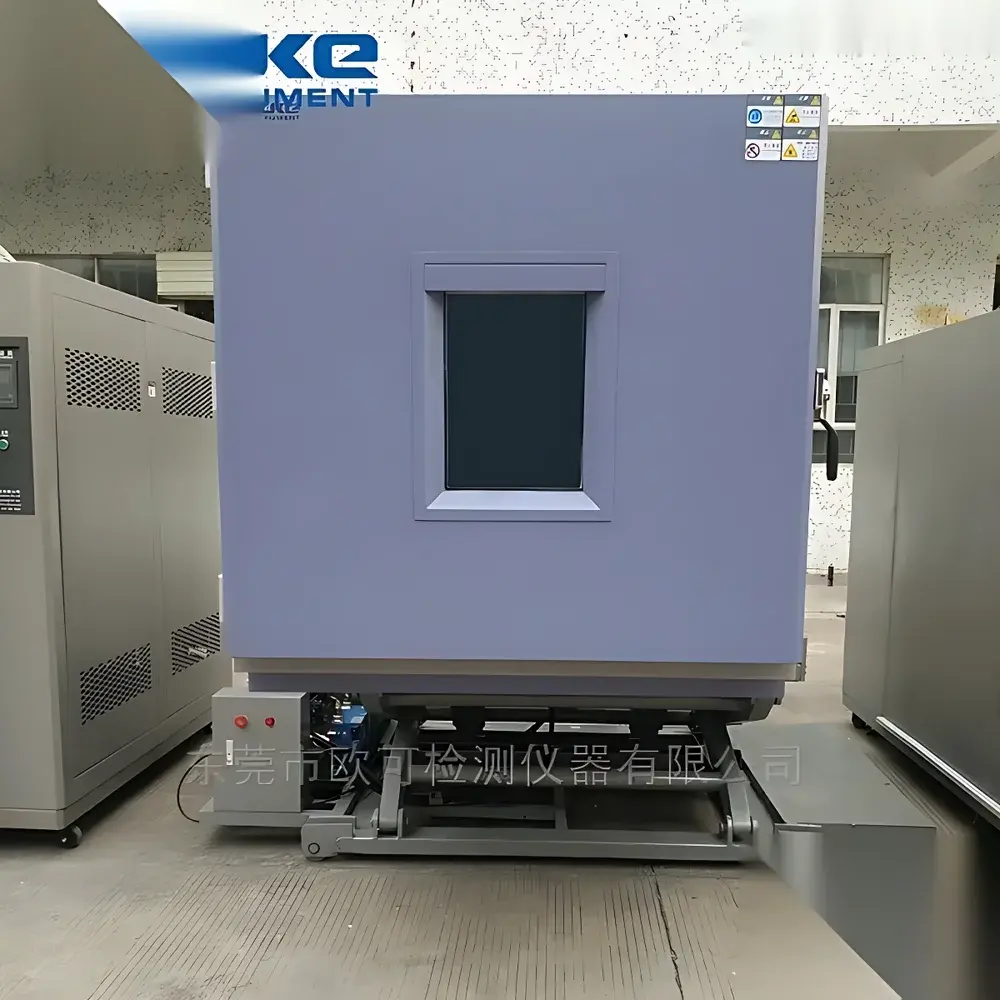
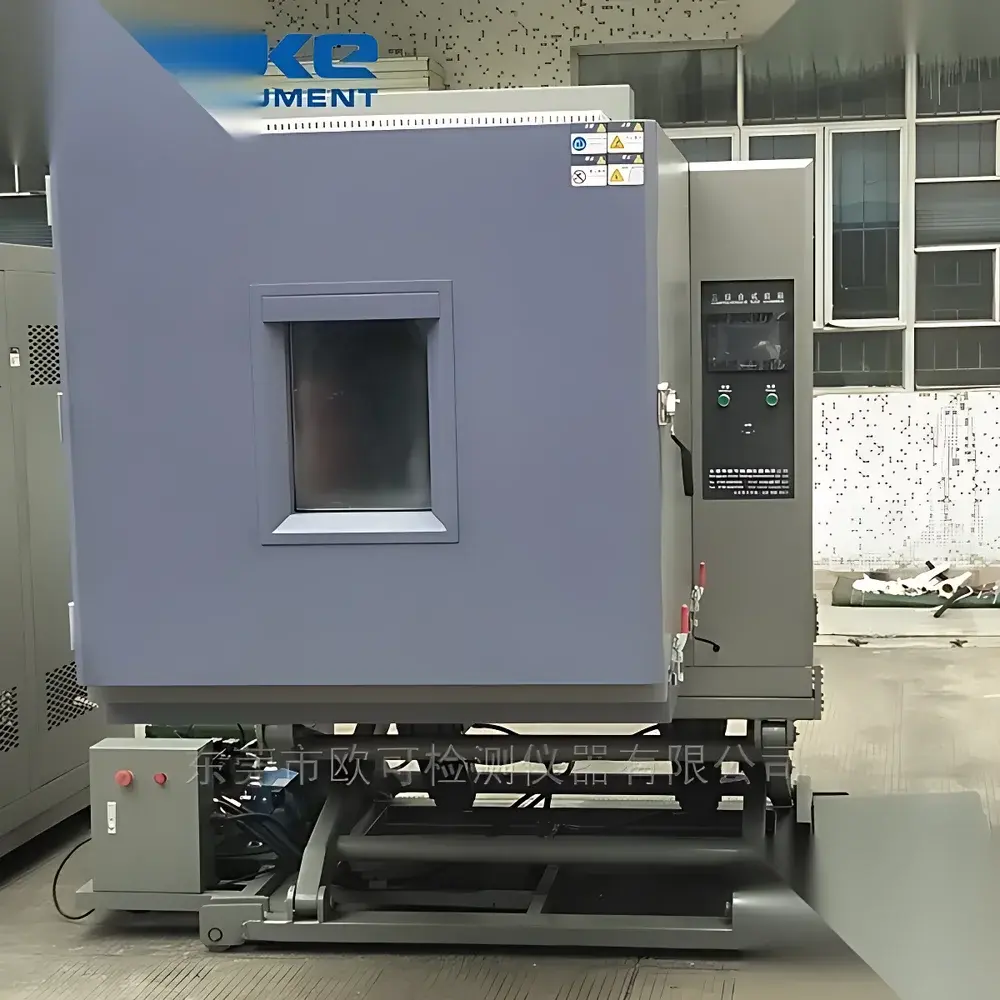
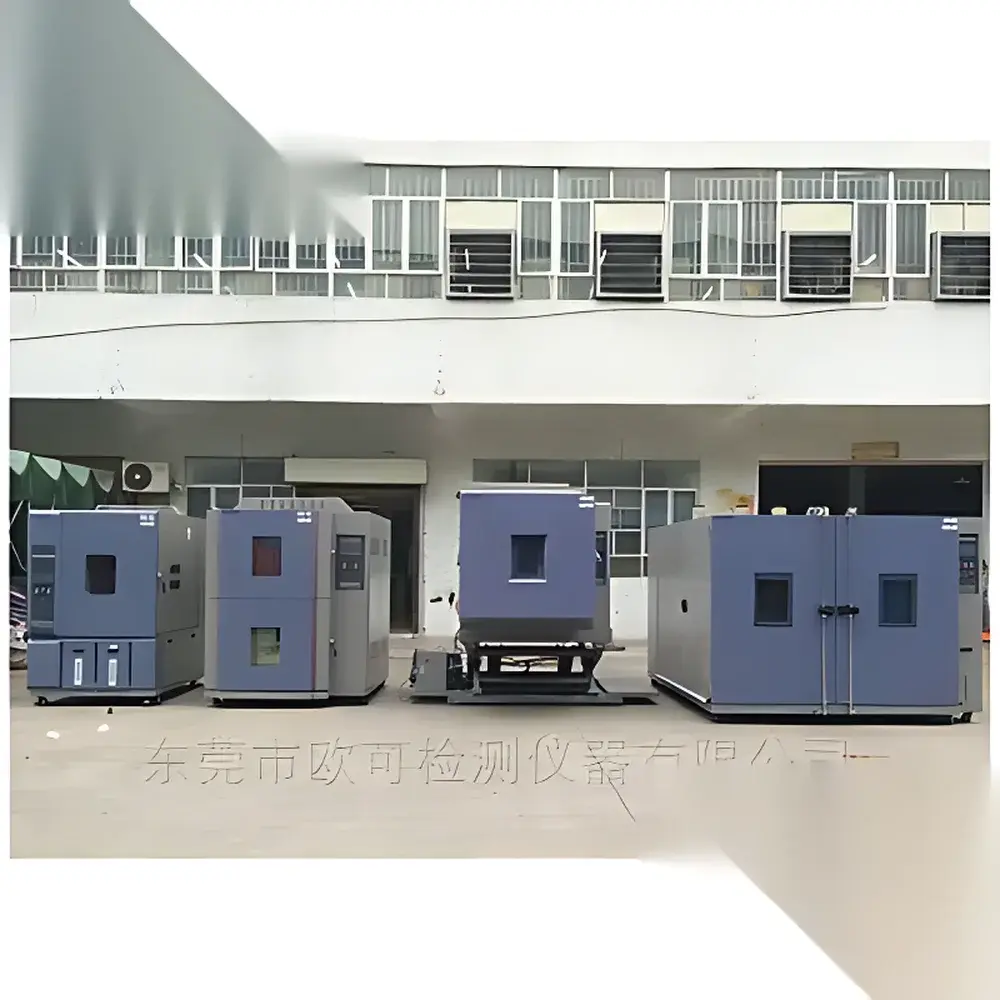
OK-ZTH-1002 Combined Temperature-Humidity-Vibration Environmental Test Chamber
| Brand | OK Instruments |
|---|---|
| Origin | Guangdong, China |
| Manufacturer Type | Direct Manufacturer |
| Country of Origin | China |
| Model | OK-ZTH-1002 |
| Price | USD 21,000 (FOB Guangdong) |
| Temperature Range | −70 °C to +150 °C |
| Humidity Range | 20–98 %RH at 20–85 °C |
| Temperature Ramp Rate | 5 / 10 / 15 °C/min |
| Temperature Uniformity | ≤ ±0.5 °C |
| Standard Load Capacity | 15 kg aluminum mass, 350 W internal heat dissipation |
Overview
The OK-ZTH-1002 Combined Temperature-Humidity-Vibration Environmental Test Chamber is an integrated reliability validation system engineered for synchronized application of thermal, hygric, and mechanical stress stimuli. Unlike sequential or loosely coupled environmental test setups, this chamber implements true concurrent stress imposition—enabling simultaneous control of temperature, relative humidity, and broadband vibration across programmable time profiles. Its operational principle relies on a unified control architecture that coordinates electromagnetic shaker dynamics with precision climate regulation, ensuring phase-aligned stress exposure critical for identifying synergistic failure mechanisms. Designed in accordance with IEC 60068-2 series, MIL-STD-810H, and GB/T 2423 standards, the system supports qualification testing for components and subsystems subjected to real-world transport, storage, and operational environments—including rapid thermal transients, condensation-prone humidity cycles, and road-induced or launch-spectrum vibration.
Key Features
- Triple-stress synchronization engine: Real-time coordination of temperature ramping, humidity modulation, and vibration profile execution (sine sweep, random, shock) within a single test sequence.
- Reinforced structural integration: Climate chamber body constructed with high-strength stainless steel and vibration-damped insulation; reinforced mounting interface between shaker armature and chamber wall.
- Dynamic hermetic transition assembly: Patented motion-compensated sealing system isolates the vibrating armature from chamber interior while maintaining thermal integrity and preventing condensation at the dynamic feedthrough.
- High-fidelity climate subsystem: Twin-stage cascade refrigeration enables stable operation down to −70 °C; PID-controlled steam injection and desiccant-assisted dehumidification deliver precise RH control from 20–98 %RH within 20–85 °C operating band.
- Programmable thermal ramp rates: Selectable 5 °C/min, 10 °C/min, or 15 °C/min linear ramping—calibrated per IEC 60068-3-5 and traceable to NIST-traceable reference sensors.
- Standard load configuration: Optimized for 15 kg aluminum reference mass with 350 W thermal loading capacity—validated for consistent vibration transmission under thermal extremes.
Sample Compatibility & Compliance
The OK-ZTH-1002 accommodates samples up to standard industrial dimensions compatible with its internal chamber volume (custom variants available). It supports mounting fixtures compliant with ISO 10816-1 (vibration severity classification) and ASTM D4728 (shipping vibration simulation). All climate and vibration parameters are documented with metrological traceability per ISO/IEC 17025 requirements. The system meets essential safety and EMC criteria per EN 61000-6-2/-6-4 and is designed to support GLP-compliant test execution when paired with validated software configurations. While not pre-certified for FDA 21 CFR Part 11, its data logging architecture supports audit-ready electronic records when deployed with qualified third-party validation packages.
Software & Data Management
The embedded control platform provides a Windows-based HMI with intuitive drag-and-drop test sequencing, multi-channel real-time waveform overlay (temperature, RH, acceleration, displacement), and synchronized timestamped data export in CSV and TDMS formats. Test profiles adhere to common industry templates including MIL-STD-810H Method 520.4 (combined environments) and IEC 60068-2-68 (damp heat combined with vibration). Optional add-ons include remote monitoring via secure HTTPS API, automated report generation (PDF/Excel), and integration with enterprise LIMS systems through OPC UA. All parameter changes, alarm events, and manual interventions are logged with user ID, timestamp, and reason code—enabling full traceability for internal audits or regulatory review.
Applications
- Automotive electronics: Validation of battery management systems (BMS), ADAS sensors, and powertrain ECUs under thermal cycling + road-spectrum vibration.
- Aerospace avionics: Qualification of flight-critical modules exposed to launch vibration, orbital thermal vacuum transitions, and humidity ingress risks.
- Renewable energy systems: Reliability assessment of photovoltaic inverters, EV onboard chargers, and grid-scale battery enclosures.
- Railway signaling equipment: Testing of trackside controllers and communication units per EN 50125-3 and UIC 550 specifications.
- Industrial IoT devices: Endurance evaluation of edge computing nodes deployed in uncontrolled outdoor or factory-floor environments.
- Defense communications: Verification of ruggedized radios and tactical terminals against combined climatic and mechanical stress per DEF STAN 00-35.
FAQ
What distinguishes “combined” from “sequential” environmental testing?
Combined testing applies all three stress domains—temperature, humidity, and vibration—simultaneously and phase-coherently, revealing interaction-driven failures (e.g., solder joint fatigue accelerated by thermal expansion mismatch under vibration) that sequential tests inherently miss.
Can the system perform HALT or HASS protocols?
No—the OK-ZTH-1002 is optimized for specification-based verification and reliability growth testing per defined environmental profiles. HALT/HASS requires higher acceleration levels, faster thermal excursions, and specialized hardware not integrated into this platform.
Is low-temperature humidity control supported below 0 °C?
The specified humidity range (20–98 %RH) is valid only between 20–85 °C. Below 0 °C, the system operates in dry-freeze mode; RH control is disabled to prevent ice formation on sensors and internal surfaces.
How is vibration performance verified across temperature extremes?
Vibration amplitude and frequency response are characterized at −40 °C, +25 °C, and +85 °C using laser Doppler vibrometry per ISO 10816-3. Calibration certificates document shaker force output, transmissibility, and cross-axis rejection at each thermal setpoint.
What documentation is provided for IQ/OQ/PQ validation?
Standard delivery includes Factory Acceptance Test (FAT) report, calibration certificates for all primary sensors (PT100, capacitive RH, piezoelectric accelerometers), and a comprehensive User Requirements Specification (URS)-aligned validation protocol template suitable for GxP environments.



