
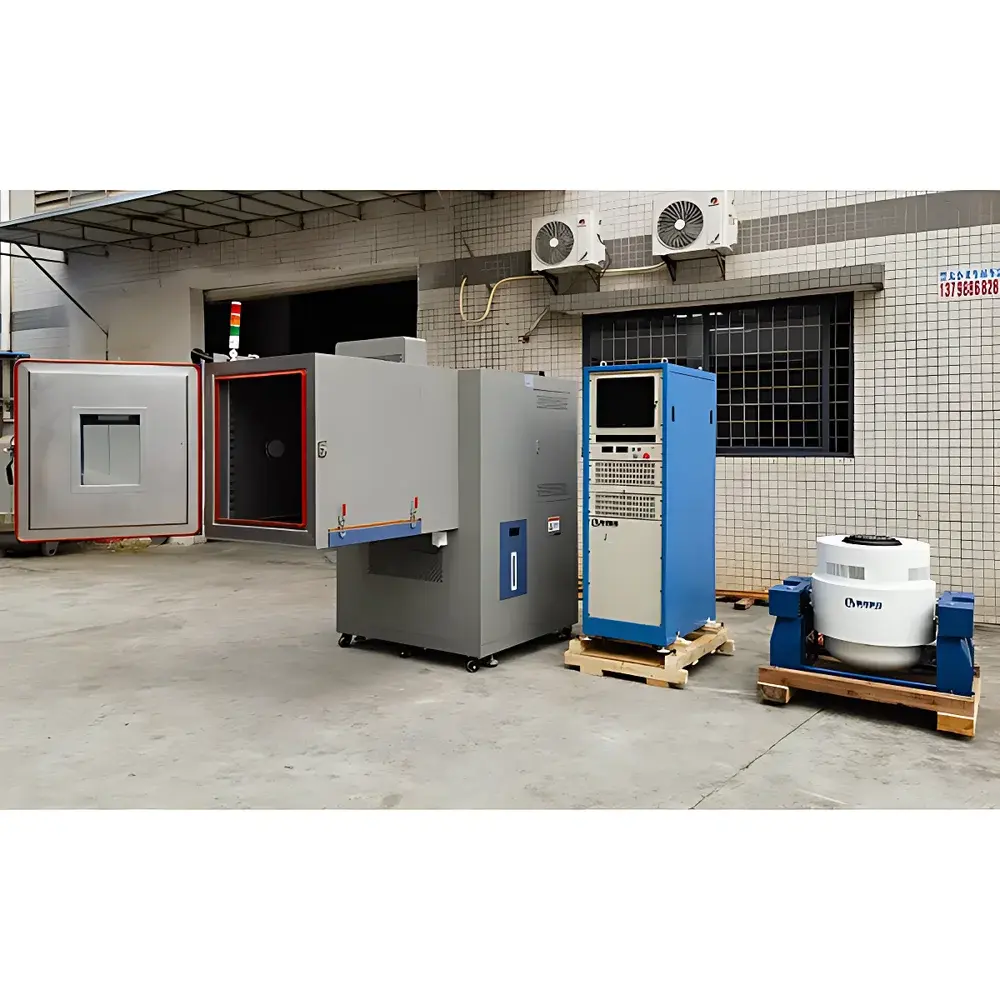
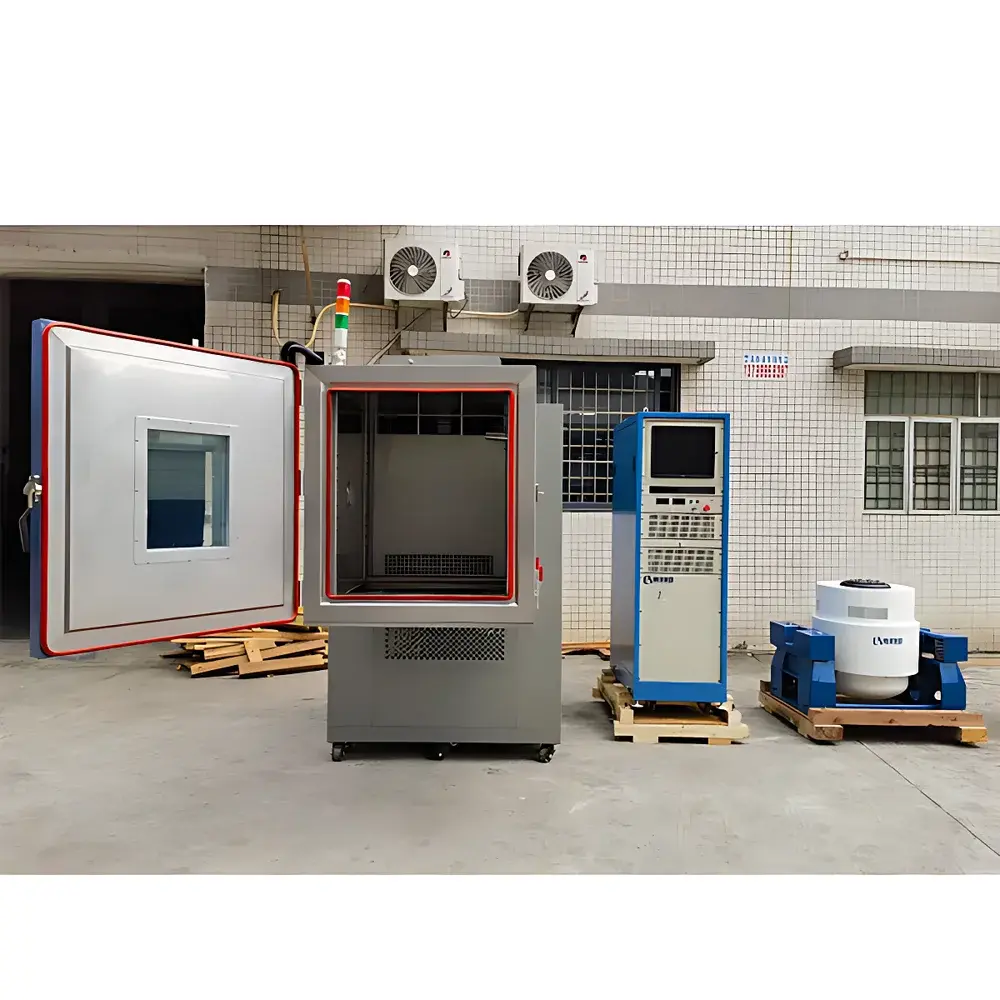
OK-ZTH-390.23 Combined Temperature-Humidity-Vibration Environmental Test System
| Brand | OK Instruments |
|---|---|
| Origin | Guangdong, China |
| Manufacturer Type | Direct Manufacturer |
| Product Origin | Domestic (China) |
| Model | OK-ZTH-390.23 |
| Temperature Range | −70 °C to +150 °C |
| Humidity Range | 20–98 %RH at 20–85 °C |
| Temperature Ramp Rate | 5 / 10 / 15 °C/min |
| Temperature Uniformity | ≤ ±0.5 °C |
| Standard Load Capacity | 15 kg aluminum mass, 350 W internal heat dissipation |
Overview
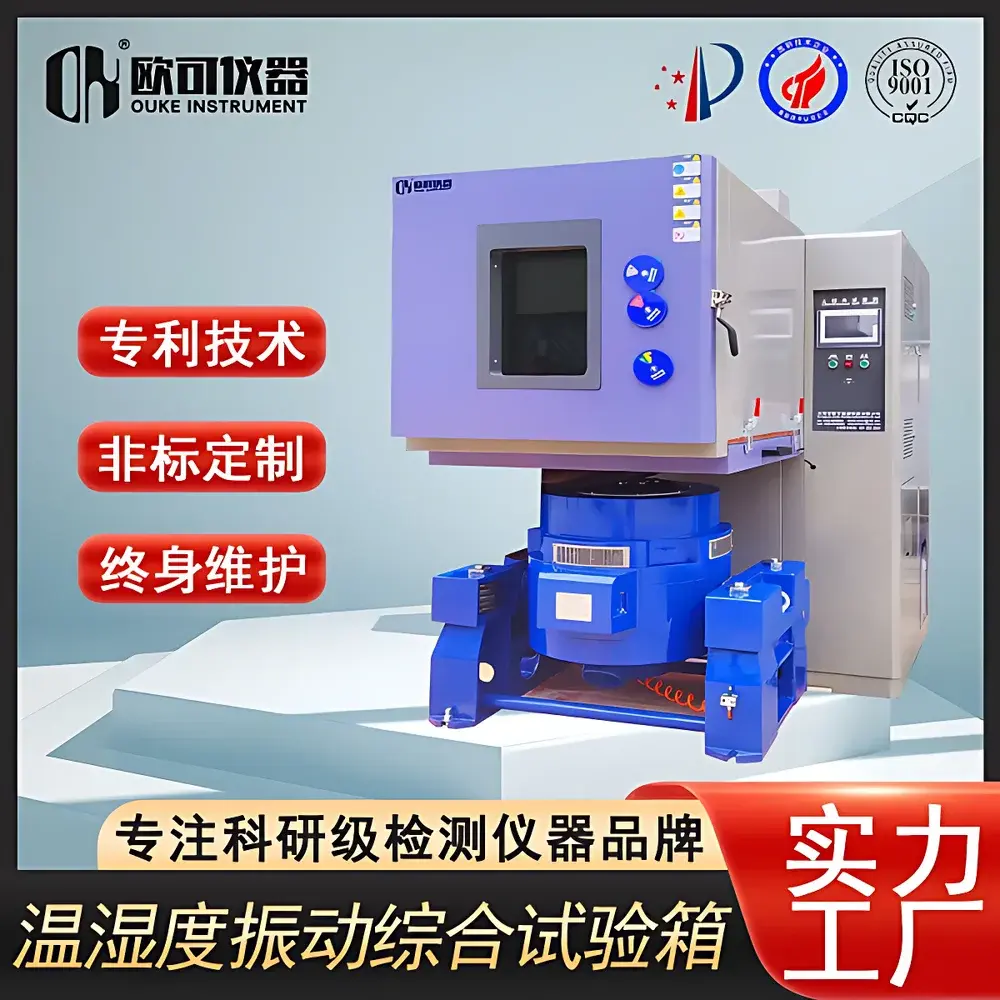
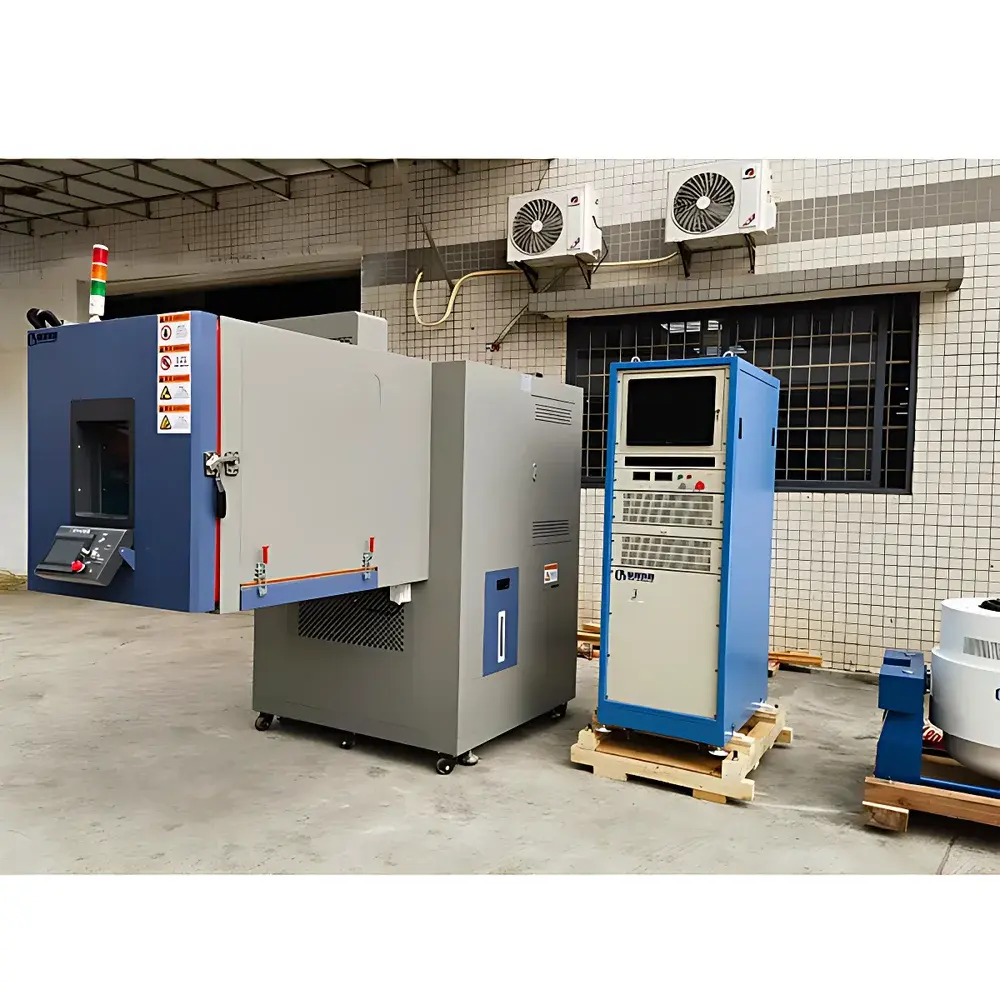
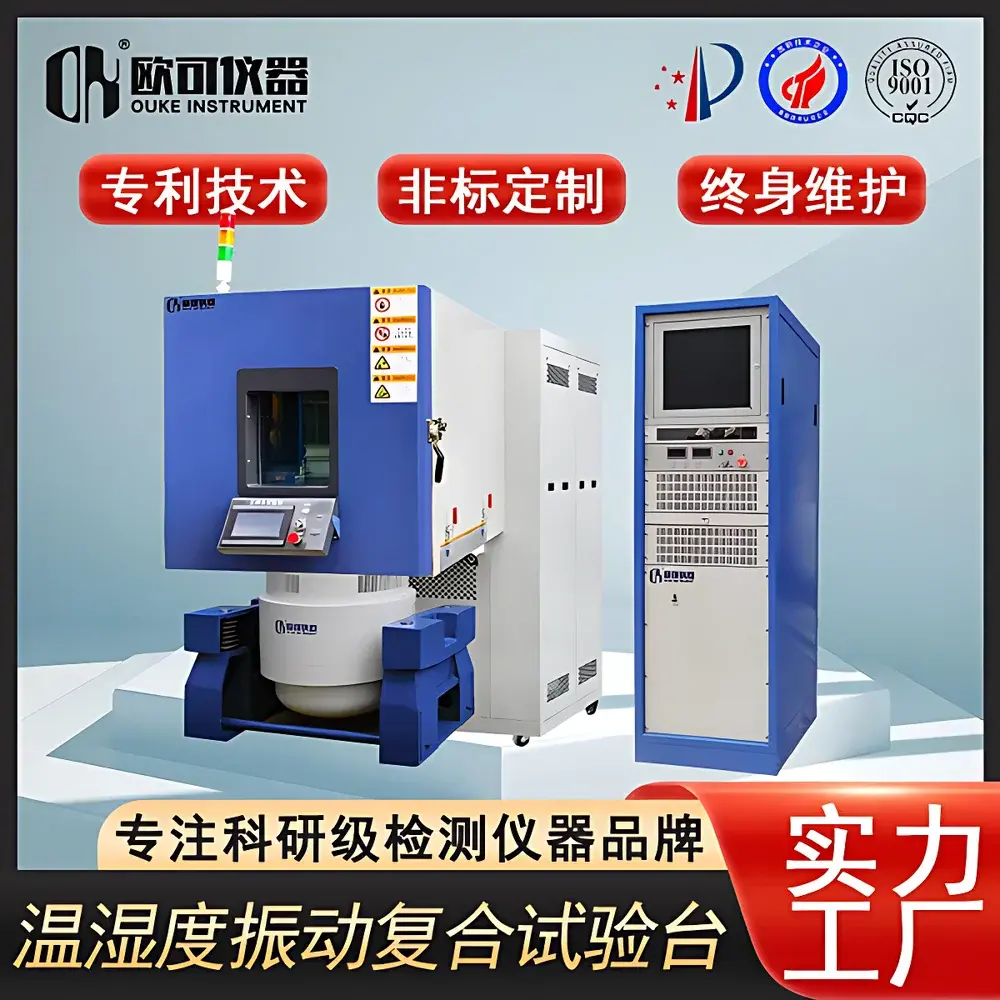
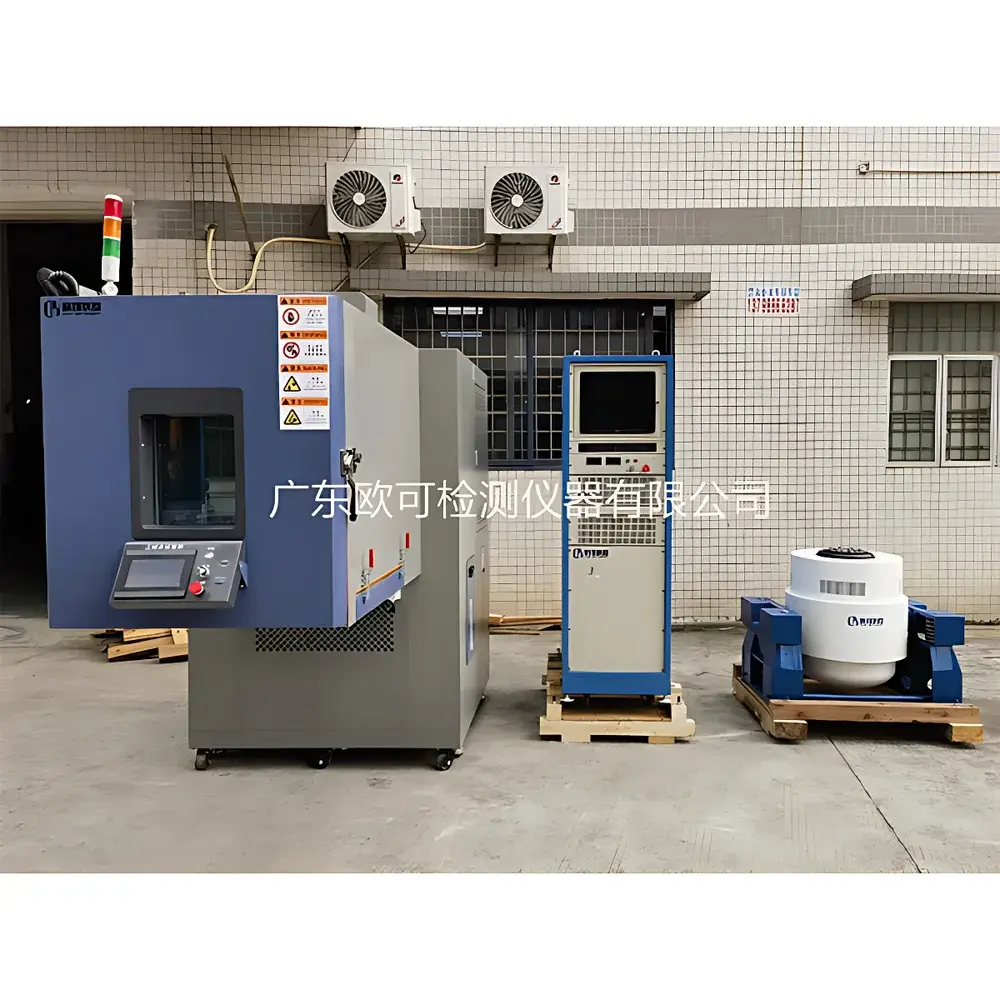
The OK-ZTH-390.23 Combined Temperature-Humidity-Vibration Environmental Test System is an integrated reliability validation platform engineered for high-fidelity simulation of multi-stress operational and transport environments. It simultaneously or sequentially applies controlled thermal cycling (−70 °C to +150 °C), humidity conditioning (20–98 %RH), and electrodynamic vibration (sine and random profiles) within a single sealed chamber—enabling accelerated life testing, HALT (Highly Accelerated Life Testing), and HASS (Highly Accelerated Stress Screening) per industry best practices. Unlike sequential single-stress chambers, this system implements true concurrent stress application based on Couette-flow-aligned thermal management and inertially decoupled vibration actuation—ensuring physical fidelity in simulating real-world failure mechanisms such as thermomechanical fatigue, condensation-induced corrosion under dynamic loading, and solder joint fracture during thermal transients with broadband excitation. Its architecture adheres to the foundational principles of physics-based acceleration: stressing multiple failure modes synergistically to expose latent design weaknesses earlier in the product lifecycle.
Key Features
- Triple-stress integration: Independent yet synchronized control of temperature, humidity, and vibration via a unified deterministic real-time controller (RT-Linux kernel, 10 ms loop cycle).
- Wide-range thermal performance: Dual-stage cascade refrigeration system achieves −70 °C base temperature; electric heating supports ramp rates up to 15 °C/min across full operating range.
- Humidity precision: Steam boiler humidification combined with direct-expansion dehumidification enables stable RH control from 20–98 %RH at temperatures between 20–85 °C, with dew point tracking and anti-condensation logic.
- Vibration subsystem: 12 kN electrodynamic shaker mounted on pneumatic isolation table; compatible with standard slip tables and vertical/horizontal configurations; operates continuously at −40 °C to +85 °C ambient chamber conditions.
- Structural integrity: 150 mm thick polyurethane-insulated chamber walls (K-value < 0.25 W/m²·K); stainless-steel interior; reinforced observation window with low-E double glazing and heated defogging.
- Safety-critical interlocks: Redundant overtemperature, overhumidity, over-acceleration, and vibration displacement limit monitoring with automatic shutdown and event-logged fault tracing.
Sample Compatibility & Compliance
The OK-ZTH-390.23 accommodates DUTs up to 15 kg (aluminum equivalent load) with maximum power dissipation of 350 W. Standard 100 mm diameter test ports (with RF-shielded feedthroughs optional) support sensor cabling, thermocouple routing, and real-time data acquisition. The system complies with key international test standards including MIL-STD-810H Method 520.5 (Combined Environments), ISO 16750-4 (Road Vehicles – Environmental Conditions), IEC 60068-2-68 (Combined Temperature/Humidity/Vibration), and DO-160G Section 25 (Environmental Conditions and Test Procedures for Airborne Equipment). All control firmware and data logs are structured to support GLP/GMP audit trails and can be configured for FDA 21 CFR Part 11 compliance with electronic signatures and immutable history.
Software & Data Management
The system runs OK-TestSuite v4.2—a deterministic test sequencing environment supporting hierarchical profile definition (e.g., nested temperature ramps with superimposed PSD spectra), real-time parameter overlay, and dual-channel synchronization (vibration PSD vs. thermal rate-of-change). Raw data streams—including chamber temperature/humidity, shaker armature displacement/acceleration, and user-defined analog inputs—are acquired at ≥10 kHz sampling and stored in HDF5 format with embedded metadata (test ID, operator, calibration expiry, environmental setpoints). Export modules generate ASTM E2779-compliant reports, CSV time-series files, and MATLAB-compatible .mat archives. Remote monitoring is supported via TLS-encrypted HTTPS API with role-based access control (RBAC) and OAuth2 authentication.
Applications
- Aerospace: Qualification of avionics enclosures, inertial measurement units (IMUs), and satellite power converters under launch vibration + stratospheric thermal cycling.
- Automotive: Validation of ADAS ECUs, battery management systems (BMS), and infotainment head units per ISO 16750-4 and LV-124 requirements.
- Defense electronics: HALT of tactical radios, EO/IR sensors, and encrypted comms modules under MIL-STD-810H combined environment protocols.
- Renewable energy: Reliability screening of grid-tied inverters, wind turbine pitch controllers, and solar charge regulators exposed to desert diurnal cycles and transportation vibration.
- Railway signaling: EN 50125-3 compliant testing of trackside controllers subjected to rail-induced resonance and seasonal humidity swings.
- Industrial IoT: Stress screening of edge AI gateways deployed in uncontrolled outdoor cabinets (e.g., smart city infrastructure).
FAQ
Can the system perform true simultaneous temperature-humidity-vibration testing?
Yes—the OK-ZTH-390.23 implements hardware-level synchronization between climate and shaker controllers, enabling concurrent application of all three stress domains with sub-second phase alignment and cross-domain feedback compensation.
What is the lowest operational temperature while vibrating at 50 g RMS?
The system maintains full vibration capability (up to 50 g RMS, 5–2000 Hz) down to −40 °C chamber temperature; operation below −40 °C requires pre-conditioning and reduced amplitude limits per qualification report OK-ZTH-390.23-VC-2024.
Is remote operation and data export compliant with FDA 21 CFR Part 11?
Yes—when configured with PKI-based digital certificates, audit trail logging, and electronic signature workflows, the OK-TestSuite meets all technical requirements for Part 11 compliance in regulated pharmaceutical and medical device development.
How is condensation managed during rapid cooldown with high humidity?
The system employs predictive dew-point modeling, active chamber air circulation optimization, and localized resistive heating of critical shaker interfaces to suppress condensation formation without compromising thermal fidelity.
Does the controller support custom HALT step-stress algorithms?
Yes—built-in HALT scripting engine allows users to define adaptive step increments (e.g., ±5 °C per dwell, 0.5 g RMS per stage) with automatic pass/fail decision logic based on real-time DUT response monitoring.



